The ten-year golden residency that comes with two million dirhams of Dubai property is usually described as a purchase benefit, something that arrives with the title deed at no extra cost.
Dubai’s immigration authority attaches a condition that marketing rarely mentions. A lien goes on the property for as long as the permit lasts. That makes the visa and the asset harder to separate later, and it is the first thing a real estate agency in Dubai should raise with an investor who is buying for residency. What follows covers the title condition, what the two million covers, and the parts of the rule that are more generous than investors expect.
What GDRFA requires on the title?
The terms published by the General Directorate of Residency and Foreigners Affairs in Dubai set out the property route in plain terms. You must own one or more properties worth no less than AED 2,000,000, as certified by a property status certificate from the Dubai Land Department.
A lien is placed on the property for the permit’s duration. Ten years of residency means that the encumbrance remains on the asset you bought.
It is worth being clear about what the lien is and what it does. The lien exists so the authority can see that the qualifying investment is still there, since the permit rests on continued ownership. It is a registration against the title rather than a debt, and it doesn’t transfer the property to anyone.
What it does change is how easy a future transaction is. An investor who expects to sell within ten years is buying an asset with a condition attached, and they should understand that before purchase rather than during a sale.
Two million across one or more properties?
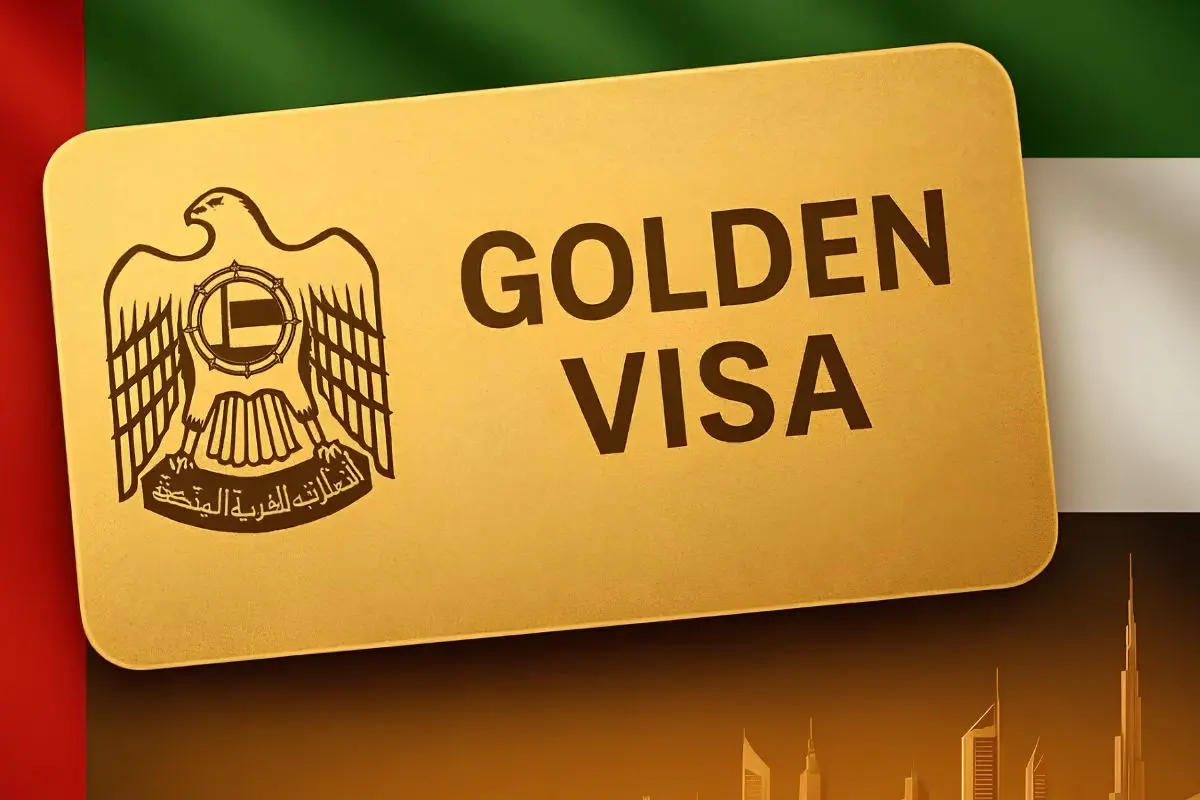
The threshold is a total, not a per-property figure. GDRFA’s wording covers ownership of one or more properties reaching AED 2,000,000, and the federal authority that issues the residency states the same: that the investor must own one or more properties in the UAE with a total value of at least that amount.
So two apartments at 1.1 million each will clear it. A valuation certificate from a Dubai Land Department licensed office may be accepted where the figure needs establishing.
For anyone weighing a golden visa through property in Dubai against the alternative routes, the same two million appears elsewhere. A deposit of that size with an accredited UAE bank qualifies, frozen for at least two years and not withdrawable during the ten-year period, as does a company stake of equivalent value.
Mortgages and off-plan both qualify
GDRFA’s terms state that mortgaged property is acceptable and include all types of properties, and the federal guidance permits financing through a loan where it comes from an approved local bank. So the common assumption that a mortgage rules you out is simply wrong.
Off-plan units also count towards the threshold once they reach the two million total, provided you buy from an approved local real estate company authorised by the competent local authority. Therefore, which developer you buy from is part of the eligibility question. A real estate agency in Dubai that sells across the off-plan market will know which names on a brochure satisfy that condition.
Whose name has to be on it?

On a shared title, the value of your own share has to reach AED 2,000,000, which makes joint ownership the place where applications fail quietly.
Picture a couple buying a three million dirham apartment in equal shares. The property clears the threshold comfortably. Neither owner does, because each holds one and a half million. The federal guidance adds that properties must be fully owned and registered in the investor’s name.
Splitting the purchase to spread risk is a reasonable instinct, but it produces exactly the wrong result here.
Can you sell the property afterward?
Carefully, and with preparation, because the permit rests on the qualifying investment continuing to exist, and a sale that takes an investor below the threshold puts the residency itself in question.
What is published and clear is the direction of the obligation. Residency follows the asset, so decisions about the asset are now decisions about the residency.
Frequently asked questions
1. How long does the residency last?
Ten years, with automatic renewal according to the federal guidance, and GDRFA states that the permit may be extended where the same conditions are still met. Anyone pricing a golden visa through property in Dubai should read that as conditional on the qualifying investment still being in place at year ten.
2. Who can I bring with me?
Spouses and children regardless of age, and parents. If the residency holder dies, sponsored family members may remain under their own permits.
3. Is health insurance part of the requirement?
Yes, and federal guidance requires the investor and family members to hold comprehensive, valid health insurance for the entire validity period of the residency, which on a ten-year permit is a recurring cost rather than a one-time document.
4. What does the application cost and how long does it take?
GDRFA lists a residence permit fee of AED 1,100, plus small additional charges and AED 500 if you apply in-country, with an expected completion time of five days. One detail worth asking a real estate agency in Dubai about is that the issuance fee rises by AED 100 annually once the residency runs beyond two years.
5. Do I have to live in the UAE to keep it?
No, not continuously, since golden residency holders may stay outside the country for longer than the six months that would normally end a residence permit. That is one of the few genuine flexibilities in the scheme.
What the lien is actually telling you?
The property route to residency is not a benefit attached to a purchase. It is a condition attached to an asset, recorded on the title, and it lasts as long as the permit does.
An investor who works all of that out before signing gets a straightforward ten years. Anyone pricing a golden visa through property in Dubai should treat the lien as part of the purchase, not a formality that follows, and have that conversation with a real estate agency at the viewing stage.