Key Takeaways:
- Even strike threats at Samsung raised global supply chain concerns.
- Workers demanded fair, profit-linked bonus distribution, not just higher wages.
- The deal has suspended the strike, but underlying tensions remain unresolved.
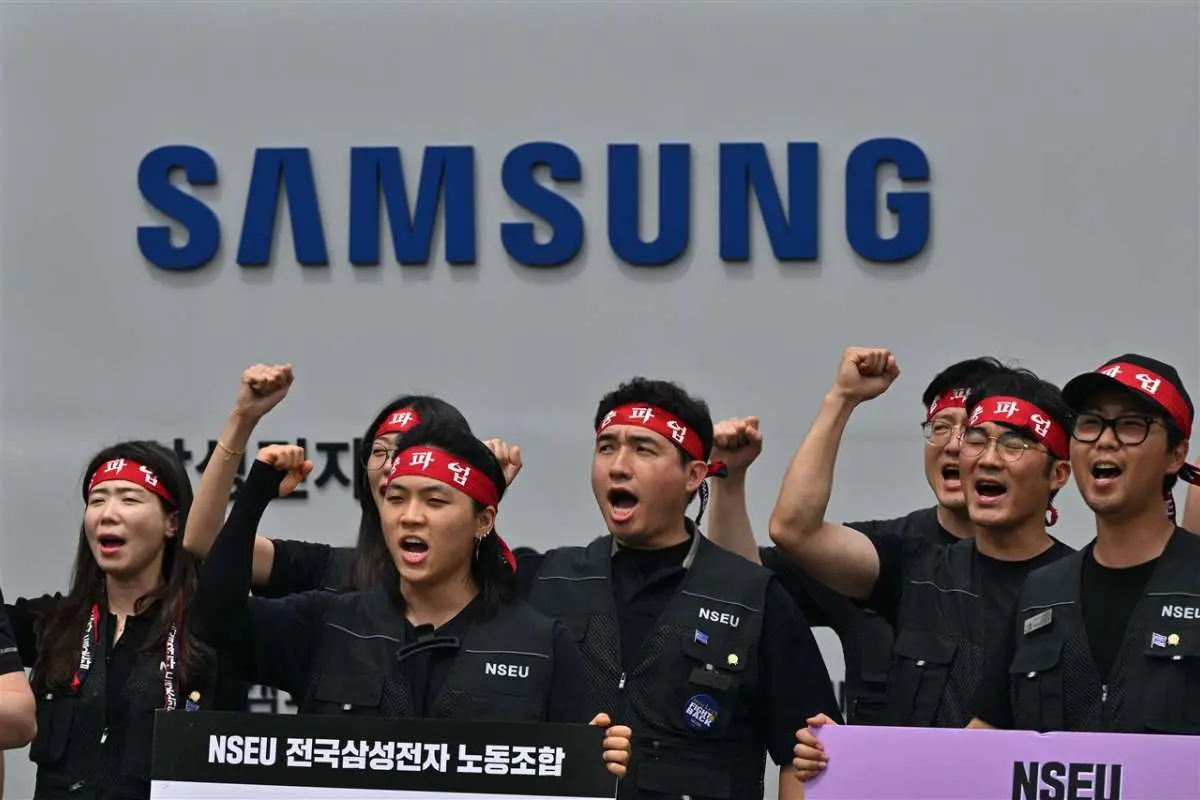
Samsung Electronics has temporarily avoided a major labour disruption after reaching a tentative wage agreement with its labour union, prompting the suspension of a planned strike with Samsung Strike Suspended, which could have involved tens of thousands of workers in South Korea’s semiconductor operations.
The breakthrough came just ahead of a potential escalation in industrial action, with union leaders deciding to pause strike preparations while the agreement is put to an internal vote. The voting process is expected to take place between May 22 and May 27, and will determine whether the deal is formally accepted or whether labour action could resume.
The dispute had escalated over several weeks as negotiations between Samsung management and union representatives stalled, particularly over wage structures and performance-based bonuses. At its peak, the proposed strike threatened to involve more than 47,000 employees, raising concerns about possible disruptions in global semiconductor supply chains at a time of strong demand for advanced chips used in artificial intelligence, smartphones, and data infrastructure.
Government mediation played a role in bringing both sides back to the negotiating table, reflecting the strategic importance of Samsung Electronics to South Korea’s export-driven economy. Any prolonged disruption in production was widely seen as a risk not only to global technology supply but also to national economic stability.
The Samsung Strike Suspended has provided immediate relief to investors and industry stakeholders, easing fears of supply shortages in a highly sensitive segment of the global tech ecosystem.
Bonus Structure and Pay Equity at the Core of the Dispute
At the centre of the conflict was Samsung’s performance-linked bonus system, which has long been a point of contention among employees across divisions. The union pushed for a restructuring of compensation, arguing that workers should receive a larger share of the company’s profits, especially during periods of strong semiconductor performance.
Demands included bonuses equivalent to 15% of annual operating profit and the removal of a cap that limited total bonus payouts to 50% of an employee’s base salary. Employees argued that the existing framework failed to reflect the record profitability of Samsung’s chip division, which has benefited significantly from global demand for AI-driven technologies.
Workers in semiconductor units expressed frustration over perceived disparities in compensation between high-performing divisions and other business segments within the company. The growing divide highlighted broader concerns about fairness, transparency, and consistency in Samsung’s pay structure.
The tentative agreement reached between both sides represents a compromise. Samsung has agreed to allocate a portion of its business performance estimated at just over 10% towards special bonuses for employees in its chip division. While this falls short of the union’s original demand, it marks a significant adjustment to the company’s compensation approach.
Despite the compromise, internal differences remain, as some employees believe the revised structure still does not fully address long-standing inequities in how profits are distributed across departments. Even under the Samsung Strike Suspended development.
Market Relief, Stability Restored, but Structural Issues Remain
Financial markets responded positively to the suspension of the strike, with Samsung shares rising as concerns over potential production disruptions eased. Investors had been closely monitoring the situation due to Samsung’s dominant role in the global memory chip industry, which underpins everything from consumer electronics to artificial intelligence systems.
A prolonged strike was viewed as a major risk to global supply chains, particularly at a time when semiconductor demand remains elevated. The temporary resolution has therefore been seen as a stabilising development for both the company and the broader technology sector.
However, while the agreement has helped avert an immediate crisis, it has also drawn attention to deeper structural challenges within Samsung’s workforce model. Performance-based bonuses, especially during periods of high profitability, have intensified debates over income disparity between divisions and employee groups.
Some employees and subcontractors have reportedly expressed dissatisfaction, suggesting that the benefits of the agreement may not be evenly distributed across all sections of the workforce. These concerns indicate that while industrial action has been paused, underlying tensions have not been fully resolved.
For Samsung, the outcome of the upcoming union vote will be crucial in determining whether the agreement becomes a long-term settlement or a temporary pause in labour unrest. With Samsung Strike Suspended for now, operations remain stable, but the company continues to navigate growing expectations from employees amid rising global competition and rapidly evolving semiconductor demand.