SpaceX successfully deployed 29 Starlink satellites into low-Earth orbit on the night of March 1, 2026, in its latest SpaceX Starlink launch, continuing its rapid launch cadence in support of global broadband expansion. The Falcon 9 rocket lifted off from Cape Canaveral Space Force Station at 9:56 p.m. EST, marking another milestone in the company’s ambitious satellite deployment program.
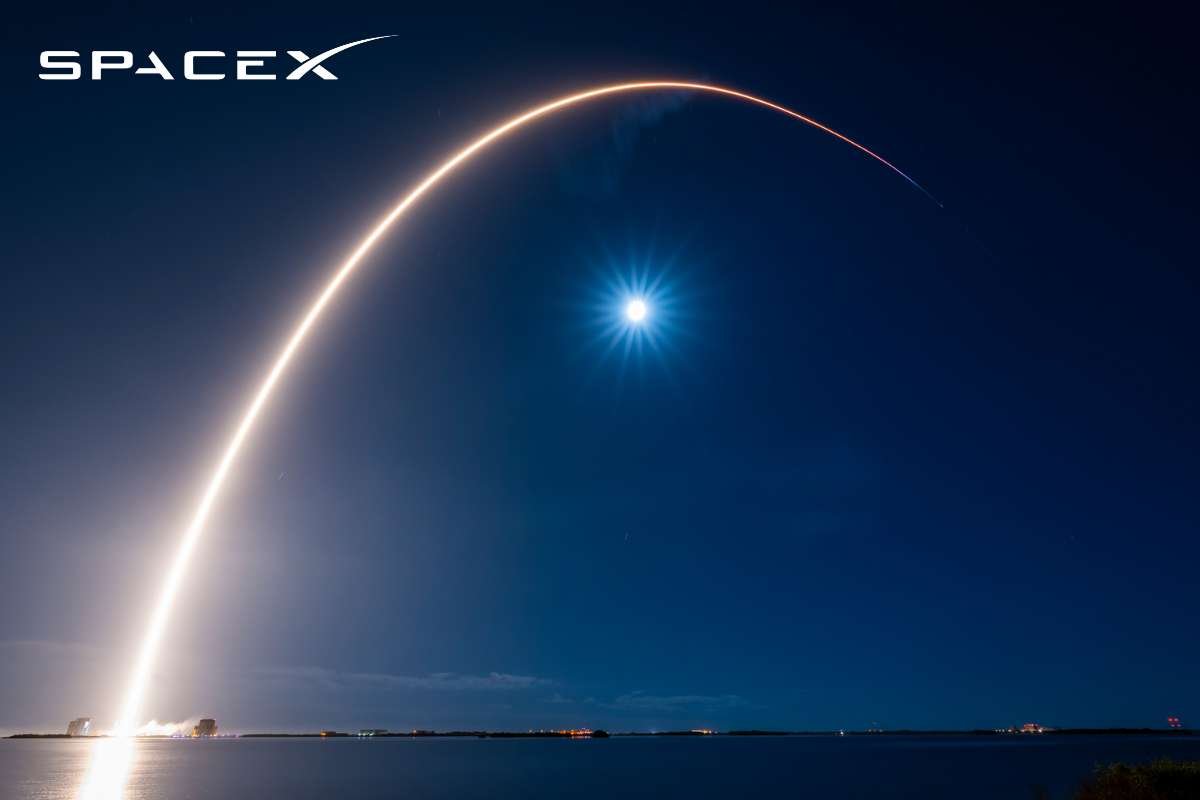
The mission, designated Starlink 10-41, proceeded under favorable weather conditions, allowing for a smooth countdown and on-time launch. Spectators along Florida’s Space Coast witnessed a bright arc across the night sky as the rocket powered upward, carrying the latest batch of internet satellites designed to enhance connectivity worldwide.
Roughly an hour after liftoff, the 29 satellites were successfully deployed into their intended orbit during the SpaceX Starlink launch. From there, they will gradually maneuver into operational positions within the growing Starlink constellation. The addition strengthens the network’s capacity, particularly in underserved and remote regions where terrestrial broadband infrastructure remains limited or unreliable.
Booster Reuse Demonstrates Operational Efficiency
A key highlight of the mission was the continued reuse of the Falcon 9 first-stage booster. The rocket’s first stage, flying for the 26th time, separated from the upper stage shortly after launch and began its descent back toward Earth. In a carefully choreographed sequence, it executed reentry burns before landing autonomously on a droneship stationed in the Atlantic Ocean.
The successful recovery underscores SpaceX’s long-standing focus on reusability as the SpaceX Starlink launch demonstrated successful booster recovery. By refurbishing and reflighting boosters multiple times, the company has significantly reduced launch costs and increased mission frequency. The latest landing adds to an already extensive record of booster recoveries, reinforcing the reliability of reusable launch systems.
Reusability has become central to SpaceX’s broader strategy, enabling the company to maintain a high launch tempo while supporting both commercial and government customers. The ability to quickly turn around hardware allows missions like Starlink deployments to occur at a pace unmatched by most competitors in the global launch market.
Starlink’s Expanding Footprint in Orbit
With thousands of satellites already operating in orbit, the Starlink constellation represents one of the largest satellite networks ever assembled. Each new launch incrementally increases capacity, improves coverage density, and enhances service performance for users worldwide.
The satellites deployed in this mission are part of a next-generation batch, were included in the SpaceX Starlink launch and are designed to deliver faster speeds and lower latency. As they reach their designated orbital slots, they will integrate into the broader mesh network that beams internet connectivity to ground terminals across continents and oceans.
SpaceX’s aggressive 2026 launch schedule signals sustained demand for satellite-based broadband services. The company continues to expand its global footprint, targeting regions where connectivity gaps persist. From rural communities to maritime and aviation sectors, the network is steadily broadening its reach.
The March 1 launch demonstrates not only the company’s technical capability but also its operational consistency. With another successful deployment and landing completed, SpaceX advances its vision of a globally connected planet one Falcon 9 launch at a time.