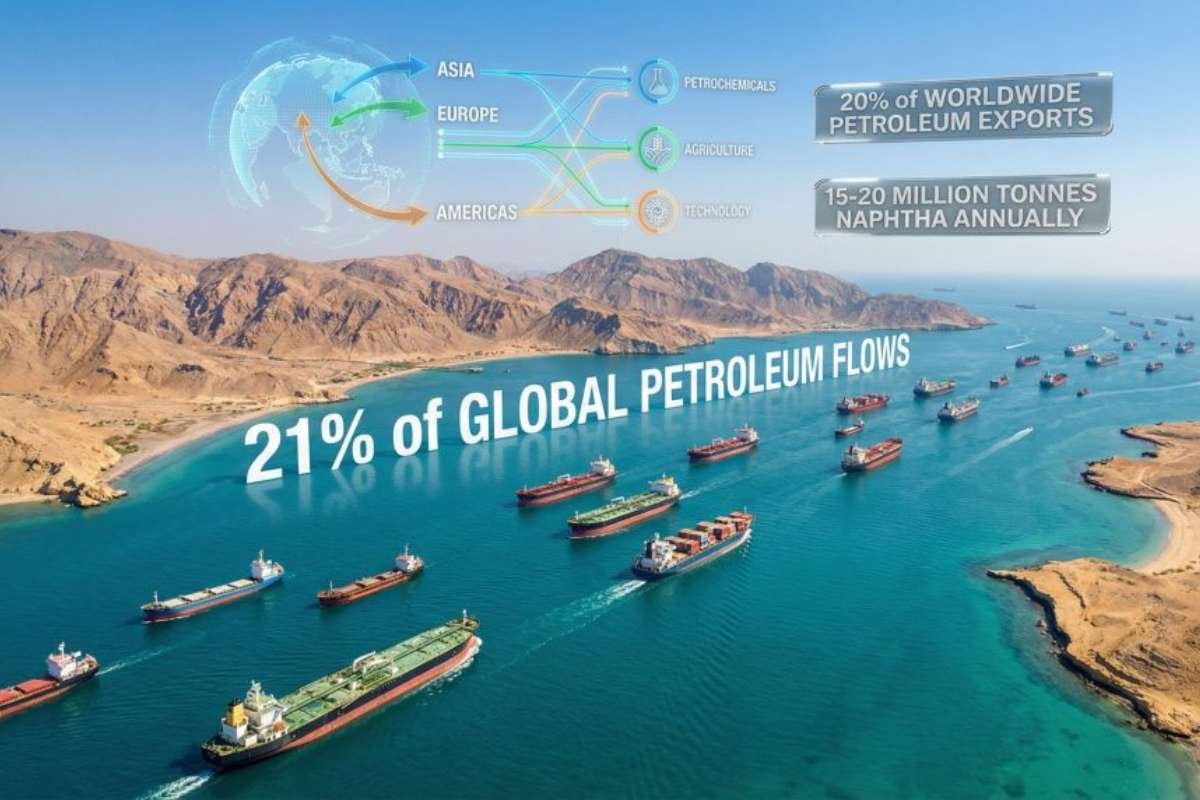
The Strait of Hormuz, a narrow yet vital maritime corridor linking the Persian Gulf to global markets, has emerged as a major flashpoint for economic uncertainty. The ongoing Strait of Hormuz Disruption is intensifying concerns worldwide. Handling nearly a quarter of the world’s seaborne oil trade and significant volumes of liquefied natural gas (LNG), the strait plays a critical role in maintaining global energy stability. Recent disruptions to shipping traffic in the region have raised alarm bells across industries, with ripple effects already being felt in financial and commodity markets.
Heightened geopolitical tensions have slowed tanker movement, forcing shipping companies to delay or reroute cargo. This has led to a sharp increase in freight and insurance costs, while also tightening the availability of energy supplies. Oil prices have responded with volatility, climbing amid fears of prolonged disruption. For energy-importing economies, particularly in Asia and Europe, the situation poses immediate risks to supply security and inflation control.
What makes the Strait of Hormuz uniquely sensitive is its status as a chokepoint. Even minor interruptions can have outsized global consequences. The current slowdown highlights the fragility of global logistics systems, where a single disruption can cascade across multiple sectors. As uncertainty persists, markets remain on edge, closely monitoring developments tied to the Strait of Hormuz Disruption.
Fertilizer Supply Crunch Sparks Food Security Fears
Beyond energy, the disruption is significantly impacting global fertilizer supply chains—an issue with potentially long-lasting consequences. The Gulf region is a key exporter of essential agricultural inputs such as urea, ammonia, and sulfur. These materials are critical for maintaining soil fertility and ensuring stable crop yields across the world.
With shipping delays mounting, fertilizer exports have tightened, creating supply shortages in several regions. Countries heavily dependent on imports are particularly vulnerable, as reduced access to these inputs could directly affect agricultural productivity. The ongoing Strait of Hormuz Disruption is worsening these shortages. Staple crops such as wheat, rice, and maize may see lower yields if the disruption continues, increasing the risk of food shortages.
The implications extend beyond farms. A decline in crop output could drive food prices higher, intensifying inflationary pressures already affecting global economies. For developing nations, where food security is closely tied to economic stability, the stakes are especially high.
At the same time, the disruption is also affecting the movement of petrochemicals used in industrial manufacturing. These materials are integral to producing plastics, packaging, and medical supplies. As supply chains tighten, industries dependent on these inputs may face rising costs and production delays. The cumulative effect is a broad-based strain on both agricultural and industrial systems, amplifying the economic fallout.
Semiconductor Industry Faces Emerging Risks
The technology sector is now beginning to feel the impact as well, particularly in semiconductor manufacturing. Modern chip production depends on a complex network of raw materials and specialized gases, some of which are transported through routes linked to the Strait of Hormuz. The ongoing Strait of Hormuz Disruption is adding pressure to these supply routes. Among these, helium stands out as a critical component used in cooling and manufacturing processes.
Supply constraints in helium and other inputs are raising concerns about potential slowdowns in semiconductor production. This comes at a time when the global chip industry is still recovering from previous supply shortages. Any renewed disruption could have far-reaching consequences, affecting everything from smartphones and consumer electronics to automobiles and industrial machinery.
The situation underscores the deep interdependence of modern supply chains. A disruption in one region can quickly cascade into multiple industries, creating a domino effect that is difficult to contain. For businesses operating on just-in-time models, such shocks can be particularly damaging, forcing costly adjustments and delays.
In response, companies and governments are increasingly exploring ways to strengthen supply chain resilience. Diversifying sourcing strategies, investing in alternative trade routes, and building strategic reserves are among the measures being considered. However, these solutions require time and coordination, leaving markets exposed in the short term.
As the Strait of Hormuz Disruption continues, its impact is being felt far beyond the energy sector. With agriculture, manufacturing, and technology all under pressure, the situation serves as a stark reminder of how critical global chokepoints can shape the trajectory of the world economy.