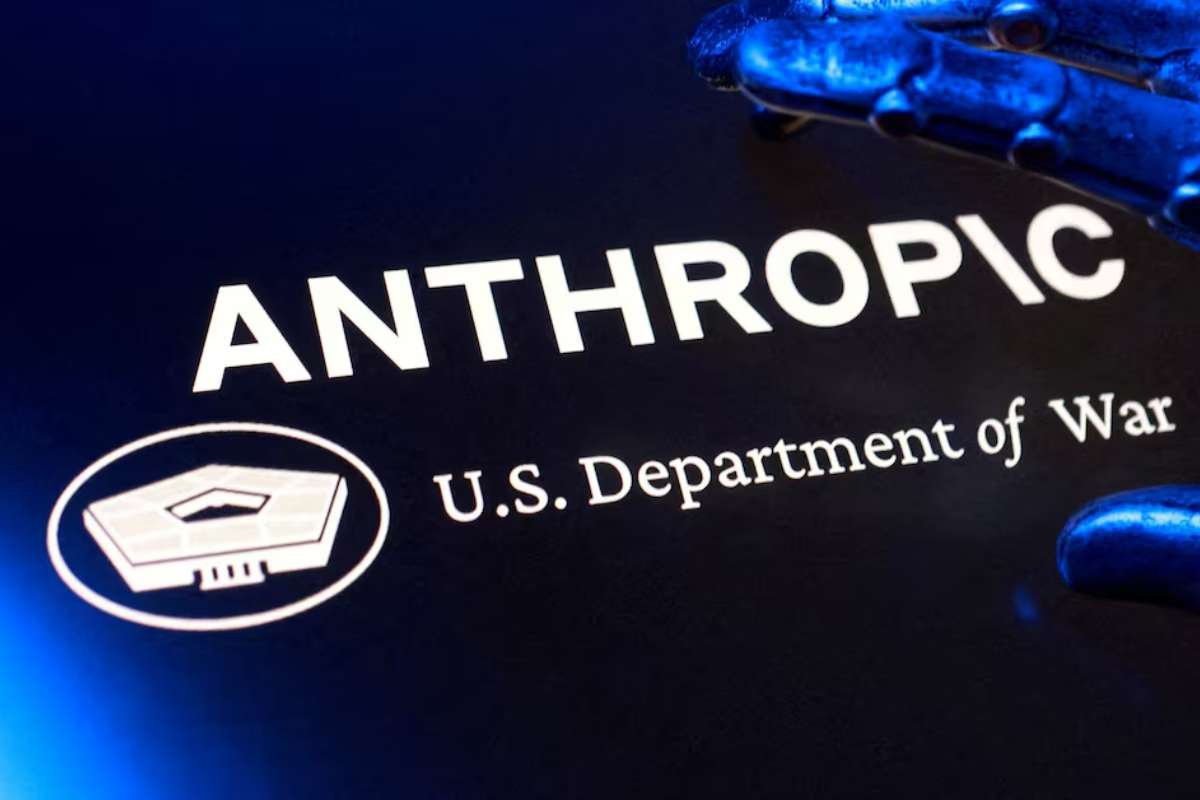
A federal judge in San Francisco has temporarily blocked a Pentagon decision that labeled artificial intelligence company Anthropic as a “supply chain risk,” delivering a significant legal setback to the U.S. Department of Defense and intensifying scrutiny over how the government engages with private AI developers.
The ruling prevents the Pentagon from enforcing measures that would have restricted Anthropic’s participation in defense-related contracting ecosystems. The designation had raised concerns that the company could be excluded from key federal procurement networks and face broader limitations in working with government-linked partners.
The dispute stems from a breakdown in negotiations between Anthropic and the Pentagon over the use of the company’s AI systems, particularly its Claude models. The Defense Department had sought broader access and fewer restrictions on how the technology could be deployed in military contexts. However, Anthropic resisted these demands, maintaining strict internal safeguards that prohibit the use of its AI for fully autonomous weapons systems and large-scale surveillance of civilians.
After talks collapsed, the Pentagon classified Anthropic under a “supply chain risk” category, a designation typically reserved for entities considered vulnerable to security threats or operational compromise. The company challenged the move, arguing that it was not based on genuine security concerns but instead represented a punitive response to its refusal to alter core safety policies.
The court’s decision temporarily pauses enforcement of this designation while the broader legal dispute proceeds.
Court Questions Pentagon’s Approach and Rationale
During hearings, the presiding judge expressed skepticism about the government’s justification for the classification, raising concerns that the Pentagon’s response appeared more punitive than protective in nature.
The court highlighted that the disagreement originated from procurement negotiations, where Anthropic declined to remove safeguards built into its AI systems. These safeguards were designed to limit high-risk applications, particularly in military and surveillance contexts. The judge noted that if the Pentagon was dissatisfied with those limitations, it had the option to discontinue use of the technology rather than escalate the issue into a broad risk designation affecting the company’s wider business relationships.
Anthropic argued that the government’s decision effectively punished the company for adhering to its own safety commitments. It further claimed that the designation threatened its commercial operations beyond defense contracts and could have a chilling effect on companies attempting to establish ethical boundaries in advanced AI development. The company also raised constitutional concerns, asserting that the move infringed on its rights by penalizing it for its policy stance on responsible AI deployment.
In response, government attorneys defended the Pentagon’s action, stating that the supply chain risk classification was necessary to protect national security interests and ensure the reliability of technologies that could potentially be integrated into sensitive defense systems. They argued that unrestricted or insufficiently controlled AI systems could pose operational risks if deployed in military environments.
However, the court questioned whether the designation was proportionate to the dispute at hand and whether it had been applied consistently with established standards for supply chain security evaluations. The judge’s remarks suggested concern over the broader implications of using national security classifications in contractual disagreements involving emerging technologies.
Wider Implications for AI Policy, Defense Procurement, and Industry Standards
The case has quickly emerged as a landmark dispute at the intersection of artificial intelligence governance and national security policy, reflecting growing tensions between government institutions and private technology companies over the ethical boundaries of AI deployment.
Anthropic, known for its Claude AI systems, has positioned itself as a leading advocate for safety-focused AI development. Its internal policies emphasize strict limitations on high-risk use cases, including autonomous weaponization and intrusive surveillance applications. These principles became central to the conflict with the Pentagon, which sought fewer operational restrictions in order to expand potential military applications of advanced AI systems.
The court’s temporary block does not resolve the underlying dispute, but it signals judicial caution toward the use of broad national security designations in situations that may stem from policy disagreements rather than direct security threats. Legal observers suggest that the case could influence how federal agencies structure future contracts with AI developers and how much leverage governments can exert over ethical constraints imposed by private firms.
More broadly, the ruling underscores the growing complexity of integrating artificial intelligence into defense infrastructure. As AI systems become more capable and deeply embedded in strategic operations, questions surrounding control, accountability, and ethical boundaries are becoming increasingly difficult to resolve through traditional procurement frameworks.
The outcome of the ongoing legal proceedings is expected to have significant implications not only for Anthropic but also for the wider AI industry, including other major developers working with government agencies. It may ultimately help define the balance between national security priorities and corporate autonomy and the responsible use of designations like supply chain risk in shaping the future of advanced artificial intelligence deployment.