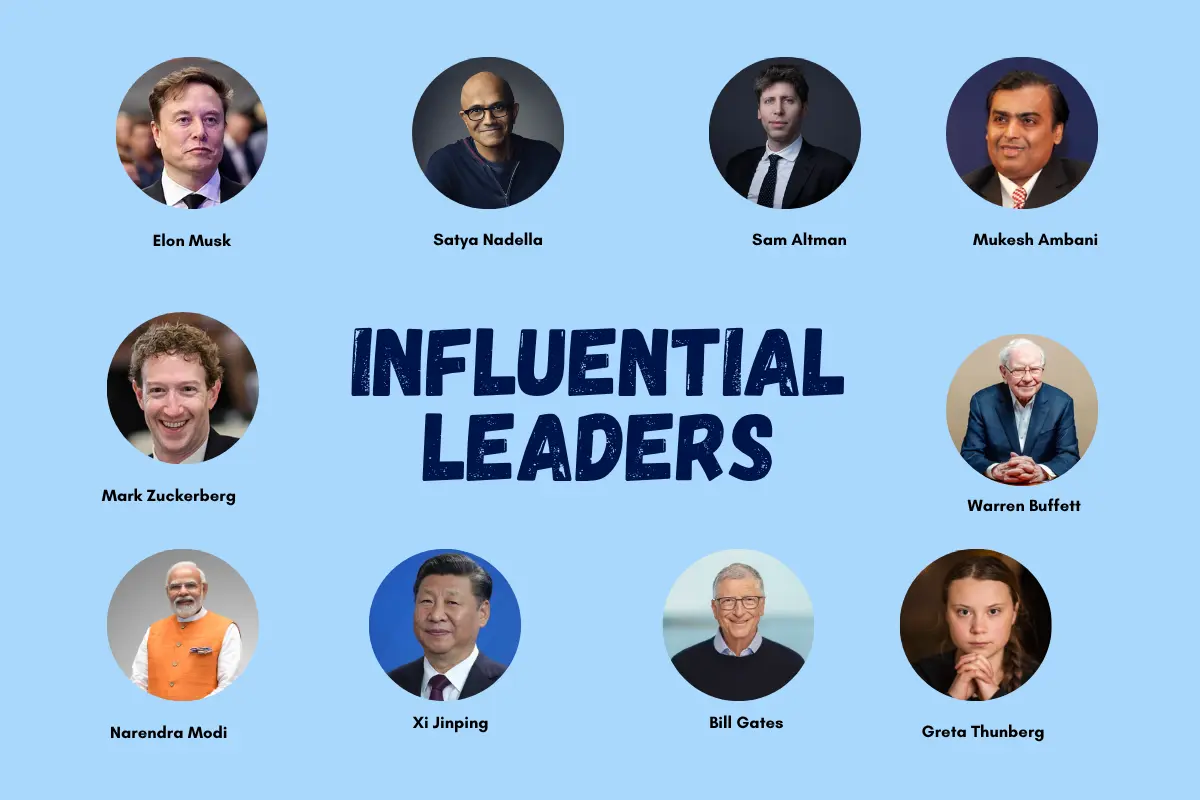
Standing at the helm of global organizations reveals a fundamental truth: formal organizational charts rarely reflect how international strategy gets executed on the ground.
Truly influential leaders recognize that guiding cross-border teams, driving large-scale transformation, and navigating volatile markets depend far less on executive authority and far more on trusted influence.
This article highlights 20 influential leaders who continue to shape the world in 2026, leaving a lasting impact across business, politics, innovation, and social change.
20 Influential Leaders in 2026 Who Are Reshaping Business and Global Markets
Leadership influence becomes clearer when measured through business outcomes. Revenue growth, market share, technology adoption, investment decisions, and job creation offer useful ways to assess how a leader affects an industry. These measures also help explain why some leaders shape business priorities well beyond their own organizations.
We selected these 20 leaders based on their influence on business, technology, finance, public policy, and social progress. We prioritized verifiable achievements and measurable impact, using company reports, government data, and trusted institutional sources wherever possible. Together, they show how strategic choices and leadership approaches affect competition, investment, and long-term business growth.
1. Elon Musk
Area of Influence: Electric vehicles, aerospace, satellite communications, and artificial intelligence
Elon Musk influences several industries through Tesla, SpaceX, and other technology ventures. Tesla reported $94.83 billion in revenue for 2025, down from $97.69 billion in 2024, while its energy generation and storage revenue grew to $12.77 billion. These businesses show how investment in electric vehicles, energy storage, reusable rockets, and satellite internet can create new markets and reshape competition.
Business significance: Musk’s ventures demonstrate the opportunities and risks of capital-intensive innovation. Their decisions affect manufacturing, supply chains, technology investment, and competition across several industries.
2. Tim Cook
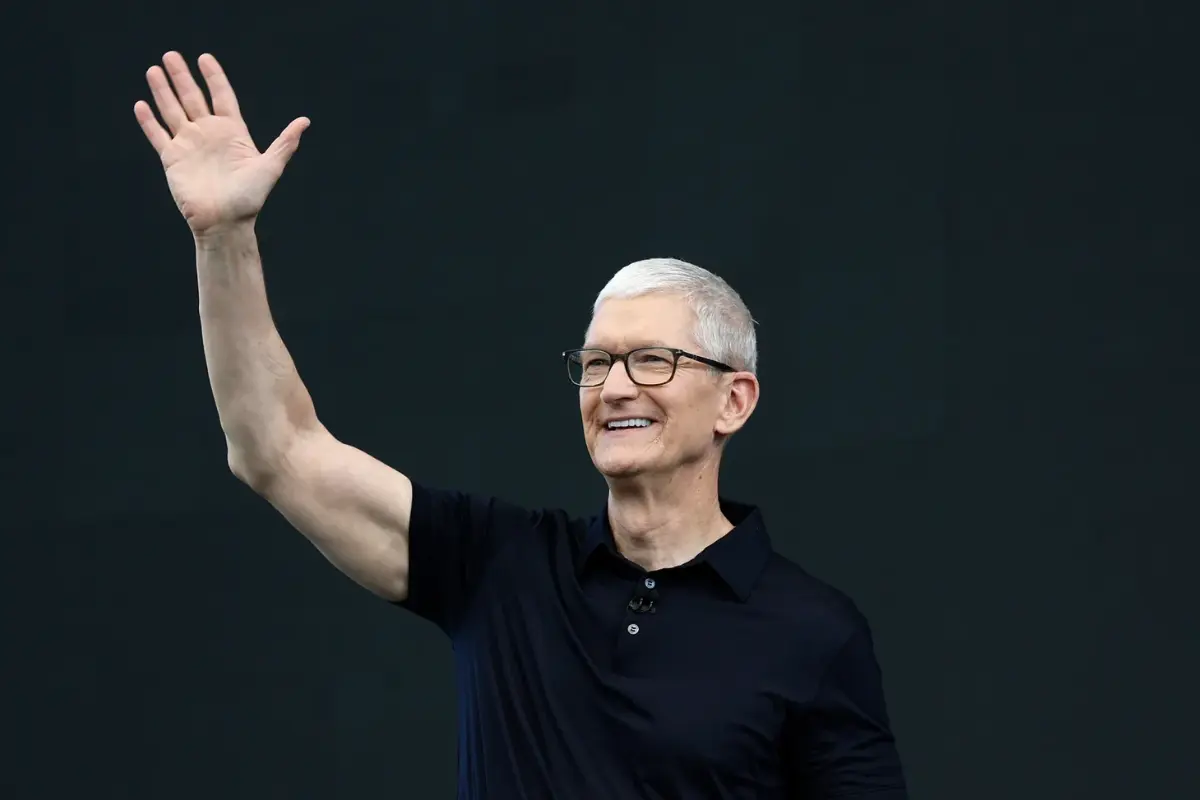
Area of Influence: Consumer technology, global supply chains, and digital services
As Apple’s CEO, Tim Cook has focused on supply chain management, services, privacy, and product development. Apple reported $416.2 billion in net sales for fiscal 2025, up 6% from the previous year, with operating income of $133.1 billion. Its business influences suppliers, app developers, retailers, and technology companies worldwide.
Business significance: Cook demonstrates how operational discipline, recurring service revenue, and customer loyalty can support a global technology business. His leadership also highlights the need to balance innovation with customer trust and regulatory demands.
3. Satya Nadella
Area of Influence: Enterprise software, cloud computing, and artificial intelligence
Satya Nadella has helped Microsoft expand its cloud and AI businesses while strengthening its enterprise software offerings. Microsoft reported $281.7 billion in revenue for fiscal 2025, while Microsoft Cloud revenue reached $168.9 billion. These services help companies manage computing infrastructure, analyze data, and adopt AI tools without building every system themselves.
Business significance: Nadella’s leadership shows how companies can adapt to technological change by updating products, partnerships, and workplace culture. It also highlights the need to measure AI’s business value against implementation costs and risks.
4. Jensen Huang
Area of Influence: Semiconductors, AI computing, and data center infrastructure
NVIDIA CEO Jensen Huang leads a company whose chips and computing platforms support AI development, scientific research, and data centers. NVIDIA reported $215.9 billion in revenue for fiscal 2026, up 65% from the previous year, driven largely by data center demand. Its combination of hardware, software, and networking products helps businesses build AI infrastructure.
Business significance: Huang illustrates how specialized technology and a strong software ecosystem can create a competitive advantage. NVIDIA’s growth also affects chip suppliers, cloud providers, data center investment, and energy demand.
5. Jeff Bezos
Area of Influence: E-commerce, cloud computing, logistics, and aerospace
Amazon founder Jeff Bezos remains executive chair of the company and leads Blue Origin, his space venture. Amazon’s retail network and Amazon Web Services have changed how businesses sell products, manage logistics, and access computing infrastructure. AWS, in particular, lets companies rent computing resources instead of making large upfront investments in servers and data centers.
Business significance: Bezos’s business career highlights customer focus, operational efficiency, and long-term investment. His ventures also show how established capabilities can support expansion into related markets.
6. Sam Altman

Area of Influence: Artificial intelligence, enterprise software, and AI infrastructure
OpenAI CEO Sam Altman has helped bring generative AI tools into business workflows, including research, coding, content creation, and customer support. Reuters reported in October 2026 that OpenAI’s annualized revenue for September was nearly $50 billion. This is an estimate based on a recent revenue rate, not audited annual revenue.
Business significance: Altman illustrates how emerging technologies can attract investment and create new markets quickly. Businesses adopting AI must still assess accuracy, data protection, operating costs, and whether the tools deliver measurable value.
7. Sundar Pichai
Area of Influence: Search, digital advertising, cloud computing, and artificial intelligence
Sundar Pichai leads Alphabet, Google’s parent company. Its businesses shape online advertising, digital search, mobile software, and cloud services. As Google adds AI to its products, it must respond to changing search habits while protecting its existing advertising model. Its cloud services also give businesses access to computing, data, and AI tools.
Business significance: Pichai’s leadership highlights the challenge of adapting an established business when new technology changes customer behavior. Companies must develop new revenue opportunities without weakening the services that support their existing business.
8. Mukesh Ambani
Area of Influence: Telecommunications, retail, energy, media, and digital services
Mukesh Ambani leads Reliance Industries, a major Indian business group with interests in energy, retail, telecommunications, and digital services. Reliance reported ₹10.71 lakh crore in revenue for fiscal 2024–25. Its digital services business served more than 488 million subscribers, while its retail business recorded ₹3.31 lakh crore in revenue.
Business significance: Ambani’s strategy shows how infrastructure, scale, and connected businesses can support expansion. Jio’s growth has also helped broaden internet access and created opportunities in digital payments, online retail, and entertainment.
9. Lisa Su
Area of Influence: Semiconductors, data centers, and high-performance computing
AMD CEO Lisa Su has expanded the company’s position in server processors, AI accelerators, personal computers, and gaming. AMD reported $34.6 billion in revenue for 2025, up 34% from 2024, while data center revenue increased 32% to $16.6 billion. Its products give cloud providers and businesses more options when investing in computing infrastructure.
Business significance: Su demonstrates the value of technical execution, product focus, and competition in capital-intensive industries. AMD’s growth also shows how rising AI demand can create opportunities for multiple suppliers.
10. Mark Zuckerberg

Area of Influence: Social media, digital advertising, and artificial intelligence
Mark Zuckerberg, founder and CEO of Meta Platforms, leads Facebook, Instagram, and WhatsApp. Meta is investing in AI to improve content recommendations, advertising performance, and business messaging. These tools influence how companies reach customers, manage campaigns, and build online communities. Meta’s financial reports track the company’s advertising business, infrastructure spending, and technology investments.
Business significance: Zuckerberg’s leadership shows how digital platforms can shape advertising markets and customer relationships. It also highlights the need to balance innovation and growth with privacy, regulation, and user trust.
11. Jamie Dimon
Area of Influence: Banking, corporate finance, and financial services
Jamie Dimon, chairman and CEO of JPMorgan Chase, leads a major financial institution serving consumers, businesses, governments, and investors. The bank reported $182.4 billion in net revenue for 2025 and $57 billion in net income. Its lending, payments, and investment services influence business financing, expansion plans, and major corporate transactions.
Business significance: Dimon’s leadership highlights the role of financial discipline, risk management, and technology investment in banking. Credit decisions can also influence business growth, hiring, and investment across the wider economy.
12. Warren Buffett
Area of Influence: Investment, insurance, and diversified businesses
Warren Buffett remains chairman of Berkshire Hathaway, while Greg Abel became CEO on January 1, 2026. Buffett’s investment approach emphasizes understanding business models, assessing financial strength, and allocating capital carefully. Berkshire’s interests span insurance, energy, rail transport, manufacturing, and consumer products.
Business significance: Buffett’s career offers lessons in disciplined investing, long-term thinking, and risk assessment. Berkshire’s leadership transition also highlights why succession planning matters to companies that rely on a founder or long-serving executive.
13. Mary Barra

Area of Influence: Automotive manufacturing, electric vehicles, and mobility
General Motors chair and CEO Mary Barra leads an automaker adapting to changes in electric vehicles, software, and manufacturing. Its decisions affect factory investment, battery suppliers, vehicle development, and workers. GM must balance investment in new technology with consumer demand, production costs, vehicle quality, and profitability. Its annual reports outline its performance and the challenges facing this transition.
Business significance: Barra illustrates how established manufacturers can manage major technological change while protecting operational performance. Her decisions also affect supplier networks, factory employment, and demand for new skills.
14. Narendra Modi
Area of Influence: Economic policy, infrastructure, manufacturing, and digital development
As India’s prime minister, Narendra Modi influences the business environment through infrastructure programs, manufacturing policies, digital public services, and trade decisions. In June 2026, the Indian government approved an additional ₹30,000 crore commitment to the National Investment and Infrastructure Fund, bringing its total commitment to ₹60,000 crore. The fund aims to support infrastructure investment and attract institutional capital.
Business significance: Government decisions can create opportunities in construction, transport, energy, technology, and manufacturing. For businesses, the impact depends on project delivery, regulatory conditions, access to finance, and private investment.
15. Ursula von der Leyen
Area of Influence: European economic policy, industrial competitiveness, and regulation
As president of the European Commission, Ursula von der Leyen influences trade, technology rules, climate policy, and industrial development across the European Union. In October 2026, the Commission selected 46 strategic projects for critical raw materials across 16 member states. These projects aim to improve access to materials needed for electric vehicles, renewable energy, electronics, and other industries.
Business significance: Von der Leyen’s leadership shows how regional policies can influence sourcing, investment, and competition. Businesses operating in Europe must account for both regulatory requirements and new opportunities created by industrial policy.
16. Xi Jinping
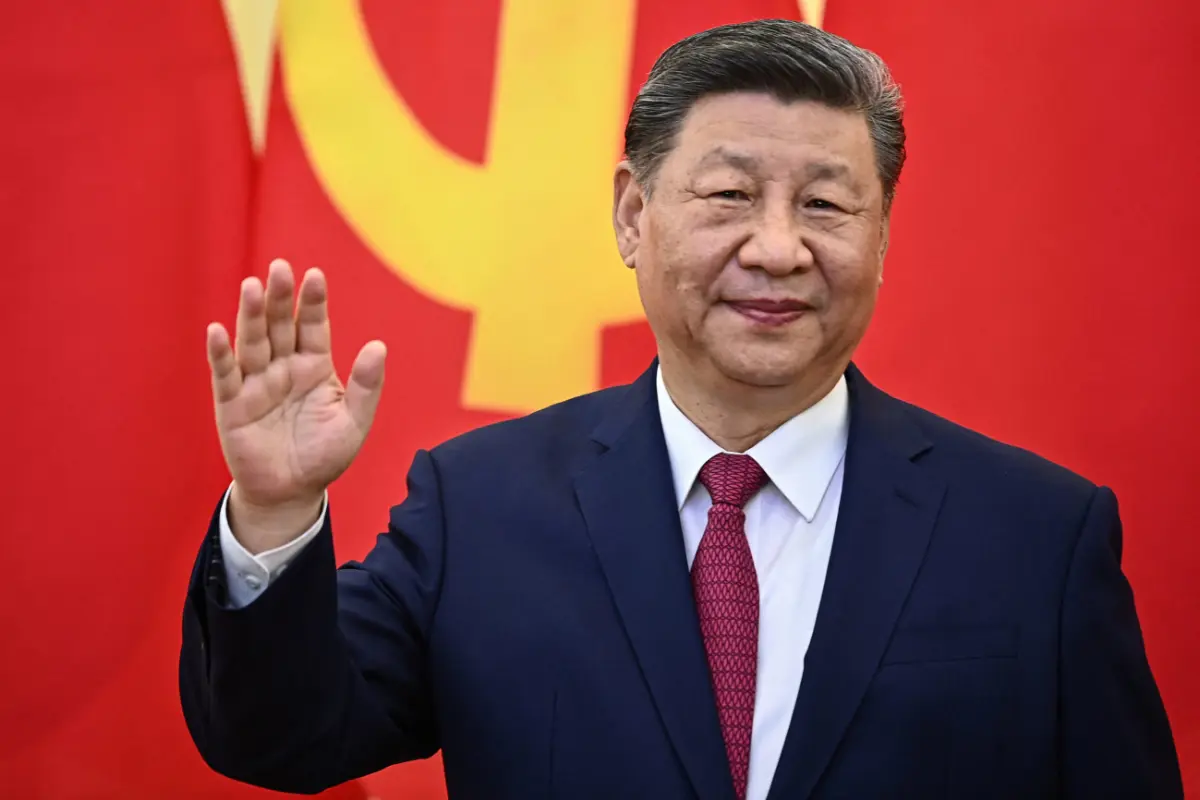
Area of Influence: China’s economy, manufacturing, trade, and industrial policy
As China’s president, Xi Jinping influences economic policy, technology priorities, trade relations, and industrial development. China’s official statistics reported 5% GDP growth in 2025, while manufacturing value added increased by 6.1%. China’s position in manufacturing, electric vehicles, batteries, and renewable energy affects global prices and supply chain decisions.
Business significance: China’s policies influence competition and sourcing decisions across many industries. Business leaders must weigh access to its manufacturing capacity and consumer market against trade restrictions, geopolitical risks, and regulatory uncertainty.
17. Volodymyr Zelenskyy
Area of Influence: Ukraine’s economy, reconstruction, energy, and European integration
Ukraine’s president, Volodymyr Zelenskyy, leads a country whose economy and infrastructure have been heavily affected by Russia’s full-scale invasion. A joint assessment by Ukraine’s government, the World Bank Group, the European Commission, and the United Nations estimated nearly $588 billion in recovery and reconstruction needs over the next decade, based on damage and needs through December 2025.
Business significance: Reconstruction could create demand for construction, energy, transport, housing, and engineering. However, private investment will depend on security, financing, insurance, and confidence in the business environment.
18. Bill Gates
Area of Influence: Philanthropy, public health, education, and technology
Bill Gates, Microsoft’s co-founder, supports global health, disease prevention, agricultural development, and poverty reduction through the Gates Foundation. The foundation reported $8.47 billion in charitable support for 2025. Its work often involves governments, researchers, nonprofits, and private companies to develop solutions for large public needs.
Business significance: Gates demonstrates how philanthropic funding can support research and services that may not attract enough commercial investment on their own. Better health, education, and agricultural systems can also strengthen workforces and local economies.
19. Malala Yousafzai
Area of Influence: Education, gender equality, and workforce opportunity
Malala Yousafzai, co-founder of Malala Fund, advocates for girls’ access to education. Her work highlights the economic cost of barriers that prevent girls from completing school. Education can expand the skilled workforce, improve earning potential, and help more people enter entrepreneurship and professional careers. Malala Fund’s 2025–2030 strategy continues to focus on improving girls’ access to education.
Business significance: Malala’s work connects education with future talent, productivity, and economic participation. Businesses can support these goals through skills programs, fair hiring, scholarships, and partnerships that help young people prepare for work.
20. Greta Thunberg

Area of Influence: Climate policy, environmental advocacy, and the energy transition
Greta Thunberg’s climate activism has helped keep emissions, fossil fuel use, and environmental accountability in public debate. These issues affect business decisions through energy costs, reporting rules, customer expectations, and investment in lower-carbon technology. European projects for critical raw materials also show how climate goals influence supply chains for batteries, electric vehicles, and renewable energy.
Business significance: Thunberg’s influence works through public pressure rather than corporate management. Her activism highlights why businesses need to assess climate risks, understand changing regulations, and set clear environmental targets.
Lessons for entrepreneurs and business executives from influential leaders
Influential leaders’ decisions can offer useful lessons, but entrepreneurs should adapt them to their own budgets, customers, and markets. A strategy that works for a global company may not suit a small business with limited capital.
- Solve a clear customer problem. Build products around real needs instead of pursuing technology only because it is popular.
- Invest with a purpose. Set clear goals for spending on technology, marketing, equipment, and hiring. Review whether each investment is producing the expected value.
- Build financial discipline. Track cash flow, margins, debt, customer acquisition costs, and the time needed to earn back an investment.
- Prepare for market changes. Monitor competitors, regulation, customer behavior, and new technology. Update plans when the evidence changes.
- Develop a strong team. Hire for the skills your business needs, provide useful feedback, and help employees adapt as the company grows.
- Use technology carefully. Test new tools on a small scale, measure the results, and check security and privacy risks before expanding their use.
- Plan for uncertainty. Maintain realistic budgets, consider alternative suppliers, and avoid relying too heavily on one customer, market, or platform.
- Measure outcomes, not activity alone. Look at sales, customer retention, productivity, quality, and profitability to understand whether a strategy is working.
Conclusion:
Sustaining a competitive advantage across international markets demands an executive approach centered on trust, cultural agility, and informal authority. When top executives empower influential leaders within regional hubs, corporate strategy moves smoothly from boardrooms to local operations without friction. Cultivating these high-impact voices across global teams strengthens enterprise resilience, protects top talent, and establishes a clear pipeline for sustainable international growth.
FAQs
1. How do global executives identify influential leaders across remote or regional offices?
Executives analyze internal collaboration networks and manager feedback to spot individuals whom regional teams naturally consult for problem-solving, regardless of their official titles.
2. What is the main difference between executive authority and global influence?
Executive authority relies on organizational hierarchy to enforce decisions, whereas global influence uses cross-cultural trust and shared goals to drive alignment and voluntary adoption.
3. How do influential leaders maintain alignment across culturally diverse teams?
They adapt their communication styles to local cultural norms while keeping core strategic objectives consistent, ensuring clear expectations across all operating regions.
4. What role do informal influencers play during large-scale enterprise transformations?
Informal influencers act as regional advocates, reducing change resistance by translating corporate shifts into practical, local benefits for their peers.
5. How can multinational organizations cultivate influence at lower tiers of management?
Companies accelerate influence by offering high-visibility cross-functional projects, international mentorship programs, and direct exposure to global leadership initiatives.
Blog Links: