Finding the best manufacturing equipment for business growth is key to scaling your operations in 2026. The top tools include CNC machines, laser cutters, robotic arms, CIP systems, and injection molding tech. These systems boost precision and automation across your entire factory floor. Read this guide to learn how to choose the right machinery and connect your shop to build a more profitable and efficient business today.
Manufacturing is changing. It is no longer just about sheer volume; it is about agility and precision. If you are operating in the U.S. market, you know that labour costs and global competition are tighter than ever.
To compete, you need the right manufacturing equipment for business growth that does more than just produce goods. You need machinery that scales your profit margins. Investing in the right tech is the fastest way to move your operations to the next level.
So here is the manufacturing equipment that will take your business to the next level.
Essential manufacturing equipment for business growth.
These essential tools are designed to boost your efficiency and support long-term growth.
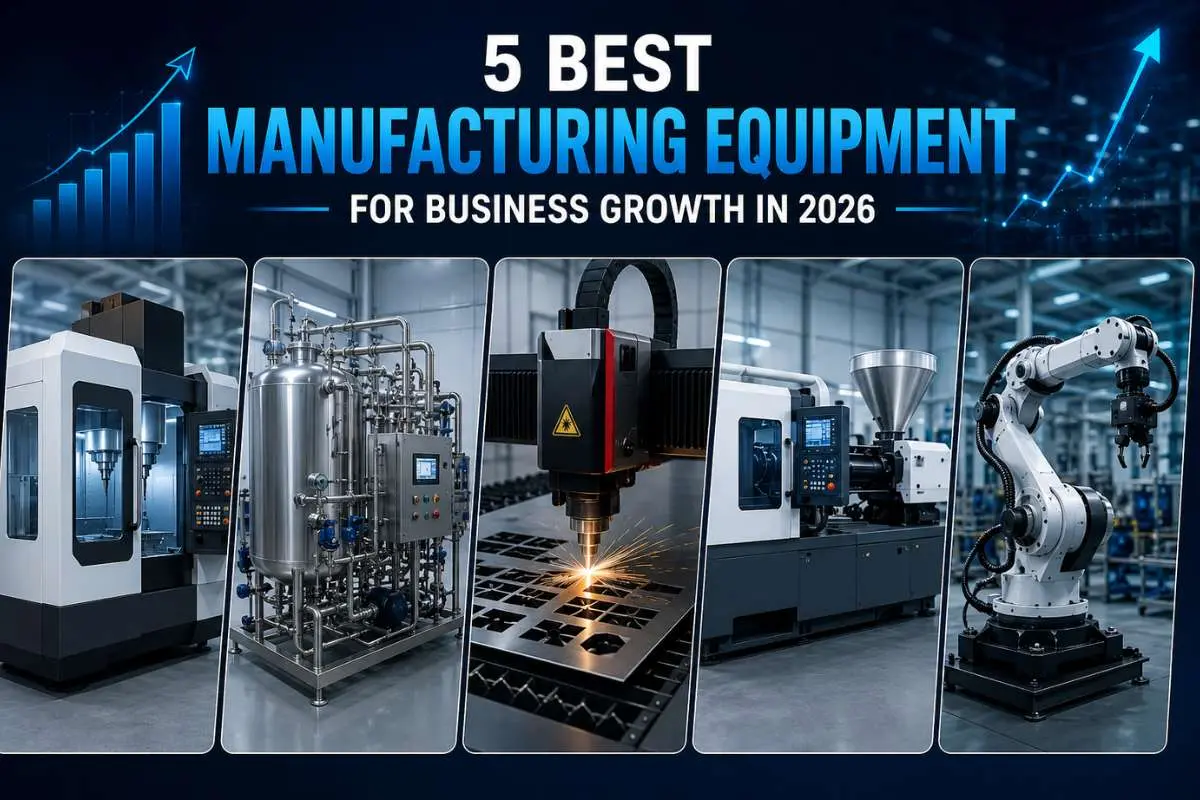
1. CNC machines for precision and accuracy

CNC machines have transformed U.S. manufacturing. They make precise cuts on many materials, which helps you waste much less.
Adding these machines to your shop floor removes the guesswork. You get consistent results on every project. Because they are easy to program, you spend less time setting them up and more time creating quality parts. This is a smart way to stop mistakes and protect your profits.
Modern CNC systems do more than just improve quality. Top shops report that using high-speed, connected CNC units can cut setup times by 25%. This allows for “lot size of one” production. You gain the power to finish custom orders as fast as mass-produced goods.
2. Clean-in-place (cip) systems

If you operate in the food, beverage, or pharmaceutical sectors, cleanliness is not just a requirement, but it is a competitive advantage. CIP systems automate your sanitation process.
Manual cleaning is slow and often inconsistent. CIP systems use chemical circulation and flow technology to clean busy areas without forcing you to take apart your lines. You save hours of labour and cut the risk of cross-contamination.
Before you buy, check the specs from trusted U.S. suppliers to make sure you meet FDA and local safety rules.
3. Laser cutters for speed and throughput

Traditional cutting methods can be slow and expensive when you account for material waste.
Laser cutters offer a level of speed that manual or mechanical cutting simply cannot touch. Laser systems work on almost any material, including complex metals and plastics. By investing in this hardware, you improve your profitability by cutting down on downtime and material scrap.
This manufacturing equipment delivers cleaner edges and a faster turnaround on custom orders, which keeps your clients happy and coming back for more.
4. Injection molding machines for mass production

When your order volume spikes, you need equipment that can handle the pressure without sacrificing quality. Injection molding machines are the standard for high-volume, high-detail production.
This tech allows you to create intricate components repeatedly with extreme consistency. Investing in this manufacturing equipment for business growth allows you to expand your operations rapidly.
Instead of struggling to keep up with demand, you produce thousands of units in a fraction of the time it would take using older, manual techniques.
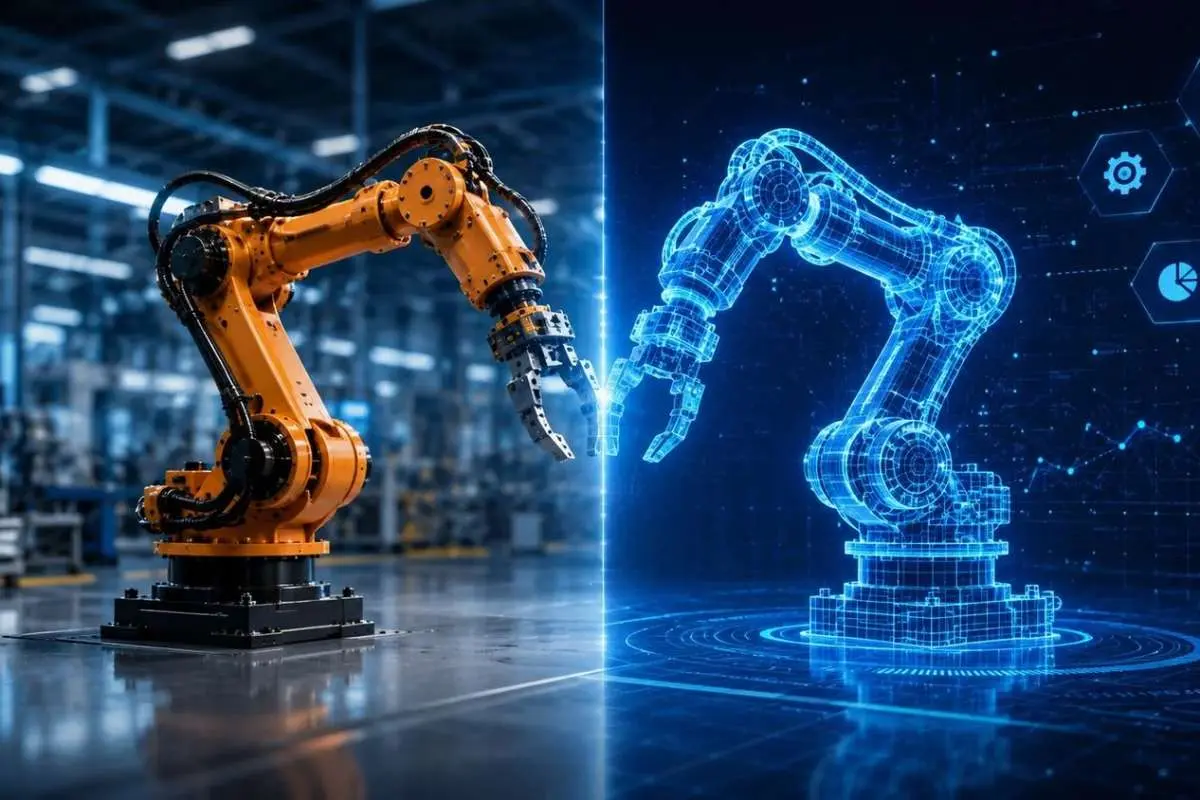
5. Robotic arms for scalable automation

Let’s be honest, your team is best used for high-level problem solving, not repetitive, heavy lifting. Robotic arms are the answer for businesses looking to improve their workflow.
These units handle repeatable tasks with perfect precision, 24/7. They increase shop floor safety by taking over hazardous or dull work, freeing up your skilled staff to focus on more important projects. This shift creates an efficient production environment, allowing you to scale your output without needing to hire more people.
The biggest mistake with robotics is using them to replace your staff. Successful companies use cobots (collaborative robots) to handle the “three Ds”: dull, dirty, and dangerous tasks.
This keeps your workers happy and helps them stay with your company. It lets your skilled team focus on difficult problems and quality checks, which machines cannot do.
How can you build a smart factory for business growth?
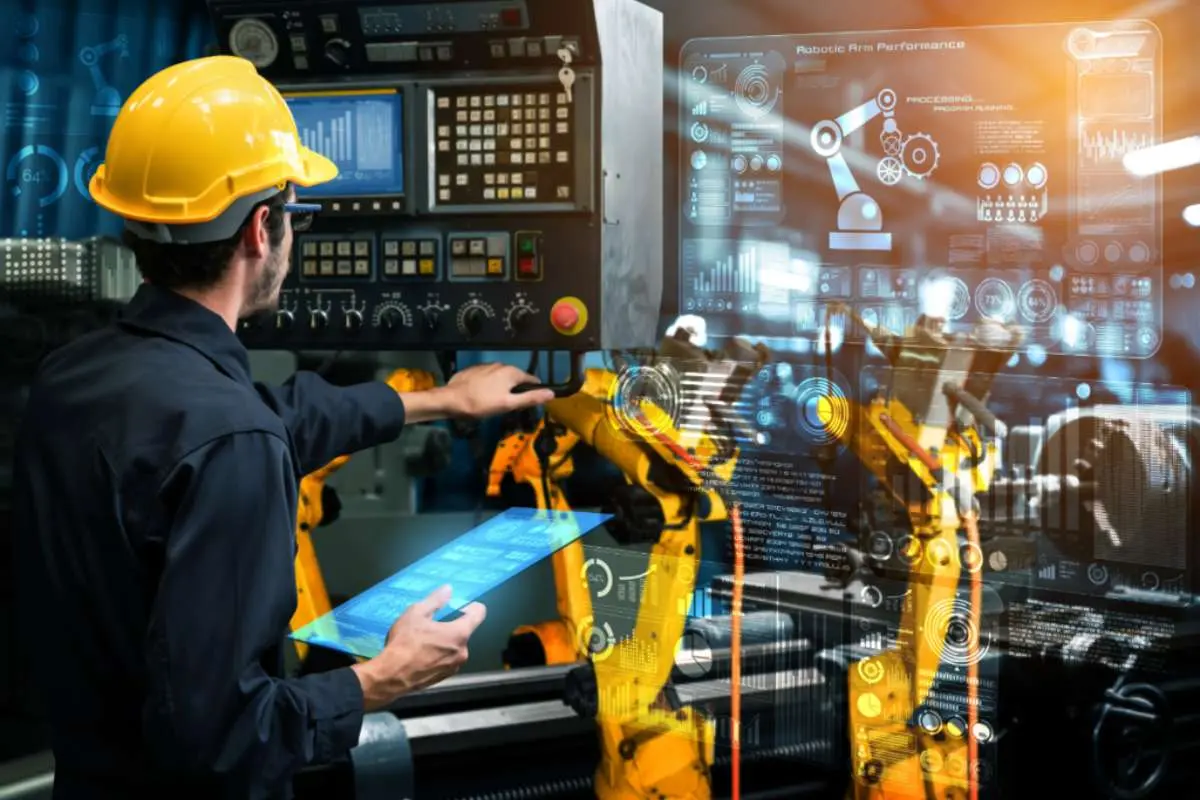
In 2026, the best manufacturers do more than just buy hardware. They build “Smart Factories” by connecting their Manufacturing Equipment for Business Growth through a single digital network. By linking CNC machines, laser cutters, and robotic arms via an Industrial Internet of Things (IIoT) network, you gain real-time visibility into production speeds and energy use. This helps you spot maintenance needs before they cause delays.
Instead of running machines in isolation, treat your shop floor as a single, connected system. This approach is what sets high-growth leaders apart. By integrating your equipment, you turn individual machines into a powerful, data-driven system. This integration, often called Industry 4.0, is what separates high-growth leaders from the rest of the pack.
Conclusion:
Investing in the right manufacturing equipment for business growth is the key to scaling your operations and staying competitive. Whether you are adding automation with robotic arms or improving precision with CNC machines, these upgrades serve as the foundation for a more profitable future. Do not wait for production bottlenecks to slow you down. Assess your floor’s specific needs today and start building a more efficient shop.
Frequently asked questions
1. How do I decide which equipment to prioritise?
Start by looking at your current bottlenecks. If your defect rate is high, look at CNC or Laser cutters. If your output volume is the issue, prioritise Injection Molding or Robotics.
2. What is the ROI on manufacturing automation?
While the upfront cost is high, most U.S. manufacturers see a return within 18–36 months through reduced labour costs, less material waste, and higher production speeds. Consult with your local financial advisor or industrial equipment dealer for specific projections based on your tax situation.
3. How do I train my staff to handle these new technologies?
Start by partnering with your equipment supplier for on-site training sessions. Many providers offer certification programs for operators. Encouraging your team to take local technical workshops can also build the confidence needed to run high-tech machinery safely and effectively.
4. How often should I perform maintenance on my new machinery?
Follow the manufacturer’s schedule exactly. Preventive maintenance for your manufacturing equipment is the best way to avoid unplanned downtime. Keep a digital log of all service history to help you track performance and catch potential issues before they cause costly repairs.