
A CEO juggles emails like a circus clown on fire.
Chaos everywhere. Teams scatter. No wins. Sound familiar?
The 3 C of leadership fix that mess fast. They mean clarity (clear vision), communication (clear talk), and consistency (steady action). Modern leaders flop without them; 90% of startups fail from poor leadership basics.
The 3 C’s of leadership simplify real life. No fluff. Just results. Ditch the drama. Grab these Cs. Lead like a boss. Watch your team crush goals and laugh all the way to success.
What Are the 3 C of Leadership?
The 3 C’s of leadership stand for clarity, communication, and consistency.
Clarity sets the path.
Communication shares it.
Consistency sticks to it.
Leaders miss one C, and everything crumbles. No clarity? Teams wander lost. Weak communication? Confusion reigns. No consistency? Trust vanishes.
In business, the 3 C of leadership cut turnover by 51%. Startups need them to scale, 90% fail without a clear direction. Teams win big with all three. Real-world proof shows the 3 C’s of leadership deliver.
First C of Leadership: Clarity

What Clarity Means in Leadership?
Clarity means knowing exactly where you are going and making that direction easy for others to see. A leader with clarity does not keep goals inside their head. They bring them out into the open. Everyone knows what matters right now. Everyone knows what comes next. Everyone knows what success will look like when the work is done.
Without clarity, people feel lost. They work hard but move in different directions. This creates stress, delays, and mistakes. When clarity is present, work feels lighter. People focus better. Decisions feel easier.
The 3 C of leadership start with clarity because leadership begins with direction. If people cannot see the goal, they cannot follow it. Clear leadership turns confusion into confidence.
Signs of a Leader With Clarity
A leader with clarity always knows their top priorities. They do not try to do everything at once. They choose what matters most and protect it. They say no to tasks that distract the team. This helps everyone use their time wisely.
Clear leaders repeat important messages. They do not assume people remember everything. They explain goals again and again in simple words. This repetition builds alignment, not boredom.
Their teams do not guess what to do. Meetings end with clear decisions and next steps. Roles feel defined. Deadlines feel real. Work moves forward without constant follow-ups.
In the 3 C’s of leadership, clarity saves time, energy, and trust. People trust leaders who make things simple and steady.
How Leaders Can Build Clarity Daily?
Clarity does not happen once. Leaders must build it every day. Start by writing goals down. Spoken goals fade. Written goals stay clear. Share these goals often, not just once.
Ask your team what they understood. Do not ask if they agree. Ask what they heard. This shows where confusion still exists. Fix gaps early before they grow.
Use simple language. Avoid long explanations. Keep messages short and direct. Review priorities regularly. Remove tasks that no longer matter.
These small habits keep clarity alive. This daily effort strengthens the 3 C of leadership at the ground level and helps teams move forward with confidence.
Second C of Leadership: Communication

Communication is not about speaking more. It is about making sure people truly understand you. A leader may have great ideas. But if those ideas stay inside their head, they have no value. Teams cannot act on thoughts they never hear or fully understand.
Leadership fails when messages remain unclear. Talking alone does not make someone a leader. Leading means people know what to do, why it matters, and how their work fits the bigger goal.
When communication stays weak, confusion grows. Confusion slowly turns into stress, fear, and mistakes.
The 3 C’s of leadership depend heavily on communication because direction without understanding creates anxiety. People start guessing. They fill gaps with assumptions. Productivity drops. Trust fades. Clear communication removes this risk. It replaces doubt with confidence.
Why Communication Is the Backbone of Leadership?
Every decision, goal, and change passes through communication first. Without it, leadership has no shape. A leader who communicates well gives clarity to chaos. They align people before pushing them to perform.
Strong communication builds trust. It shows respect. It tells people their role matters. In the 3 C of leadership, communication connects clarity and consistency. It turns plans into action and values into behavior.
When leaders communicate often and honestly, teams feel safe. Safety leads to focus. Focus leads to results.
Key Communication Skills Every Leader Needs
Good leaders listen more than they speak. Listening shows care. It helps leaders understand real problems, not surface noise. When people feel heard, they open up. This makes leadership stronger.
Clear leaders explain decisions in simple words. They do not hide behind big terms. They share the reason behind their choices. This builds trust even when decisions feel tough.
Early feedback is another key skill. Leaders who wait too long create tension. Short and timely feedback helps people improve without fear. It keeps small issues from turning into big ones.
Tone matters as much as words. Strong leaders adjust their tone based on the situation. They stay calm under pressure. They stay firm when needed. This balance keeps the 3 C’s of leadership practical and human, not theoretical.
Also read:
- 10 Effective Leadership Styles in Management Every Leader Should Know
- 7 Proven Ways to Grow Your Business in 2025
Common Communication Mistakes Leaders Make
Many leaders assume silence means agreement. It does not. Often, silence means confusion or hesitation. When leaders do not invite questions, people stop speaking up.
Another mistake is using complex language. Jargon may sound smart, but it creates distance. Simple words build connection. Teams work better when messages feel clear and real.
Some leaders avoid difficult conversations. They delay feedback. They soften messages too much. This avoidance breaks trust over time. Problems grow quietly and explode later.
These habits weaken leadership fast. They damage trust and reduce clarity. They also harm consistency. That is why poor communication quickly breaks the 3 C of leadership.
Strong leaders fix this by speaking clearly, listening deeply, and staying honest. Communication done right keeps leadership strong, stable, and respected.
Third C of Leadership: Consistency

Consistency is the quiet strength of leadership. It may not sound exciting, but it decides whether people trust you or doubt you. Many leaders speak well and plan well, yet fail because their actions change too often. This is where the 3 C’s of leadership either stand strong or fall apart.
What Consistency Means for Leaders?
Consistency means showing up the same way every day. Your values do not shift with pressure. Your standards do not change based on mood. Your behavior does not depend on who is watching.
A consistent leader treats people fairly. Rules apply to everyone. Praise feels genuine. Feedback feels honest. Promises do not stay as words. They turn into action.
When leaders act differently on different days, teams feel confused. One day, a mistake gets ignored. The next day, the same mistake gets punished. This creates fear and frustration. Over time, respect fades.
The 3 C’s of leadership collapse when leaders react emotionally instead of acting intentionally. Consistency keeps leadership steady, even when situations change.
Why Consistency Builds Trust?
People trust patterns, not speeches. When leaders act predictably, teams feel safe. Safety reduces stress. Lower stress improves focus. Better focus improves results.
Trust grows when people know what to expect. They know how decisions get made. They know how feedback will come. They know effort gets noticed.
Inconsistent leadership creates doubt. People stop taking initiative. They wait. They protect themselves. Performance drops silently.
This is why the 3 C of leadership matter in the long run. Clarity gives direction. Communication spreads it. Consistency proves it through action.
Ways Leaders Can Stay Consistent Under Pressure
Pressure reveals true leadership. Anyone can stay calm when things go well. Real leaders stay steady when things go wrong.
Start with personal rules. Decide how you respond to stress before stress arrives. Write them down. Follow them.
Review your decisions weekly. Ask yourself one question. Did I act the same way in similar situations? Honest reflection prevents drift. Ask for direct feedback. Encourage your team to speak up. Listen without defense. Feedback keeps blind spots small.
Protect your energy. Tired leaders react emotionally. Rested leaders respond thoughtfully. Simple routines support consistent behavior.
Small daily checks protect the 3 C’s of leadership during tough times. Consistency does not mean perfection. It means reliability.
When leaders stay consistent, people relax. When people relax, they perform better. That is how trust turns into results.
How do the 3 C of Leadership Work Together?

Leadership never works in parts. One strong habit cannot cover weak ones. This is why the 3 C’s of leadership must work as a single system, not as separate ideas.
Clarity alone does not save a leader. A leader may know the goal clearly, but if they fail to explain it well, the team feels lost. People start guessing. Guesswork creates mistakes. In this case, clarity without communication only creates silent confusion.
Communication alone also fails. A leader may speak well and motivate people daily. But if their actions change every week, trust breaks. The team stops believing the words. Communication without consistency feels empty and staged.
Consistency alone struggles too. A leader may act steadily and fair. But if the direction stays unclear, people work hard in the wrong direction. Consistency without clarity wastes effort.
The 3 C of leadership work only when they move together.
Clarity sets the direction.
Communication spreads in that direction.
Consistency proves that the direction matters.
When all three sync, leadership feels natural. People stop asking repeated questions. They feel safe. They feel focused. They perform better because they trust the leader.
A strong real-life example is Satya Nadella at Microsoft. When he took charge, the company needed a reset. He brought clarity first. He made the cloud-first vision simple and visible. Everyone knew where Microsoft was heading.
Next came communication. Nadella shared updates often. He spoke openly with teams. He explained why change mattered. People felt included, not forced.
Then came consistency. His actions matched his words year after year. The strategy stayed steady. Leadership behavior stayed calm. This balance made the 3 C’s of leadership real, not theoretical.
The result was powerful. Microsoft’s revenue nearly tripled over time. Team morale improved. Innovation returned. Trust was rebuilt across the company.
Research supports this approach. A McKinsey 2024 leadership study shows that organizations using balanced leadership frameworks like the 3 C of leadership improve performance by up to 40%. Teams show higher engagement, stronger ownership, and better results when leaders stay clear, communicate well, and act consistently.
The lesson is simple. Do not overuse one C and ignore the rest. Balance them daily. When the 3 C’s of leadership move together, morale rises, execution sharpens, and leadership finally works the way people expect it to.
3 C of Leadership in Different Roles
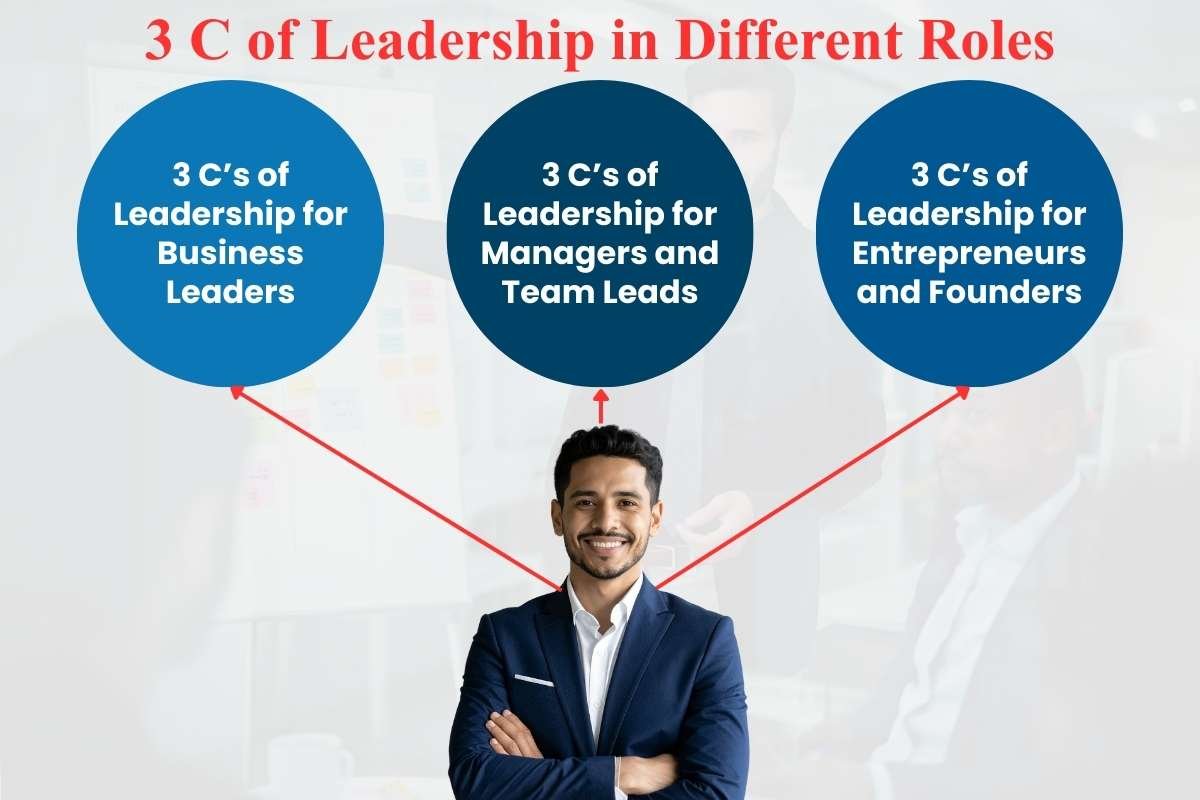
- 3 C’s of Leadership for Business Leaders: Business leaders use the 3 C’s of leadership to steer ships. Clarity charts markets. Communication rallies execs. Consistency beats rivals. Jeff Bezos mastered it at Amazon.
- 3 C’s of Leadership for Managers and Team Leads: Managers apply the 3 C’s of leadership daily. Clarity assigns tasks. Communication checks in. Consistency rewards wins. Teams hit quotas 30% faster.
- 3 C’s of Leadership for Entrepreneurs and Founders: Founders thrive on the 3 C’s of leadership. Clarity pitches investors. Communication hires talent. Consistency pivots smart. Sara Blakely built Spanx this way, no flops.
Real-Life Examples of Leaders Using the 3 C of Leadership
Satya Nadella’s leadership journey at Microsoft offers a strong real-world example. When he became CEO, Microsoft struggled with slow innovation and internal competition. Teams worked in silos. Priorities felt unclear. Morale stayed low.
Nadella began with clarity. He simplified Microsoft’s mission. He focused on cloud computing and collaboration. Employees knew what mattered and what did not. This clarity removed confusion and fear.
Next came communication. Nadella spoke openly with employees. He encouraged listening and learning. He shared failures along with wins. This open communication built trust across teams.
Most importantly, he stayed consistent. His actions matched his words. He repeated the same values year after year. Over time, employees believed him. That trust helped Microsoft regain growth and relevance. His journey shows how the 3 C of leadership work in real life, not just in theory.
Common Leadership Problems Solved by the 3 C Framework
Many leadership problems look complex on the surface. In reality, most come from missing basics. Low trust often appears when leaders change decisions often or break promises. This points to weak consistency.
Poor accountability grows when goals feel vague. People cannot own what they do not understand. This shows a lack of clarity.
Slow execution happens when leaders speak less or speak later. Teams wait for direction. This reflects weak communication.
Burnout grows when expectations keep shifting. People feel unsure and stressed. This again links to broken consistency.
The 3 C’s of leadership solve these issues by fixing the root cause. When leaders stay clear, speak often, and act steadily, teams perform better without pressure.
Recommended by Our Editors:
- The Impact of Different Types of Leadership and Management Styles on Teams
- The Art of Leadership: 7 Key Traits of Successful Business Leaders
- Chaos Isn’t a Bad Thing (and 9 Other Important Leadership Qualities)
How to Apply the 3 C of Leadership in Daily Work Life?
Applying leadership does not require big speeches. Small actions matter more. Start meetings with a clear purpose. Share why the meeting exists. End with clear next steps. This builds clarity.
Repeat priorities often. Do not assume people remember. Repetition strengthens communication. Act on promises. If plans change, explain why. This protects consistency.
Ask for feedback. Listen without defense. Adjust when needed. These habits show respect. Over time, these small actions strengthen trust. They keep leadership steady and human. This is how the 3 C’s of leadership stay alive every day.
3 C of Leadership vs Other Leadership Models

Many leadership models focus on personality or style. Some praise charisma. Others highlight authority or vision.
The 3 C’s of leadership take a different path. They focus on behavior, not image. Anyone can practice clarity. Anyone can improve communication. Anyone can stay consistent.
This makes the framework practical. It works for managers, founders, team leads, and first-time leaders. It fits startups and large companies alike.
Because the 3 C’s of leadership rely on daily actions, they stay effective across roles and industries. Leadership becomes less about position and more about trust.
Conclusion:
Every leader craves real wins. The 3 C of leadership deliver them. Clarity shows the path. Communication lights it up. Consistency keeps you on track.
Think back to that frazzled CEO from the start. Emails fly wild. Teams flop. Chaos rules. Now picture him with the 3 C’s of leadership. He turns into a captain. Clowns vanish. Teams charge forward. Goals smash. You? You laugh all the way to the bank with fat results.
Master these Cs daily. Ditch the mess. No more guesswork. Lead with bold fire. Teams trust you. Rivals eat dust. Growth explodes.
The 3 C’s of leadership sit ready. They worked for Nadella, Nooyi, and Hastings. They work for you, too. Grab them now. Step up. Lead like never before. Your best era starts today.