Nike started as a small side business run out of a car trunk. It grew into the world’s biggest sportswear company. Along the way, it built one of the most famous logos on earth. It also signed some of the richest endorsement deals in sports. Even its slogan has a strange backstory.
These interesting facts about Nike cover the brand’s history, its big design ideas, and where its business stands today. Whether you love sneakers or you’re just curious, these facts about Nike are worth knowing.
Nike company info at a glance
Here’s a quick look at the details about Nike before we get into all 50 facts.
| Nike Company Info | Details |
| Founded | January 25, 1964 (as Blue Ribbon Sports) |
| Renamed to Nike | 1971 |
| Founders | Phil Knight and Bill Bowerman |
| Headquarters | Beaverton, Oregon, USA |
| CEO | Elliott Hill |
| Total revenue (FY2026) | $46.4 billion |
| Employees | 73,000 worldwide |
| Stock listed | NYSE, since December 1980 |
| Logo designer | Carolyn Davidson, 1971, paid $35 |
| Famous slogan | “Just Do It,” launched 1988 |
Interesting facts about Nike’s starting journey
1. Nike began life under a different name. Nike was founded on January 25, 1964. Back then, it was called Blue Ribbon Sports. That makes it more than six decades old today.
2. The idea came from a college paper. Phil Knight got the idea for the company from a paper he wrote at Stanford. In it, he argued that Japanese-made shoes could beat Germany’s grip on the running shoe market.
3. Bill Bowerman became a co-founder by chance. Knight’s old track coach, Bill Bowerman, backed the idea and joined as a partner. His name would later shape some of Nike’s earliest shoe designs.
4. Knight sold the first shoes out of his car. Before Blue Ribbon Sports had an office, Knight sold shoes out of his car trunk. He drove to track meets across the Pacific Northwest to sell them.
5. The first shoe order cost just $1,000 total. Knight and Bowerman split $500 each to place their first shoe order from Japan. That small bet is one of the more surprisingly interesting facts about Nike since it became the seed money for a global company.
6. The company split from its Japanese supplier in 1971. Blue Ribbon Sports split from its Japanese shoe supplier after a contract dispute. The company needed a new name fast, since it was about to sell shoes under its own brand.
7. The name “Nike” came from a dream. Phil Knight had almost picked the name “Dimension Six.” Instead, an employee named Jeff Johnson suggested “Nike” after dreaming about the Greek goddess of victory.
8. Nike’s first employee did more than one job. Jeff Johnson wasn’t just the person who named the company. He also ran the first Nike store and wrote early ads by hand.
9. Nike went public in 1980. The company listed its stock on Wall Street in December 1980. That move helped fund its fast growth through the 1980s and beyond.
The swoosh and “Just do it”: two big milestones
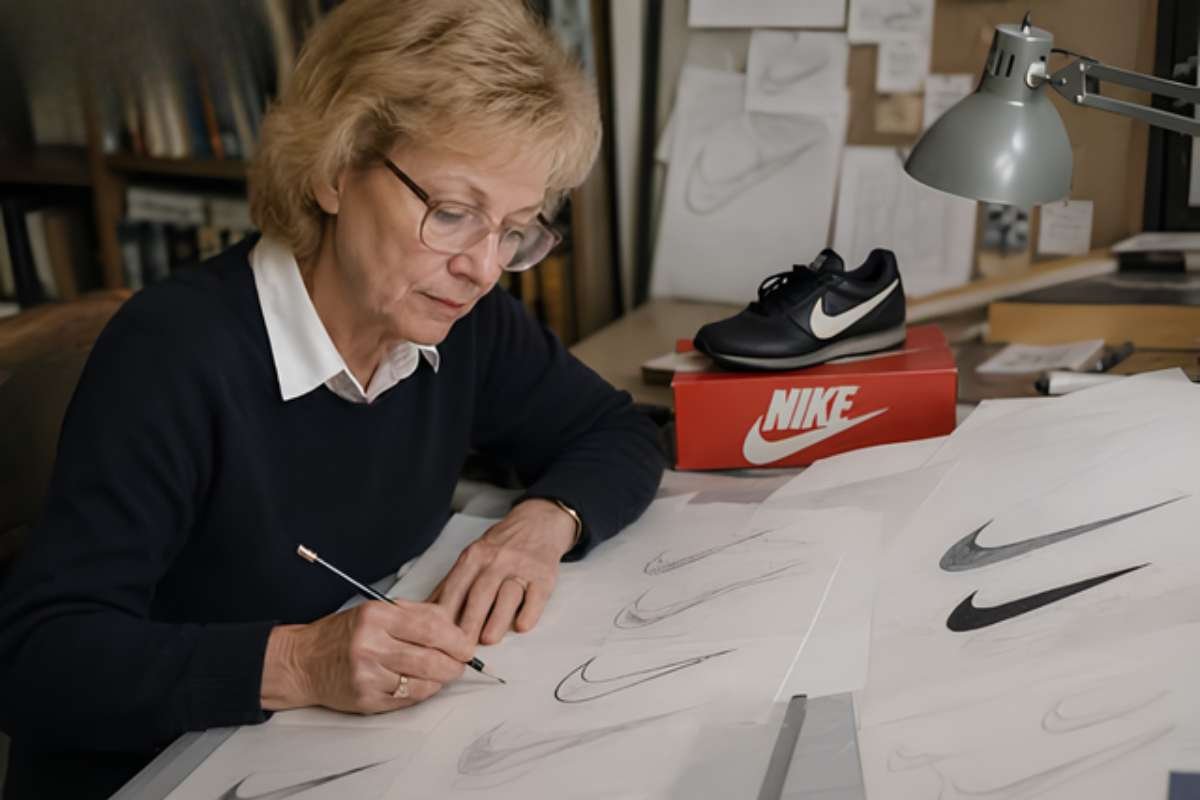
10. The Swoosh was designed by a college student. The Swoosh logo was designed in 1971 by Carolyn Davidson, a graphic design student at Portland State University. Nike paid her just $35 for the work.
11. Davidson was thanked years later with stock and a ring. Once the company had grown, Knight thanked Davidson with company stock and a gold ring shaped like the Swoosh. It made up for the tiny original fee.
12. The Swoosh may have been inspired by a rival’s logo. Some design experts say Davidson’s early sketches looked a bit like the Adidas stripes. Among interesting facts about Nike’s branding, this one shows how close its most famous symbol came to looking very different.
13. “Just Do It” has a dark true-crime origin. The famous slogan came from the last words of a convicted murderer named Gary Gilmore. Ad writers at Wieden+Kennedy turned his final phrase, “Let’s do it,” into Nike’s slogan in 1988.
14. The slogan helped Nike’s market share more than double. “Just Do It” first appeared in an ad in 1988. Within ten years, it helped Nike’s share of the U.S. shoe market jump from about 18% to over 43%.
15. Nike had a slogan before “Just Do It.” In the early 1980s, Nike ran ads under the line “There Is No Finish Line.” The phrase never caught on the way “Just Do It” later did.
Interesting facts about Nike’s shoe designs
16. A waffle iron created Nike’s first big shoe breakthrough. Bill Bowerman accidentally poured liquid rubber into his wife’s waffle iron. This created the grooved sole pattern used on the Waffle Trainer.
17. The Nike Moon Shoe was the first to wear the Swoosh. The Nike Moon Shoe came out in 1972 for the U.S. Olympic Trials. It was the first shoe to ever carry the Swoosh logo.
18. A rare Moon Shoe became the most expensive Nike ever sold. One surviving Moon Shoe pair sold at a Sotheby’s auction in 2019. It went for $437,500, setting a record for any Nike shoe.
19. The Air Force 1 became one of the best-selling shoes ever. Nike released the Air Force 1 in 1982 as its first basketball shoe with visible Air cushioning. It has stayed in steady production ever since, longer than almost any other sneaker.
20. The Air Max 1 let people see the air cushion for the first time. The Air Max 1 launched in 1987, designed by Tinker Hatfield. It’s one of the more design-focused interesting facts about Nike, since it was the first sneaker to show its air cushion through a small window in the sole.
21. Fans still celebrate the Air Max 1 every year. The Air Max 1’s design became one of Nike’s most popular product lines. It also led to “Air Max Day,” which fans still celebrate every March 26.
22. Dri-FIT changed how sports clothes handle sweat. Nike introduced Dri-FIT fabric in the 1990s to pull sweat away from the skin. The technology became standard across nearly all of Nike’s sportswear.
Which team-ups became cultural moments?
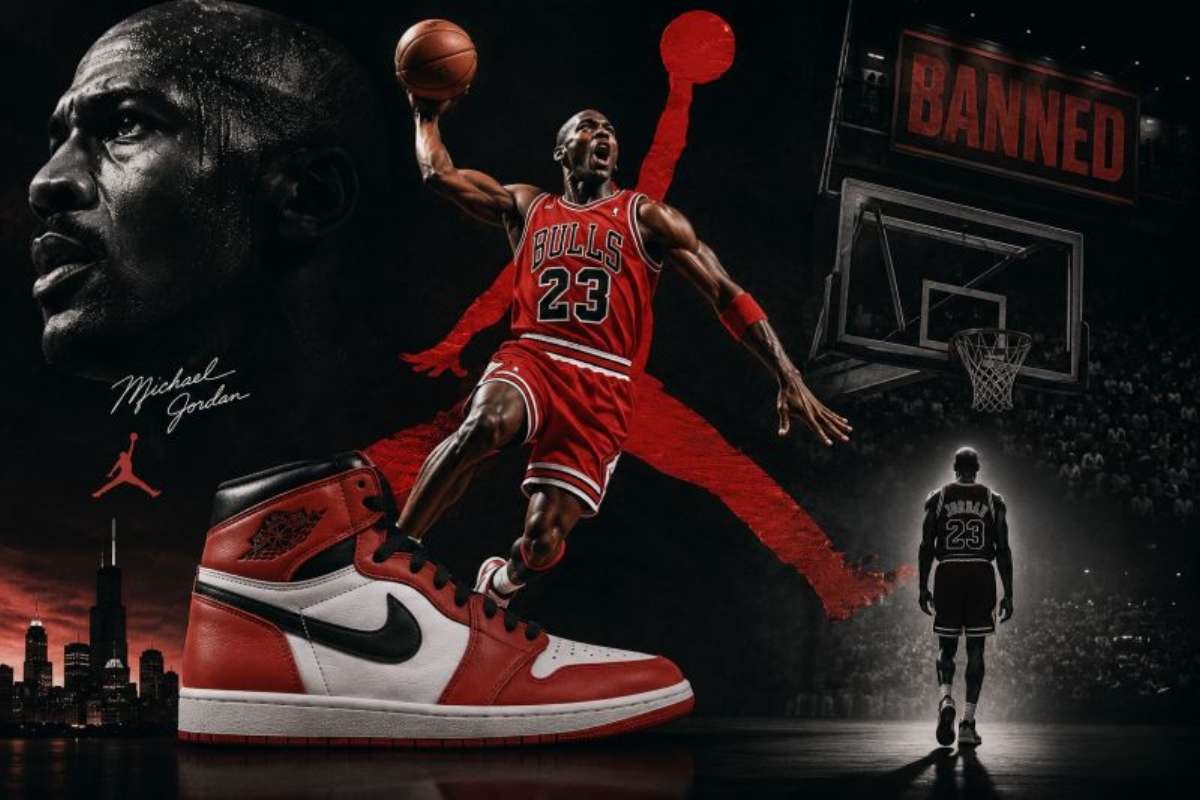
23. The Air Jordan 1 was banned by the NBA. The Air Jordan 1 came out in 1985 and was made only for Michael Jordan. The NBA banned it for breaking uniform color rules, but Nike turned that ban into a huge marketing win.
24. Jordan Brand now earns billions a year on its own. Among the most interesting facts about Nike is how one shoe line grew into its own empire. The Air Jordan 1 introduced the now-famous Jumpman logo, and today the Jordan Brand alone brings in huge money.
25. Virgil Abloh’s last big project mixed sneakers with luxury fashion. Designer Virgil Abloh redesigned the Air Force 1 with Louis Vuitton shortly before he passed away. The shoes mixed streetwear style with high fashion.
26. Those Louis Vuitton pairs later resold for millions. Pairs from the Abloh collaboration later resold at auction for well over a million dollars combined. It shows how far Nike has pushed into luxury fashion.
27. Not every team-up worked out well. In 2021, musician Lil Nas X teamed up with the group MSCHF on the “Satan Shoes,” using modified Air Max 97s that reportedly held a drop of human blood. Nike sued over trademark use, and the case was settled with the shoes recalled.
28. “Bo Knows” turned one athlete into a Nike icon. In the late 1980s, Nike built a famous ad campaign called “Bo Knows” around two-sport star Bo Jackson. The ads showed Jackson trying random sports, which helped sell the Air Trainer shoe.
What endorsement deals made Nike history?
29. Nike’s first pro athlete deal was with a tennis player. Tennis player Ilie Nastase became Nike’s very first pro athlete endorser in 1972, long before Nike built its basketball empire. The deal set a pattern Nike still uses today: sign athletes early, then grow with them.
30. LeBron James signed a deal that could last forever. LeBron James signed a lifetime deal with Nike in 2015, one of the biggest interesting facts about Nike’s modern endorsement history. His first deal, back in 2003, was worth $90 million over seven years.
31. LeBron’s lifetime deal could top $1 billion. Sports business experts think LeBron’s 2015 lifetime deal could be worth more than $1 billion over his life. That would make it one of the richest athlete deals in company history.
32. Michael Jordan still earns huge money from Nike. Michael Jordan’s deal with Nike remains the gold standard, even years after he stopped playing. Jordan Brand now brings in more than $6 billion a year.
33. Serena Williams had one of Nike’s longest athlete partnerships. Serena Williams signed with Nike early in her career and stayed with the brand for two decades. Her long run helped Nike grow its women’s tennis lineup.
34. Cristiano Ronaldo’s Nike deal is one of soccer’s richest. Cristiano Ronaldo signed a lifetime deal with Nike in 2016. Reports estimate the deal is worth over $1 billion across his career.
35. Tiger Woods’ Nike golf run ended when Nike left golf gear. Tiger Woods was one of Nike Golf’s biggest stars for nearly two decades. Nike stopped making golf clubs and balls in 2016, though it kept making Tiger’s golf shoes and clothes for years after.
36. Colin Kaepernick’s Nike ad sparked national debate. In 2018, Nike made former NFL player Colin Kaepernick the face of a “Just Do It” anniversary campaign. The ad drew both boycotts and record online sales for the brand.
How did Nike build its DTC business?
37. Nike Direct now makes more than one-third of all sales. Nike Direct is the company’s name for its own stores and websites. In fiscal year 2026, Nike Direct revenue was $17.7 billion out of $46.4 billion in total company revenues, making up a share of about 38.2%.
38. Digital sales are the shakier half of Nike’s direct business. In fiscal 2026, NIKE Direct revenue fell mainly because of a 12% drop in NIKE Brand Digital sales, compared with only a 4% drop in Nike-owned stores. This gap is one of the more revealing, interesting facts about Nike’s current business.
39. Jordan Brand alone made $7 billion in one year. Nike’s fiscal 2026 results show Jordan Brand sales of $7.03 billion, down slightly from $7.27 billion the year before. That single sub-brand outsells most entire sportswear companies.
40. The SNKRS app turned sneaker drops into a game. Nike’s SNKRS app lets fans enter draws to buy limited sneakers before anyone else. Some pairs sell out within seconds of a drop going live.
41. Niketown changed how Nike sold shoes in person. Nike opened its first Niketown concept store in Chicago in 1990. The store worked more like a museum than a shoe shop, with displays built around famous athletes.
What business records and green efforts stand out?
42. Nike passed Adidas to become the top U.S. shoe brand in 1980. By 1980, Nike had passed Adidas to become the top-selling shoe brand in the U.S. That was a big turning point, marking the start of Nike’s long run as the top sportswear company in the world.
43. Nike bought Converse for $305 million. Nike acquired Converse in 2003, adding the classic Chuck Taylor sneaker brand to its business. Converse still runs as a separate brand under the Nike umbrella today.
44. Old sneakers get a second life through Nike Grind. Nike’s Reuse-A-Shoe program collects old sneakers and grinds them down into a material called “Nike Grind.” That material gets used to build running tracks, courts, and playgrounds, closing out one of the greener interesting facts about Nike on this list.
45. Nike set public goals to cut waste and carbon. Nike’s “Move to Zero” program aims to cut carbon emissions and send zero waste to landfills across its supply chain. The company reports its progress toward these goals every year.
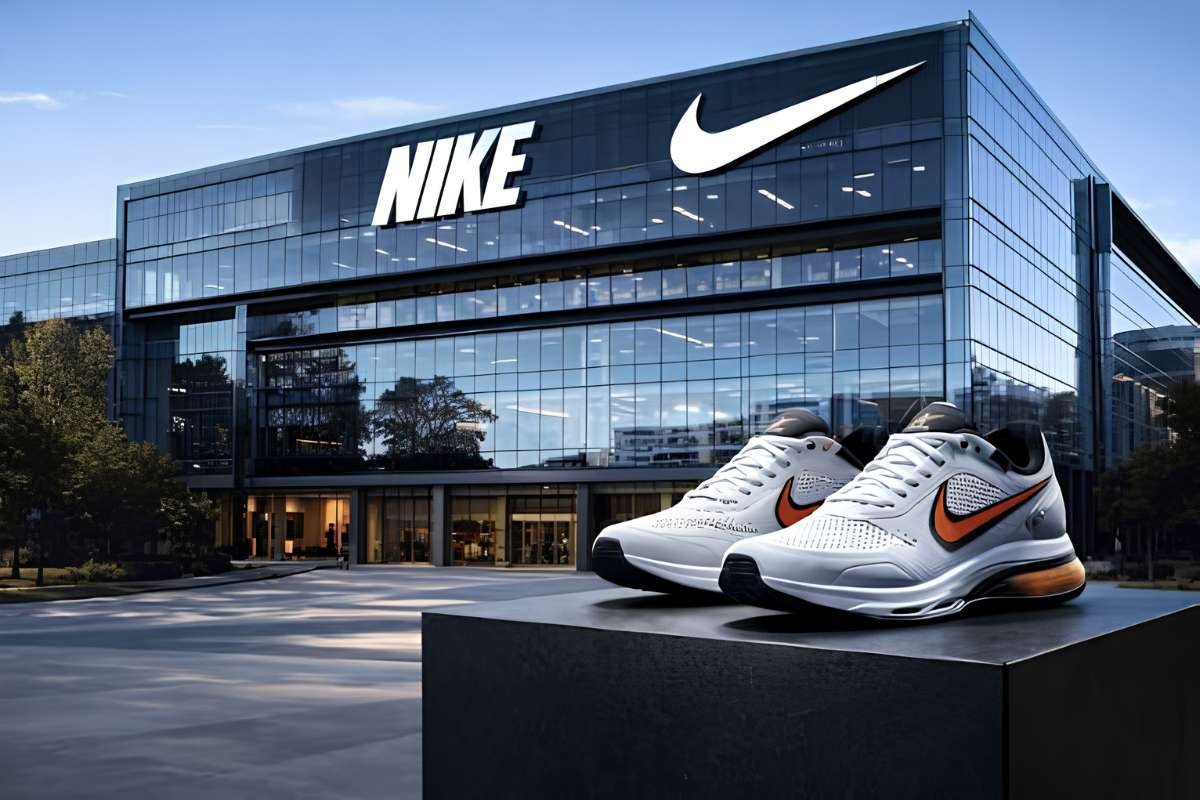
46. Nike’s headquarters looks like a small city. Nike’s world headquarters sits on a huge campus in Beaverton, Oregon. It’s one of the more overlooked interesting facts about Nike for people outside Oregon. Many of the buildings are named after famous Nike athletes.
47. Nike outfits more Olympic athletes than any rival. Nike sponsors more athletes at the Olympic Games than any other sportswear brand. Its gear appears across dozens of countries and sports at every Summer Games.
48. Nike designs kits for national soccer teams worldwide. Nike supplies official uniforms for several national soccer teams that compete in the World Cup. These kits are redesigned before nearly every major tournament.
49. Nike has supplied NBA jerseys since 2017. Nike took over as the official uniform maker for the NBA in the 2017-18 season. The deal replaced Adidas, which had held the job for over a decade.
50. Nike’s stock has split several times since going public. Since its 1980 stock market debut, Nike has split its shares multiple times as the price grew. Each split lowered the price per share without changing the company’s total value.
Conclusion
Nike went from a car-trunk shoe business to a company worth tens of billions of dollars. These interesting facts about Nike show how small, bold choices turned into lasting cultural moments. The Swoosh’s cost was just $35. The slogan came from an unlikely place. And the direct-to-consumer numbers keep climbing every year.
Few companies have mixed sports, pop culture, and smart business moves as well as Nike has over the past six decades. As apps, memberships, and fewer store partners reshape its future, Nike’s next chapter is already taking shape.
FAQs
1. Who designed the Nike Swoosh logo?
Carolyn Davidson, a design student at Portland State University, designed the Swoosh in 1971 for just $35. It’s one of the most interesting facts about Nike that most fans don’t know.
2. Where does the “Just Do It” slogan come from?
It came from the final words of a convicted murderer, “Let’s do it,” which the ad agency Wieden+Kennedy turned into Nike’s slogan in 1988.
3. What percentage of Nike’s revenue comes from direct-to-consumer sales?
Nike Direct, its own stores and websites, made up about 38% of total brand revenue last year.
4. How much is LeBron James’s Nike deal worth?
Experts think LeBron James’s 2015 lifetime deal with Nike could be worth more than $1 billion over his lifetime.
5. What was Nike originally called?
Nike started in 1964 as Blue Ribbon Sports and didn’t become “Nike” until 1971.