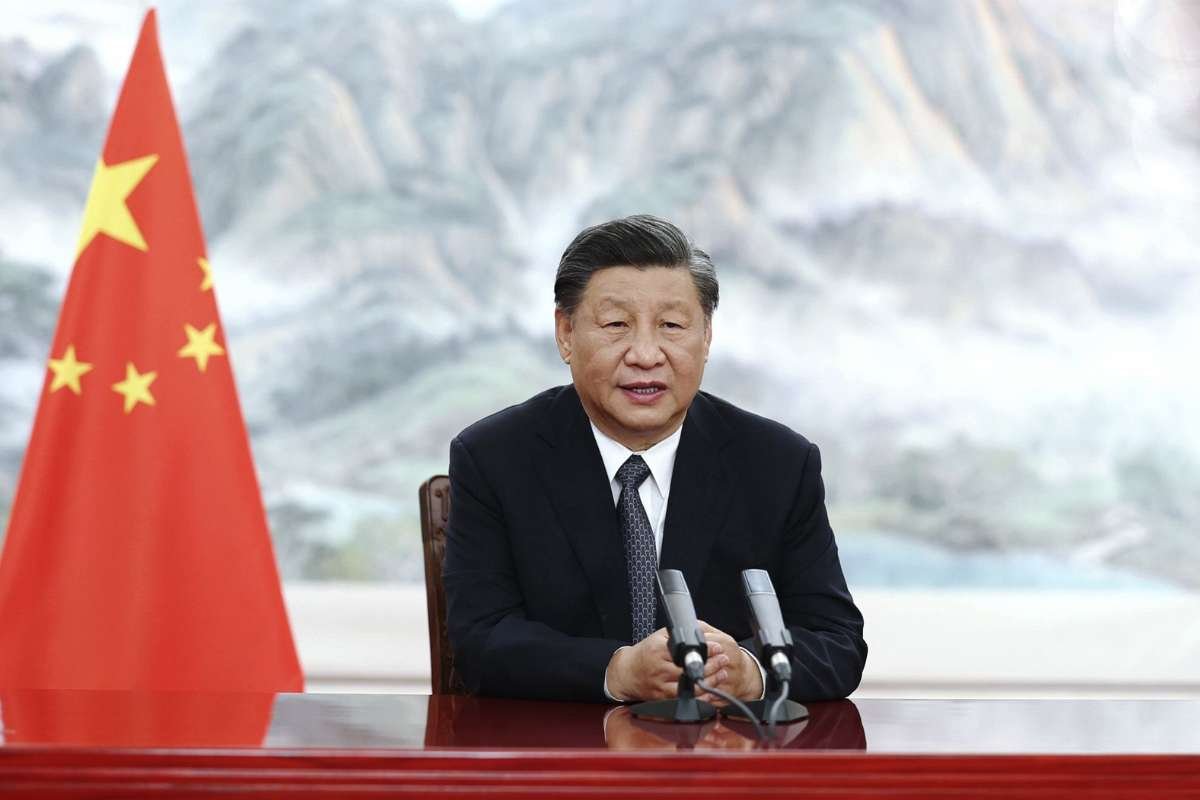
At the 2025 APEC Leaders’ Summit in Gyeongju, South Korea, Chinese President Xi Jinping emphasized the importance of unity among Asian and Pacific nations to maintain global supply chain stability during a time of mounting geopolitical and economic turbulence. Addressing regional leaders, Xi stated that when “the times are more turbulent, the more we must work together,” urging member economies to prioritize cooperation over division.
The remarks came as global trade faces renewed strain due to shifting economic alliances, trade protectionism, and fragile post-pandemic recovery. Xi Jinping positioned China as a proponent of multilateral collaboration, signaling Beijing’s intent to stabilize regional supply networks and reaffirm its leadership in fostering open, inclusive trade frameworks across Asia.
Beijing Emphasizes Supply Chain Resilience and Multilateralism
Xi Jinping underscored that maintaining stable and efficient supply chains should be a shared responsibility across the Asia-Pacific. He cautioned against “breaking supply chains” or resorting to economic isolationism, noting that fragmentation would only weaken regional competitiveness. Instead, he urged nations to adopt “genuine multilateralism” — strengthening collaboration in trade, technology, and logistics to ensure uninterrupted industrial growth.
Reinforcing this message, China’s delegation highlighted that the country remains a dependable partner for investment and manufacturing. Chinese officials reiterated that Beijing seeks to safeguard regional economic security and resist what they described as “the law of the jungle” in global trade. This vision places China at the center of a cooperative ecosystem, designed to withstand global shocks and maintain consistent industrial production.
With increasing supply chain diversification efforts across Asia, Xi’s remarks served as a call to balance independence with interdependence, promoting resilience through collaboration rather than confrontation.
Strategic Significance and Regional Outlook
Xi Jinping’s statement comes at a crucial moment for the global economy, following recent trade de-escalation efforts with the United States and growing uncertainty surrounding energy, logistics, and semiconductor supplies. By appealing to regional solidarity, China aims to bolster its diplomatic influence and economic integration in Asia, positioning itself as a stabilizing force in an era marked by rising competition and fragmented global systems.
For countries in Southeast Asia and the Pacific, many of which rely heavily on manufacturing and export-driven growth, Xi’s message resonates deeply. A stable supply chain framework is seen as vital for sustaining trade momentum, attracting investment, and ensuring predictable growth trajectories amid external volatility.
Analysts view Xi’s address as both a reassurance and a strategic maneuver. While the rhetoric of cooperation projects inclusivity, it also underscores China’s ambition to steer regional economic discourse and safeguard its own interests within an evolving global order. As global power dynamics continue to shift, the emphasis on supply chain resilience may define the next phase of Asia-Pacific economic diplomacy.
In essence, Xi’s appeal at the APEC Summit was more than a call for collaboration—it was a statement of intent. China is positioning itself not merely as a participant but as a driver of regional unity and industrial stability, urging neighbors to move forward together in an increasingly unpredictable world.
Also Read : The Enterprise World Magazine For More Information