AI in ecommerce marketing is no longer just a buzzword—it’s a practical engine for business growth. According to the McKinsey report, over the last year the share of organizations using AI rose from 65% to 71%; in marketing & sales, about 42% of respondents report using AI. The expectation is clear: more companies will integrate AI across structures and processes. In customer acquisition and retention specifically, 56% of marketers actively use AI today—and that number is rising.
But how can you distinguish real solutions from flashy promises? — Alex Danchenko, co-founder and COO of the omnichannel CDP Yespo (a leading Customer Data Platform for marketing automation in Eastern Europe), shared practical experience, success cases, and predictions about what lies ahead.
Two AI Lanes Already Helping Ecommerce Marketers
Alex Danchenko outlined two major lanes of modern AI.
1. Predictive AI — the proven lane.
This technology has delivered steady results for years, including:
- Propensity-to-buy prediction
- Churn-risk detection
- Next-best-offer selection
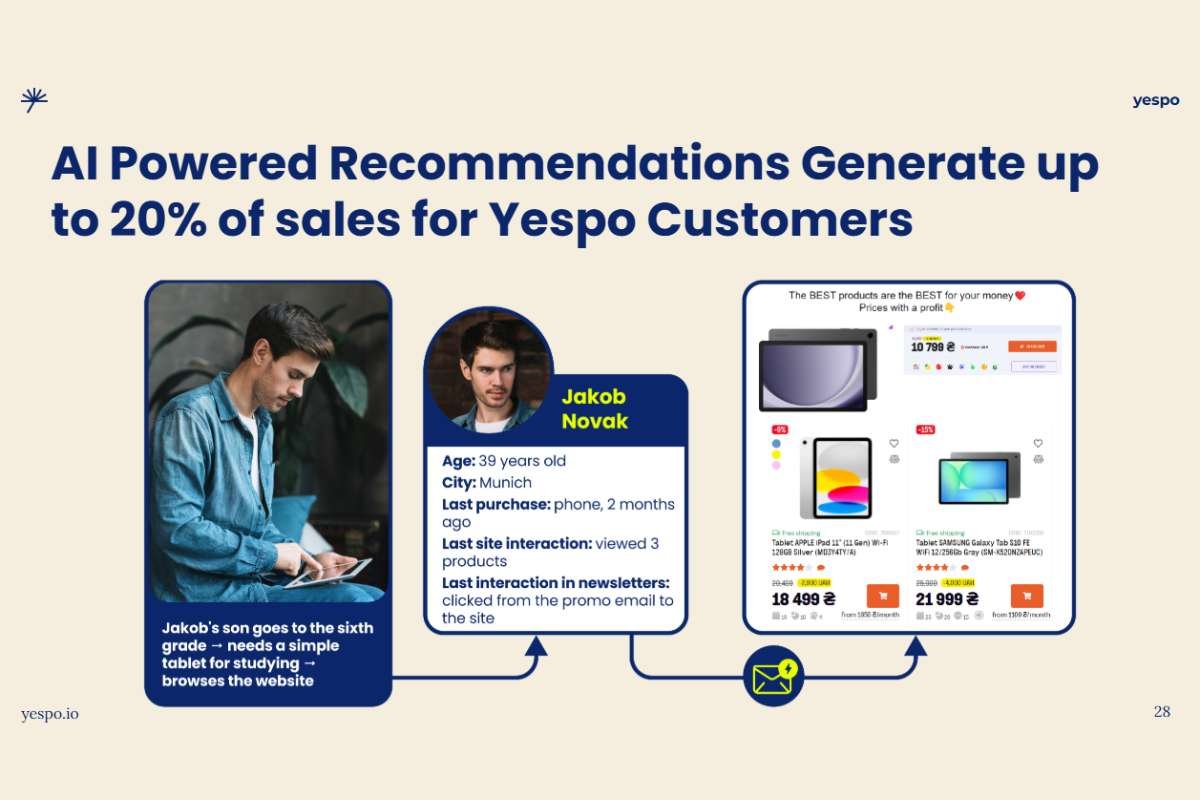
- AI-powered product recommendations
“These models are reliable, keep improving, and—crucially—are easier to adopt thanks to CDP platforms like Yespo that package them for marketers,” Alex explained.
Inside a CDP like Yespo, this becomes practical, no-overhead tooling for marketers:
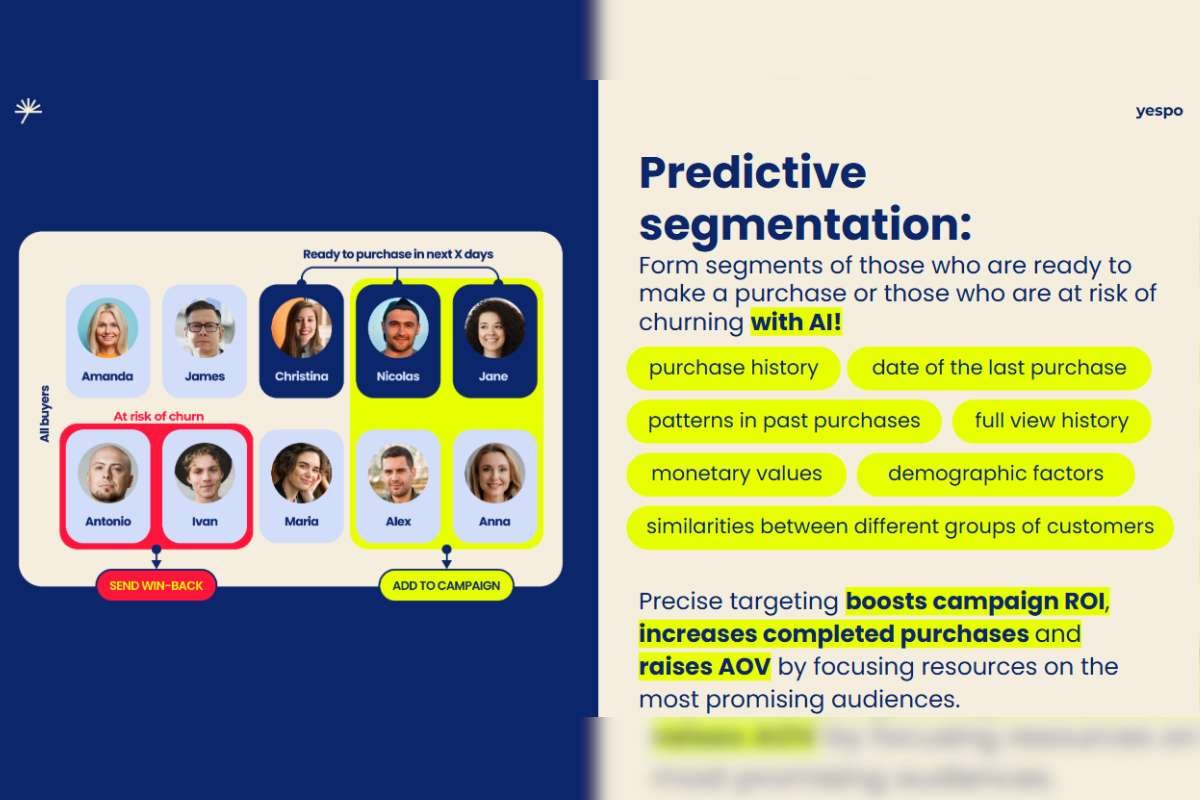
- Predictive segmentation (who is likely to convert or churn)
- Churn-risk detection and purchase-readiness scoring
- Next-best-product/offer suggestions
- Personalized recommendations from real-time behavior
- Smarter product re-categorization to improve recommendation quality
2. Generative AI — the creative accelerator
Newer than classic predictive models, GenAI drew massive attention over the last 2–3 years. According to Alex, the industry is moving past the Gartner Hype Cycle peak into a pragmatic phase where real value shows up in specific use cases. With the latest models, teams can achieve high-quality results in text generation, image and video generation, and text annotation. And that’s only the tip of the iceberg—researchers are tackling far more serious tasks such as AI-assisted DNA decoding and drug design.
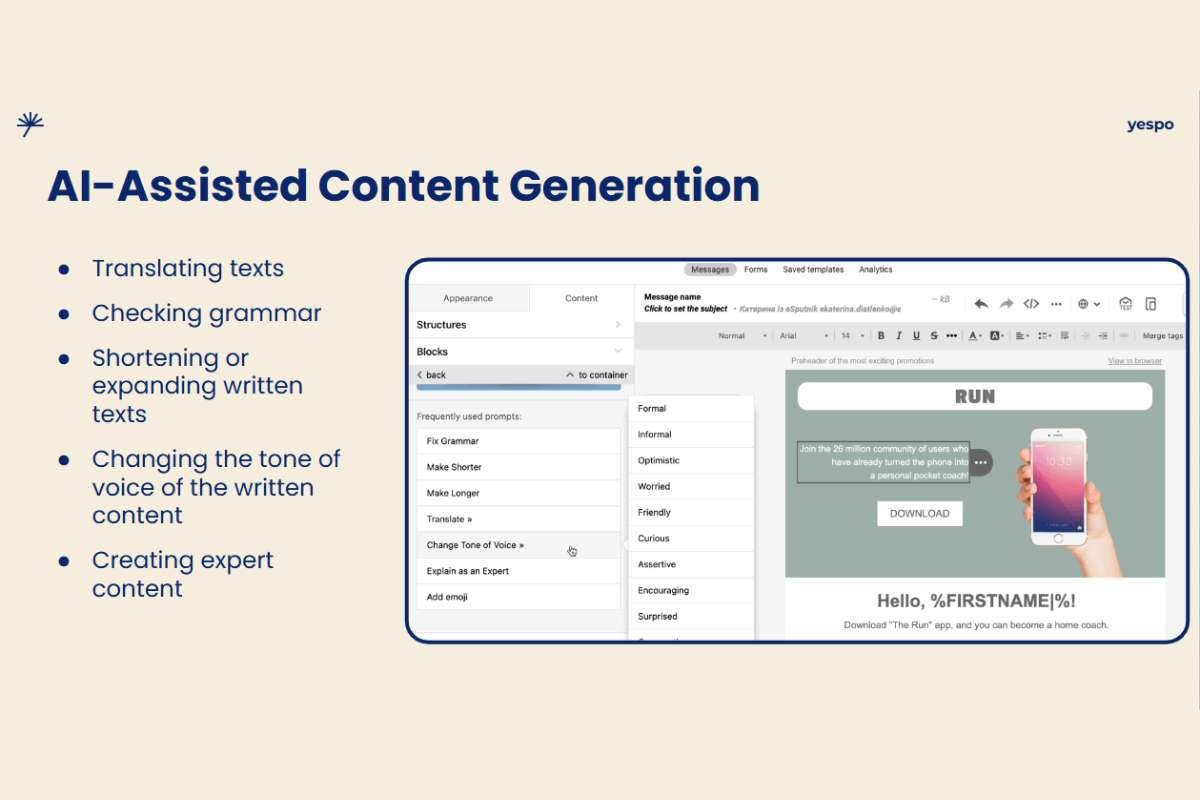
Within Yespo’s editor, built-in GenAI tools work right inside your templates:
- Emotional-tone analysis of text
- Tone-of-voice adjustments
- Content generation
- Grammar fixes
- Multilingual adaptation and scaling
- Headline improvement
- Mobile push generation
- Continuous A/B testing with automated optimization
The “Improve with AI” button suggests hooks grounded in persuasion psychology or your current draft. These tools help you generate engaging copy faster while keeping full control over the final message.
What You Can Implement Today?
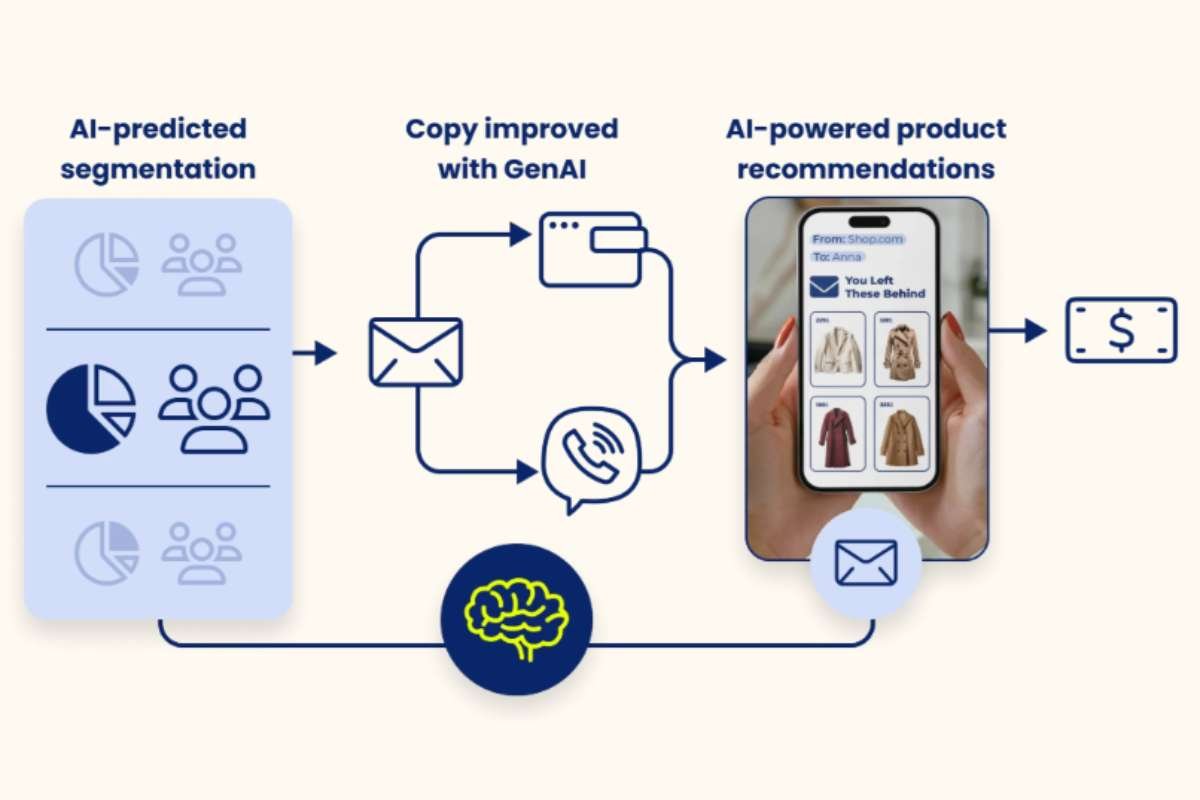
“Start with the predictive stack—it’s market-proven and ROI-positive. In parallel, add GenAI wherever it already saves time and lifts results,” says Alex Danchenko.
Predictive tools inside the CDP set the context—who needs what, and when. Generative tools turn that context into compelling creative—the right message, tone, and format for each audience. That’s where brands feel the next step-change in performance.
The Human Role Remains Central
Despite rapid AI advances, human judgment is still critical.
“In 2025, AI is the assistant; the marketer is the editor-in-chief. Humans own creativity, the emotional nuance of campaigns, brand strategy, and ethics. AI accelerates execution—but direction, taste, and final judgment stay human,” Alex emphasized.
He also shared a hiring perspective:
“When I hire marketers today, I look for candidates who are not only familiar with AI, but use it consciously—not just copy-paste, but applying critical reasoning to AI outputs.”
Another key point is speed. AI lets teams create content quickly: instead of one campaign, you can launch five or ten and still have time left. That time should be invested in testing—running experiments to understand what works and why. Skills in A/B testing, statistics, hypothesis building, and evidence-based validation are now essential for every marketer.
Real Results from Yespo Clients
Across Eastern Europe, Yespo clients are actively applying both generative and predictive AI to improve campaign results.
One of today’s most in-demand tools in ecommerce is personalized product recommendations. The goal is simple: show each customer the items they’re most likely to want—and buy. Recommendation engines rely on AI/ML algorithms that analyze past behavior, preferences, and interactions with products or services to generate tailored suggestions.
“AI algorithms embedded in the Yespo CDP select relevant products with up to 69% accuracy. Our clients have access to 200+ tested, ready-to-use algorithms. In practice, recommendations typically increase site conversion by 20–30%, with a record case of +60%. We continuously enhance functionality and add +5–10% each year,” Alex noted.
Two years ago, Yespo combined transformer architectures (familiar from ChatGPT), LLMs, and classical recommendation models. This made it possible to analyze user behavior and product attributes (category, brand, price, descriptions) more deeply and raise relevance.
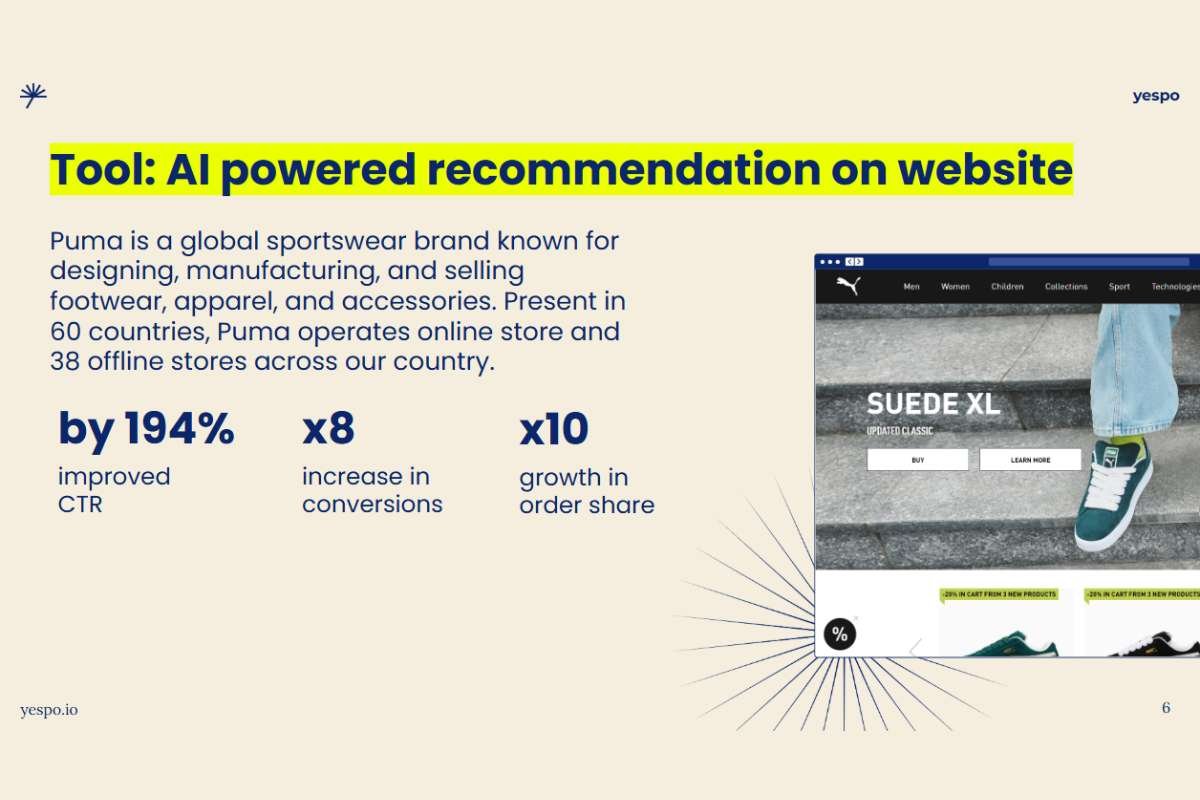
Among the brands actively using this tech is Puma. By adding a personalized recommendations block to the website, they increased conversion 8× and order share 10× for that channel.
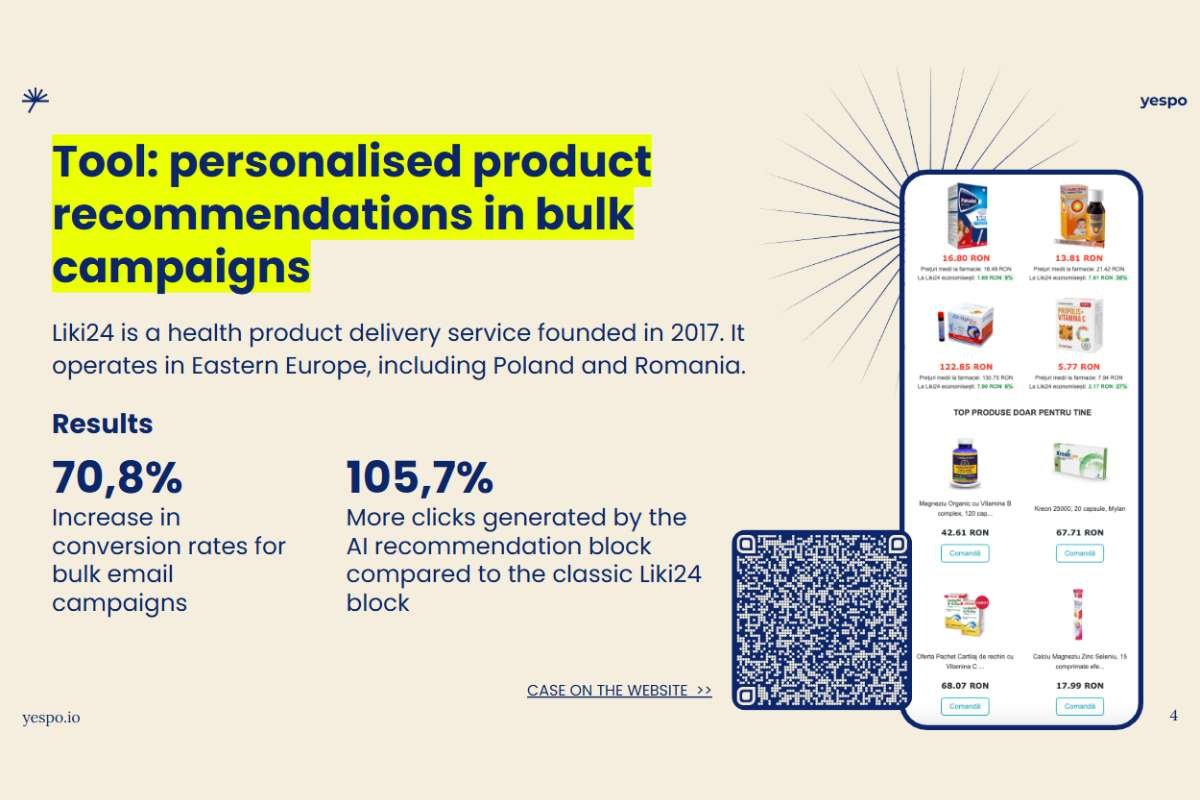
Recommendations don’t live on the website alone—they extend to the app and all direct channels: Email, App Inbox, Web & Mobile Push, widgets, Viber, Telegram bot, and SMS. Some clients go further and insert personalized recommendations into bulk campaigns. Because these sends have large reach, customized picks can multiply conversion. The technology dynamically inserts a personal product set into each recipient’s email based on their preferences.
For example, the pharma marketplace Liki24 boosted the results of bulk email by adding personalized recommendation blocks to mass campaigns—delivering +70.8% conversion.
Recommendations also supercharge triggered communications. Instead of a standard “abandoned browse” reminder, add a curated set of similar items the user is likely to love. Clients report higher site returns, significant sales uplift, and a positive impact on LTV. The fashion brand Natali Bolgar uses this approach in email and Viber triggers and 7× increased revenue from the channel.
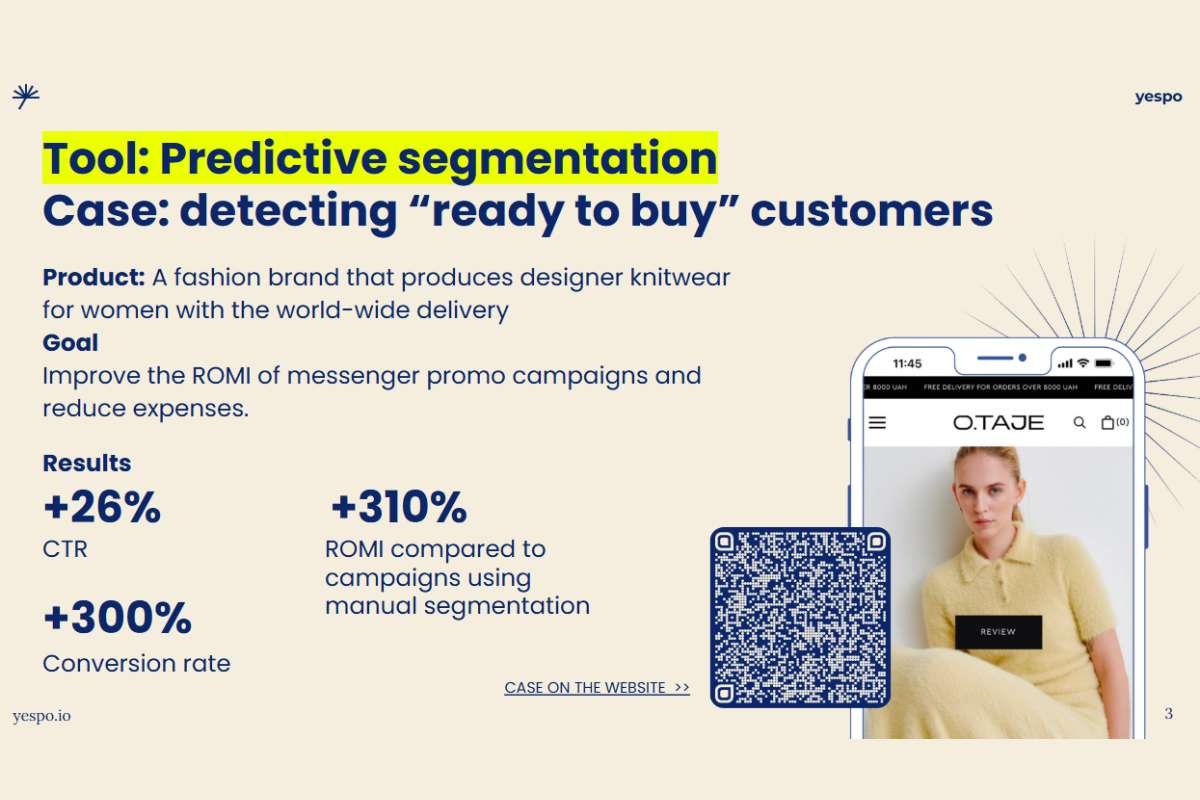
How else do brands deepen personalization with AI? Beyond improving copy, they create more precise audiences using predictive segmentation. When you target people who are genuinely ready to buy, campaign performance rises dramatically—especially in costly channels.
The apparel brand O.TAJE used predictive segmentation to improve sends and achieved +310% ROMI in Viber and +300% conversion compared to a manually built segment.
Market Challenges and Common Mistakes
Discussing regional specifics, Alex highlighted core challenges:
“Even if you don’t plan to use AI today—especially in Eastern markets—within two years you’ll have no choice if you want to keep customers and profit. Competitors will deliver more personalized experiences faster and more efficiently by minimizing manual work with AI. Businesses understand this. We see more and more top managers asking marketing teams to use AI daily. But in practice, many face problems and poor results.”
According to Alex, the root cause is often skipping the basics. Companies lack the right infrastructure and AI-ready customer data to produce high-quality outcomes. Meanwhile, the market is flooded with AI tools promising to help with everything; stacking too many subscriptions gets expensive without a clear view of real value.
Principles for choosing AI tools:
- Look for tools that truly implement an AI approach (not just marketing).
- Choose solutions that help you collect and activate AI-friendly data—like a CDP.
- Prefer services and platforms with proven, measurable results and case studies.
- Prioritize one strong platform over many scattered integrations to save budget and time.
The Future: AI Agents as the New Standard
Forecasting 2025–2026, Alex is confident that AI agents will become the main trend:
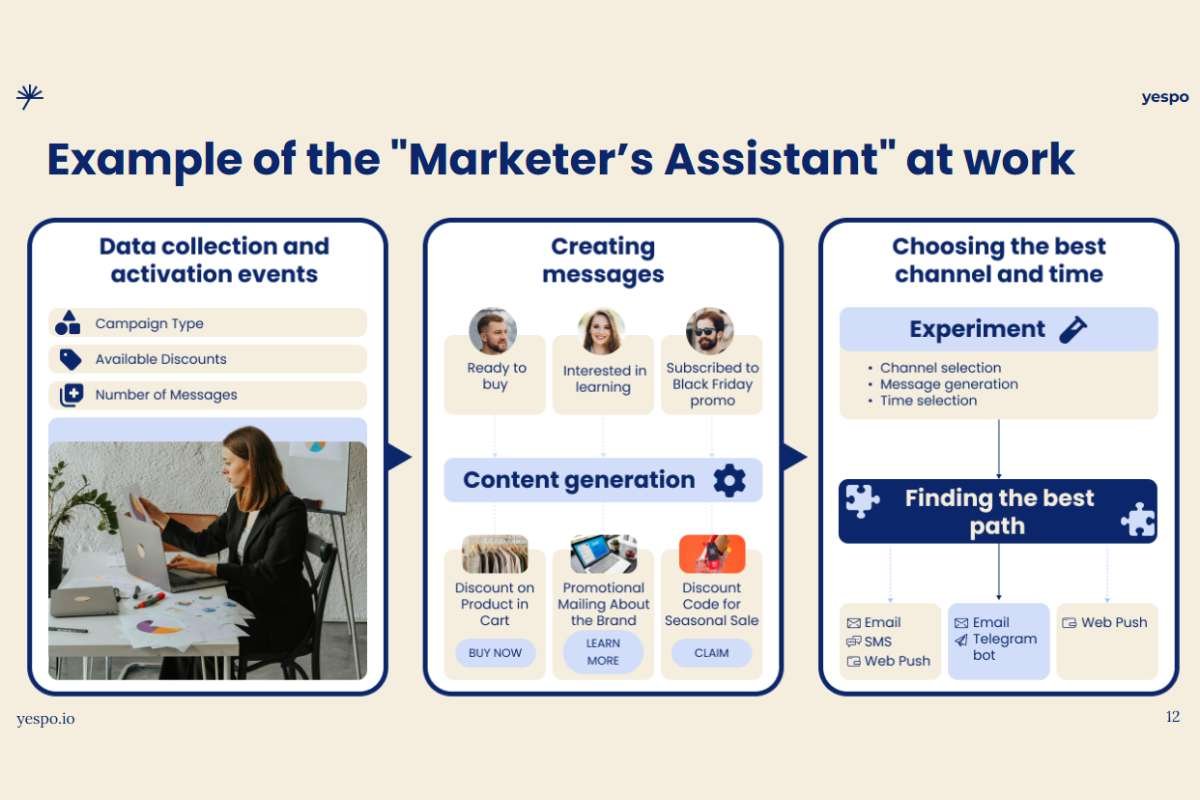
“Think of a CDP-connected campaign agent running a continuous build–measure–learn loop—auto-segmenting audiences, generating and testing creative, allocating budget across channels, and writing back learnings for the next cycle.”
By 2026, brands without an agent orchestrating journeys from their CDP will feel slow and expensive. The winners will pair predictive context (who/when/what) with agentic generation & optimization (how to say it/where to run it) across every touchpoint.
About Yespo
Yespo is a leading Customer Data Platform in Eastern Europe that helps ecommerce brands grow revenue with data and AI.
Yespo is an omnichannel CDP built to boost revenue and elevate customer experience using unified customer data and AI.
With Yespo, ecommerce businesses don’t guess what customers want—they know. The platform collects behavioral and demographic data from multiple sources in real time to create a complete, actionable customer profile. The result: personalized communication, stronger relationships, and measurable growth.
What an online shop can do with Yespo:
- Track customer activity across website & app
- Deliver AI-powered product recommendations
- Identify and segment high-value buyers
- Automate behavior-based triggers and workflows
- Launch personalized campaigns across 9+ channels—including email, push, messengers, and web—from a single platform