There are moments in education when a single question, “Why?”, has the power to reshape the way we teach, learn, and lead. For decades, classrooms have echoed with curiosity that often met rigid systems where creativity struggled under conformity and individuality was lost in standardization. Yet, amidst this landscape, a powerful shift has begun. Project-based and holistic learning models are redefining education, blending knowledge with purpose and turning lessons into lived experiences that speak to every kind of learner.
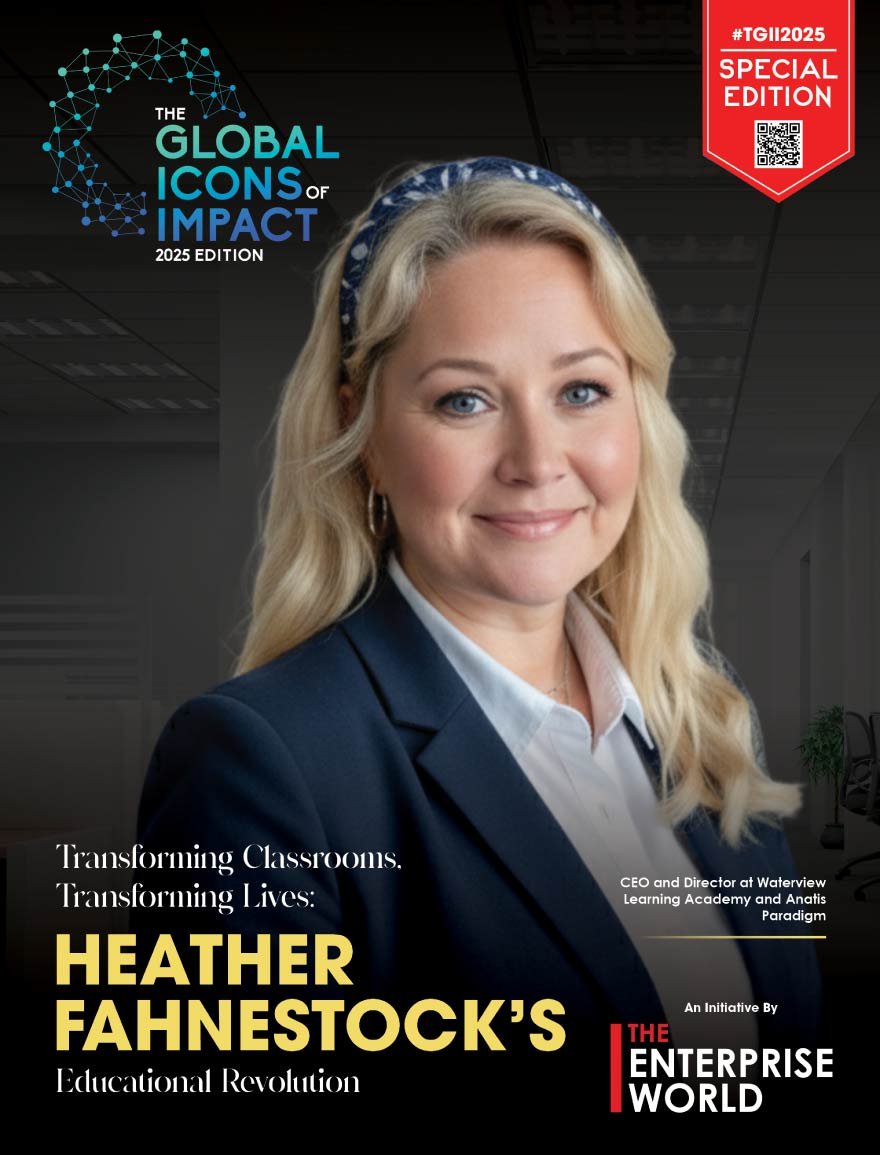
At the heart of this transformation stands a new kind of leader, vision-driven, empathetic, and unafraid to challenge convention. Among them, Heather Fahnestock has played a pivotal role in bridging the gap between traditional education and modern innovation. Guided by compassion and an unwavering belief in the potential of every student, her work has advanced a model where emotional intelligence and academic excellence coexist. By shaping environments that empower both educators and learners, Heather continues to redefine what meaningful education truly looks like in today’s world.
In a candid conversation with The Enterprise World, Heather Fahnestock discusses the evolution of her vision, the milestones achieved along the way, and how she continues to inspire meaningful change in education.
1. Could you briefly share your professional journey and how it led you to your current role?
Teaching has always been my passion. After secondary education, I entered the profession at the public school level. Being a teacher seems to be not just a career, but an art form when you are able to craft it to your personality and the group of students in front of you. As the years at public school passed, my passion was fading.
I saw too many students falling through the cracks and not getting fulfillment when they asked the question, “Why?” I had recently finished my Master’s degree with a project-based focus and knew that being able to facilitate lessons hands-on might actually engage and captivate students more than traditional learning. That is how Waterview and Anatis Paradigm were born through a vision of creating a project-based learning environment that could empower each and every student with their own personal style. The school and curriculum saw students as whole individuals, went beyond academics, and provided a place for them to develop socially and emotionally as well.
2. What has been the biggest driving force behind your career growth?
The biggest driving force in my career growth would have to be my youngest son, who, upon an autism diagnosis, we were told would not be able to obtain a traditional education. He, like other neurodivergent learners, was not being seen for his potential. I knew there had to be a way to change that script and give him the tools to be whatever he set his mind to.
3. How do you approach leadership within your organization and industry?
I believe that a good leader starts with the mindset of not asking staff or others to do something that they wouldn’t be willing to do themselves. In other words, don’t ask someone to take out the trash or clean a bathroom if you yourself aren’t willing to do it. Show your team that everyone has equal input and value. I have also found that a good leader is always looking for ways to improve and help their team, not just delegate. This can be through furthering their own education or finding ways to help their team achieve their personal goals.
4. Which initiatives or projects are you most proud of leading?
There are so many moments within my career that make me proud. Data where 98% of our graduates have gone on to further their education or serve in the military. The many accolades I have been humbled with, like Educator of the Year for the State of NC, Global Recognition Award for Leadership, Business Leader of the Year, and more.
5. How do you ensure your work creates a lasting impact beyond business success?
The nature of my business, in itself, allows me to leave a legacy with lasting impacts on all of society. I make it a goal to personally get to know each student we enroll beyond their learning style. I listen to their story prior to joining our environment and learn what their goals are for the future. By creating a caring and nurturing bond, the students come home and share their journeys with me. I know that when each student graduates from high school, they will leave a positive mark on our world.
6. What has been the most valuable leadership lesson you’ve learned so far?
One of the most valuable leadership lessons I have learned is to follow your gut. When I first spoke about the idea of creating a school, I was met with negative remarks, and many said it would never work. If you are passionate about something and have a vision for something that could help even just one person, go for it. In a world with such diversity, you never know who may benefit from your idea.
7. How do you stay adaptable in a world shaped by AI, technology, and constant disruption?
Staying ahead of the curve is something I have always tried to incorporate into my company. We embrace AI and technology and teach students how to use them in their true form. While this is a learning environment and students should learn to think for themselves, AI and technology can be useful tools. Students with dysgraphia or dyslexia can receive writing assistance. Students who learn better from audio can access the novel their teacher is using. We were fortunate enough to utilize Zoom meetings for teaching prior to the pandemic, so when that time came, our students never missed a day of instruction.
8. Who has been your greatest influence or mentor in leadership?
My parents are probably my greatest influences. My father modeled how to run a business and lead a team. My mother was an educator who showed me that it could be an appreciated art.
9. What excites you most about the future of your industry and your role in it?
The future of education is truly very exciting. While there seems to be a great deal of disruption due to political changes involving education, many parents are empowering themselves to find alternatives. Our program and curriculum take pieces not just from academics but also aim to empower the learner to be strong in their social and emotional well-being. Our students, who once thought education wasn’t for them, find that with the right environment, they can accomplish anything.
10. What message would you like to share with the global audience attending The Global Icons of Impact 2025?
While my company and vision seem to focus on educating our youth, a holistic approach can actually benefit any career field. If we start to look at people as a whole and they feel valued, understood, and appreciated, so much good can come from that for everyone involved. Empower each individual to seek their answers to all the times they ask, “Why?” and perhaps learn from doing, not just listening.