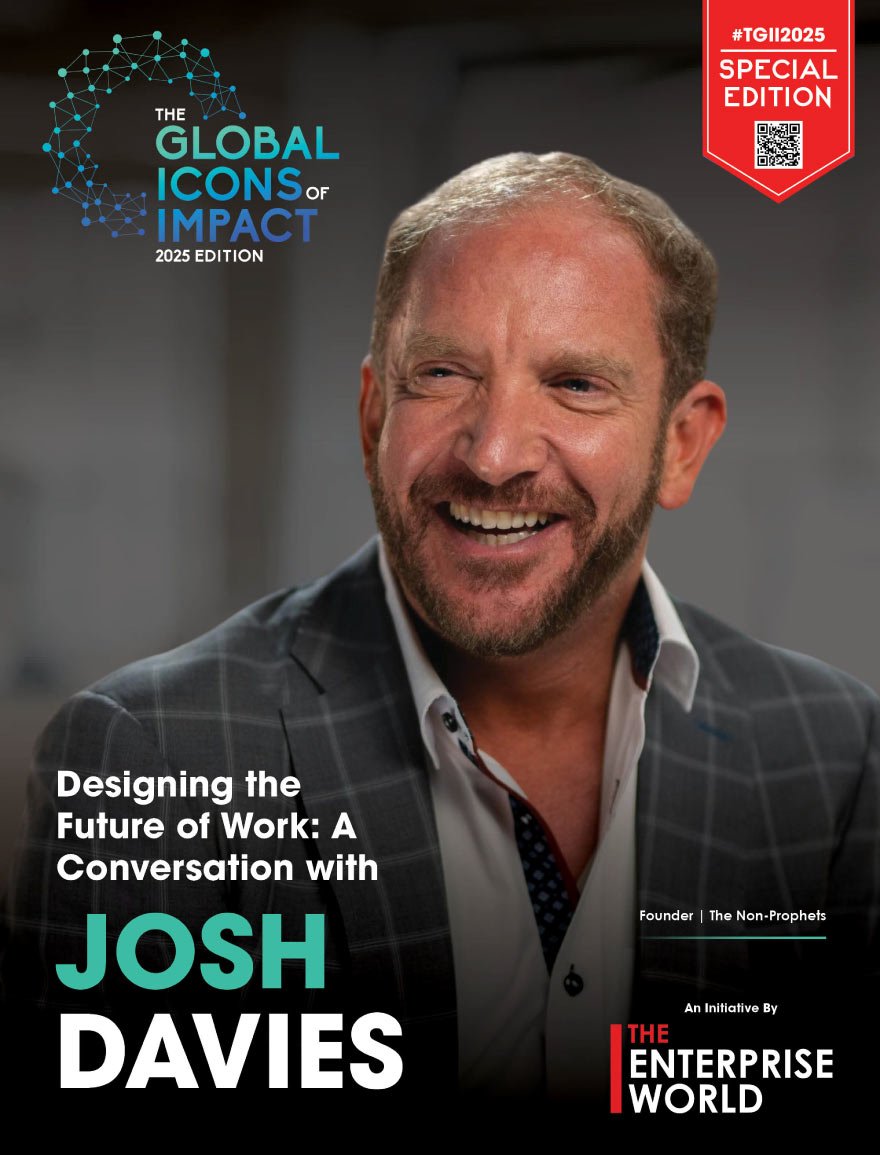
The future of work continues to evolve, but one constant throughout Josh Davies’ career has been his deep commitment to helping people find meaning in what they do. With years of experience training jobseekers across the country, Josh Davies later founded The Non-Prophets—a think tank and consulting collective dedicated to preparing leaders for what lies ahead.
His journey hasn’t followed a traditional path, but it has always been guided by a clear belief: that work can be a powerful force for dignity, purpose, and transformation. That conviction has taken him from hands-on training environments to global speaking stages.
Today, as a Workforce Futurist, Josh Davies is focused on building systems that are not only future-ready but also more human, more equitable, and built to thrive in a rapidly changing world.
1. Can you briefly describe your professional journey and what led you to your current role?
My career path hasn’t been linear, but one thing has remained constant: a deep commitment to helping people discover purpose through their work. I’ve led national organizations that trained hundreds of thousands of jobseekers, and later launched The Non-Prophets—a think tank and consulting collective focused on preparing leaders for the future. Throughout it all, I’ve been driven by a central question: How do we equip people, systems, and leaders for what’s next? That curiosity, combined with lessons learned along the way, shaped my progression from trainer to CEO to what I now call a Workforce Futurist.
2. What has been the biggest driving force behind your career growth?
At the core, it’s a belief that work is more than a paycheck—it’s a pathway to dignity, purpose, and impact. Every time I’ve leaned into that belief, new opportunities have emerged—whether leading national initiatives, advising workforce boards, or speaking on global stages. What’s consistently fueled my growth is the drive to connect human potential with the changing landscape of work.
3. How do you approach leadership within your organization and industry?
I see leadership as a balance of clarity, curiosity, and compassion. My approach centers on building teams that are self-aware, purpose-driven, and confident enough to question the status quo. In a results-driven field, I lead by fostering a culture of inquiry—because often, it’s the right question, not the perfect answer, that drives meaningful progress.
4. Which initiatives or projects are you most proud of leading?
I’m most proud of the projects that sparked broader, lasting change. At the Center for Work Ethic Development, we partnered with over 750 organizations to strengthen essential employability skills across the country. More recently, through The Non-Prophets, we’ve designed programs that help educators and workforce leaders embed AI and adaptability into their systems—transforming disruption into strategic design.
5. How do you ensure your work creates a lasting impact beyond business success?
For me, real impact means building something that thrives beyond my direct involvement. I design every initiative to be transferable—developing tools, training, and frameworks that others can adapt and scale. Whether it’s a local workforce team or a global leadership network, the true measure of success is what they continue to create long after I’ve stepped back.
6. What has been the most valuable leadership lesson you’ve learned so far?
That clarity outweighs charisma. Early on, I believed great leaders had to inspire with big speeches and bold visions. Over time, I’ve learned that the true power of leadership lies in helping others clearly see the vision—and their place within it. When people feel a sense of ownership in the future, they’re far more motivated to help build it.
7. How do you stay adaptable in a world shaped by AI, technology, and constant disruption?
I treat adaptability as a daily discipline. That means staying curious about emerging trends, testing ideas before they’re fully formed, and actively seeking out perspectives that challenge my own. I see AI not as a replacement for human value, but as an amplifier—for those willing to keep learning, unlearning, and reimagining how they show up in the world.
8. What excites you most about the future of your industry and your role in it?
We’re on the cusp of a new era where human-centered skills—empathy, creativity, adaptability—are finally being recognized as core to success. Workforce systems are shifting from static institutions to engines of innovation and equity. I’m excited to be part of that shift—helping move the conversation from fear about the “future of work” to optimism about the “future of purpose.”
10. What message would you like to share with the global audience attending The Global Icons of Impact 2025?
The future isn’t on the horizon—it’s already hiring.
No matter your role—whether you’re guiding teams, shaping communities, or steering entire systems—your greatest legacy won’t be in predicting what’s coming, but in preparing people for it. Let’s create a world where resilience, adaptability, and empathy aren’t just “nice to have,” but essential skills for building a more just, sustainable, and human-centered future.
Key Takeaways
- Purpose-Driven Career: Built a career around helping people find meaningful work, guided by the belief that work is a source of dignity and purpose.
- Leadership Approach: Leads with clarity, curiosity, and compassion—empowering teams to challenge assumptions and take ownership of shared goals.
- Focus on Sustainable Impact: Measures success by what continues to grow beyond personal involvement—designs tools and frameworks that others can scale.
- Adaptability Strategy: Treats adaptability as a skill that must be practiced—stays curious, open to change, and willing to learn and unlearn in an AI-driven world.
- Industry Outlook: Excited about the shift toward human-centered work—where empathy, creativity, and adaptability are seen as essential skills.