Leadership takes many forms, but at its core, it is about guiding people through challenges, unlocking potential, and leaving a mark that lasts beyond immediate results. In every industry, leaders are tested not just by their achievements but by how they respond to change, uncertainty, and the responsibility of shaping others’ paths.
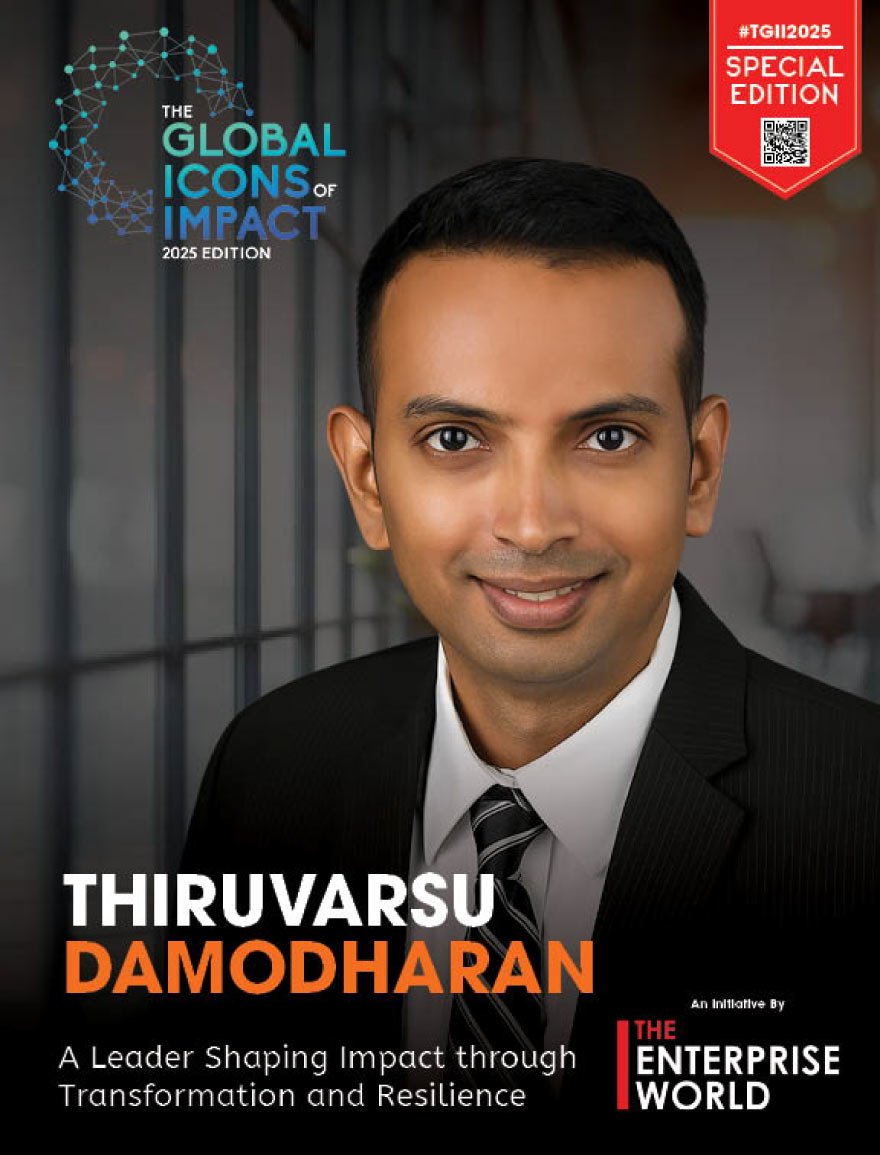
Among those who stand out for their clarity of vision and steady approach is Thiru Damodharan. His journey began as a materials engineer and steadily expanded into roles in consulting, global business development, and leadership mentoring. Along the way, he has built a career defined by resilience, curiosity, and a belief that leadership is less about control and more about creating space for collaboration, learning, and growth.
Today, Thiru continues to influence industries and individuals alike—whether by leading global partnerships, mentoring future leaders, or sharing insights on mental health, mindfulness, and resilience. As a keynote speaker at The Global Icons of Impact 2025, his voice resonates with the urgent need for responsible leadership in a world navigating digital disruption, economic uncertainty, and social transformation.
In this exclusive conversation with The Enterprise World, Thiru Damodharan shares his journey, leadership philosophies, and vision for the future.
1. Can you walk us through your early journey and what experiences shaped your leadership path?
I started my career as a materials engineer, initially working in operations and then in business development throughout Asia. These early experiences instilled in me discipline, problem-solving skills, and resilience. As I transitioned into consulting and leadership positions, I understood that effective leadership isn’t about having all the answers—it involves listening, empowering teams, and making impactful decisions.
2. Who or what inspired you to pursue your current career direction?
The idea of transformation has inspired me—whether it’s individuals growing beyond their limitations, or businesses adapting to new realities. I was also influenced by mentors who showed me that leadership is about service and creating opportunities for others to thrive.
3. Looking back, what was a defining moment that gave you clarity about your purpose as a leader?
A defining moment came when I was asked to lead a team through a complex project that seemed impossible. We succeeded, not because I had all the answers, but because I created space for collaboration and trusted people’s strengths. That was when I realized my purpose lies in guiding others to realize their fullest potential.
4. How do you define leadership in today’s rapidly changing world?
Leadership today means being adaptable, empathetic, and visionary. It’s about balancing technology with humanity—using tools like AI to scale impact, but never losing sight of people, values, and relationships.
5. What core values or principles guide your decision-making and leadership style?
Integrity, empathy, and resilience. I believe in doing the right thing even when no one is watching, listening deeply before making decisions, and standing firm in adversity while remaining open to learning.
6. In your view, how has leadership evolved with the rise of AI and digital transformation?
Leaders now need digital literacy as much as emotional intelligence. AI amplifies our decision-making, but it also forces us to confront ethical questions. The best leaders are those who combine strategic foresight with responsible use of technology.
7. What unique leadership philosophy or framework have you developed over the years?
I call it “Start small, think big.” I believe in taking bold steps, but grounding them in practical, incremental action. This approach allows leaders to stay agile, adapt to changes, and build momentum toward long-term transformation.
8. Could you share one milestone or achievement that you’re particularly proud of?
One milestone was being entrusted to lead global partnerships that opened new markets in Asia-Pacific. But equally meaningful has been my ability to pivot into keynote speaking, where I share insights on mental health, mindfulness, and resilience—topics close to my heart.
9. What has been your toughest leadership challenge, and how did you overcome it?
My toughest challenge was leading during times of uncertainty and layoffs. The human side of leadership is always the hardest. I overcame it by being transparent, showing compassion, and ensuring that even tough decisions were handled with dignity.
10. How do you balance long-term vision with short-term business realities?
I anchor myself in the long-term vision but build flexible roadmaps that account for short-term realities. It’s like running a marathon—you pace yourself but never lose sight of the finish line.
11. What excites you most about the future of your industry?
I’m excited about the convergence of AI, digital transformation, and human-centric leadership. The future isn’t just about technology—it’s about how we can use it to enhance well-being, drive innovation, and create inclusive growth.
12. What role do you think leaders must play in shaping responsible and sustainable growth?
Leaders must act as stewards, not just strategists. Beyond profits, we must safeguard mental health, sustainability, and social equity. The future demands leaders who leave a positive legacy, not just a balance sheet.
13. What advice would you give to the next generation of leaders aspiring to create global impact?
Stay curious, be courageous, and surround yourself with people who challenge you to grow. Global impact comes when you combine local insights with universal values. And never forget—your mindset shapes your trajectory.
14. What does being featured as a keynote speaker at The Global Icons of Impact 2025 mean to you personally and professionally?
It’s both humbling and affirming. Personally, it reflects my journey from engineer to global speaker. Professionally, it gives me a platform to amplify messages on resilience, mindfulness, and responsible leadership—topics the world urgently needs today.
15. What would be your advice for business leaders to incorporate work-life balance into their schedule?
Treat balance as a discipline, not an afterthought. Schedule downtime the way you schedule meetings. Protect your mental health because your people will mirror your habits. A rested leader is a resilient leader.
16. What is the best lesson you’ve learned throughout your career?
That setbacks are stepping stones. Every failure I’ve faced has been a catalyst for growth, pushing me to reinvent myself and find new opportunities.
17. Can you brief us about your financial journey?
I started with humble beginnings and worked my way through two MBAs before pursuing my DBA. Along the way, I learned the importance of delayed gratification, disciplined saving, and strategic investments. Today, I approach finance the way I approach leadership—with patience, foresight, and a balanced approach.