When I first read about peer-to-peer connections in college, I never thought it would be a life-changing concept for me. Back then, I saw it as just another technological innovation, one of those things I’d probably never really use or need. But over the years, as I navigated the challenges of managing my finances, I began to realize how indispensable it had become. It started slowly – a few small transactions here and there, finding better exchange rates or avoiding bank fees. But before long, I found myself using P2P platforms daily.
Whether it’s to protect my savings from inflation, send money across borders without exceedingly high fees, or simply trade more efficiently, P2P has quietly but powerfully become a cornerstone of my financial strategy. And as the world keeps evolving, I can’t help but wonder how many others are just now discovering how much P2P can transform their financial lives.
In today’s rapidly changing economic landscape, millions of people worldwide are turning to Peer-to-Peer (P2P) crypto trading as a way to escape the limitations and high fees of traditional financial systems. With soaring inflation, capital controls, and unstable fiat currencies, countries like Argentina, Nigeria, Kenya, Brazil, Venezuela, and Turkey have seen their local currencies lose significant value, leaving citizens searching for alternative ways to preserve their wealth. P2P crypto trading provides a direct, decentralized method of buying and selling cryptocurrencies, making it an ideal solution for people in financial crises.
With decentralized finance (DeFi) gaining prominence, P2P crypto trading has proven to be a lifeline in regions where traditional financial systems are either nonexistent or unreliable. Platforms like MEXC P2P, which charge zero fees and offer a variety of local payment methods, are becoming go-to platforms for anyone seeking financial independence or wanting to bypass banking system inefficiencies.
What is P2P crypto trading and Why It Matters Now?
P2P crypto trading refers to a decentralized method of transacting digital currencies directly between buyers and sellers, without the need for an intermediary like a bank or centralized exchange (CEX). Through a P2P platform, users can set up offers to buy or sell cryptocurrencies using local payment methods such as bank transfers, mobile money, or even e-wallets. The platform facilitates the transaction by offering an escrow service, ensuring that both parties fulfill their obligations before completing the trade.
Why does P2P matter now?
The importance of P2P crypto trading has become even more evident in recent years as global economic instability has risen:
1. Argentina:
In 2024, inflation rates in Argentina soared past 200%, eroding the value of the Argentine peso. As the country grapples with economic instability and skyrocketing inflation, many citizens have turned to P2P platforms to convert their pesos into USDT (Tether), a stablecoin pegged to the U.S. Dollar, to protect their savings from hyperinflation.
2. Nigeria:
With the naira heavily restricted due to capital controls and devaluation, Nigerians have increasingly turned to P2P platforms to buy crypto and bypass the high premiums set by black-market currency exchanges. As of 2024, Nigeria’s inflation rate was around 22%, which further exacerbates the need for alternative financial solutions. P2P trading offers a route for Nigerians to safeguard their wealth against the devaluation of the naira and access international markets.
3. Russia:
Since 2022, Western sanctions and capital controls have blocked Russians from dollars/euros, with SWIFT cut for most banks. By late 2025, inflation hit 8%, while the ruble lost 22% against the USD in 2024. Tighter 2024–2025 sanctions made traditional methods like Sberbank/Tinkoff riskier for P2P crypto trades, pushing users to MIR cards, QIWI, or alternatives – often 10–15% better than black-market rates. P2P remains the key lifeline for imports, foreign payments, and shielding savings from devaluation.
4. Kenya:
Kenya, with its inflation rate of about 9.2% in 2023, is facing economic pressures that make saving in local currency less viable. The Kenyan shilling has been underperforming, and many Kenyans are turning to P2P platforms to buy cryptocurrencies like USDT to hedge against inflation and devaluation. The ability to convert their savings into a more stable asset has become essential for preserving wealth.
5. Vietnam:
In 2024–2025, Vietnam’s dong lost over 5% against the USD while inflation climbed to 6%, compounded by strict State Bank forex controls that cap personal USD purchases. Millions of Vietnamese — especially freelancers and remote workers paid in dollars — now rely on P2P platforms to instantly convert VND into USDT via MoMo, ZaloPay, Vietcombank, or bank transfers. This has made Vietnam one of Southeast Asia’s fastest-growing P2P markets, offering savers a secure, high-return hedge against dong devaluation and far better rates than official channels or black-market dealers.
P2P crypto trading offers a solution to the financial challenges in these countries, providing a decentralized, low-cost, and accessible method for individuals to safeguard their savings, bypass capital controls, and access global markets without relying on centralized financial institutions. In regions where inflation, capital controls, and currency instability are rampant, P2P platforms are playing a vital role in offering financial freedom and security to individuals who would otherwise be left vulnerable to their country’s economic crises.
How P2P Protects Users from Inflation and Restrictions?

The benefits of P2P crypto trading extend far beyond simply facilitating the buying and selling of cryptocurrencies. In countries facing inflationary pressures, volatile currencies, and financial restrictions, P2P platforms offer a powerful tool for protecting personal wealth and ensuring financial autonomy. Here’s a closer look at how P2P trading can help users safeguard their assets:
When you use p2p, you have a cheap way of fighting inflation.
1. Inflation Hedge: Protecting Purchasing Power
Inflation erodes the purchasing power of a currency, diminishing the value of savings, wages, and investments. In hyperinflationary economies, this process is accelerated, causing prices to rise rapidly and wages to become insufficient for covering basic expenses. In these environments, holding local fiat currency becomes risky, as its value can collapse overnight.
P2P trading allows individuals to convert their rapidly depreciating local currency into stablecoins such as USDT (Tether), which is pegged to the U.S. Dollar and is far less susceptible to inflation. By exchanging their volatile currency for a stable digital asset, users can shield their wealth from the rapid devaluation caused by inflation.
For example:
- In Argentina, where inflation has surpassed 200%, citizens frequently turn to P2P platforms to swap pesos for USDT, effectively “dollarizing” their savings. This move helps to preserve the value of their wealth, especially as the Argentine peso continues to depreciate.
- In Venezuela, where inflation reached an astronomical rate of above 600,000% in 2018, P2P crypto trading has become a critical method for citizens to convert bolivars into more stable currencies, thus maintaining their purchasing power in the face of economic collapse.
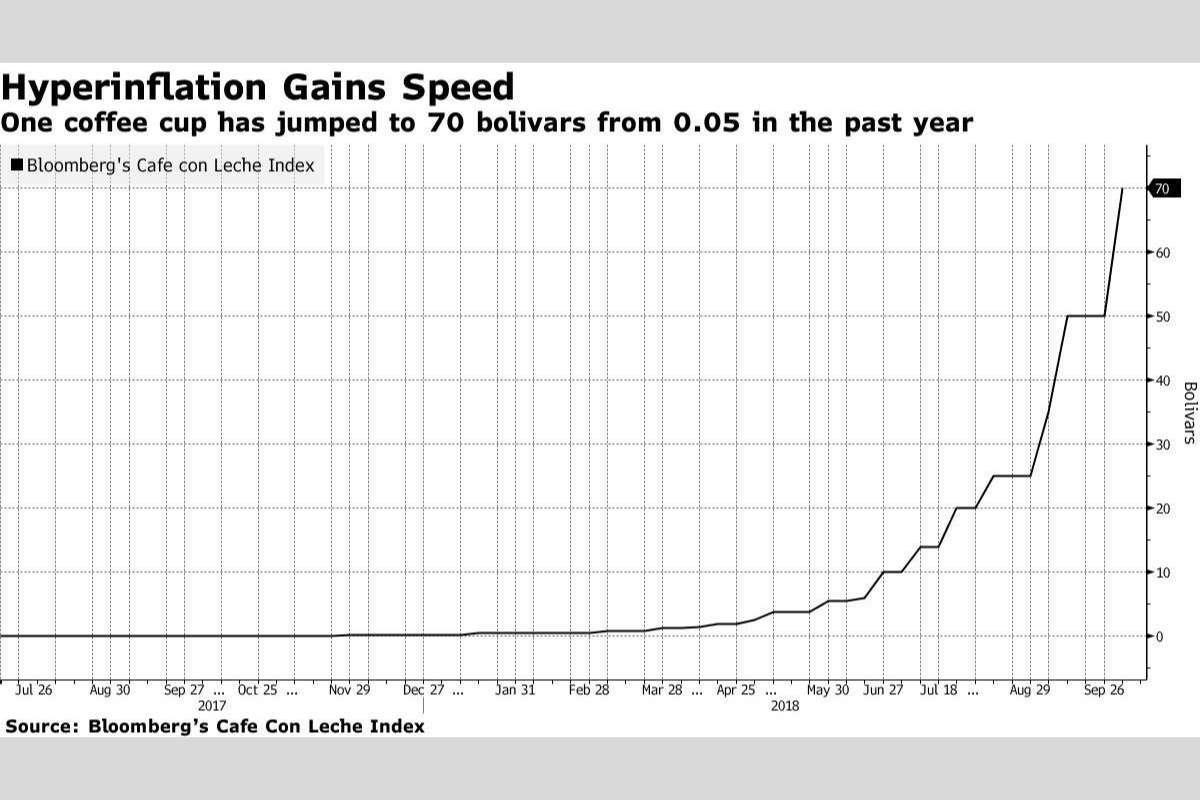
Venezuela hit high inflation levels in 2018.
This process of moving savings into a stable coin protects individuals from the ravages of inflation and allows them to store their wealth in an asset that holds its value more reliably than their local currency.
2. Bypassing Capital Controls: Freedom from Restrictions
Many countries facing economic instability impose capital controls in an attempt to prevent capital flight or to stabilize the local currency. These controls limit the amount of foreign currency that citizens can purchase or transfer abroad, making it difficult for people to safeguard their wealth in a more stable currency.
In Nigeria, for example, the Central Bank has set strict limits on foreign currency purchases, leading many citizens to look for alternative methods of converting their local naira into more stable assets. Similarly, in Argentina, citizens have been forced to buy dollars through the “blue dollar” black market to escape the devaluation of the peso, as official channels limit the purchase of foreign currencies.
P2P platforms provide a way to bypass these restrictions entirely. By enabling individuals to trade directly with others, P2P platforms eliminate the need for intermediaries, such as banks or centralized exchanges, which might be subject to capital control. Users can exchange their local currency for stablecoins without needing government approval or worrying about limits imposed on foreign currency purchases.
This decentralization offers a level of financial autonomy not possible through traditional banking systems. Users can trade freely, move their money across borders, and access global markets without the interference of capital controls or restrictions placed on international transfers. For instance:
- In Nigeria, P2P platforms allow users to trade their naira for USDT or other cryptocurrencies, bypassing government-imposed restrictions and enabling the transfer of funds across borders.
- In Turkey, where the lira has been devaluing, many Turkish citizens turn to P2P to convert their lira into USDT, thus escaping the limitations on foreign currency trading imposed by local banks.
Through P2P, individuals can continue to manage their wealth, remit money internationally, and avoid the disruptive impacts of capital controls.
3. Lower Fees and Faster Transactions: Cost-Effective and Efficient
In addition to inflation protection and bypassing capital controls, P2P crypto trading offers lower fees and faster transactions than traditional financial systems. When transferring money through traditional banks or using remittance services, individuals are often charged high fees (sometimes as much as 20%) for currency exchange or international transfers. These fees can significantly reduce the amount of money sent or saved.
P2P platforms typically offer zero platform fees or charge minimal fees for transactions, making them a far more affordable alternative to traditional banking services. Since P2P crypto trading allows users to negotiate directly with one another, they can often find better exchange rates and avoid the significant spread costs imposed by banks and remittance services.
Moreover, P2P transactions are typically completed within minutes, while traditional remittance services or bank transfers can take several days, depending on the destination. This speed is particularly important for individuals in emergency situations or those living in unstable economic environments who need to save money quickly.
For example:
- In Kenya, users can exchange Kenyan shillings for USDT or other stablecoins via mobile money platforms like M-Pesa, without the need for a bank account. This service is faster, cheaper, and more accessible for individuals in rural areas compared to traditional remittance services like Western Union.
- In Brazil, where high inflation and currency instability have increased the demand for stablecoins, users rely on P2P platforms to convert Brazilian reais to USDT quickly and without the burden of high fees associated with traditional methods.
By cutting out the middleman, P2P crypto trading platforms like MEXC offer a far more efficient and cost-effective way to manage funds.
4. Privacy and Anonymity: Securing Financial Privacy
One of the lesser-discussed, but still crucial, advantages of P2P trading is the level of privacy and anonymity it offers. In countries with high levels of surveillance or oppressive governments, individuals may be wary of having their financial transactions scrutinized by authorities.
P2P platforms allow users to trade directly with others, often without requiring extensive background checks that are common on centralized exchanges.
This is particularly important in countries where people may be at risk of being penalized for accessing foreign currency, using cryptocurrencies, or engaging in financial transactions outside of state control. For example:
- In Russia, where financial transactions are increasingly monitored and scrutinized, P2P platforms offer an alternative way for individuals to exchange their rubles for more stable assets like USDT without exposing themselves to potential surveillance.
P2P crypto trading gives users more control over their financial privacy, allowing them to trade in a decentralized manner, reducing the risks associated with government oversight and censorship.
Increased Access to Global Markets: Trading Without Borders
P2P platforms not only provide a method for individuals to protect their wealth, but they also offer an avenue to access global markets. In many cases, users from emerging markets or countries with restricted financial systems are locked out of global financial opportunities due to capital controls, limited banking services, or unfavorable exchange rates. P2P trading democratizes access to cryptocurrencies, allowing users from virtually anywhere to participate in the global economy.
For example:
- In Brazil, users can convert Brazilian reais to USDT or Bitcoin via P2P platforms, enabling them to access global crypto markets or hedge against local economic instability.
- In Nigeria, P2P crypto trading offers access to international markets for individuals who may not have access to traditional financial products like savings accounts, investments, or foreign stocks due to banking limitations.
By removing geographical boundaries and financial gatekeepers, P2P crypto trading empowers individuals to participate in the global economy, access global markets, and diversify their financial portfolios.
P2P vs. Traditional Crypto Exchanges: Why P2P Wins for Accessibility
When comparing P2P crypto trading with traditional centralized exchanges (CEX), the advantages of P2P become clear, especially for users in emerging markets:
| Method | Typical Fees | Accessibility in Emerging Markets | Payment Methods Offered | Best Use Case |
| MEXC P2P | 0% platform fee | Very high accessibility globally | 300+ local payment methods (varies by country) | Emerging markets + zero‑cost trading seekers |
| Traditional Banks/Remittances | ~5%–20% (incl. FX spread) | Often limited by banking infrastructure & border controls | Bank transfers, cash deposits | Large transfers via formal banking channels |
| Centralized Exchanges (CEX) | ~1%–5% + spreads | Requires fiat on‑ramp and bank card access | Cards (Visa/Mastercard), bank wires | Regulated users in mature markets |
| Peer‑to‑Peer Platforms (P2P) | ~0%–1% | High accessibility where mobile payments or local rails exist | Many local payment methods + e‑wallets | Users in emerging markets with local payment options |
P2P platforms like MEXC stand out due to their zero fees, extensive payment methods, and high accessibility, especially for users in emerging markets where traditional financial services may be limited.
Key Features of MEXC P2P: Zero Fees, Escrow Safety, and Multiple Payment Options
When choosing a P2P platform, security, cost, and convenience are critical factors. MEXC P2P stands out in all of these areas. Here are some of the key features that make MEXC a popular choice for global users:
➢ Zero Transaction Fees
MEXC does not charge any transaction fees for P2P trades, which allows users to maximize the value of their trades. This is particularly important in emerging markets, where even small fees can be a barrier to financial access.
➢ Escrow Protection
MEXC uses an escrow system to ensure security during transactions. When a buyer places an order, the crypto is held in escrow until the seller confirms that payment has been received. This prevents fraud and ensures that both parties fulfill their obligations.
Multiple Local Payment Methods
MEXC supports over 300 local payment methods across various regions, including mobile money apps, e-wallets, and bank transfers. This flexibility makes it easy for users from different parts of the world to trade crypto using their preferred local payment method. For example:
- In Brazil, users can pay via Pix, an instant bank transfer system widely used in the country.
- In the Philippines, GCash, a popular mobile wallet, is accepted.
- In Kenya, users can trade with M-Pesa, a mobile money transfer service
These local payment methods ensure that MEXC P2P remains accessible to users from all backgrounds, particularly in regions with limited access to traditional banking systems.
Step-by-Step Guide: How to Use P2P on MEXC
Here’s a simple guide to getting you started with MEXC P2P I bet it will be fans:
1. Sign Up/Log In:
Create an account on MEXC by signing up with an email or phone number if you do not have one or login in case you already have an account with them.
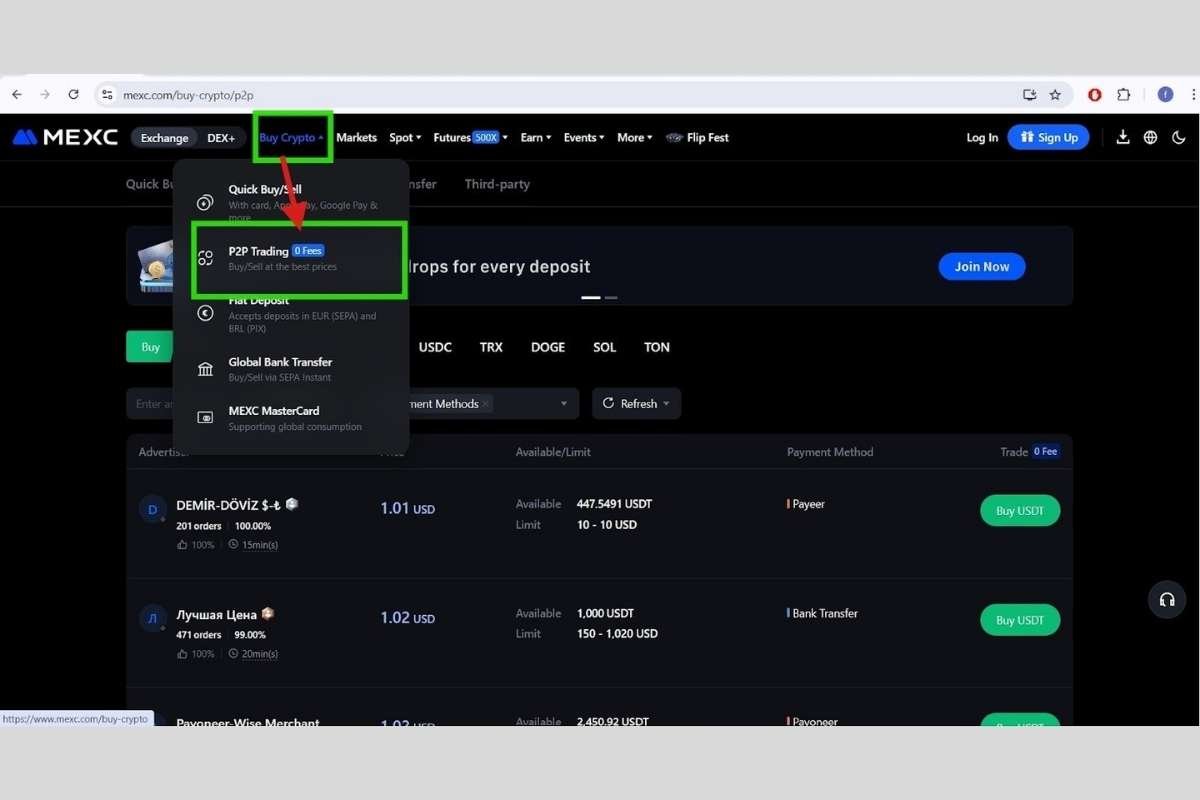
2. Access P2P Section:
Navigate to the “Buy Crypto” tab and select “P2P Trading.”
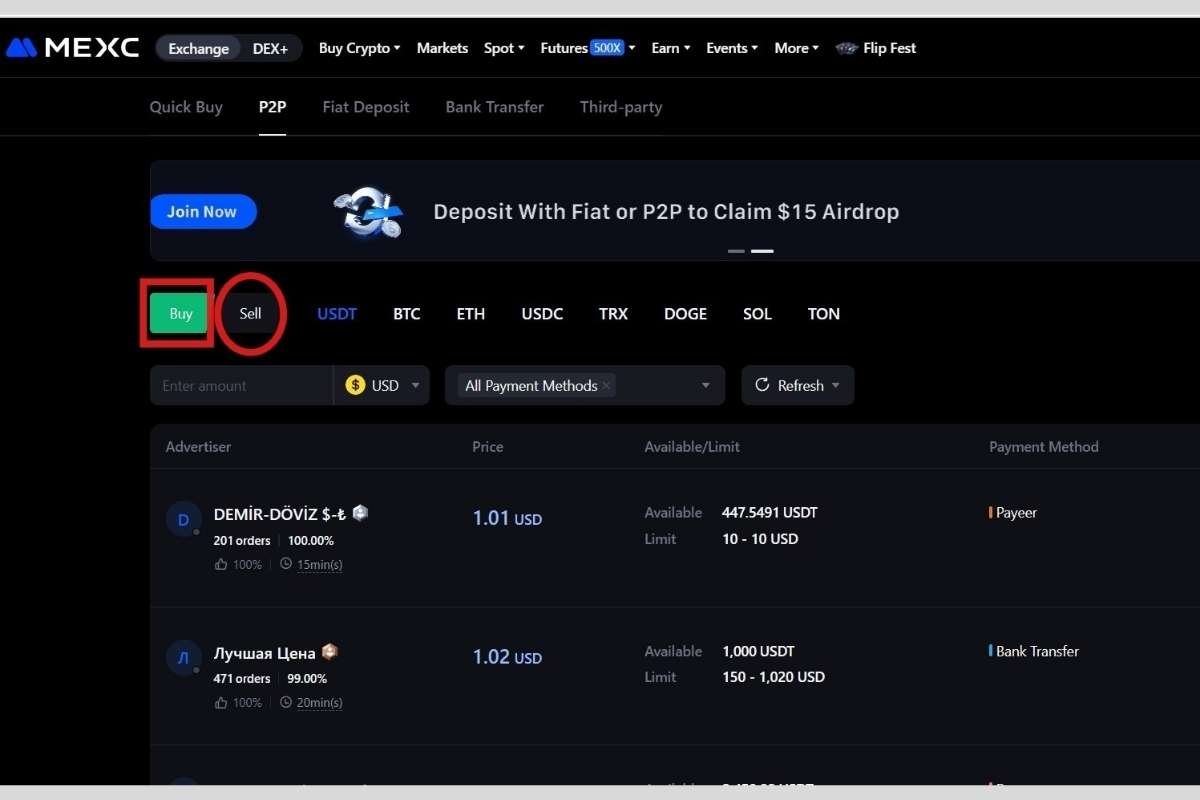
3. Choose Buy/Sell:
Select “Buy” if you want to purchase crypto or “Sell” if you want to convert your crypto back into fiat.
4. Filter Offers:
Select your preferred fiat currency, payment method, and trade amount. Sort by the best rates available.
5. Place Order:
Confirm your order details, and chat with the seller if necessary.
6. Escrow Release:
Once the seller confirms receipt of payment, the crypto is released from escrow into your wallet.
User Stories: How P2P Saves the Day in Emerging Markets
Ahmed from Turkey,
Meet Ahmed, an engineer in Istanbul, Turkey. He watched as the value of his savings in Turkish Lira rapidly eroded due to inflation. With limited options to protect his wealth, he turned to MEXC P2P. He used a local bank transfer to buy USDT from a verified seller, and within minutes, the crypto was securely in his account. By converting his salary into USDT, Ahmed has shielded his savings from the lira’s volatility and is now able to store his wealth in a more stable form.
Alex from Lagos,
Meet Alex from Lagos, Nigeria: “With naira crashing and banks limiting dollars to $100/month, I was stuck. Using MEXC P2P, I buy USDT with my GTBank transfer—zero fees, done in 5 minutes. I hold USDT to pay freelancers abroad or trade on MEXC spot markets. Last month, I avoided a 15% inflation loss on my savings.”
Stories like that of Alex and that of Ahmed are common in Argentina (swapping pesos for USDT amid blue-dollar premiums), Turkey (hedging lira with crypto during elections), and many upcoming economies. P2P isn’t just trading – it’s financial survival.
Conclusion: Secure Your Financial Future with MEXC P2P
P2P crypto trading offers a decentralized, low-cost, and secure way to buy and sell cryptocurrencies, providing a valuable tool for individuals in emerging markets facing economic instability. MEXC P2P’s zero fees, wide variety of local payment methods, and escrow protection make it an ideal choice for anyone looking to protect their wealth or gain access to global markets.
Ready to get started?
Sign up for MEXC P2P today and start trading with zero fees to safeguard your financial future.