Key Points:
- Unified U.S. AI rules needed vs. China
- AI offers breakthroughs but risks misuse
- Global standards key for safe innovation
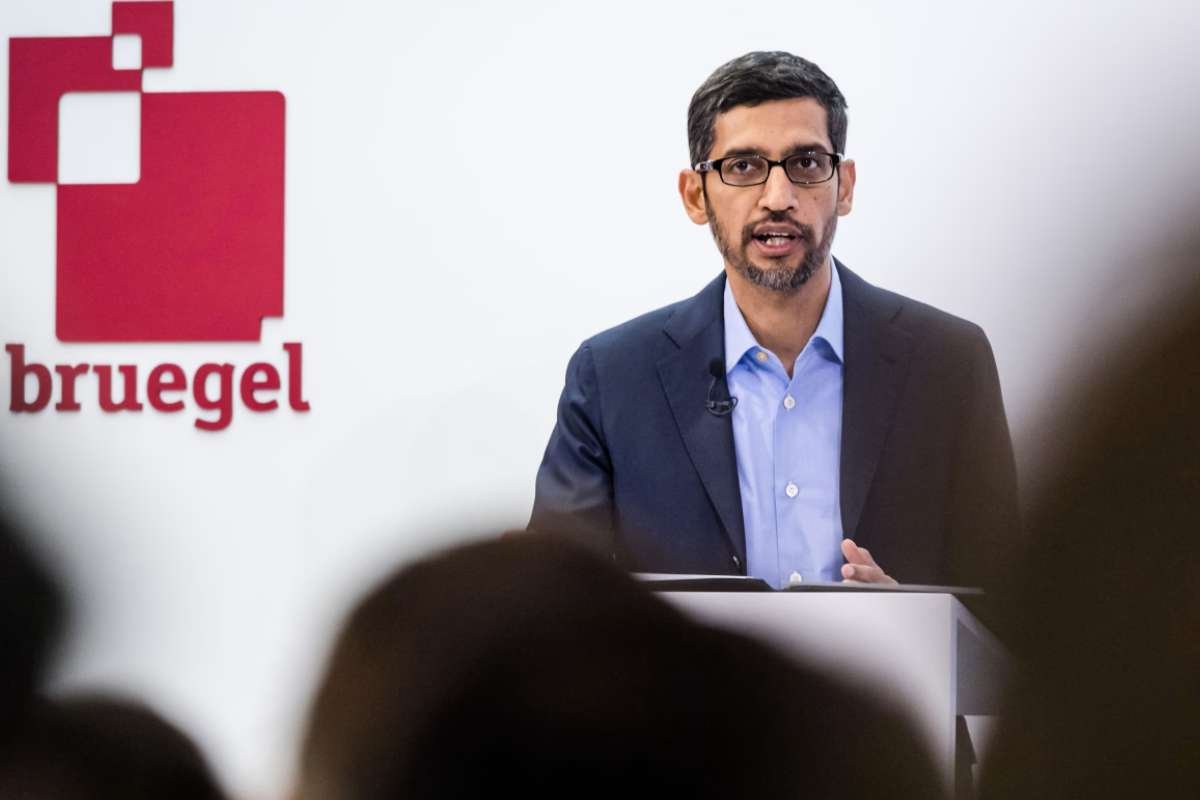
Google CEO Sundar Pichai has renewed calls for a unified national regulatory framework for artificial intelligence, warning that the United States risks falling behind global competitors, particularly China, if it continues to rely on fragmented state-level laws. Speaking in a recent national interview, Pichai emphasized that more than a thousand AI-related bills circulating across various U.S. states are creating an inconsistent environment for innovation.
He argued that the U.S. must “get the balance right” by encouraging responsible AI development while providing companies with clear, predictable guidelines. According to Pichai, a centralized federal approach would reduce confusion, streamline compliance efforts, and enable American companies to move faster in a field where international rivals are rapidly expanding.
Navigating AI’s Promise and Risks Through Global Collaboration
Sundar Pichai acknowledged AI’s transformative potential, citing its role in accelerating breakthroughs in medical research, drug discovery, and cancer treatment. However, he cautioned that the same technology carries inherent risks if left unchecked. He described AI as a “dual-use” tool capable of powering life-saving innovation but equally vulnerable to misuse by malicious actors.
To mitigate these risks, Pichai urged governments and technology firms around the world to cooperate on shared standards, ethical guardrails, and verification mechanisms. He highlighted the importance of tools that help identify AI-generated content and protect users from impersonation, fraud, and emerging digital threats.
Sundar Pichai also referenced Google’s long-term ambitions, such as exploring solar-powered AI infrastructure in space. Such futuristic projects, he suggested, underscore the need for early regulatory clarity to prevent unintended consequences while enabling safe exploration of advanced technologies.
U.S.–China Competition Heightens Urgency for AI Policy
A major focal point of Pichai’s message was the intensifying global race for AI leadership. He warned that the U.S. could lose its competitive edge if regulatory uncertainty slows down innovation or forces companies to navigate conflicting state requirements. In contrast, he noted that nations like China are advancing under unified national strategies, giving them a clear advantage in execution and speed.
Sundar Pichai stressed that AI is now central to geopolitical, economic, and technological power. For the U.S. to remain competitive, he argued, it must strengthen federal leadership, create a standard regulatory blueprint, and ensure American innovation remains globally influential. He added that national regulation would not only boost competitiveness but also reinforce trust and safety in AI deployment across industries.
Looking ahead, Pichai called for broad cooperation among policymakers, researchers, and private-sector leaders to create a cohesive global framework. He emphasized that shared rules and responsible development practices will be essential to ensuring AI remains a force for progress rather than disruption.