There’s a peculiar kind of panic that hits the second a disaster lands on your clothes. Mine happened on a Monday morning, right before an important meeting. I remember staring down at the spreading coffee blot on my shirt, feeling my confidence evaporate with it.
An hour later, I found myself standing outside the dry cleaner’s like someone waiting for a verdict. My stained shirt hung heavy in my hands, limp and defeated, like a wounded soldier. The neon “OPEN” sign buzzed, flickering glow on the glass door, almost as if inviting me inside or warning me.
And in that strange, suspended moment, one question kept looping through my mind: How Does Dry Cleaning Work? What kind of behind-the-scenes world was I about to entrust my only good outfit to? Whatever happened past those swinging doors, it felt like the fate of my entire day rested on it.
The Fundamental Misconception: “Dry” Doesn’t Mean Dry
The term “dry cleaning” is inherently misleading. Despite its name, the process is not actually dry. Instead, it’s a chemical-based cleaning method that uses liquid solvents—not water—as the primary cleaning agent. People often wonder how does dry cleaning works when they hear it’s not really “dry,” and the confusion makes sense.
Why not just use water?
Water is a universal solvent, but it’s not universal for all fabrics or stains. Here’s why:
- Fabric damage: Water causes many fabrics, especially wool, silk, and delicate synthetics, to shrink, warp, or lose their shape. Wool fibers, for instance, are hydrophobic (water-repellent on the surface) yet absorb water internally, causing swelling and felting.
- Dye bleeding: Water can cause dyes to leach from fabrics, especially darker colors or hand-dyed textiles.
- Stain limitations: While water excels at removing water-soluble stains (salt, sugar, sweat), it struggles with oil-based stains, grease, makeup, and tar, all of which require non-aqueous solvents.
Chemical solvents, by contrast, dissolve oils and hydrophobic substances that water cannot, making them ideal for professional garment care.
A Brief History: From Kerosene to Perchloroethylene
The practice of using chemical solvents for garment cleaning dates back centuries. Understanding exactly how does dry cleaning works today requires understanding where it began.
Early Solvents:
- Kerosene and gasoline (1800s): Early dry cleaners used flammable petroleum-based solvents. While effective, they posed significant fire risks, leading to numerous industrial accidents and workplace hazards.
- Benzene and carbon tetrachloride (1900s-1930s): These were slightly safer than kerosene but still volatile and toxic. Carbon tetrachloride, in particular, was later banned due to severe health risks.
The Birth of Perchloroethylene (Perc):
After World War II, perchloroethylene became the dominant solvent. Its safety and efficiency helped define how does dry cleaning works in modern facilities. Perc was non-flammable, effective on oil stains, and easy to recycle, making it the industry standard for decades.
- It was non-flammable, making workplaces safer.
- It was highly effective at removing oils and stains.
- It could be easily recovered and reused through extraction.
- Left no flammable residue on garments.
By the 1960s, perc dominated the industry, accounting for approximately 90% of all dry cleaning solvents globally.
The Modern Dry Cleaning Process: Step-by-Step
Understanding how does dry cleaning works requires following a garment through the cleaning cycle.

Step 1: Intake and Inspection
When you drop off clothes at a dry cleaner, the attendant:
- Inspects the garment for existing damage, stains, and fabric type.
- Tag each item with an identification number.
- Note any special instructions or problem areas (wine stains, delicate embroidery, stubborn marks).
- Sorts garments by fabric type and color (to prevent dye transfer).
This step is crucial; the dry cleaner assesses whether certain garments require alternative cleaning methods or if pre-treatment is necessary.
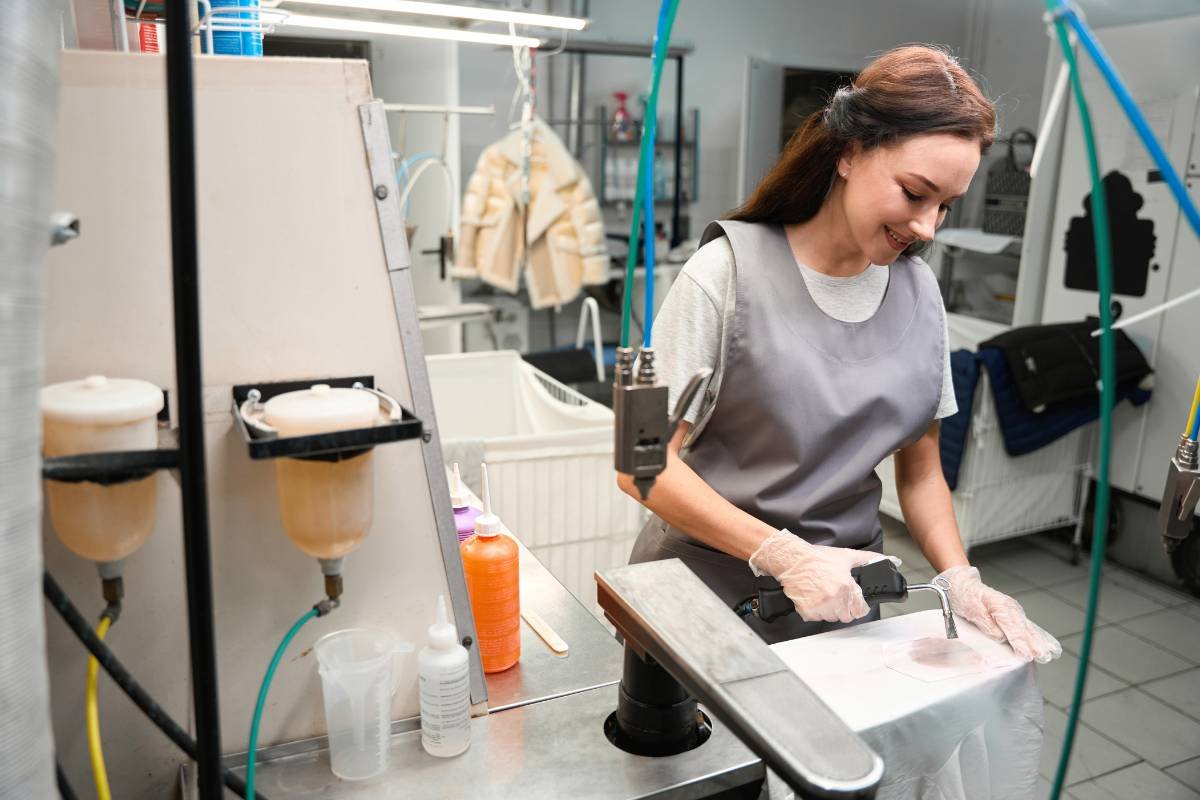
Step 2: Pre-Treatment of Stains
Stain pre-treatment is where professional dry cleaning differs dramatically from home laundering.
Experienced dry cleaners apply a specialized spotter, a concentrated cleaning agent, to individual stains before the main cleaning cycle. Different stains require different treatments:
- Oil-based stains (grease, makeup, salad dressing): Treated with petroleum-based spotters or additional perc.
- Protein-based stains (blood, egg, sweat): Treated with enzymatic spotters containing protease enzymes.
- Tannin stains (wine, coffee, tea): Treated with oxidizing agents or special tannin removers.
- Combination stains (lipstick, paint): Multiple spotters applied in sequence.
The pre-treatment solution is gently worked into the fabric using soft brushes, allowing the active ingredients to break down the stain’s molecular bonds before immersion.
Step 3: Machine Washing (Solvent Immersion)
Once pre-treated, garments are placed into a large dry cleaning machine, essentially a specialized washing machine that uses chemical solvents instead of water.
Inside the dry cleaning machine:
- Garments are submerged in a solvent (typically perc, though alternatives are increasingly used).
- The machine gently agitates garments, allowing the solvent to penetrate fibers and suspend dirt particles.
- Surfactants (additives) help break down oils and allow them to remain suspended rather than redepositing on the fabric.
- The cycle typically lasts 20-30 minutes.
- Temperature is carefully controlled (usually around 100-130°F / 37-54°C) to prevent damage to delicate fabrics.
The solvent works by dissolving hydrophobic (oil-loving) dirt and stains, suspending them so they can be rinsed away rather than reabsorbing into the fabric.
Step 4: Solvent Extraction and Recovery
This is where “dry” cleaning earns its environmental and economic justification.
After the wash cycle, garments are moved to an extractor, a centrifuge that spins at high speeds to remove solvent from fabrics. This step:
- Recovers approximately 95-98% of the solvent used.
- Prevents the solvent from evaporating into the air (reducing environmental pollution and health risks).
- Allows the same solvent to be reused, reducing cost and waste.
The recovered solvent is then filtered and distilled to remove contaminants (loosened dirt, dyes, fiber fragments) before being reused in the next cleaning cycle. This recovery system is a defining feature of professional dry cleaning and a major difference from alternative methods.
Step 5: Drying
After extraction, garments still contain trace amounts of solvent. They move to a drying cabinet, essentially an oven with controlled temperature and airflow, where:
- The remaining solvent evaporates at low heat (usually below 130°F).
- Garments are gently tumbled to ensure even drying and prevent wrinkling.
- The drying process typically takes 30-45 minutes.
Modern facilities capture vapors from drying cabinets through ventilation systems and may route them through activated carbon filters or condensers to prevent environmental release.
Step 6: Finishing and Pressing
Once garments are dry, they proceed to the finishing stage:
- Steam pressing: Garments are pressed using steam and shaped on pressing equipment calibrated for different fabric types.
- Hand finishing: Delicate items or those with special details (beading, appliqués) receive hand-finishing to avoid damage.
- Inspection: Final quality check ensures stains are removed, and garments are properly shaped.
- Packaging: Garments are hung on hangers, wrapped in protective plastic, and prepared for pickup.
The Chemistry behind the Cleaning: Why Perc Works?
To truly understand how does dry cleaning works, you must look at perc’s chemistry:
- Polarity and Solvency: Perc is a non-polar solvent, meaning it readily dissolves other non-polar substances, particularly oils, greases, fats, and many synthetic stains. It has a low surface tension, allowing it to penetrate fabric fibers and suspend contaminants.
- Evaporation Rate: Perc has a moderate evaporation rate; it’s volatile enough to evaporate relatively quickly during drying but stable enough to remain liquid during the wash cycle.
- Chemical Stability: Perc doesn’t decompose during the dry cleaning process, allowing it to be reused many times before degradation.
- Non-reactivity: It doesn’t bleach dyes or damage most fabrics, making it safe for a wide variety of garments.
However, perc’s effectiveness comes with significant environmental and health concerns, a topic we’ll explore in detail.
Read Next:
- Embracing the Magic of Walk-Behind Floor Scrubbers
- Preventing Wet Floor Accidents: A Guide For Business Owners.
Modern Solvents: Alternatives to Perchloroethylene
Growing health and environmental concerns have driven the development of alternative dry cleaning solvents. While perc remains dominant, several alternatives are gaining traction:
1. Hydrocarbon Solvents (DF-2000, EcoSolve, Petroleum Naphtha)
What they are: Refined petroleum distillates with properties similar to perc
| Advantages: | Disadvantages: |
| Non-toxic to humans. | Slightly flammable (though safer than early kerosene-based solvents). |
| Lower environmental persistence (breaks down more quickly) | May not perform as well on tough, oil-based stains. |
| Lower cost than some alternatives. | Requires additional safety equipment in facilities. |
| Compatible with existing dry cleaning equipment (with modifications). |
Market adoption: A 2006 survey (for a state-level regulation report) showed that hydrocarbon (high-flashpoint) cleaning machines represented about 21% of all commercial dry‑cleaning machines in that jurisdiction.
2. Liquid Carbon Dioxide (CO₂)
What it is: Supercritical carbon dioxide is pressurized and heated to a state between liquid and gas
| Advantages: | Disadvantages: |
| Non-toxic and safe for workers | Requires expensive, specialized equipment ($100,000-$500,000 per machine) |
| Leaves no harmful residue on garments | Slower processing time |
| Environmentally benign (CO₂ is recycled back into the atmosphere) | Relatively rare in the industry |
| Effective on most stains |
Market adoption: Niche; fewer than 100 facilities worldwide currently use this technology
3. Siloxane Solvents (GreenEarth Cleaning)
What they are: Silicon-based compounds (cyclopentasiloxane)
| Advantages: | Disadvantages: |
| Non-toxic to humans and aquatic life | Higher cost than perc |
| Biodegradable | Some environmental concerns regarding persistence in sediment |
| Pleasant odor | Less widespread availability |
| Compatible with existing equipment (with modifications) | |
| Effective cleaning performance |
Market adoption: Some industry‑oriented articles and blogs say that silicone‑based solvents are “less than 5%” of cleaners in the U.S.
4. Wet Cleaning
What it is: Water-based cleaning using specialized computer-controlled machines and biodegradable detergents
| Advantages: | Disadvantages: |
| No toxic solvents | Cannot clean all garment types (some delicate silks and wools still risk damage) |
| Environmentally friendly | Slower processing time |
| Suitable for many fabrics previously requiring solvent cleaning | Requires specialized training and equipment |
| Lower operating costs | Higher labor costs |
- EPA Endorsement: The U.S. Environmental Protection Agency actively promotes wet cleaning as a sustainable alternative.
- Market adoption: On average, professional wet cleaning (PWC) accounts for about 10% of a typical dry cleaner’s business, according to a New York State survey.
Health Risks and Environmental Concerns: The Perc Problem

Despite its effectiveness and widespread use, perchloroethylene presents significant health and environmental risks:
Worker Exposure
Dry cleaning workers face the highest exposure risk to perc vapors. Chronic exposure has been linked to:
- Neurological effects: Dizziness, headaches, confusion, memory loss, tremors.
- Liver and kidney damage: Chronic solvent exposure damages these organs.
- Cancer risk: The International Agency for Research on Cancer (IARC) classifies perc as a Group 2A carcinogen (probably carcinogenic to humans).
- Reproductive effects: Some studies suggest potential impacts on fertility and fetal development.
Consumer Risk
Residual perc on garments poses a lower but potentially significant risk to consumers:
- Trace amounts remain on garments even after extraction.
- Wearing perc-exposed garments provides minor dermal (skin) exposure.
- Inhaling vapors from freshly cleaned clothing can cause mild symptoms in sensitive individuals.
Environmental Impact
- Groundwater contamination: Perc is a priority pollutant; it contaminates soil and groundwater near dry cleaning facilities, persisting for decades.
- Atmospheric pollution: Perc is a volatile organic compound (VOC); it evaporates and contributes to ground-level ozone formation.
- Bioaccumulation: Perc accumulates in aquatic organisms, moving up the food chain.
- Persistence: Perc remains stable in the environment, lasting years before breaking down.
Regulatory Changes and Industry Shifts
Governments are phasing out perc. As the industry evolves, the answer to how does dry cleaning works will shift toward greener systems.
United States:
- 2020 EPA Rule: Phased out perc use in dry cleaning facilities located in residential buildings or mixed-use buildings (where people live above or adjacent to the business).
- California: Implementing a statewide phase-out by 2023-2025, depending on facility size.
- New York City: Phasing out perc in buildings with 4+ residential units above the business.
European Union:
- Stricter emission standards for perc facilities.
- Incentives for switching to alternative solvents.
Canada: Restrictions on perc in certain provinces; encouragement of alternatives.
These regulatory shifts are driving industry adoption of safer alternatives, though the transition is gradual due to the high cost of upgrading equipment.
When Should You Use Dry Cleaning?
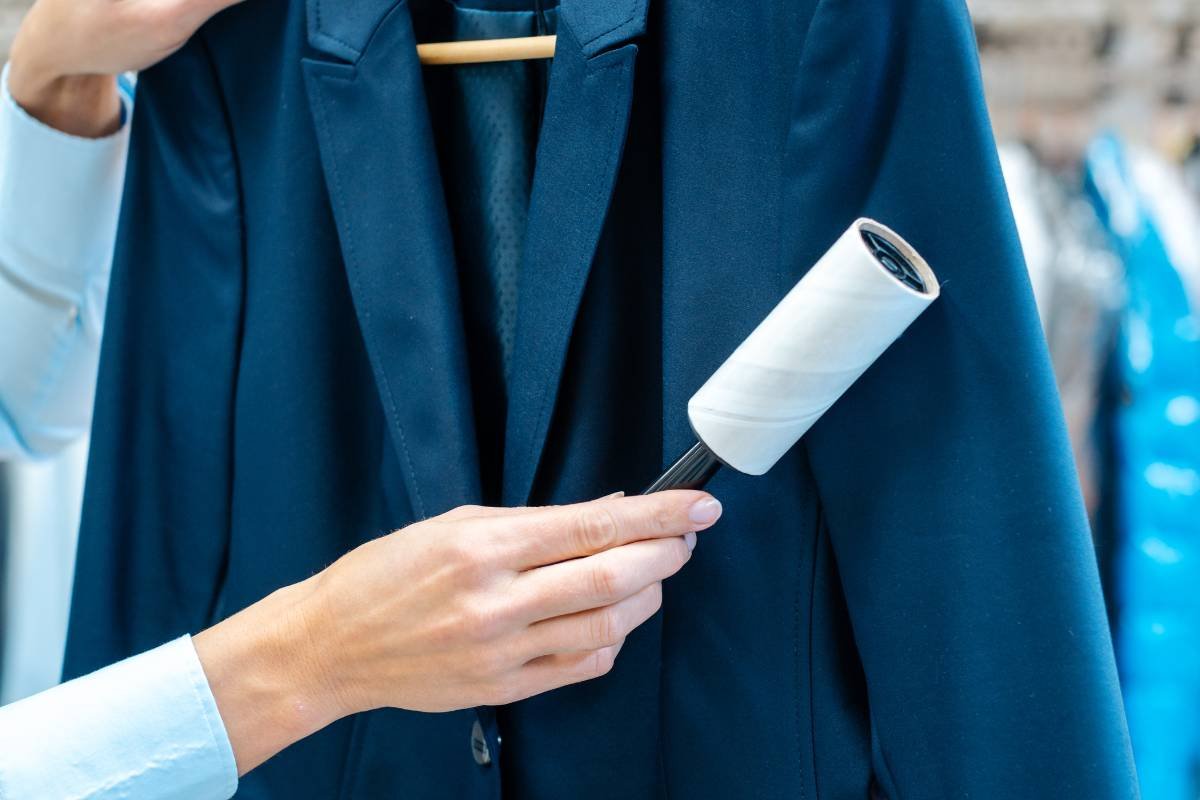
You can use the principles behind how does dry cleaning works to make smarter garment choices.
Garments That Should Be Dry Cleaned:
- Wool (especially tailored pieces prone to shrinking)
- Silk (delicate fibers prone to damage and dye bleeding)
- Blended fabrics with special finishes (structured blazers, coats)
- Delicate embellishments (beads, sequins, embroidery)
- Professional attire (suits, dress pants, formal wear)
- Garments with heavy oil-based stains (grease, paint, lipstick)
Garments That Can Often Be Home Washed:
- Cotton (durable and water-stable)
- Linen (durable and typically preshrunk)
- Polyester (synthetic, usually water-resistant)
- Blends clearly marked “machine washable.”
- Garments with water-soluble stains (sweat, food, mud)
Pro tip: Check care labels carefully. Many items marked “dry clean only” can actually be safely hand-washed in cool water with gentle detergent, saving money and environmental impact.
Cost Factors: Why Dry Cleaning is Expensive?
Understanding how does dry cleaning works also explains its pricing:
- Chemical solvents: Cost $3-8 per gallon; a typical machine cycle uses 5-20 gallons.
- Equipment maintenance: Extraction, drying, and pressing equipment requires regular servicing ($5,000-15,000 annually).
- Labor: Experienced dry cleaners command higher wages due to technical skill and training.
- Environmental compliance: Proper ventilation, solvent recovery, and waste disposal systems are expensive.
- Insurance and liability: Coverage for worker health and environmental compliance adds significant overhead.
- Utilities: Energy for heating, cooling, and pressurized systems is substantial.
Average dry cleaning costs:
- Simple items (shirts, blouses): $3-8
- Pants: $4-10
- Jackets or blazers: $7-15
- Formal wear (dresses, gowns): $15-50+
Tips for Maximizing Dry Cleaning Value
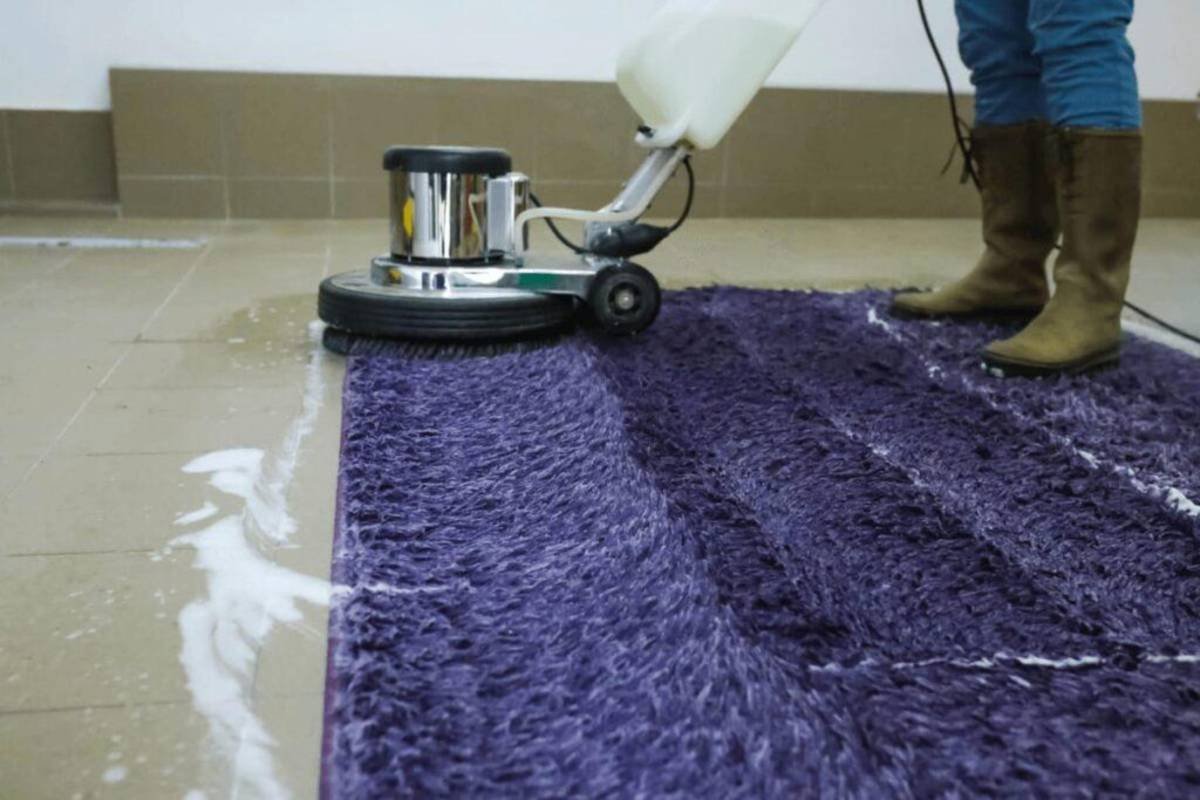
- Spot clean at home first: Many light stains respond to immediate home treatment, reducing dry cleaner workload.
- Separate items properly: Ensure correct sorting by color and fabric to prevent complications.
- Point out stains: Always alert the dry cleaner to specific stains; pre-treatment effectiveness increases with visibility.
- Ask about alternatives: Inquire whether wet cleaning or hand-washing might work for your garment.
- Reduce frequency: Airing out garments and spot-cleaning extends the time between full cleanings.
- Choose a reputable cleaner: Established facilities with modern equipment and trained staff provide better results.
The Future of Dry Cleaning: Sustainability and Innovation
From enzymatic cleaners to ultrasonic technology, the future of how does dry cleaning works is shifting toward greener, safer, and more efficient methods.
Emerging Technologies:
- Enzymatic cleaning: Using biological enzymes to break down stains in water-based systems.
- Ultrasonic cleaning: Sound waves to agitate contaminants from fibers without harsh chemicals.
- Ozone-based systems: Using ozone gas to oxidize stains and odors.
- AI-driven sorting: Machine learning to optimize fabric type matching and cycle selection.
Industry Sustainability Goals:
- Transition to 100% alternative solvents within 10-15 years.
- Zero-waste water discharge through closed-loop systems.
- Reduced energy consumption through optimized equipment.
- Worker safety improvements through chemical phase-out.
Consumer Trends:
- Growing preference for “clean beauty” in garment care.
- Interest in home-care alternatives (specialty detergents, delicate wash cycles).
- Willingness to pay premium prices for certified eco-friendly dry cleaning.
- Support for local, independently-owned cleaners with strong environmental practices.
Read Next: 5 Ways to Update Your Home’s Flooring on a Limited Income
Conclusion
Now that I finally understand what really goes on back there, it all feels a little less mysterious and somehow even more impressive.
Learning how does dry cleaning works hasn’t killed the drama at all; it’s made every garment rescue feel like a small, personal victory. That same shirt I nearly cried over came back looking so crisp you’d never guess it had survived a caffeinated catastrophe.
And honestly? That’s the comforting part. Because the next time life spills something unexpected on you, literally or figuratively, you’ll know there’s this entire backstage world, ready to bring things back to life.
Because sometimes all you need is a good cleaner, a little science, and the courage to hand over the mess.
FAQ: Common Questions about Dry Cleaning
1. Is dry cleaning actually dry?
No. It uses liquid solvents. This misconception is why many ask how does dry cleaning works in the first place.
2. Can I dry-clean delicate items at home?
Home dry cleaning kits exist but offer limited effectiveness. Professional dry cleaning uses industrial-scale equipment and trained specialists; home kits lack this capacity. For expensive delicates, professional cleaning is recommended.
3. How often should I dry-clean my clothes?
Frequency depends on use and fabric. Heavy-use garments (daily wear suits) may need cleaning every 4-6 wears; delicate items worn occasionally may only need annual cleaning.
4. Are there health risks from wearing dry-cleaned clothes recently?
Trace perc residue may remain on garments, but research suggests the risk to consumers is minimal compared to exposure for workers. Airing out garments for 24-48 hours allows residual solvents to evaporate.
5. What’s the difference between dry cleaning and wet cleaning?
Both are professional systems, but only one uses solvents, which is central to how does dry cleaning works in its traditional form.
6. How do I know if my garment can be home-washed?
Check the care label first. If it says “dry clean,” test an inconspicuous area with cool water and gentle detergent. Many “dry clean” items are actually safe for hand-washing.
7. Why do some stains remain after dry cleaning?
Some stains are permanent—especially dyes, heat-set stains, or those that have oxidized over time. Professional dry cleaners can identify permanent stains during intake and inform you of the risk.