Mining organizations operate in some of the most complex business environments in the world. Assets are distributed across remote regions, local regulations differ by country, and operational conditions vary from site to site. At the same time, executive teams expect consistent reporting, predictable costs, and unified governance across the entire enterprise. This tension often creates a false dilemma: either enforce strict standardization or preserve local autonomy. In reality, modern mining companies no longer need to choose between the two. With the right digital foundation, global consistency and site-level control can coexist. Many operators achieve this balance by relying on ERP software solutions for the mining industry that are designed specifically for asset-intensive, geographically dispersed operations.
Why Standardization Matters More Than Ever in Mining?
Operational fragmentation creates hidden risk. When each site follows its own processes, reporting structures, and data definitions, leadership loses visibility. Maintenance performance becomes difficult to compare. Procurement efficiency declines. Safety metrics lose reliability. Over time, these gaps translate into higher operating costs and slower decision-making.
Standardization provides a shared operational language. It aligns finance, maintenance, supply chain, and production planning around consistent rules and data structures. For mining groups managing multiple pits, processing plants, or underground operations, this consistency is essential for accurate forecasting and long-term capital planning.
Yet rigid templates often fail in practice. Local teams face unique geological conditions, workforce constraints, and regulatory obligations. Systems that ignore these realities tend to be bypassed or heavily customized, eroding the benefits of standardization altogether.
The Challenge of Preserving Local Autonomy
Local control is not resistance to governance; it is a requirement for operational safety and efficiency. A processing plant in Northern Europe does not operate under the same constraints as an open-pit site in South America or a remote operation in Australia. Differences in equipment, climate, labor agreements, and logistics require localized decision-making.
Problems arise when corporate systems impose uniform workflows that cannot accommodate site-specific needs. Maintenance planners lose flexibility. Inventory rules become impractical. Production scheduling tools fail to reflect real constraints. Eventually, local teams revert to spreadsheets or parallel systems, reintroducing silos.
The real objective, therefore, is not uniform execution but standardized structure with configurable behavior.
Digital Architecture as the Balancing Layer

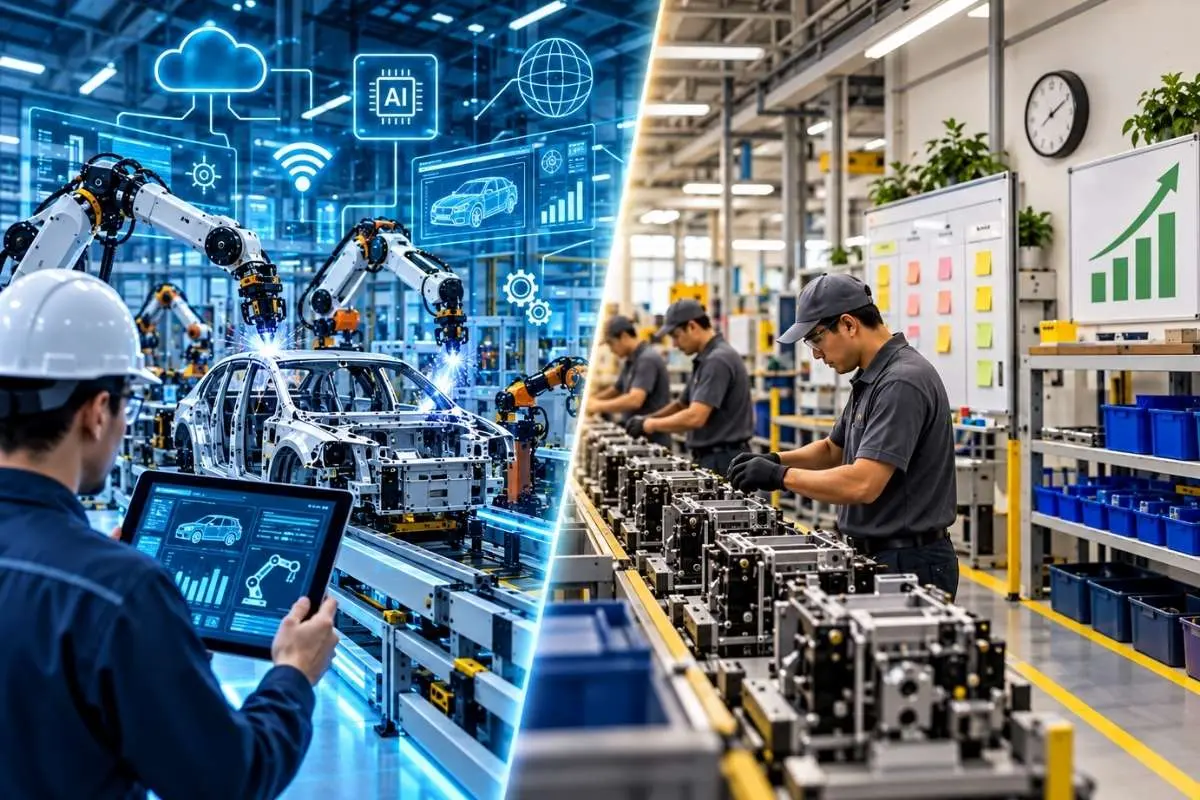
Modern mining ERP platforms address this challenge by separating core governance from local execution. Centralized data models, financial structures, and reporting standards define the enterprise framework. Within that framework, sites adapt workflows, parameters, and operational rules without breaking compliance.
This approach allows leadership to maintain consistency while empowering site managers to respond quickly to on-the-ground realities. Digital systems become enablers rather than constraints.
Key architectural principles typically include:
- Central master data governance combined with site-specific operational parameters
- Shared asset hierarchies with localized maintenance strategies
- Unified financial structures supporting region-specific regulatory reporting
- Configurable workflows that reflect site conditions without altering core logic
These principles reduce complexity while preserving operational agility.
Standardization Across the Mining Value Chain
Mining ERP platforms’ operations span far beyond extraction. Exploration data, asset maintenance, supply logistics, production planning, environmental reporting, and financial consolidation all contribute to performance. Fragmentation in any part of this chain undermines overall efficiency.
A unified system ensures that information flows seamlessly between functions. Maintenance actions inform production forecasts. Inventory availability influences work scheduling. Financial impact becomes visible in near real time. Decision-makers gain confidence that insights reflect reality rather than delayed or incomplete data.
This level of coordination becomes especially critical during periods of market volatility, equipment shortages, or regulatory change.
The Role of Mining ERP Platforms

Generic enterprise systems often struggle with mining-specific complexity. Asset intensity, long lifecycle equipment, remote connectivity constraints, and strict compliance requirements demand specialized capabilities.
Industry-focused mining ERP platforms address these needs by embedding logic directly into their design. Asset management supports preventive and predictive strategies. Supply chain functions reflect remote site logistics. Financial modules accommodate project-based costing and capital-intensive investments.
Equally important, modern solutions emphasize configurability over customization. This distinction allows mining groups to roll out standardized templates quickly while retaining the flexibility required at individual sites.
Where Novacura Fits into the Equation?
While mining ERP platforms provide the foundation, many organizations require additional flexibility to adapt workflows without compromising governance. This is where specialized solution partners play a critical role.
Novacura works with mining companies to extend and adapt ERP environments through low-code applications, mobile solutions, and integration layers tailored to operational reality. Instead of replacing core systems, Novacura enhances them, enabling local teams to work efficiently while remaining aligned with corporate standards.
Typical scenarios include mobile maintenance workflows for remote sites, custom approval processes aligned with local regulations, or integrations that connect operational data with enterprise reporting structures. These extensions allow mining groups to standardize how information is structured while allowing sites to control how work is executed.
Achieving Long-Term Operational Alignment

Successful standardization is not a one-time project. It is an ongoing capability. Mining organizations that thrive in complex environments treat digital platforms as living systems that evolve alongside operations.
By combining structured governance with adaptable execution layers, companies reduce friction, improve transparency, and strengthen resilience. Local teams gain tools that reflect real conditions. Corporate leaders gain confidence in data-driven decisions.
The result is not uniformity for its own sake, but coordinated performance across diverse operations. For mining companies facing increasing pressure to improve efficiency, safety, and sustainability, this balance is no longer optional—it is a strategic necessity.