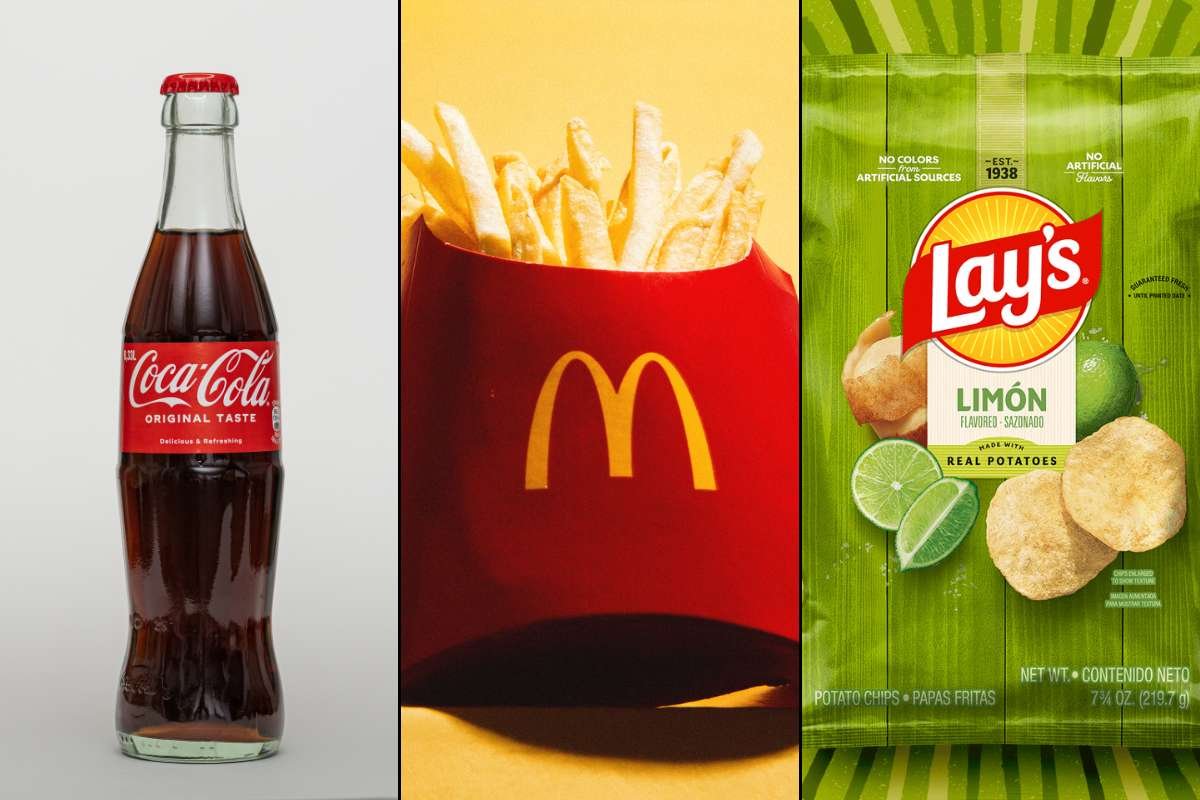
When you think of American culture, certain foods come to mind almost instantly. A McDonald’s burger on a road trip, an ice-cold Coca-Cola during summer, or a warm bowl of mac and cheese shared at home. Calling them simply ‘meals’ strips them of their cultural weight. They’re small moments that millions of people grow up with, and they’ve helped define what comfort food means in the United States.
Many of the most popular American food brands continue to hold strong because people trust what they already love. Chips, such as Lay’s and Doritos, continue to fill store shelves, while classic sweets like M&M’s and Reese’s remain crowd favorites. Chains like McDonald’s and Chick-fil-A continue to draw steady foot traffic. Dave’s Hot Chicken, which began as a tiny parking-lot stand in Los Angeles in 2017, has risen to the top as one of the most beloved food brands in America, according to recent surveys, even surpassing long-dominant big names.
In this article, you’ll find the 25 most popular American food brands, why some long-loved names continue to stay relevant, how newer brands are making their mark, and what’s truly influencing people’s choices.
The Classics That Built America’s Taste
The most popular American food brands come in different sizes and forms. Some have been around for over a century, quietly becoming part of our everyday routines. These companies didn’t just succeed by luck. They built trust, created rituals, and found ways to remain relevant even as the world around them changed.
1. McDonald’s: The Golden Arches Everyone Knows

McDonald’s opened in 1940 and has grown into a global hustler, generating $25.92 billion in revenue in 2024, with the United States alone accounting for $10.41 billion of that figure. The chain is widely recognized for its consistency across every location and its rapid adoption of technology to meet customer needs. In 2024, they introduced affordable $5 combo meals to attract budget-conscious customers. As a result, 175 million people now use their loyalty app, collectively spending approximately $30 billion annually through mobile orders.
While health concerns about their menu and the budget perception of the brand continue to surface, McDonald’s keeps adapting by rolling out faster mobile ordering systems and exploring ghost kitchens to stay competitive among the most popular American food brands.
2. Coca-Cola: The Drink That Became an Icon

Coca-Cola, founded in 1886, is the world’s undisputed number one soft drink, with a brand value of $106.45 billion as of 2024. Coca-Cola Classic leads the market by a wide margin, but the real growth story is in zero-sugar versions, such as Coke Zero, which saw an explosive 11% sales increase in Q3 2024 alone. The company holds 44.9% of the entire US carbonated soft drink market and also owns Sprite, which now ranks as the third most popular soft drink, and Diet Coke, which sits in fifth place.
Beyond traditional sodas, Coca-Cola has expanded into coffee, tea, and functional beverages to diversify revenue streams. Sustainability concerns and ongoing health criticism about sugar content remain challenges for this iconic, popular American food brand.
3. Lay’s: 100% Recognition, Everywhere You Look

Lay’s achieved something remarkable: 100% brand awareness among Americans surveyed, meaning literally every person knows the name. The brand has been a household staple since 1932, under PepsiCo’s Frito-Lay division, and is available in virtually every grocery store aisle and gas station across the country. Available in classic, flavored, kettle-cooked, multigrain, and constantly rotating limited-edition varieties, the brand keeps consumers engaged and coming back for more.
Frito-Lay, which houses Lay’s along with Doritos and Cheetos, generates over $1 billion in annual sales per major brand, employs 80,000 people, maintains 55 manufacturing plants, and distributes to nearly 40 countries worldwide. Health-conscious trends toward nuts and seeds, along with growing private label competition, pose challenges; yet Lay’s dominance among the most popular American food brands remains virtually unshaken.
4. Pepsi/PepsiCo: The Portfolio Play

PepsiCo operates as a diversified giant with 23 major brands, each generating over $1 billion in annual sales, creating a robust ecosystem that extends far beyond beverages. In Q3 2024 alone, the company reported net revenue of $23 billion, with a market capitalization of $211.8 billion as of December 2024. However, the Pepsi beverage brand itself has faced setbacks, dropping from its traditional second-place position to fourth place in soft drink rankings, now trailing Coca-Cola, Dr Pepper, and Sprite.
The Pepsi brand alone is valued at $22.6 billion, making it the second most valuable soft drink globally. The company fights back by heavily investing in its snack portfolio, such as Lay’s and Doritos, while simultaneously pushing zero-sugar beverages to remain competitive and relevant among the most popular American food brands today.
5. Starbucks: The Place Where Coffee Became a Lifestyle

Starbucks, founded in 1971, has become a global phenomenon, operating 40,199 stores worldwide and generating $36.18 billion in annual revenue, with 33.8 million active loyalty members in the US market alone. The company fundamentally changed how Americans view coffee by inventing the “third place” concept, the space between home and work where people gather, work, and socialize.
The company’s reach extends globally, with the majority of its locations now operating outside the United States in countries such as Turkey, Taiwan, and Indonesia. However, 2024 brought challenges, as comparable store sales dropped 7% globally and sales in China fell 14%, indicating that customers were visiting stores less frequently. Starbucks is responding through significant technology investments, expanding drive-thrus, and implementing faster ordering systems to maintain its position.
The Standouts: Masters of Their Food Categories
These brands may not have the household name recognition of the Legacy Giants, but they dominate their specific categories completely. When people want what they specialize in, these are the names that come to mind first. They’ve spent decades becoming the best at one thing, and consumers reward them with loyalty.
6. Chick-fil-A: The Chicken Hustler

Chick-fil-A achieved $22.7 billion in total systemwide sales for 2024, representing a 5.4% increase from the previous year, despite consumers reducing their visits due to higher costs. The chicken chain operates approximately 3,109 locations, primarily in the United States, and generated $9.06 billion in company revenue. What sets Chick-fil-A apart is its average unit volume of $749 million per location in 2024, the highest among all fast food chicken chains, significantly outpacing KFC and Popeyes.
The company has built its reputation on consistency, high-quality chicken, and employee satisfaction, which directly translates into customer loyalty. Despite challenges from cultural controversies and limited growth from closing on Sundays, Chick-fil-A remains one of the most popular American food brands and continues to expand its presence.
7. Heinz: The Condiment Authority Since 1869

Heinz was founded in 1869 in Sharpsburg, Pennsylvania, and quickly became the leading producer of pickles, vinegar, and ketchup in the United States. The iconic “57 Varieties” slogan, created in 1896, has become an integral part of American culture. Heinz Ketchup first hit the market as “catsup” in 1876 and revolutionized the way condiments were made and consumed through the implementation of strict safety standards and innovative preservation techniques.
Today, the brand maintains 98% awareness among American consumers, with its distinctive glass bottle design, introduced in 1889, becoming a symbol of quality and trust. The slow-pouring consistency and unique blend of sweet, tangy, and savory flavors remain unchanged, which is precisely why people continue to buy it. While health trends and private labels create challenges, Heinz’s position as a condiment leader remains unshaken after 155 years.
8. Nestlé: The Diversified Food Giant

Nestlé operates as the world’s largest food company, with annual revenue of roughly $106 billion, making it a dominant force in the global food industry. The company owns numerous popular brands, including KitKat, which is worth approximately 8 billion euros (roughly $ 8.8 billion) as of 2025, demonstrating explosive growth in European markets. KitKat recorded over 1.4 billion Swiss francs in sales growth over the past two years alone, demonstrating the brand’s continued relevance. Nestlé also owns Häagen-Dazs ice cream, Purina pet food, and Café Nécessa café coffee, among dozens of other recognizable brands spanning multiple categories.
The company manages inflation pressures and changing consumer preferences by investing heavily in its most prominent brands and exploring new growth opportunities. Nestlé remains one of the most popular American food brands globally, despite being a Swiss company with significant American operations.
9. Oreo: The Best-Selling Cookie in the World

Oreo was introduced by Nabisco in 1912 and has become an absolute icon, selling over 60 billion cookies annually across more than 100 countries under Mondelez International ownership. Brand awareness among American consumers hit 94% in 2024 studies, with 78% of Oreo purchasers associating the brand with childhood memories. The company has created over 233 documented limited-edition flavor variations, continually launching new options to keep consumers excited and engaged. Limited-edition releases typically sell out within their availability windows, achieving 87% retail sell-through rates, and command prices 15 to 25 percent higher than standard varieties.
The iconic black and white sandwich cookie design, with its embossed pattern and contrasting colors, registers instant recognition across demographics. Oreo’s dual positioning as both a classic, nostalgic treat and an innovation platform keeps the brand relevant across generations, supporting its position as the most popular American food brand in the cookie category.
10. Reese’s: The Peanut Butter Cup Icon

Reese’s holds 98% brand awareness and 79% favorability among American consumers, making it one of the most recognizable candy brands in the nation. The Hershey Company, which owns Reese’s, reported total net sales of $11.2 billion in 2024, with the confectionery segment generating strong growth driven by innovative products and effective marketing. Reese’s Peanut Butter Cups are the leading Halloween candy among children, with over three-quarters of surveyed children choosing Reese’s when asked to pick one candy over others.
The brand expanded beyond the classic peanut butter cup into multiple formats, including Reese’s Pieces, Fast Break, and countless limited-edition variations that test new flavor combinations. The perfect balance of peanut butter and chocolate created a devoted following that spans generations and consumption occasions. Reese’s continued innovation and multi-format approach keep it firmly positioned as one of the most popular American food brands in the confectionery category.
Fast-Food Rising Stars: Growth and Cultural Impact
These brands represent the next generation of popular American food brands that are rewriting the rules of the industry. They’re not content being second-tier. Through innovation, aggressive expansion, and genuine connections with customers, they’re climbing the ranks fast and challenging the old guard for market dominance.
11. Taco Bell: The Innovation Leader

Taco Bell generated a record-high $1 billion in profit during 2024 and outperformed the entire quick-service restaurant category despite industry-wide headwinds. The company experienced US same-store sales growth in all four quarters of 2024, with Q2 showing a 5% increase driven by menu innovation and value offerings. Digital sales exploded by 32% to reach $6 billion annually, with mobile customers spending more per transaction.
The chain is executing its RING (Relentlessly Innovative Next-Generation Growth) strategy by doubling the number of menu introductions in 2025, launching new items every four to five weeks to outperform the category consistently. Its premium Cantina Chicken menu contributed 25% of orders and shifted sales mix by 10 points toward chicken. Taco Bell’s aggressive approach positions it as one of the most popular American food brands among younger demographics.
12. Chipotle: The Unstoppable Growth Engine

Chipotle has become a juggernaut in the fast-casual dining industry, reporting total revenue of $11.3 billion for 2024, a 14.6% increase from $9.9 billion in 2023. The company opened 304 new restaurants in 2024, marking the highest single-year total in its history, and plans to open 315 to 345 additional restaurants in 2025. Comparable restaurant sales grew 7.4% for the whole year, with 5.3% higher transactions, while digital sales now represent 35.1% of total food and beverage revenue.
Chipotle has already reached 4,000 locations by December 2025 and maintains ambitious goals to expand to 7,000 restaurants across North America by 2030. Operating margins expanded to 16.9%, with individual restaurant margins reaching 26.7%. This growth and profitability demonstrate why Chipotle stands among the most popular American food brands of the new generation.
13. Dunkin’: The Coffee and Convenience Leader

Dunkin’ generated $12.5 billion in systemwide sales in 2024 and continues to expand its presence beyond the Northeast into national markets. The brand operates over 9,700 locations globally and has invested heavily in digital transformation, with mobile ordering accounting for more than 7% of all transactions, and app users spending significantly more on average. The company pioneered mobile ordering for fast food and operates the DD Perks loyalty program, which delivered double-digit growth in membership.
Dunkin’ is positioning itself as a coffee-first brand, capitalizing on the projected 5.4% annual growth of the global coffee market through 2030. Their NextGen store format features dedicated drive-thru lanes for mobile orders, which achieve 40% higher sales volumes than standard locations. Dunkin’s balance of convenience, affordability, and digital-first strategy keeps it competitive among American food brands.
14. Domino’s: The Digital Pizza Pioneer

Domino’s operates the world’s largest pizza delivery chain, with 21,358 locations across the United States and 85 other countries, generating over $19 billion in annual sales as of 2024. The company’s digital sales now account for 85% of its US revenue, demonstrating its dominance in tech-enabled ordering and delivery. Recently, Domino’s added DoorDash as a delivery partner across the United States, opening incremental sales channels in suburban and rural markets while maintaining its own driver fleet.
The franchise model shields the company from operational costs while generating consistent revenue streams through royalties and supply chain revenue. Global net store expansion added 17 units in the US, though international closures reduced overall net growth. Despite some same-store sales challenges, with a 0.5% decline in the US, Domino’s remains a leader in pizza delivery and one of the most popular American food brands, thanks to its digital-first approach and franchise excellence.
15. Popeyes: The Authentic Cultural Brand

Popeyes Louisiana Kitchen generated approximately $5.7 billion in systemwide sales for 2024 and continues to expand rapidly with 3,148 locations globally, adding 97 units year-over-year. The brand experienced a complete renaissance after its viral chicken sandwich launched in August 2019, which sold out nationwide in two weeks and generated an estimated $23 million in free publicity.
The sandwich generated a 103% traffic increase and created extended lines outside locations, becoming a cultural phenomenon that transcended typical fast food marketing. Following this success, Popeyes expanded its sandwich offerings with Buffalo Ranch and Blackened Chicken variations while bringing back the beloved Cajun Flounder Sandwich. The brand’s authentic Louisiana heritage, quality differentiation from competitors, and ability to create culturally relevant products position it among the most popular American food brands for consumers seeking genuine flavor and cultural connection.
Everyday Classics Americans Keep Going Back To
These brands may not always grab headlines, but they remain deeply ingrained in American life. Some have been part of family routines for generations. Others have built devoted communities around their unique approach to food and shopping. They’ve earned their place by staying true to what they do best while adapting to modern consumer needs.
16. Ritz Crackers: Premium Snacking Since 1934

Ritz Crackers were introduced by Nabisco in 1934 during the Great Depression with a deliberate strategy to offer affordable luxury when people needed it most. A Nabisco employee named Sydney Stern had one weekend to come up with a competitor to Sunshine Biscuits’ popular cracker, and he chose the name “Ritz” to evoke elegance and high society, even though the crackers cost just 19 cents.
The brand quickly became iconic, even appearing on menus at the Waldorf-Astoria Hotel during the Depression era. Today, Ritz maintains 98% brand awareness and 80% favorability among American consumers, with a presence in virtually every grocery store nationwide. Available in classic, flavored, kettle-cooked, and multigrain varieties, Ritz represents premium snacking positioning. Despite competition from private labels and health-conscious alternatives, Ritz remains a major American food brand in the cracker category.
17. Snickers: The World’s Best-Selling Chocolate Bar

Snickers was created in 1930 by Frank Mars, the founder of Mars, Inc., and was named after the Mars family’s favorite horse. Initially manufactured in Chicago and selling for just five cents, the candy bar combined nougat, caramel, and peanuts, all covered in milk chocolate, creating an irresistible combination that became an instant hit, even during the Great Depression. In 1960, the formula was enhanced by adding peanut butter nougat, and in 1996, the company increased the peanut content by 10 percent to strengthen consumer appeal.
Today, Mars produces 15 million Snickers bars daily with annual global sales exceeding $380 million, making it the world’s most popular chocolate bar. The brand achieved 98% awareness and 77% favorability among American consumers. Snickers’ famous “You’re Not You When You’re Hungry” marketing campaign has made its place among the most popular American food brands globally for decades.
18. Twix: The Dual-Bar Icon

Twix was initially invented in 1967 by Forrest Mars and Mars Limited in the United Kingdom under the name “Raider,” featuring a unique combination of biscuit, caramel, and chocolate. The candy bar was renamed to Twix in 1979 when it was introduced to the United States, with the name cleverly referencing the product’s distinctive “twin sticks” or dual-bar format. In the 1980s, when Raider sales stagnated, Mars repositioned and rebranded the product worldwide between 1991 and 2000 with the slogan “Raider is now Twix, nothing else changes.” By 2012, Twix had sold more than 161 million units, generating nearly $194 million in annual sales.
The brand expanded into numerous flavor varieties, including peanut butter, dark chocolate, white chocolate, cappuccino, and seasonal limited editions. Twix maintains 98% brand awareness and continues to compete strongly among the most popular American food brands by using playful marketing around left versus right bar preferences.
19. Trader Joe’s: The Cult Grocery Brand

Trader Joe’s has built a rare cult following in the grocery world, driving stronger loyalty than traditional chains. With an estimated revenue of $16.5 billion in 2023 and over 700 stores, it achieves exceptional sales per square foot, at roughly $1,750, significantly outpacing Walmart and Target. Over 80% of its products are private label, allowing competitive pricing, consistent quality, and fast product innovation.
Its limited SKU count of about 4,000 items creates a curated shopping experience that appeals to students, young professionals, and value-focused shoppers. In 2024, Trader Joe’s outpaced the broader grocery category in monthly foot traffic and ranked as Yelp’s second most-loved brand. By 2025, it will remain a top private-label leader, known for its originality and affordability.
20. Kraft Mac and Cheese: The Comfort Food Staple

Kraft introduced boxed macaroni and cheese in 1937 during the Great Depression, promoting it as “a meal for four in nine minutes” for just 19 cents. It became an instant hit, selling 9 million boxes in its first year and more than 50 million packages by 1943 as families relied on it as an affordable dinner option. During World War II, its popularity grew further, as two boxes required only one ration point, making them valuable when meat was scarce.
The blue box design quickly became a staple in American households. In 2025, Kraft Mac and Cheese holds 96% brand awareness and continues to sell millions of boxes each year. Despite health-driven shifts, its nostalgia, affordability, and multi-generational appeal continue to make it America’s top food brand.
The Up-and-Coming Favorites Winning Over America
These brands represent the future of popular American food brands. They’re newer, faster-growing, and often outpacing established names in customer satisfaction and expansion. While they may not yet have the household name recognition of legacy brands, they’re making serious noise and deserve attention from anyone watching the food industry.
21. Dave’s Hot Chicken: From Parking Lot to #1 Most-Loved Brand

Dave’s Hot Chicken started as a parking lot pop-up in Los Angeles in 2017 and became Yelp’s number one most-loved brand in 2025, a remarkable achievement that shocked the industry. The company was founded by friends with fine-dining experience who wanted to perfect Nashville-style hot chicken, offering multiple spice levels ranging from “No Spice” to “Reaper,” as well as creative offerings like “Dave’s NOT Chicken” cauliflower bites. According to Yelp data, 71% of Dave’s Hot Chicken reviews are four or five stars, one of the highest review distributions of any brand this year.
The chain was acquired for $1 billion earlier in 2025, validating its explosive growth trajectory and cultural appeal. Dave’s rapid expansion, cult following, and focus on quality ingredients over gimmicks position it as the most popular American food brand among younger, value-conscious consumers who reward authenticity.
22. Raising Cane’s: The Chicken Finger Phenomenon

Raising Cane’s generated $5.1 billion in revenue in 2024, marking its strongest year to date, while serving over 473 million customers and maintaining the lowest crew turnover rate since 2019. The chain deliberately keeps its menu simple, featuring chicken fingers, crinkle-cut fries, Texas toast, coleslaw, and one signature sauce, which allows for laser-focused operational excellence and consistent quality.
Raising Cane’s has the highest average unit volume among major fast-food chains, except for Chick-fil-A, with locations averaging $5.7 million in annual sales, more than double the comparable figures of Wendy’s. In 2024, the company opened 118 new locations and plans nearly 100 more in 2025, currently operating over 800 locations across 42 states. The founder plans to reach 1,600 locations and top-10 brand status in the coming years, making Raising Cane’s one of the fastest-growing popular American food brands.
23. Del Taco: Beating Legacy Chains at Their Own Game

Del Taco dethroned Chick-fil-A from USA Today’s Best Drive-Thru award in 2024 and was voted the best fast food restaurant in the 2025 10Best Reader’s Choice Awards, a remarkable achievement for a brand that consumers had long overlooked. The chain offers something unique: a diverse menu that combines Mexican favorites, such as carne asada tacos and burritos, with American burgers and fresh ingredients prepared in-restaurant kitchens, not on assembly lines.
Del Taco introduced its Del Dorado Chicken menu featuring grilled marinated chicken with fresh Salsa Roja, house-made guacamole, and spicy Jack cheese, directly competing with premium fast-casual concepts on flavor. The brand’s commitment to made-fresh quality at drive-thru speeds, combined with competitive pricing and genuine value, positions it as one of the most popular American food brands for customers tired of premium prices.
24. CAVA: Mediterranean Goes Mainstream

CAVA surpassed the $1 billion revenue milestone after just two years as a public company, growing 33% year-over-year in 2024 with 367 restaurants and achieving same-store sales growth of 13.4%, including a 9% increase in traffic. The Mediterranean fast-casual brand achieved average unit volumes of $2.9 million while expanding to 415 locations by Q3 2025, with new units generating sales of over $3 million within their first month of operation.
CAVA’s strategic menu additions, such as grilled steak, exceeded expectations, and its reimagined loyalty program drove repeat visits among younger consumers seeking health-conscious dining options. The brand opened 58 new restaurants in 2024, with plans for 62 to 66 openings in 2025, establishing Mediterranean cuisine as the next major cultural dining category in America. CAVA’s rapid growth, strong unit economics, and cultural resonance position it among the most popular American food brands for Gen Z and millennial consumers.
25. Shake Shack: Premium Burgers Going Suburban

Shake Shack ended 2024 with record revenue of $1.3 billion and opened 76 new restaurants, including 43 company-operated locations, while planning to quadruple its footprint to 1,500 units domestically in the coming years. The premium burger concept grew same-store sales by 3.6% in 2024, with restaurant-level margins expanding nearly 300 basis points to 22.7%, the highest fourth-quarter level since 2017.
The chain generated $4.1 million in company-operated average unit volumes while reducing construction costs from $2.6 million in 2023 to $2.4 million in 2024, with a target of $2.2 million in 2025. Shake Shack is pivoting from urban “Main on Main” locations to suburban expansion, featuring drive-thrus and smaller formats, to reach new markets while maintaining its food quality and culinary standards. Visits surged 21.7% in 2024 compared to 2023, and the brand is positioned to become one of the most popular American food brands in the premium burger category.
Why These Brands Won: The Psychology of Brand Loyalty
Understanding why people choose one brand over another goes beyond taste or price. The most popular American food brands succeed because they connect emotionally with consumers in ways that keep customers coming back for lifetimes.
Childhood Memories Create Lifelong Customers
When people grow up eating Oreos, drinking Coca-Cola, or grabbing McDonald’s on road trips, those memories stick with them into adulthood. Coca-Cola’s “Share a Coke” campaign increased sales by 20% because it tapped directly into memories of sharing drinks with friends and loved ones. Oreo has mastered this by constantly releasing limited-edition flavors, triggering childhood nostalgia with every trip to the grocery store. Three-quarters of consumers prefer the chocolate and candy brands they grew up with, and this extends to comfort foods like Kraft Mac and Cheese, where parents pass down traditions to their children.
Generational Preferences Split Dramatically
Baby Boomers remain loyal to brands like McDonald’s, Coca-Cola, and Chick-fil-A because these companies represent consistency and established trust built over decades. Millennials shifted toward brands like Chipotle and Trader Joe’s, which offered customization, sustainability, and transparency about the origin of their food.
Gen Z takes authenticity even further. Nearly 60% of Gen Z and millennial consumers prioritize authenticity in food over price or convenience. They detect corporate polish instantly and reject it. Dave’s Hot Chicken became the most-loved brand in 2025 because it felt rooted—founded by friends in a parking lot, not by a corporate committee. Gen Z views food as a form of self-expression and seeks brands that align with their personal identity, whether that involves health-conscious eating or cultural appreciation.
Authenticity Beats Corporate Polish
The rise of Popeyes and Dave’s Hot Chicken reveals that consumers value authentic stories over corporate messaging. When Popeyes’ viral 2019 chicken sandwich launched, people believed it was genuine competition on product quality, not marketing spend. When brands showcase real people and genuine passion, an emotional connection follows.
McDonald’s rewards program demonstrates that brand psychology is practical: members visit 23% more frequently and spend 15% more per transaction because they feel recognized and valued individually. The most popular American food brands winning in 2025 understand you can’t fake authenticity. Brands built on genuine values from the start, such as Dave’s Hot Chicken, outcompete legacy brands that attempt to convince people they care through generic campaigns.
Conclusion
The most popular American food brands face a pivotal moment. Legacy giants like McDonald’s and Coca-Cola must compete against emerging brands that prioritize authenticity and quality. Consumer preferences are shifting toward health-conscious options, personalized experiences, and transparency. Brands succeeding in 2026 will strike a balance between affordability and innovation, respond to value-seeking behavior, and foster emotional connections that extend beyond corporate messaging. Winners will adapt quickly to changing tastes while maintaining the quality and authenticity that made them beloved in the first place.