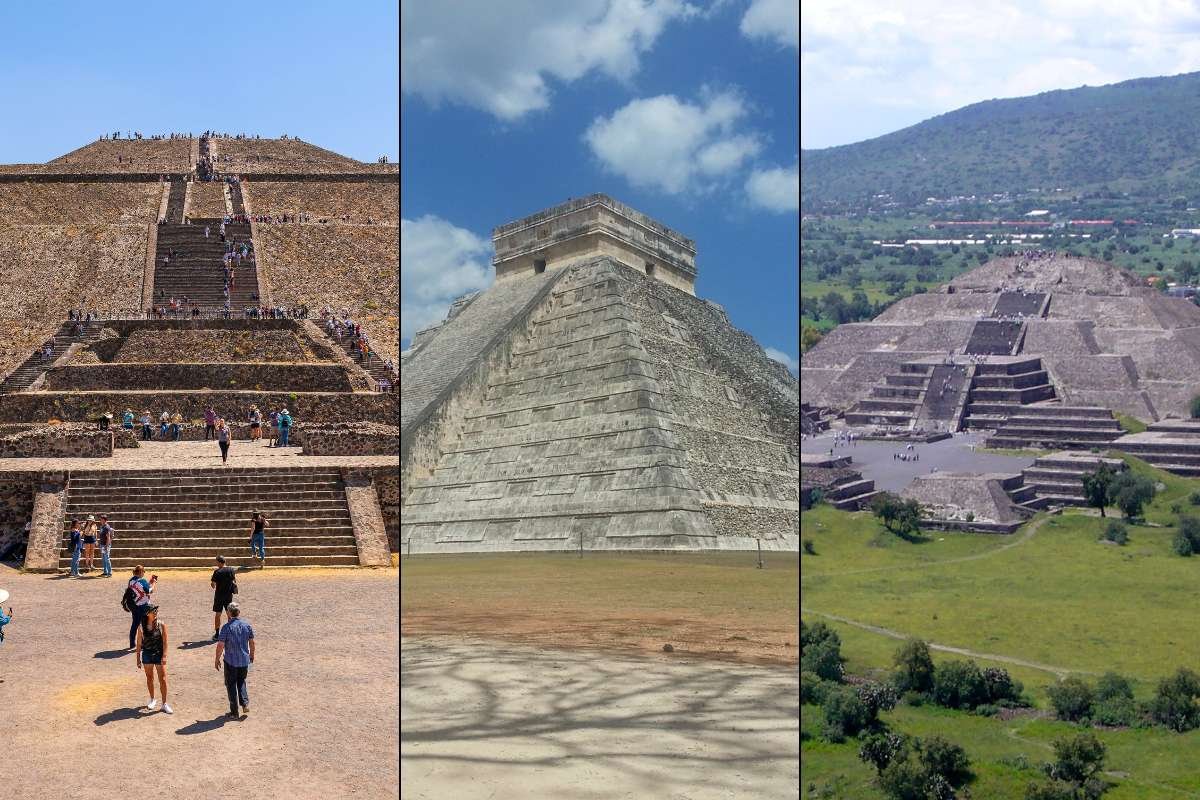
Mexico did not just build pyramids. It built confidence using stone, patience, and belief. Long before modern cities appeared, ancient people here shaped hills into symbols of power. While many civilizations wrote their ideas on paper or clay, the pyramids in Mexico chose something bolder. It stacked knowledge, faith, and science toward the sky. These pyramids watched empires rise and fall. They stood through wars, storms, and centuries of silence.
Many people still connect pyramids only with Egypt. That idea feels incomplete. Mexico holds some of the most impressive pyramids on Earth, both in size and meaning. Each structure tells a story of sharp thinkers, skilled builders, and cities that once controlled trade, culture, and belief.
In this guide on Pyramids to Visit in Mexico, you will walk through those stories step by step.
You will understand why these pyramids exist, what makes each one special, and how to visit them without stress. Expect history that feels alive, travel tips that make sense, and facts that stay with you long after the last step.
Why is Mexico famous for Pyramids?
Mexico is famous for pyramids because its ancient people valued knowledge more than comfort. For them, wisdom was power, and pyramids were the safest place to protect it. Civilizations like the Olmec, Maya, Toltec, and Aztec built pyramids to study the sky, honor their gods, and guide their communities. Every stone had a reason. Every step had a purpose.
These pyramids in Mexico worked like giant tools. Some tracked the movement of the sun and stars. Others hosted important ceremonies, public gatherings, and leadership decisions. Unlike Egyptian pyramids, these were not built to hold the dead. They stayed active and full of life for hundreds of years. People prayed there, planned wars, celebrated seasons, and taught future generations.
This guide on Pyramids to Visit in Mexico helps readers understand where these powerful structures stand today, why they still matter, and how to experience them slowly and thoughtfully without missing their deeper meaning.
15 Pyramids to Visit in Mexico Every Curious Traveler Talks About
This list of pyramids in Mexico is not random and not based on popularity alone. It is curated using multiple qualitative and travel-relevant factors,
| No. | Pyramid Name | Location | Why It’s Special | Best Time to Visit |
| 1. | Great Pyramid of Cholula | Puebla | The biggest pyramid ever built | Winter mornings |
| 2. | Pyramid of the Sun | Teotihuacan | Aligned with the sun | Early morning |
| 3. | Pyramid of the Moon | Teotihuacan | Mirrors a sacred mountain | Late afternoon |
| 4. | El Castillo | Chichén Itzá | Shadow serpent on equinox | March & September |
| 5. | Temple of the Warriors | Chichén Itzá | Warrior stone columns | Morning |
| 6. | Nohoch Mul | Coba | One of the few climbable pyramids | After sunrise |
| 7. | Pyramid of the Magician | Uxmal | Unique oval base design | Late afternoon |
| 8. | Temple I | Tikal region (near the Mexico border) | Symbol of royal power | Dry season |
| 9. | Temple of Inscriptions | Palenque | Tomb of King Pakal | Cool mornings |
| 10. | Temple of the Cross | Palenque | Explains Maya creation beliefs | After rainfall |
| 11. | La Venta Pyramid | Tabasco | Oldest pyramid tradition | Winter months |
| 12. | Tenayuca Pyramid | State of Mexico | Stone serpent carvings | Weekdays |
| 13. | Tula Pyramid B | Hidalgo | Warrior statues on top | Morning |
| 14. | Xochicalco Pyramid | Morelos | Astronomy carvings | Dry season |
| 15. | Kinich Kak Moo Pyramid | Izamal, Yucatán | Dominates the yellow city | Early evening |
1. Great Pyramid of Cholula

Location: Puebla | Size: Largest pyramid by volume in the world
The Great Pyramid of Cholula was not built at once. Different civilizations added layers over nearly a thousand years. Each new group respected the older structure and built directly on top of it. This slow growth made the pyramid wider and larger than any other in the world. Over time, soil and plants covered it, making it look like a natural hill. When the Spanish arrived in the 1500s, they did not realize that pyramids in Mexico stood there. They built a church on top, hiding the pyramid until tunnels later revealed its true size.
Specialty: It holds the title of the largest pyramid ever built by volume.
Best Time to Visit: Visit early morning in the winter months. Clear skies reveal views of nearby volcanoes. The weather stays cool, and walking tunnels feels comfortable.
2. Pyramid of the Sun

Location: Teotihuacan | Size: 216 feet tall
The Pyramid of the Sun was built around 200 CE when Teotihuacan was one of the largest cities on Earth. Thousands of workers shaped stone and earth with careful planning. The builders aligned the pyramid with the movement of the sun and nearby mountains. No written records explain who ruled the city, which makes the site even more mysterious. Archaeologists believe the pyramid served as a spiritual center where people gathered for major rituals. Its size and placement show strong knowledge of math, astronomy, and city design.
Specialty: It aligns with solar events and holds deep cosmic meaning.
Best Time to Visit: Arrive at opening time. Midday heat drains energy fast. Early hours give quiet paths and better photos.
3. Pyramid of the Moon

Location: Teotihuacan | Size: 141 feet tall
The Pyramid of the Moon stands at the northern end of Teotihuacan’s main avenue. Builders constructed it in several stages over many years. Each stage added height and meaning to the structure. Leaders used this pyramid for ceremonies linked to rain, water, and farming success. Archaeologists found offerings and remains that suggest ritual sacrifices. The pyramid’s shape copies the nearby mountain, which ancient people saw as sacred. This design shows how nature guided their architecture and beliefs in everyday life.
Specialty: Its position mirrors the nearby mountain, blending nature with design.
Best Time to Visit: Late afternoon works well. The light softens and crowds thin out.
4. El Castillo

Location: Chichen Itza | Size: 98 feet tall
El Castillo was built by the Maya as a symbol of time and balance. Every detail reflects their calendar system. The pyramid has four sides, each with 91 steps. When combined with the top platform, it equals 365 days. This design helped people track seasons and farming cycles. The pyramids in Mexico also honored Kukulkan, the feathered serpent god. During equinox days, sunlight creates a moving shadow that looks like a snake sliding down the steps. This effect proves the Maya understood astronomy with great precision.
Specialty: During equinoxes, a shadow serpent appears on the steps.
Best Time to Visit: March and September offer the equinox effect. Arrive early to avoid lines.
5. Temple of the Warriors

Location: Chichen Itza | Size: Large complex
The Temple of the Warriors shows a strong connection between the Maya and the Toltecs. Builders created it after Chichen Itza gained power through trade and military strength. The structure once supported a large roof held by rows of carved stone columns. Each column shows warriors, weapons, and symbols of authority. This temple likely hosted ceremonies, meetings, and public events. Its design reflects shared beliefs between regions, proving that cultures exchanged ideas instead of remaining isolated.
Specialty: Warrior carvings show shared culture between regions.
Best Time to Visit: Morning visits avoid harsh heat and tour rush.
6. Nohoch Mul

Location: Coba | Size: 137 feet tall
Nohoch Mul rises above the jungle of Coba and once controlled key trade routes. The city around it thrived between 600 and 900 CE. Leaders built these pyramids in Mexico to show power and guide travelers. Its steep steps symbolized a path between earth and sky. Coba connected many roads, called sacbeob, which helped goods and messages move fast. The pyramid remained hidden by the forest for centuries until modern exploration revealed its size and importance in Maya trade networks.
Specialty: It remains one of the few pyramids still climbable.
Best Time to Visit: Visit after sunrise. Jungle humidity drops slightly.
7. Pyramid of the Magician

Location: Uxmal | Size: Oval shape
The Pyramid of the Magician stands at the heart of Uxmal. Maya builders constructed it in several phases, one structure covering another. Local legends say a dwarf built it overnight, but archaeology shows careful long-term planning. The pyramid’s oval base differs from most square pyramids. This shape suggests a unique religious meaning. It likely served as a ceremonial center linked to rain and fertility. The structure reflects the Puuc style, known for smooth stonework and detailed decoration.
Specialty: Its unusual oval base sets it apart.
Best Time to Visit: Late afternoon brings golden light and fewer groups.
8. Temple I

Location: Tikal region, Mexico border | Size: Steep and tall
Temple I was built to honor a powerful Maya ruler and to display royal strength. It stands tall above the surrounding jungle, making it visible from far away. Builders placed it in a central position to show political control. The pyramid also served as a burial site for the ruler it honored. Its steep design forced visitors to look upward, reinforcing respect and authority. The temple played a major role in ceremonies that celebrated leadership and divine connection.
Specialty: Its height symbolized authority over jungle lands.
Best Time to Visit: Dry season ensures safe paths and clear views.
9. Temple of Inscriptions

Location: Palenque | Size: Medium
The Temple of Inscriptions is one of the most important Maya discoveries. Builders created it as both a temple and a tomb. Inside lies the burial chamber of King Pakal, one of Palenque’s greatest rulers. Long carved texts on stone walls describe his life, family, and achievements. These writings helped historians understand Maya history and kingship. The temple shows how rulers linked themselves to gods and eternity through architecture and writing.
Specialty: It holds one of the few known royal burials.
Best Time to Visit: Cool mornings allow relaxed exploration.
10. Temple of the Cross

Location: Palenque | Size: Compact
The Temple of the Cross was built to explain Maya creation beliefs. It formed part of a group of temples dedicated to gods and rulers. Inside, carvings show sacred trees and symbols of balance. The temple honored the ruling family and their role in keeping order in the universe. Builders used precise stonework and thoughtful design. This structure helped teach spiritual ideas to the public through art instead of written words.
Specialty: Its carvings explain spiritual beliefs clearly.
Best Time to Visit: Visit after rain for lush surroundings.
Read Next:
- 15 Largest Pyramids in the World Reveal Ancient Power and Modern Surprises
- 7 Ancient Wonders of the World: Stories, Secrets, and the Legacy They Left Behind
11. La Venta Pyramid

Location: Tabasco | Size: Earthen pyramid
The La Venta Pyramid belongs to the Olmec civilization, one of the earliest cultures in Mexico. Builders made it from packed earth instead of stone. It dates back to around 900 BCE. The pyramids in Mexico stood at the center of a ceremonial site surrounded by plazas and offerings. The Olmec used it for rituals and gatherings. Its simple shape influenced later pyramid designs across Mexico. This site marks the beginning of pyramid-building traditions.
Specialty: It shows the earliest pyramid planning in Mexico.
Best Time to Visit: Winter months stay dry and pleasant.
12. Tenayuca Pyramid

Location: State of Mexico | Size: Tiered
The Tenayuca Pyramid shows early Aztec architectural ideas. Builders created a stepped design with two staircases, which later became common in Aztec temples. The pyramids in Mexico went through many rebuilds as rulers added layers to show power. Stone serpents carved along the base symbolized protection and strength. Tenayuca served as a religious center before Tenochtitlan rose to power. It helped shape Aztec religious and architectural identity.
Specialty: Serpent carvings line the base.
Best Time to Visit: Weekdays remain quiet and calm.
13. Tula Pyramid B

Location: Hidalgo | Size: Medium
Tula Pyramid B was built by the Toltecs, a warrior culture that influenced later civilizations. The pyramid supported a temple on top, guarded by tall stone warrior statues. These figures held weapons and wore armor, showing military pride. The site served as a political and religious center. Toltec ideas spread across Mexico, shaping Maya and Aztec traditions. Tula marked a shift toward warrior-focused leadership.
Specialty: Atlantean warrior statues guard the top.
Best Time to Visit: Morning light highlights stone details.
14. Xochicalco Pyramid

Location: Morelos | Size: Carved sides
Xochicalco rose after the fall of Teotihuacan. Leaders built it as a center for learning, trade, and astronomy. The pyramid features detailed carvings that show solar events and calendar knowledge. These carvings helped priests track seasons and eclipses. Xochicalco attracted scholars from different regions. Its design reflects shared knowledge rather than conquest. The city shows how learning helped rebuild power after a major cultural collapse.
Specialty: Astronomy carvings remain precise.
Best Time to Visit: The Dry season offers clear skies.
15. Izamal Kinich Kak Moo

Location: Yucatán | Size: Massive base
This massive pyramid honored Kinich Kak Moo, the Maya sun god. Builders designed it to dominate the city skyline. People gathered here for ceremonies tied to light, heat, and life cycles. Over time, Spanish settlers built structures around it, but the pyramid remained central. Izamal stayed sacred across cultures. The pyramids in Mexico show how spiritual places survive even when beliefs change.
Specialty: It dominates the yellow city of Izamal.
Best Time to Visit: Early evening gives soft light and cooler air.
Facts and Stats related to Pyramids in Mexico
- Mexico has over 200 known pyramid sites.
- Chichen Itza receives over 2.6 million visitors yearly.
- The Great Pyramid of Cholula covers 45 acres.
These facts help travelers plan smarter visits to the Pyramids in Mexico.
Read Next:
- Top 10 Man Made Wonders of the World
- 21 Tombs Around the World: Tales of Power, Belief, and Architecture
Conclusion
The pyramids of Mexico do not shout for attention. They stand calm and confident, like they already know their worth. Just like the introduction promised, this guide showed how stone holds stories, science, and spirit together. Visiting these places slows time and sharpens curiosity.
When you walk among these giants, history feels personal. The pyramids to visit in Mexico remind us that great ideas always leave strong foundations behind.