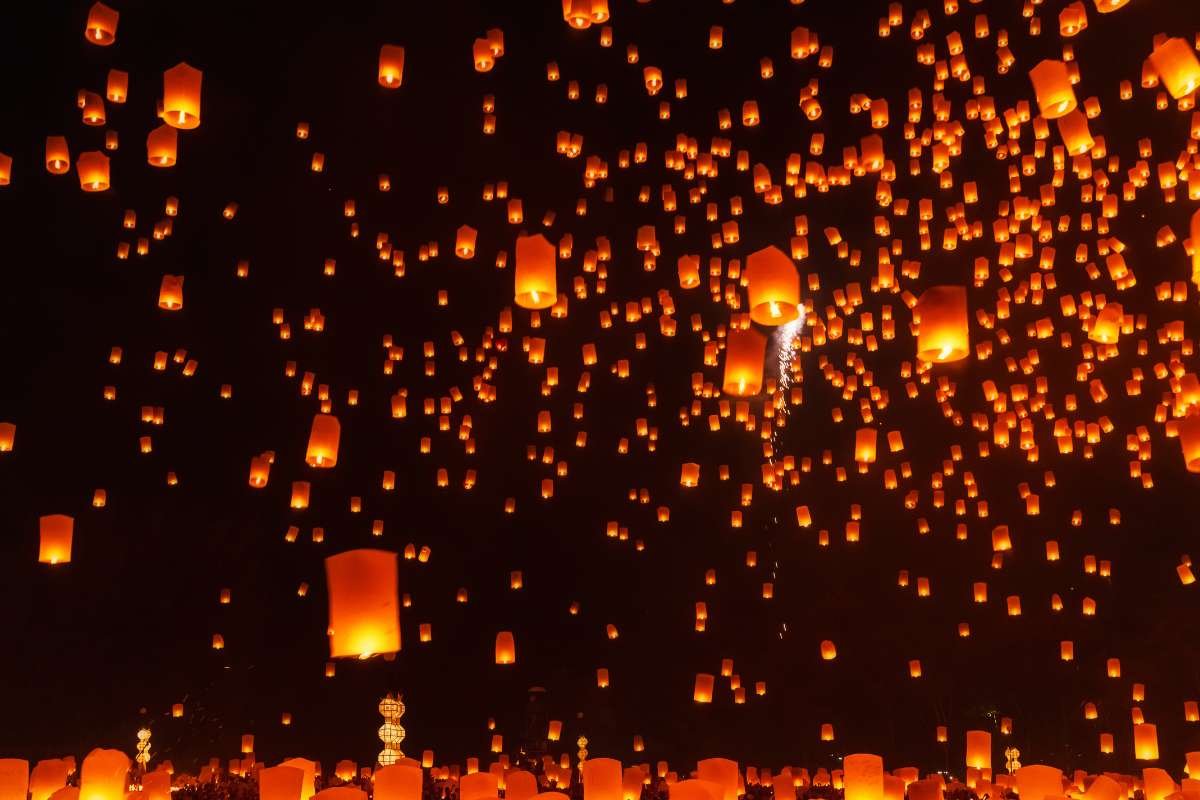
In Chinese mythology, there is a tale of Pangu, the first being who emerged from a cosmic egg. Inside that egg, light and dark existed as one chaotic force. When Pangu awoke, he pushed them apart, and the clear, bright energy rose to form the heavens, while the heavy darkness sank to become the earth. Each day, light climbed higher, darkness settled deeper, and balance shaped the world as humanity inherited the eternal duty to protect light from being swallowed by shadow again.
Across cultures, similar myths appear where light represents hope, renewal, and human intention, while darkness symbolizes fear, uncertainty, and the unknown. Lanterns were born from this belief. By lighting them, people symbolically joined the ancient battle, sending small but powerful reminders into the night that even the smallest flame can challenge the vastest darkness.
This very idea still fuels global lantern festivals around the world, where millions gather each year to transform ancient mythology into living, glowing traditions.
Our Top 12 Ranked by Culture, Scale, and Emotion
This list ranks the Top 12 global lantern festivals around the world based on authenticity, accessibility, emotional impact, visual experience, sustainability, and traveler reviews.
Let’s begin.
1. Yi Peng Lantern Festival, Chiang Mai, Thailand

Yi Peng consists of temple-based ceremonies (local communities sending lanterns for merit) and large staged releases at Mae Jo and other ticketed events that feature synchronized lantern choreography, fireworks, and cultural performances. Local authorities and tourism operators report large hotel occupancy spikes and 20k+ additional room nights around the festival weekend; private-ticketed events focus on safety, crowd-control, and increasingly on biodegradable lantern materials. Because Yi Peng blends ritual and spectacle, it ranks top among global lantern festivals around the world for emotional impact and traveler experience.
Yi Peng combines massive spectacle, ritual meaning, and tourism impact. The CAD-organized ticketed releases now attract tens of thousands of visitors to choreographed lantern ceremonies (organizers estimate 30k–40k at major ticketed sites), and the event drives millions in local revenue during November’s Loy Krathong period.
If You Go:
- When: November (aligned with Loy Krathong)
- Where: Chiang Mai city & Mae Jo grounds
- Tip: Tickets sell out months in advance.
This is easily one of the most iconic global lantern festivals around the world.
2. Taiwan Lantern Festival & Pingxi Sky Lantern Festival, Taiwan

Pingxi attracts domestic and international visitors who pay for lantern kits and guided releases; local government cleanup programs and volunteer groups collect debris after the event. Reuters and local authorities have documented clean-up drives and promoted biodegradable alternatives after past environmental critiques. The national festival often runs 10–15 days (special exhibitions, themed main lanterns, parades), and the Tourism Bureau reports significant local economic uplift during the festival window. This pairing of scale, government support, and community-led remediation makes Taiwan a global benchmark among lantern festivals around the world.
Taiwan runs two complementary lantern traditions: the national Taiwan Lantern Festival (hosted by the Tourism Bureau) and Pingxi’s sky-lantern releases; together, they drive huge visitor numbers and measurable tourism revenue. The Taiwan Lantern Festival runs multi-day exhibitions and often sees millions of visits across the host city when staged at major urban plazas.
Case Study:
The official Tourism Bureau report for 2023 shows the Taiwan Lantern Festival returned to Taipei and generated over NT$25.4 billion in economic benefits and 12.35 million visitors — the event’s largest scale to date after the pandemic.
If You Go:
- When: February (Lunar New Year)
- Where: Taipei & Pingxi
- Tip: Pingxi eco-lanterns decompose naturally—choose certified stalls.
3. Hoi An Full Moon Lantern Festival, Vietnam

Every month, the ancient town of Hoi An turns off its electric lights and glows entirely by lantern. Locals sell paper lanterns and small boat krathongs for floating on the Thu Bon River. Academic fieldwork confirms the event’s cultural role (community identity, ritual offerings) and tourism dependency—recent reporting shows Hoi An’s tourism numbers can represent a majority of local income in peak months, so the lantern nights directly support thousands of small vendors and boat operators.
The monthly frequency and UNESCO-linked heritage character make Hoi An a top practical choice for couples and photographers seeking tradition without massive crowds.
If You Go:
- When: Every full moon
- Where: Hoi An Ancient Town
- Tip: Arrive early for lantern boat rides.
4. Nagasaki Lantern Festival, Japan

The Nagasaki festival runs multiple days around the Lunar New Year, featuring dragon parades, lantern streetscapes and cultural performances. The event’s strength lies in craftsmanship (large-scale lantern floats), Chinese-Japanese cultural fusion, and strong municipal backing that promotes safety and tourism packages. Because it displays clusters in an urban walkable area, Nagasaki ranks very high for family-friendly access and photographic variety.
Nagasaki transformed a local New Year’s Chinese community celebration into a major regional event: organizers display roughly 15,000 lanterns through the Chinatown and city corridors during the festival period, drawing huge crowds and PR attention.
If You Go:
- When: Lunar New Year
- Where: Nagasaki City
- Tip: Visit Chinatown for the best displays.
5. Loy Krathong Festival, Thailand

Loy Krathong focuses on water lanterns (krathongs) and appears nationwide; city collectors report annual returns of hundreds of thousands of floated krathongs, and Bangkok’s clean-up teams publish collection stats each year (recent collection figures show 391,027 krathongs gathered, with increasing use of natural materials).
Loy Krathong’s environmental push toward biodegradable krathongs increased dramatically after municipal campaigns: Bangkok’s municipal reports show large-scale collection programs and a rising share of krathongs made from natural plant materials (with periodic year-on-year fluctuations). The ceremony’s ritual meaning, releasing symbolic offerings to the river and accessible urban rituals, make Loy Krathong a top water-lantern experience among global lantern festivals around the world, particularly for travelers seeking participatory, low-tech events.
If You Go:
- When: November
- Where: All over Thailand
- Tip: Choose biodegradable krathongs.
6. Butter Lamp Festival, Tibet

Monasteries light thousands of butter lamps in prayer halls and courtyards; the ceremony emphasizes merit-making and communal recitation. Tour operators note high pilgrim flows on the day and an uptick in heritage tourism bookings for December/January pilgrimage windows. The spiritual depth and rarity for general tourists make the Butter Lamp Festival crucial for readers who want ritual context rather than mass spectacle.
This festival attracts devout pilgrims and specialists in Tibetan Buddhism; butter-lamp rituals at major monasteries create dense, slow-burning light-fields rather than airborne releases, giving very different emotional textures to the lantern tradition.
If You Go:
- When: February
- Where: Lhasa & major monasteries
- Tip: Respect rituals—photography can be restricted.

7. Shinnyo Lantern Floating, Hawaii, USA

“Each lantern becomes a message of love sent across the water.”
Shinnyo en’s Memorial Day floating lantern ceremony combines remembrance with a large public turnout: recent coverage projected tens of thousands of spectators and several thousand floating lanterns at Ala Moana—Forbes reported plans for 6,000 candle-lit lanterns with an expected 40,000+ spectators at major editions.
The event focuses on memorialization and community healing rather than wish-making. Organizers coordinate shoreside logistics, lifeguards, and environmental safeguards; the high spectator counts and media coverage make Shinnyo Lantern Floating one of the U.S.’s most visible water-lantern memorials.
If You Go:
- When: Memorial Day
- Where: Honolulu
- Tip: Personal messages are allowed on lanterns.
8. RISE Festival, Nevada, USA

RiSE is the most popular modern sky lantern festival in the West, held in the Mojave Desert with synchronized releases. It is a modern, large-scale sky-lantern ceremony blending music, art, and synchronized lantern releases; it positions large, choreographed releases on dry lakebeds and claims large ticket sales each season.
RiSE emphasizes sustainability, where organizers publish biodegradable-lantern specs and coordinate full-site cleanups. The event’s curated music and art programs draw younger festival audiences; ticket numbers and social engagement (tens of thousands of attendees on milestone years) place RiSE among the most commercially visible modern lantern festivals globally. As contemporary event designers scale this format, many travelers now look to RiSE-type experiences for a blend of spectacle and production values.
Stat: Over 15,000 biodegradable lanterns are released with a full cleanup crew.
If You Go:
- When: October
- Where: Mojave Desert
- Tip: Expect long queues but unforgettable views.
9. The Water Lantern Festival, USA & Canada

Water Lantern Festival has become the biggest touring water-lantern brand in North America: it expanded quickly from 30+ city events to 100+ city plans, and early-season runs reported cumulative attendance figures in the tens of thousands across multiple stops. The organizer reports 34 cities and 130k combined participants in early tours, with plans to scale further.
The Festival packages (couples, families, memorials) make it accessible and repeatable. Event teams emphasize safety, shore-based marshals, and coordinated clean-ups; organizers state strong year-over-year growth, which helps explain why many travellers list it among accessible global lantern festivals around the world when they want a local, guided lantern experience.
If You Go:
- When: Year-round, city-dependent
- Where: U.S., Canada
- Tip: Arrive early with a picnic—events sell out fast.
This is one of the most accessible global lantern festivals around the world for beginners.
10. Seoul Lantern Festival, South Korea

Seoul runs multiple lantern and light festivals (Cheonggyecheon lantern displays, Winter Festa, and the UNESCO-recognized Lotus Lantern events). Recent multi-week winter/winter-festa programs show multi-million attendance (city reports cite millions over festival windows).
Seoul balances religious (Yeon Deung Hoe / Lotus Lantern) and urban light-art festivals (Winter Festa, Gwanghwamun projections). City tourism agencies report strong satisfaction and commercial uplift (restaurant and retail sales spikes during festival dates). Multi-format programming (parades, projections, and temple lanterns) gives Seoul a broad appeal for families, photographers, and heritage tourists.
If You Go:
- When: November
- Where: Central Seoul
- Tip: Visit on weekdays to avoid crowds.
11. Zigong Lantern Festival, China

One of China’s oldest lantern-making hubs, Zigong produces colossal lantern structures—dragons, palaces, mythical creatures. It is popularly known as the “city of lanterns” and hosts large craft-driven displays; municipal reporting and industry coverage show Zigong lantern exhibitions traveling to dozens of cities worldwide, and the local lantern industry accounts for sizable economic output (hundreds of millions USD annually).
Zigong organizes enormous, handcrafted lantern tableaux (animals, palaces, dragons), often exhibited domestically and abroad; local commerce reports indicate thousands of lantern workers and a major manufacturing cluster. The festival functions as both cultural heritage and export business, explaining why Zigong’s displays appear in international festival circuits and why it ranks high for craftsmanship and global influence.
If You Go:
- When: January–March
- Where: Sichuan Province
- Tip: Allocate a full day—displays are huge.
12. Festival of Lights, Berlin, Germany

Europe’s most famous light-art festival transforms Berlin with digital projections, LED installations, and modern lantern-inspired art. Organizers reported ~3–3.5 million visitors during the multi-night program in recent editions, and the festival emphasizes projection mapping, art installations, and storytelling across city landmarks.
Berlin uses projection technology and artist commissions rather than floating lanterns; the festival attracts international art tourism and drives measurable night-time city visits. The scale and urban mapping approach position Berlin’s event as an important modern evolution of the lantern/light festival concept—great for travelers who want contemporary art and accessible city-based programming.
If You Go:
- When: October
- Where: Berlin
- Tip: Book a night photography tour.
This festival shows how global lantern festivals around the world evolved into modern art experiences.
What Makes Lantern Festivals So Powerful? (Psychology Insight)
Humans respond emotionally to light in darkness. Psychologists say:
- Warm light triggers feelings of safety and connection.
- Shared rituals strengthen belonging and reduce stress.
- Release actions (like sky lanterns) provide symbolic closure.
This explains why global lantern festivals around the world pull millions every year—they make people feel grounded and uplifted at the same time.
Are Lantern Festivals Becoming More Sustainable?
Yes—many major events now use:
- Biodegradable rice paper
- Bamboo frames
- LED-based lanterns
- Organized cleanup operations
- Controlled release zones
- Fire-safety marshals
Conclusion:
Across continents, centuries, and belief systems, global lantern festivals around the world reveal something deeply human: our instinct to gather, to mark meaning, and to push back against darkness together. From Chiang Mai’s sky-filled wishes to Berlin’s modern light art, each festival on this list proves that lanterns are vessels for memory, hope, gratitude, and renewal.
This guide showed how these festivals rank not only by scale or beauty, but by cultural authenticity, emotional impact, sustainability, and real traveler experience. Some invite quiet reflection, others create awe through mass participation, and a few redefine tradition through technology, but all share a common purpose: transforming light into a collective ritual.
As lantern festivals continue to change and grow with eco-conscious designs, digital storytelling, and global participation, their core meaning remains unchanged. In a world that often feels fragmented, these glowing moments remind us that even a single flame, when lifted together, can illuminate something far greater than itself.

FAQ:
1. Are sky lanterns legal?
Many countries ban unsupervised releases. Always check local rules.
2. Which lantern festival is best for couples?
Hoi An, RiSE, and Loy Krathong.
3. Which is the biggest lantern festival in the world?
The Taiwan Lantern Festival (3M+ visitors).
4. Why do people release lanterns?
For remembrance, gratitude, healing, and spiritual renewal.
5. What do lanterns symbolize?
Hope, wisdom, guidance, and letting go.