If tech companies were people, some would still be learning to walk, while others would already own the road, the traffic lights, and the map.
The largest tech companies in the world sit in that second group. They wake up richer, grow faster than entire countries, and still complain about slow Wi-Fi. From the phone in your hand to the cloud storing your photos, these giants run daily life quietly but firmly. They do not shout power. They show it through convenience, speed, and scale.
Let us break down how these digital giants reached the top, and why their influence keeps expanding.
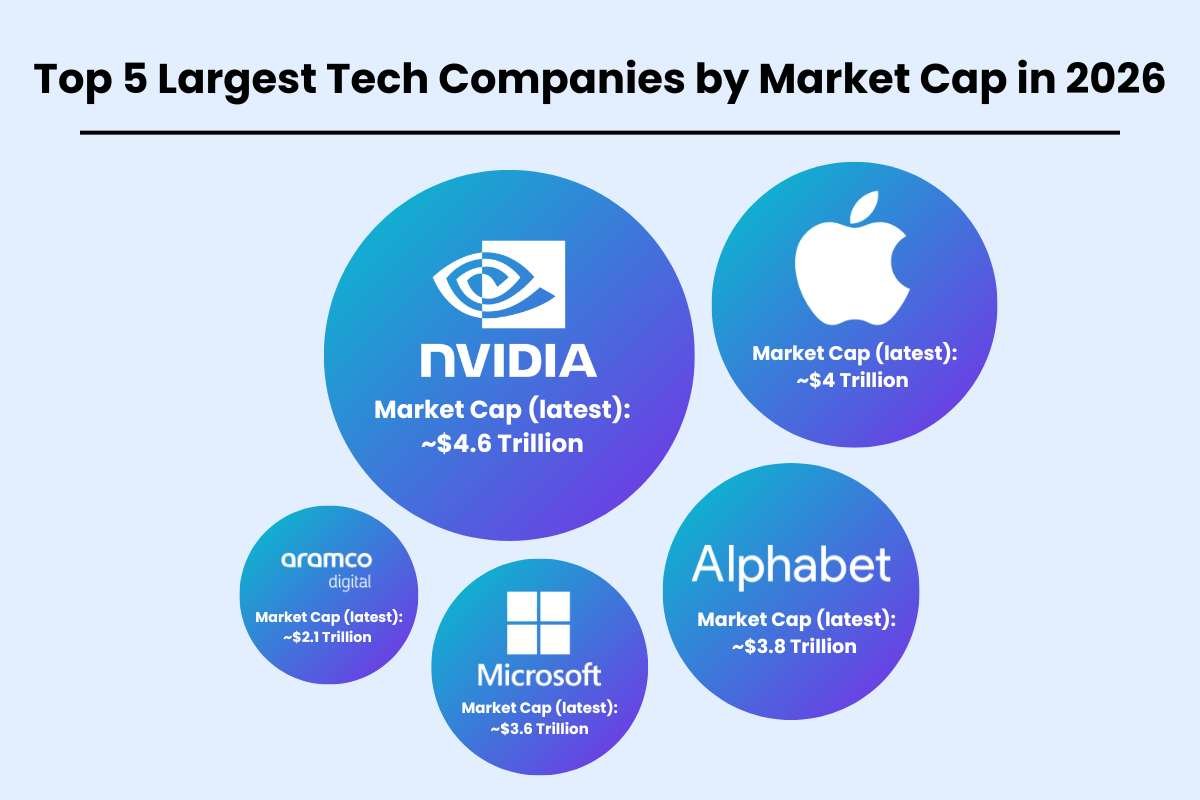
Top 5 Largest Tech Companies by Market Cap in 2026
The largest tech companies in the world by market value share one thing in common: trust at scale.
1. Apple
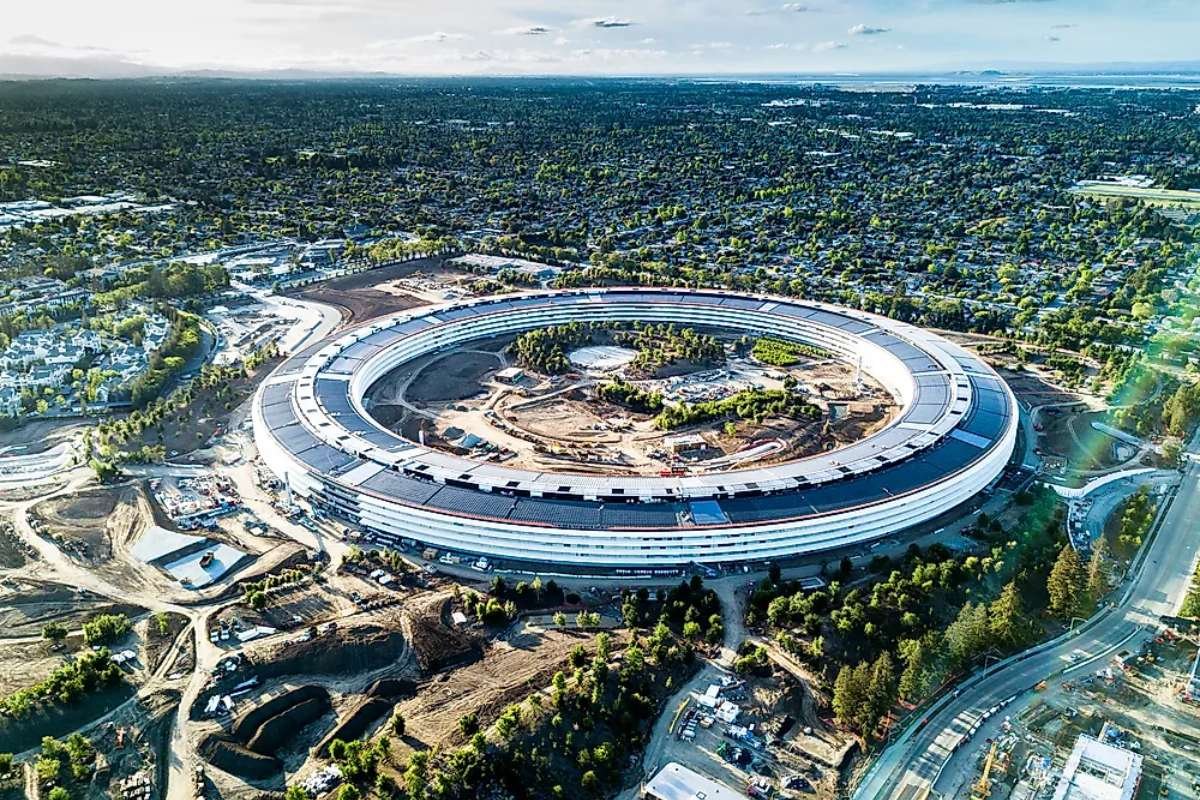
- Founding Year: 1976 | Headquarters: Cupertino, USA | Market Cap (latest): ~$4 Trillion
- Founders / Current CEO: Steve Jobs, Steve Wozniak, Ronald Wayne / Tim Cook
- Core Business Segments: Consumer electronics, software services
- Unique Innovations driving valuation: Tight hardware and software integration, privacy-first design, custom silicon
- Global Impact: Global lifestyle and tech influence
Apple stands at the top due to its strong brand trust and loyal users. It designs products that work smoothly together, from iPhones to Macs to services. Custom chips improve speed and battery life. Privacy-focused features build long-term trust. Apple earns steady revenue through devices and subscriptions. Its stores, supply chain, and ecosystem reach nearly every country. Apple shapes how people communicate, work, and consume digital content daily, making it a lasting global tech leader.
2. Microsoft
- Founding Year: 1975 | Headquarters: Redmond, USA | Market Cap (latest): ~$3.6 Trillion
- Founders / Current CEO: Bill Gates, Paul Allen / Satya Nadella
- Core Business Segments: Cloud computing software, AI enterprise tools
- Unique Innovations driving valuation: Azure cloud, AI-powered, productivity platforms
- Global Impact: Backbone of global enterprise technology
Microsoft grows through cloud services and business software used worldwide. Azure supports millions of companies with secure cloud tools. AI integration across Office and enterprise products increases efficiency. Windows and enterprise systems remain essential in offices and governments. Microsoft invests heavily in research and developer tools. Its technology supports banks, schools, hospitals, and startups. This wide adoption makes Microsoft one of the most trusted and stable tech companies globally.
3. NVIDIA
- Founding Year: 1993 | Headquarters: Santa Clara, USA | Market Cap (latest): ~$4.6 Trillion
- Founders / Current CEO: Jensen Huang / Jensen Huang
- Core Business Segments: Semiconductors, AI chips, data center hardware
- Unique Innovations driving valuation: GPUs powering AI, machine learning, and automation
- Global Impact: Foundation of the global AI economy
NVIDIA leads the AI hardware revolution. Its chips power data centers, AI models, gaming systems, and autonomous machines. Demand for AI computing drives its valuation. NVIDIA’s GPUs handle massive workloads faster than traditional processors. Tech companies rely on their hardware for training AI systems. Governments and research labs also use NVIDIA technology. As AI adoption grows, NVIDIA remains essential to future computing infrastructure worldwide.
4. Alphabet
- Founding Year: 1998 | Headquarters: Mountain View, USA | Market Cap (latest): ~$3.8 Trillion
- Founders / Current CEO: Larry Page, Sergey Brin / Sundar Pichai
- Core Business Segments: Search advertising, cloud video AI
- Unique Innovations driving valuation: Search algorithms, AI-driven ads, cloud platforms
- Global Impact: Digital information access on a global scale
Alphabet owns platforms used daily by billions. Google Search organizes online information. YouTube dominates video streaming. Google Cloud supports businesses with scalable tools. AI improves ads, language translation, and productivity tools. Alphabet earns steady revenue through advertising while investing in long-term innovation. Its services shape how people search, watch, and communicate. Alphabet’s reach makes it one of the most influential tech companies worldwide.
5. Saudi Aramco Digital
- Founding Year: 2021 | Headquarters: Dhahran, Saudi Arabia | Market Cap (latest): ~$2.1 Trillion
- Founders / Current CEO: Aramco Leadership / Nasser Al-Nasser
- Core Business Segments: Digital energy platforms, AI automation data systems
- Unique Innovations driving valuation: Energy-tech integration, smart infrastructure
- Global Impact: Digital transformation of global energy systems
Saudi Aramco Digital blends technology with energy systems. It builds digital platforms for automation, analytics, and smart operations. AI improves efficiency across energy production and logistics. Its valuation comes from combining data, infrastructure, and global energy demand. The company supports national digital goals while expanding internationally. By merging tech with energy at scale, it reshapes how large industries adopt digital systems worldwide.
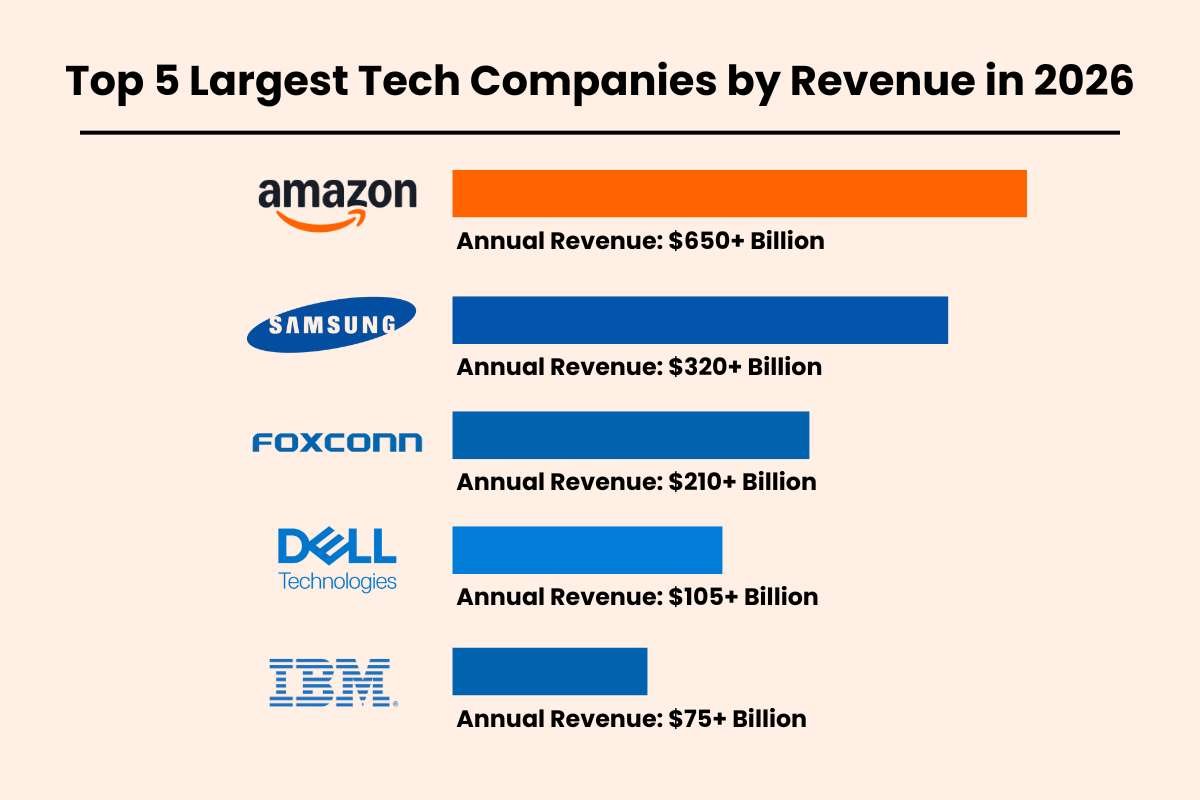
Top 5 Largest Tech Companies by Revenue in 2026
Revenue leaders among the largest tech companies in the world focus on volume, reach, and reliability.
1. Amazon
- Founding Year: 1994 | Headquarters: Seattle USA | Annual Revenue: $650+ Billion
- Core Business Segments: E-commerce, Cloud Computing, Digital Services
- Employee Strength: 1.5 Million+
- Global Footprint: Americas, Europe, Asia, Middle East
- Global Impact: Redefined shopping logistics and cloud infrastructure
Amazon earns massive revenue by serving both everyday shoppers and large businesses. Its online marketplace reaches millions daily and supports small sellers worldwide. Amazon Web Services powers websites, apps, and government systems. The company invests heavily in delivery speed automation and AI. Its workforce manages warehouses, cloud servers, and customer support across regions. Amazon’s global reach allows fast scaling in new markets. Its impact goes beyond shopping by changing how companies store data, run operations, and reach customers. Amazon’s size comes from solving daily problems at an unmatched scale.
2. Samsung Electronics
- Founding Year: 1969 | Headquarters: Suwon South Korea | Annual Revenue: $320+ Billion
- Core Business Segments: Consumer Electronics, Semiconductors, Displays
- Employee Strength: 270,000+
- Global Footprint: Asia, Europe, the Americas, and Africa
- Global Impact: Drives device and chip innovation globally
Samsung Electronics earns revenue from phones, TVs, appliances, and advanced chips. It supplies displays and semiconductors to many global brands. The largest tech companies in the world balance consumer products with deep manufacturing strength. Its large workforce supports research factories and global sales. Samsung operates in almost every major market, which keeps revenue steady even during downturns. The brand plays a key role in smartphone competition and chip supply chains. Its global impact comes from innovation speed, manufacturing scale, and the ability to serve both consumers and tech companies worldwide.
3. Foxconn
- Founding Year: 1974 | Headquarters: New Taipei City Taiwan | Annual Revenue: $210+ Billion
- Core Business Segments: Electronics Manufacturing Supply Chain Services
- Employee Strength: 1 Million+
- Global Footprint: China, India, Vietnam, the Americas
- Global Impact: Backbone of global electronics production
Foxconn does not sell to consumers but earns revenue by building products for top tech brands. It manufactures smartphones, computers, and electronic parts at a massive scale. The company employs one of the largest industrial workforces in the world. Its factories support fast production cycles and cost efficiency. Foxconn’s global footprint helps brands launch products quickly. Its impact is huge because modern electronics depend on its manufacturing strength. Without Foxconn, many devices would never reach stores on time.
4. Dell Technologies
- Founding Year: 1984 | Headquarters: Texas USA | Annual Revenue: $105+ Billion
- Core Business Segments: Enterprise Hardware, IT Infrastructure, Cloud Solutions
- Employee Strength: 130,000+
- Global Footprint: Americas, Europe, Asia Pacific
- Global Impact: Supports business computing worldwide
Dell Technologies earns revenue by serving businesses, governments, and institutions. It sells server storage systems and enterprise computing solutions. Dell focuses on reliability, long-term contracts, and customer support. Its workforce includes engineers, sales teams, and service professionals across regions. The largest tech companies in the world adapt well to hybrid work and cloud-linked systems. Dell’s global footprint allows local support for large organizations. Its impact lies in keeping offices, data centers, and digital operations running smoothly across industries worldwide.
5. IBM
- Founding Year: 1911 | Headquarters: New York USA | Annual Revenue: $75+ Billion
- Core Business Segments: Consulting, Hybrid Cloud Enterprise AI
- Employee Strength: 280,000+
- Global Footprint: 170+ Countries
- Global Impact: Shapes enterprise technology and consulting
IBM earns revenue through consulting, cloud services, and AI solutions. It works closely with governments, banks, and large enterprises. The company focuses on complex systems rather than consumer products. IBM’s workforce includes consultants, engineers, and researchers worldwide. Its long history builds trust with large organizations. IBM’s global presence supports digital transformation projects across regions. Its impact comes from helping institutions modernize systems, improve security, and adopt AI responsibly. IBM remains relevant by evolving with enterprise technology needs.
Read Next: 20 Richest Companies in the World: Trillion-Dollar Giants Powering the 2025 Economy
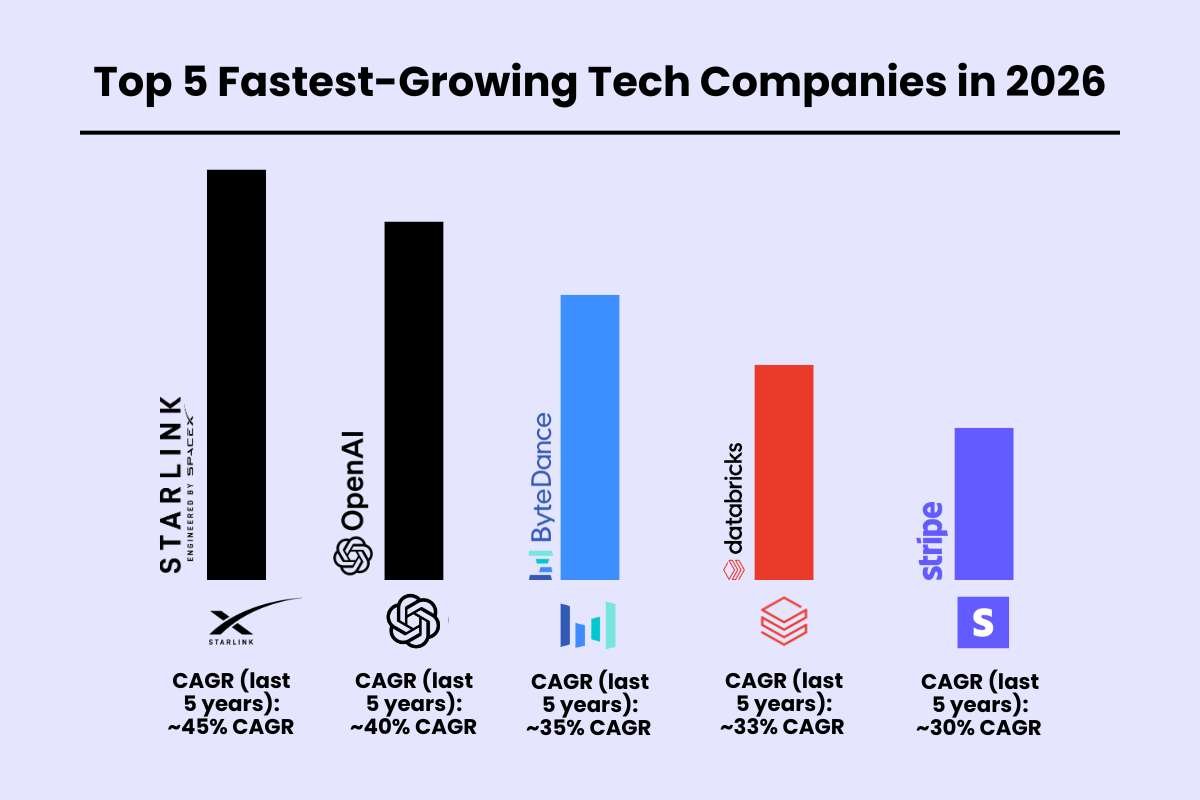
Top 5 Fastest-Growing Tech Companies in 2026
Growth speed defines future leaders among the largest tech companies in the world.
1. ByteDance
- Founding Year: 2012 | Headquarters: Beijing, China | CAGR (last 5 years): ~35% CAGR
- (CAGR-Compound Annual Growth Rate)
- Core Business Segments: Social Media, AI Content Platforms
- Unique Innovations fueling growth: AI-driven recommendation engines
- Global Impact: Global digital culture influence
- Future Outlook: Expansion into AI commerce
ByteDance grew at record speed by mastering how people consume content. Its AI systems study user behavior in real time and serve highly engaging videos within seconds. This keeps users hooked without effort. The company earns from ads, creator tools, and in-app commerce. ByteDance reshaped how brands market online and how creators earn money. Its platforms influence music, trends, and buying habits worldwide. Looking ahead, ByteDance plans to blend AI content with shopping, education, and productivity tools, which may push its growth even faster across global markets.
2. OpenAI
- Founding Year: 2015 | Headquarters: San Francisco, USA | CAGR (last 5 years): ~40% CAGR
- Core Business Segments: Artificial Intelligence, Enterprise AI
- Unique Innovations fueling growth: Large language models and AI copilots
- Global Impact: Work and learning transformation
- Future Outlook: Regulated global enterprise growth
OpenAI grew fast by making advanced AI useful for daily work. Its tools help people write, code, analyze data, and solve problems faster. Businesses adopt OpenAI to cut costs and boost productivity. Schools and developers also rely on its models for learning and innovation. OpenAI focuses strongly on safety, trust, and responsible AI use. This builds long-term confidence among governments and enterprises. In the future, OpenAI is expected to expand deeper into healthcare, finance, and education while shaping how humans and machines work together.
3. Stripe
- Founding Year: 2010 | Headquarters: San Francisco, USA | CAGR (last 5 years): ~30% CAGR
- Core Business Segments: Digital Payments, Financial Infrastructure
- Unique Innovations fueling growth: Simple payment APIs and fraud control
- Global Impact: Global online business growth
- Future Outlook: Strong role in digital trade
Stripe grows by making online payments easy for businesses of all sizes. Its tools allow companies to accept payments across countries without complex banking setups. Stripe also protects transactions with smart fraud detection systems. Startups, large brands, and global platforms rely on Stripe daily. The company supports millions of online jobs by powering digital commerce behind the scenes. As global online trade keeps expanding, Stripe is expected to grow steadily by adding financial tools like lending, subscriptions, and cross-border payment solutions.
4. Databricks
- Founding Year: 2013 | Headquarters: San Francisco, USA | CAGR (last 5 years): ~33% CAGR
- Core Business Segments: Data Analytics, AI Platforms
- Unique Innovations fueling growth: Unified data lakehouse system
- Global Impact: Enterprise data-driven decisions
- Future Outlook: Rising demand from AI growth
Databricks grows because companies struggle with massive data. Its platform brings data storage, analytics, and AI into one simple system. This helps teams work faster and make better decisions. Businesses use Databricks to power AI models, customer insights, and forecasting. The largest tech companies in the world save time by removing data silos. As AI adoption increases, demand for clean and usable data rises. Databricks sits at the center of this shift, making it one of the strongest growth stories in enterprise technology.
5. SpaceX Starlink
- Founding Year: 2015 | Headquarters: USA | CAGR (last 5 years): ~45% CAGR
- Core Business Segments: Satellite Internet, Connectivity
- Unique Innovations fueling growth: Low-earth orbit satellite networks
- Global Impact: Global internet access
- Future Outlook: Future leader in space-based broadband
Starlink grows faster than most telecom companies by using space instead of cables. Its satellites deliver high-speed internet to remote and underserved areas. Rural homes, ships, airplanes, and disaster zones benefit most. Starlink reduces dependence on traditional infrastructure. Governments and businesses now rely on it for secure communication. As more satellites launch, service quality improves. In the future, Starlink aims to cover the entire planet, making internet access more equal and reliable worldwide.
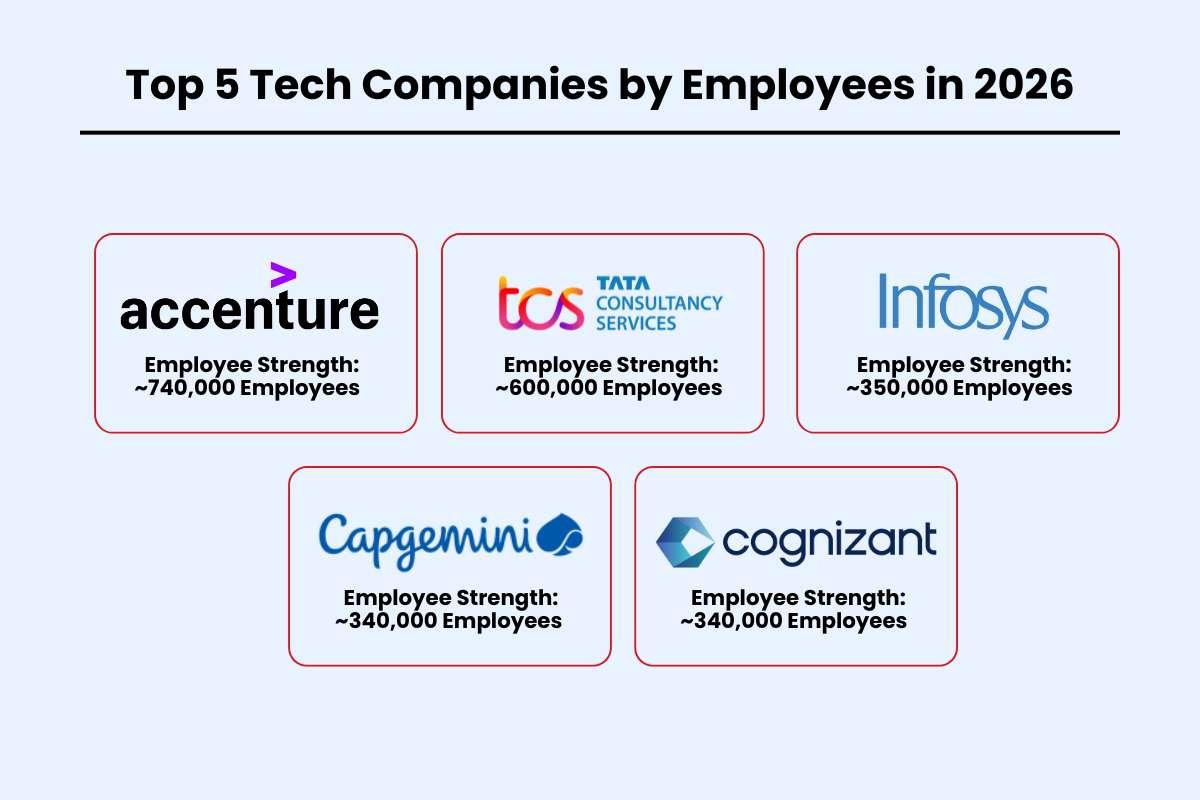
Top 5 Tech Companies by Employees in 2026
People power keeps the largest tech companies in the world running daily.
1. Accenture
- Founding Year: 1989 | Headquarters: Dublin, Ireland | Employee Strength: ~740,000 Employees
- Workforce Culture: Inclusive, skill-driven culture
- Core Business Segments: Consulting, Cloud, AI, Cybersecurity
- Global Footprint: 120+ Countries
- Global Impact: Global Digital Transformation Leader
Accenture has one of the largest workforces in the tech world. The company focuses strongly on training, diversity, and continuous learning. Employees work across consulting, cloud services, artificial intelligence, and cybersecurity. Accenture supports governments, healthcare systems, banks, and global enterprises. Its teams operate in over 120 countries, helping clients modernize operations and adopt digital tools. The company’s culture rewards innovation, collaboration, and problem-solving. Accenture’s people-first approach allows it to scale complex projects quickly while maintaining quality. This massive workforce makes Accenture a key driver of global digital change.
2. Tata Consultancy Services (TCS)
- Founding Year: 1968 | Headquarters: Mumbai, India | Employee Strength: ~600,000 Employees
- Workforce Culture: Learning-first, stable work culture
- Core Business Segments: IT Services, Business Solutions, Digital Services
- Global Footprint: 55+ Countries
- Global Impact: Backbone of Global Enterprise IT
Tata Consultancy Services is known for its disciplined and training-focused workforce. The company hires at scale and invests heavily in employee education and skill development. TCS delivers IT services, software solutions, and digital transformation projects for banks, retailers, telecom companies, and governments. Its teams work across more than 55 countries, supporting mission-critical systems. The largest tech companies in the world promote long-term careers and internal growth. This stable culture helps TCS manage large, complex global projects efficiently. Its workforce strength makes it one of the most reliable technology service providers worldwide.
3. Infosys
- Founding Year: 1981 | Headquarters: Bengaluru, India | Employee Strength: ~350,000 Employees
- Workforce Culture: Ethical, learning-oriented culture
- Core Business Segments: Digital Transformation, Cloud, AI
- Global Footprint: 50+ Countries
- Global Impact: Enterprise Modernization Expert
Infosys built its reputation on strong values and employee learning. The company focuses on upskilling its workforce through global training programs. Infosys helps companies move from old systems to modern digital platforms. Its services include cloud migration, artificial intelligence, and data analytics. Employees work with clients across finance, healthcare, manufacturing, and retail. Infosys operates in over 50 countries and supports global enterprises at scale. The company’s focus on ethics, quality, and learning helps it maintain trust and long-term client relationships.
4. Capgemini
- Founding Year: 1967 | Headquarters: Paris, France | Employee Strength: ~340,000 Employees
- Workforce Culture: Collaborative, innovation-driven culture
- Core Business Segments: Consulting, Technology, Engineering Services
- Global Footprint: Strong Presence in Europe and North America
- Global Impact: Strategy-to-Technology Connector
Capgemini blends business consulting with advanced technology services. Its workforce values teamwork, creativity, and practical innovation. Employees help clients with digital strategy, cloud systems, and engineering solutions. Capgemini has a strong presence across Europe and North America, with growing operations in Asia. The Capgemini, the largest tech company in the world, works closely with industries such as automotive, finance, and energy. Its culture encourages collaboration between technical and business teams. This balance allows Capgemini to turn ideas into real-world digital solutions with lasting impact.
5. Cognizant
- Founding Year: 1994 | Headquarters: Teaneck, USA | Employee Strength: ~340,000 Employees
- Workforce Culture: Client-focused, agile workforce
- Core Business Segments: Digital Operations, Cloud, Data Services
- Global Footprint: Global Delivery Centers
- Global Impact: Enterprise Digital Growth Partner
Cognizant focuses on helping large companies adapt to digital change. Its workforce operates with speed, flexibility, and a strong client-first mindset. Employees deliver services in cloud computing, data management, and digital operations. Cognizant supports industries such as healthcare, banking, and retail. The company runs delivery centers across multiple regions to serve clients efficiently. Its agile culture helps businesses respond quickly to market changes. Cognizant’s global workforce plays a key role in modernizing enterprise systems worldwide.
Read Next: Largest Companies in the United States in 2026: Revenue, Market Cap, Employees, and More
Regional Comparisons – US vs China vs Europe
The largest tech companies in the world grow differently depending on where they are built. Culture, government policy, market size, and consumer behavior all shape how technology develops in each region. The United States, China, and Europe represent three very different but powerful tech models.
Regional Comparison of Major Tech Regions
| Region | Strength | Focus |
| United States | Innovation | Software, AI, platforms |
| China | Scale | Hardware, manufacturing, apps |
| Europe | Trust | Enterprise tech, data privacy |
United States: Innovation and Platform Power
The United States is home to many of the largest tech companies in the world because it focuses on innovation and speed. American tech firms lead in software, artificial intelligence, cloud computing, and digital platforms. Companies from this region build products that scale fast and reach users worldwide.
Strong startup culture, easy access to funding, and close ties with universities support growth. US companies also focus heavily on user experience and global expansion. This is why platforms for search, social media, cloud services, and AI tools often come from the US. Their impact shapes how people work, communicate, and consume content every day.
China: Manufacturing Scale and Digital Ecosystems
China produces some of the largest tech companies in the world by focusing on scale and speed of execution. Chinese tech firms dominate hardware manufacturing, electronics supply chains, and mass-market digital services. They also excel in e-commerce, fintech, and social apps designed for large populations.
Government support, massive domestic demand, and fast adoption of new technology help Chinese companies grow quickly. These firms build complete digital ecosystems where shopping, payments, messaging, and entertainment work in one place. This approach creates strong user loyalty and deep market control within the region and beyond.
Europe: Trust, Regulation, and Enterprise Strength
Europe shapes the largest tech companies in the world through trust, privacy, and long-term stability. European tech firms focus more on enterprise services, cybersecurity, data protection, and regulated industries. Strong laws around data privacy influence how companies design products.
European companies work closely with governments, banks, and industrial sectors. They prioritize reliability over rapid expansion. While growth may appear slower, it is often steady and sustainable. Europe’s strength lies in building technology that businesses and public systems trust for long-term use.
How do These Regions Balance Global Tech Power?
Together, these regions form the backbone of the largest tech companies in the world. The US drives innovation, China delivers scale, and Europe ensures trust and stability. Each region fills gaps left by the others. This balance keeps global technology competitive, resilient, and constantly evolving. Innovation never pauses because each region pushes the others to improve.
Conclusion
The largest tech companies in the world started as ideas, garages, and risky bets. Today, they run phones, offices, hospitals, and even space networks. Just like the introduction hinted, these giants do not shout success. They deliver it quietly, every second. Their real power lies not in size alone, but in usefulness. As long as they keep solving human problems simply, their influence will keep growing one click, swipe, and signal at a time.