Key Points:
- Samsung’s HBM4 chips win customer praise.
- Talks with Nvidia raise strategic stakes.
- Samsung trails SK Hynix in market share.
Samsung Electronics said customers have praised the competitiveness of its next-generation HBM4 memory chips, signaling renewed confidence as the company works to close the gap with rivals in the fast-growing artificial intelligence market.
Customers Signal Confidence in Samsung HBM4 Chips Push
Samsung co-CEO and chip chief Jun Young-hyun said customers responded positively to the company’s sixth-generation high-bandwidth memory chips, known as HBM4, during a New Year’s address on Friday.
“They are saying, ‘Samsung is back,’” Jun said, citing what he described as differentiated competitiveness in the company’s latest memory technology.
HBM chips are critical components for artificial intelligence and high-performance computing systems, where fast data processing and energy efficiency are essential. Demand for such chips has surged as AI workloads expand globally.
Samsung has struggled in recent years to keep pace with rivals in the HBM market, particularly SK Hynix, which has benefited from early and strong ties with leading AI chip designers. The positive feedback marks a potential turning point for the world’s largest memory chipmaker.
Talks With Nvidia Highlight Strategic Stakes
Samsung said in October that it was in close discussions to supply HBM4 to U.S. artificial intelligence leader Nvidia, underscoring the high stakes of the company’s latest push.
NVIDIA is the dominant supplier of AI processors used in data centers and advanced computing systems, making it a key customer for memory chipmakers. Winning or expanding supply deals with Nvidia could significantly boost Samsung’s standing in the HBM market.
Samsung executives have emphasized that HBM4 is designed to meet the performance and reliability demands of next-generation AI systems. The company is shipping samples of the chips to key clients, it said during its third-quarter earnings conference call.
“We are providing Samsung HBM4 chip samples to major customers and focusing our efforts on readiness for mass production,” the company said during the call, without naming specific clients.
Samsung plans to begin mass production of HBM4 products in 2026, betting on continued growth in AI-related demand.
Market Share Gap Still Favors SK Hynix
Despite the positive customer feedback, Samsung continues to trail SK Hynix in the global HBM market.
SK Hynix held 53% of the HBM market in the third quarter of 2025, while Samsung accounted for 35% and U.S.-based Micron Technology held 11%, according to data from Counterpoint Research.
Investors have been watching closely for signs that Samsung can narrow that gap, particularly after falling behind in earlier generations of HBM chips. Analysts say execution in HBM4 will be critical as competition intensifies and customers demand reliable, high-volume supply.
Shares of Samsung Electronics rose 1.9% in morning trading on Friday, outperforming the benchmark KOSPI index, which was up 0.5%. The gains reflected cautious optimism that Samsung’s latest technology could help it regain momentum in the AI memory segment.
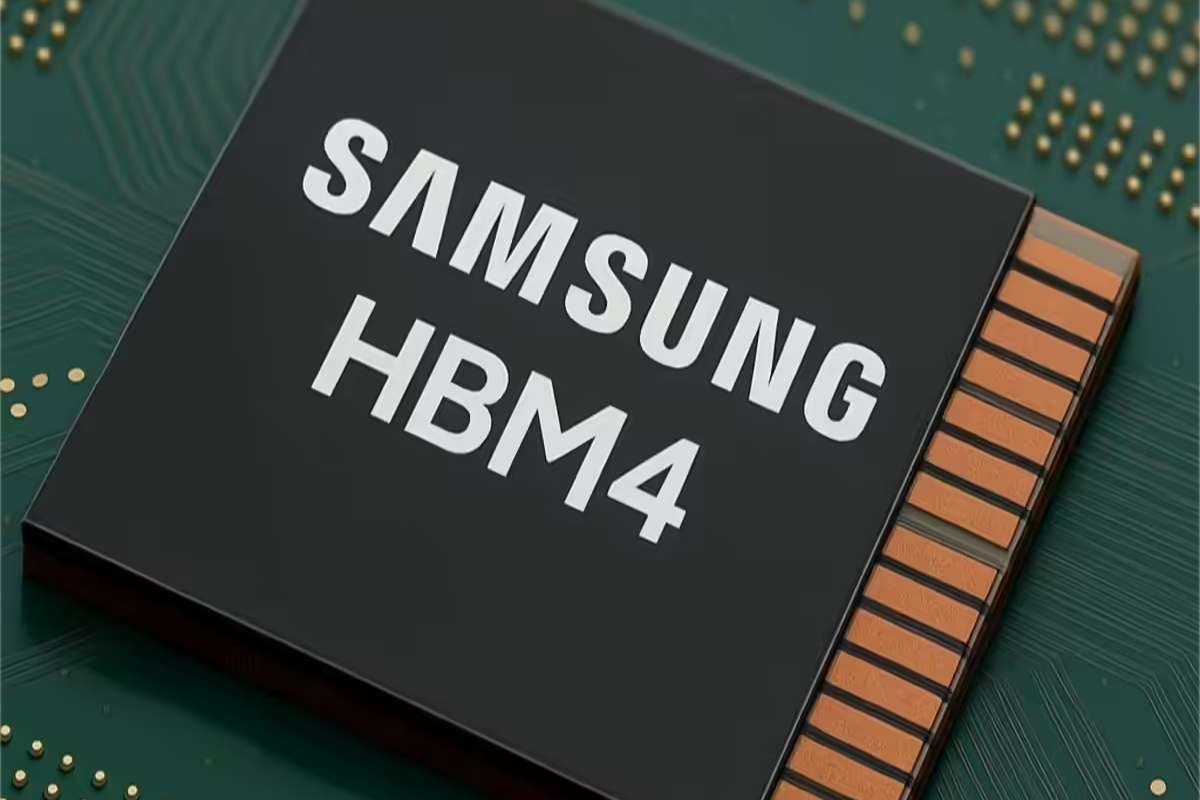
Samsung HBM4 chips were displayed publicly during the 2025 Korea Tech Festival in Seoul in December, highlighting the company’s efforts to showcase its progress to customers and investors.
While challenges remain, industry watchers say customer validation is an important step as Samsung seeks to reassert itself in one of the semiconductor industry’s most competitive and strategic markets.