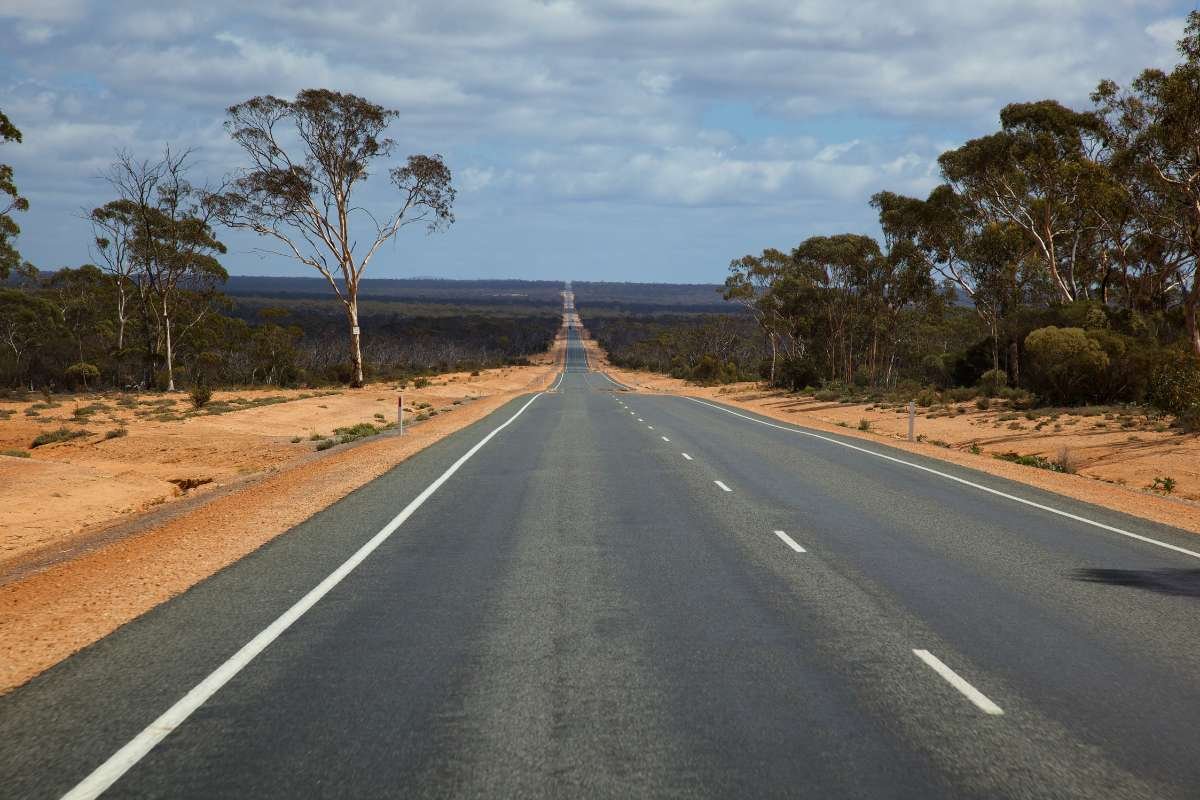
America’s roads tell stories of adventure and grit. Folks have crisscrossed the country on them for generations, chasing horizons from coast to coast. Among all those paths, the longest roads in the US stand out for their sheer reach. US Route 20 tops the pack at 3,365 miles, stretching from the salty air of Newport, Oregon, to the bustle of Boston, Massachusetts. It dodges through places like Yellowstone National Park and rolls past Chicago’s skyline.
What makes these roads special goes beyond miles. They link everyday towns to wild spots, like the towering peaks near Boise on US 20 or the endless Sandhills in Nebraska. Drivers today zip along them with better pavement and rest stops stocked for long hauls. US Route 20 keeps its crown as the longest road in the US, even as upgrades keep it rolling smoothly across 12 states.
These routes attract road trippers who want to touch the soul of America, from diners in Wyoming to lakeside views in Ohio. They mix history with the pull of open sky. In this article, we rank the top 12 longest roads in the US with details on lengths, states, cities, and tips for your next drive, and a look at green changes ahead.
How America’s Longest Roads Compare Worldwide
Before examining US routes in more detail, it is helpful to compare them with major roads worldwide. Several countries operate roads that exceed American routes in raw distance, often crossing extreme terrain or spanning entire continents.
| Road Name | Length (miles) | Countries/Terrain | Key Highlights | Why It Stands Out |
| Pan-American Highway | 19,000 (with gaps) | 14 countries: Alaska to Argentina | Spans rainforests, deserts, and Darién Gap breaks; crosses borders like Panama-Colombia. Hits spots from Alaska’s tundra to Patagonia’s ice fields. | Longest named route ever planned; draws extreme adventurers despite unfinished links and political hurdles. True test of endurance over decades. |
| Canada’s Trans-Canada Highway | 4,860 | Canada coast-to-coast | Rolls through prairies, the Rocky Mountains, the Great Lakes, and the ocean edges in BC. Features moose crossings, northern lights views, and winter-proof bridges. | The full east-west span keeps Canadians connected, handling harsh snow with plows and heated overpasses for year-round use. |
| Argentina’s National Route 40 | 3,227 | Argentina north-south | Twists from La Quiaca near Bolivia through the Andes, the Pampas deserts, to Ushuaia. Passes wine regions, salt flats, glaciers, and penguin colonies. | Covers extreme altitudes up to 15,000 ft; remote sections lack services, making it a driver’s rite of passage with raw scenic payoff. |
| China’s G40 Beijing-Shijiazhuang Expressway (part of the larger G40) | 1,310+ | China (Beijing to coast) | Links capital factories to Shanghai ports via flat plains and elevated viaducts. Carries endless freight trucks with tolls and rest areas every 30 miles. | Powers the world’s top economy; built for 200+ mph speeds in spots, shows how highways fuel mega-trade in under 20 years. |
While some international roads stretch farther, American routes offer consistent access for everyday driving. They are fully paved, clearly signed, and designed to support both private vehicles and commercial transport without lengthy interruptions. Unlike many global routes, the longest roads in the US pass directly through towns, cities, and service hubs, making them practical for daily use rather than limited to long-distance travel alone.
The 12 Longest Roads in the US That Span the Most Miles
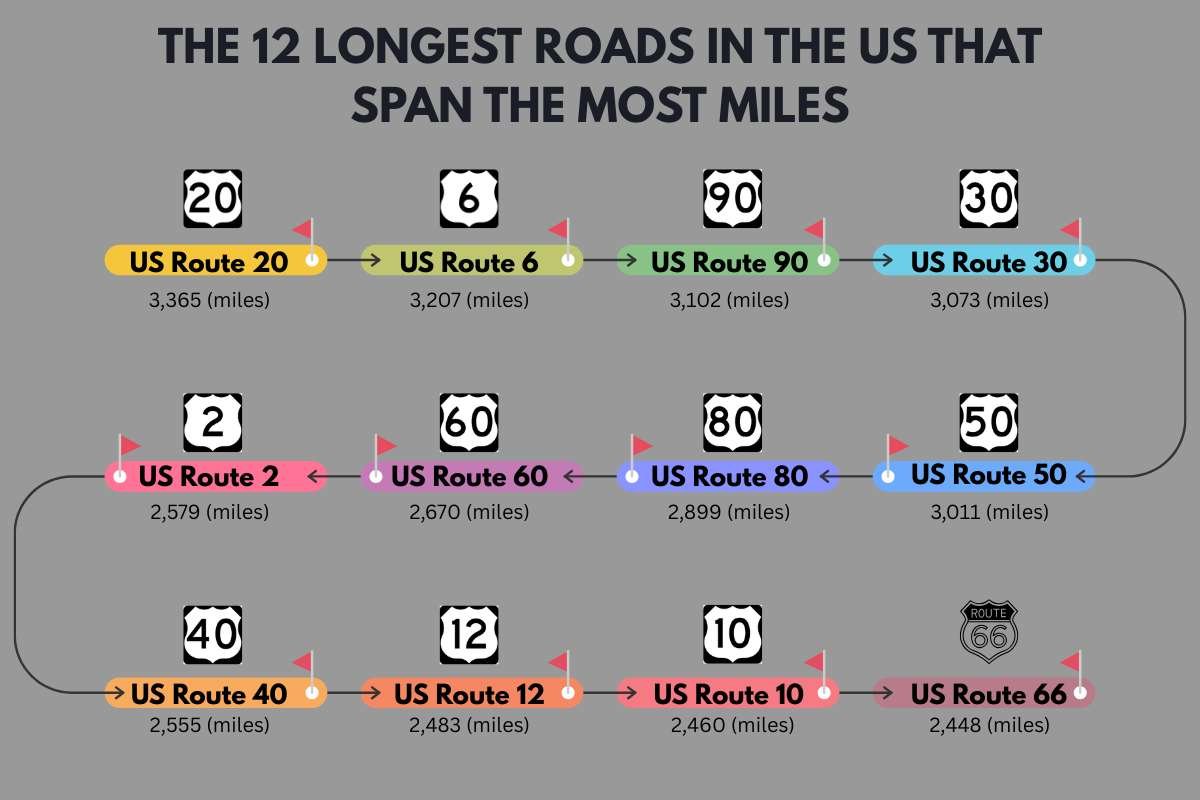
The table below offers a clear snapshot of the longest roads in the US, comparing total distance, states covered, major cities, and what makes each route distinct. Following the table, the article examines each road in detail, providing context on the route, terrain, history, and current function for travelers, freight, and daily use.
| Road | Length (miles) | States Covered | Key Cities | Unique Feature |
| US Route 20 | 3,365 | MA, NY, PA, OH, IN, IL, IA, NE, WY, ID, OR | Boston, Chicago, Yellowstone area, Boise, Newport | Tops all U.S. roads; skirts edges of Yellowstone National Park with long rural stretches and minimal stops. |
| US Route 6 | 3,207 | MA, NY, PA, OH, IN, IL, IA, NE, CO, UT, NV, CA | Provincetown, Cleveland, Rocky Mountains, Bishop | Crosses 10 states end-to-end; follows old Grand Army of the Republic path through high plains and deserts. |
| Interstate 90 | 3,102 | WA, ID, MT, WY, SD, MN, WI, IL, IN, OH, NY, MA | Seattle, Billings, Chicago, Cleveland, Boston | Busiest west-east interstate; leads in winter tech like advanced snow removal across mountain passes. |
| US Route 30 | 3,073 | NJ, PA, OH, IN, IL, IA, NE, WY, UT, ID, OR | Atlantic City, Pittsburgh, Rock Springs, Astoria | Overlaps historic Lincoln Highway sections; ends with views over the Columbia River Gorge. |
| US Route 50 | 3,011 | MD, WV, VA, OH, IN, IL, MO, KS, CO, UT, NV, CA | Ocean City, Cincinnati, Kansas City, Sacramento | Earns “Loneliest Road” tag in Nevada; passes sites tied to old atomic tests in the desert. |
| Interstate 80 | 2,899 | CA, NV, UT, WY, NE, IA, IL, IN, OH, PA, NJ | San Francisco, Salt Lake City, Omaha, Cleveland, Teaneck | Prime freight path; runs nonstop truck lanes through the salt flats and Appalachians. |
| US Route 60 | 2,670 | VA, WV, NC, TN, MO, OK, TX, NM, AZ | Virginia Beach, Knoxville, Little Rock, Albuquerque | Cuts through Ozark hills; serves as backup to Route 66 with rolling farmland views. |
| US Route 2 | 2,579 | ME, NH, VT, NY, MI, WI, MN, ND, MT, WA | Houlton, Grand Rapids, Fargo, Glacier NP, Everett | Northernmost coast-to-coast; borders Great Lakes and watches for moose on rural legs. |
| Interstate 40 | 2,555 | NC, TN, AR, OK, TX, NM, AZ, CA | Wilmington, Nashville, Memphis, Amarillo, Barstow | Rolls past music hubs like Nashville; lines up with big wind farms in Oklahoma plains. |
| US Route 12 | 2,483 | WA, ID, MT, ND, MN, IA, IL, IN, MI | Aberdeen, Helena, Minneapolis, Detroit | Traces Lewis and Clark Trail; finishes in dense forests near Olympic Peninsula. |
| Interstate 10 | 2,460 | CA, AZ, NM, TX, LA, MS, AL, FL | Santa Monica, Phoenix, El Paso, Houston, Jacksonville | Sunbelt speedway; elevated spans dodge Gulf floods from deserts to bayous. |
| US Route 66 | 2,448 | IL, MO, KS, OK, TX, NM, AZ, CA | Chicago, St. Louis, Tulsa, Amarillo, Santa Monica | Mother Road icon; neon diners and curved bridges mix with bypass interstates. |
1. US Route 20 (3,365 miles)
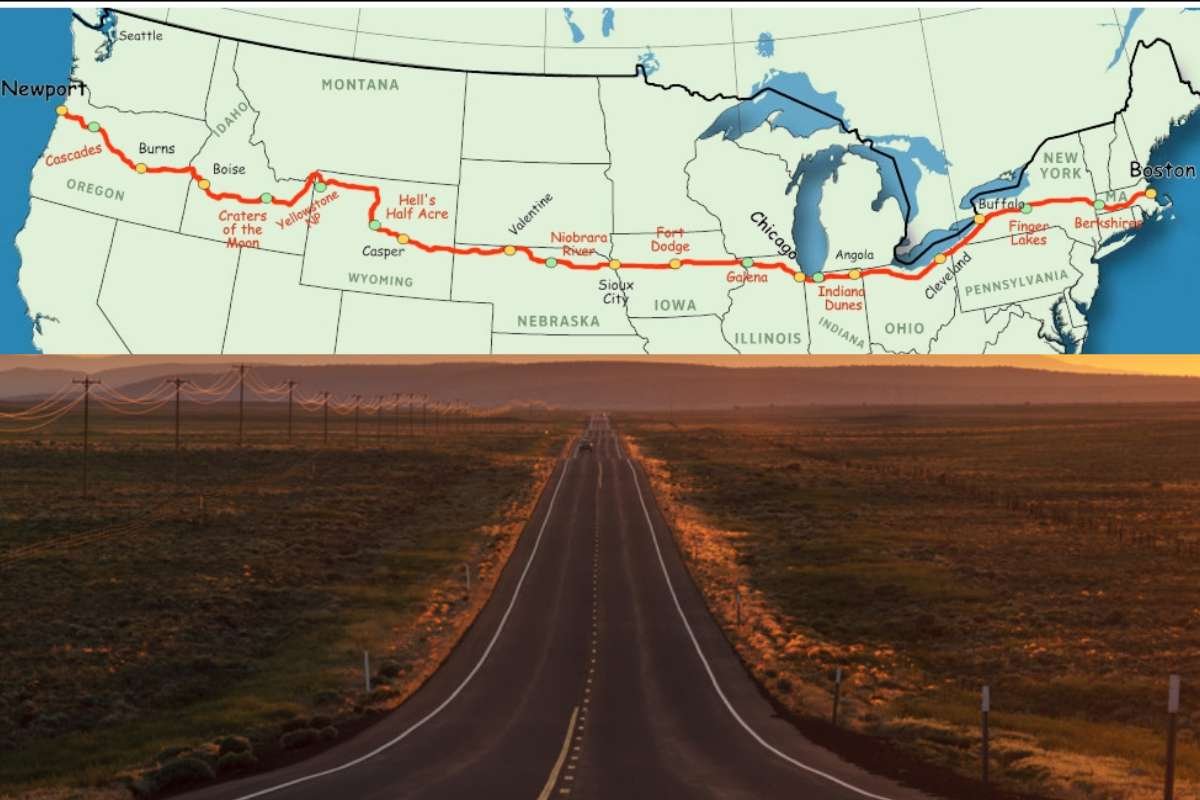
- States Covered: MA, NY, PA, OH, IN, IL, IA, NE, WY, ID, OR
- Key Cities: Boston, Chicago, Yellowstone area, Boise, Newport
US Route 20 holds the title of the longest road in the United States, stretching 3,365 miles from Boston to Newport, Oregon, without breaking into disconnected segments. It begins in dense urban streets lined with brick buildings and steady traffic, then gradually opens into quieter country as it moves west.
In Nebraska, the road runs through vast farm regions where services are spread far apart, and grain silos replace city skylines. One of its most unusual stretches runs close to Yellowstone’s boundary, offering rugged views without entering the park. Chicago appears briefly as a burst of glass and steel before the route settles back into Iowa’s farmland.
Near Boise, the air cools and terrain shifts before the final push to the Pacific. Unlike faster Interstates, Route 20 remains deeply tied to local travel, serving small towns, long-haul drivers, and families taking extended cross-country trips at an unhurried pace.
2. US Route 6 (3,207 miles)
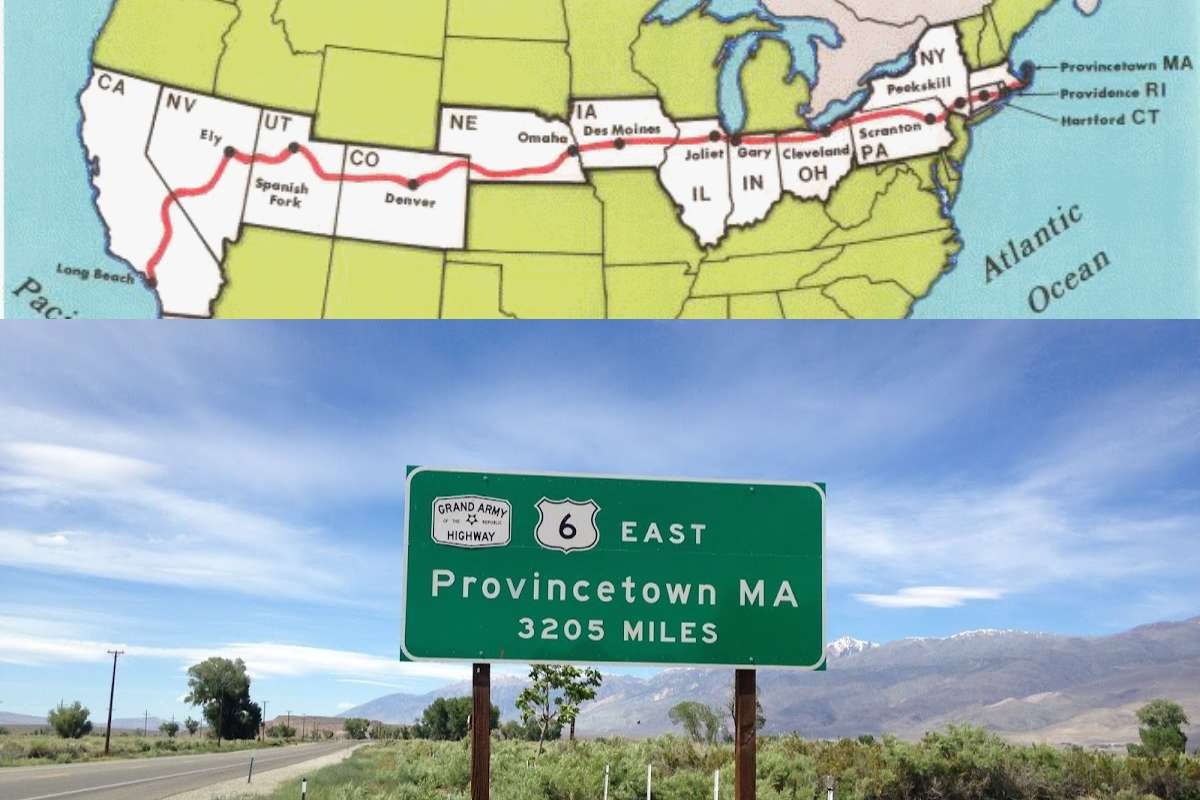
- States Covered: MA, NY, PA, OH, IN, IL, IA, NE, CO, UT, NV, CA
- Key Cities: Provincetown, Cleveland, the Rocky Mountains area, Bishop
US Route 6 begins at the edge of Cape Cod in Provincetown, where fishing boats and narrow streets set a calm starting pace. From there, it moves inland through historic towns in New England before reaching industrial centers such as Cleveland, where the road reflects decades of manufacturing and rail activity.
As part of the longest roads in the US, the route shows how early cross-country planning adapted to both cities and remote regions. West of the Midwest, the terrain changes sharply as the road climbs into Colorado’s high country, crossing mountain passes that test both engines and weather readiness. Nebraska offers long, steady drives with few interruptions, while Utah and Nevada bring dry heat and extended distances between services.
Along the way, markers honoring its Grand Army of the Republic designation connect present travel to early national history. Though parts of Route 6 have been shortened or rerouted over time, its remaining stretch continues to support local traffic and long-distance drivers who prefer older routes over high-speed corridors.
3. Interstate 90 (3,102 miles)
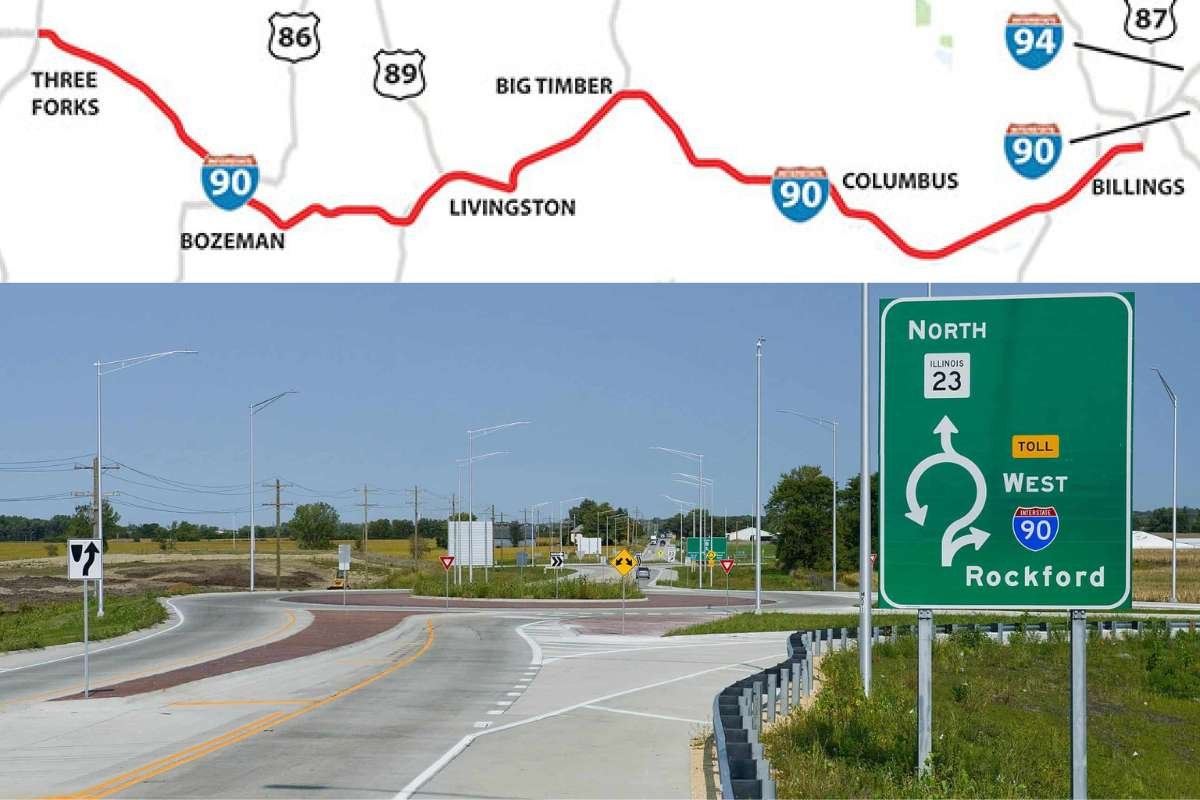
- States Covered: WA, ID, MT, WY, SD, MN, WI, IL, IN, OH, NY, MA
- Key Cities: Seattle, Billings, Chicago, Cleveland, Boston
Interstate 90 is the longest Interstate highway in the United States and one of the most heavily used east-to-west routes in the country. It begins near Seattle, where coastal weather gives way to mountain conditions within a short span. As the road crosses Montana and Wyoming, drivers encounter long stretches of open land where winter storms and strong winds are common.
Billings serves as a significant service point before the route reaches the Midwest, where traffic density increases near cities like Chicago. Further east, I-90 runs close to Lake Erie, offering brief water views near Cleveland before ending in Boston. Built for efficiency and durability, the road carries a constant mix of commercial freight, commuters, and long-distance travelers. Its scale and daily use place it firmly within the longest roads in the US, making it a core link in northern transportation networks.
4. US Route 30 (3,073 miles)
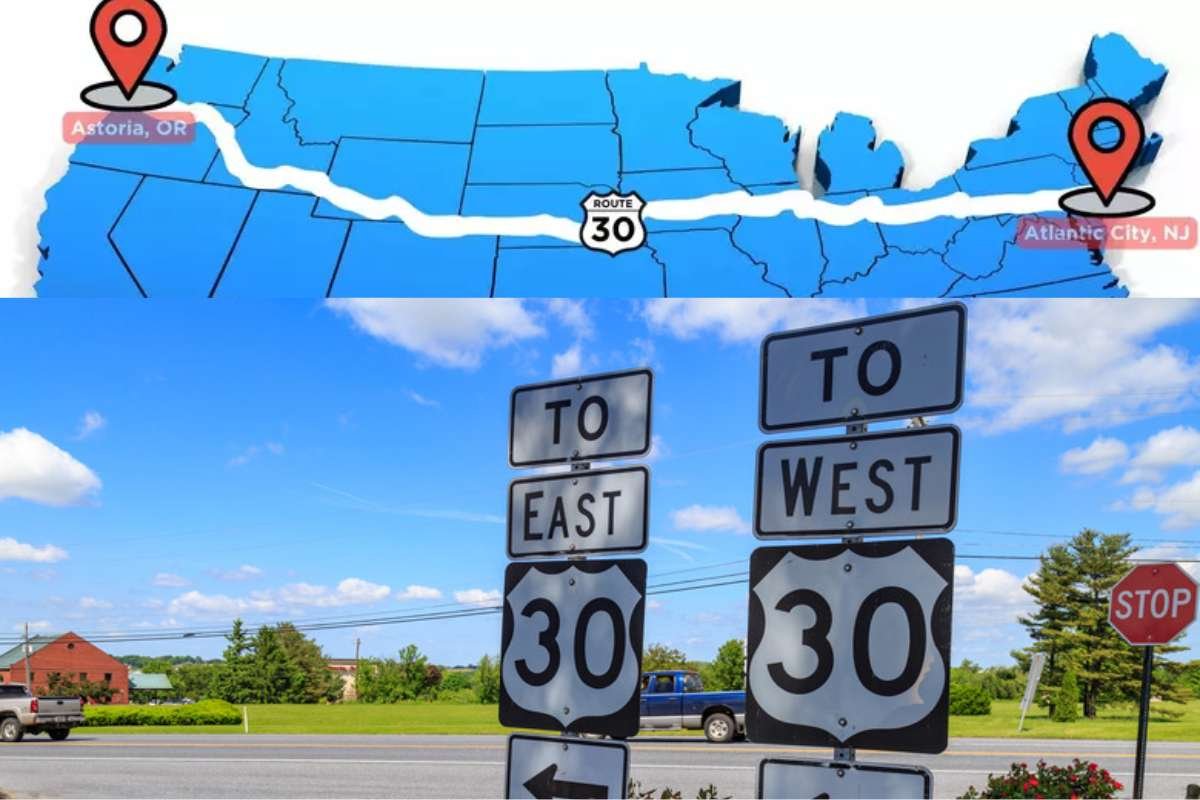
- States Covered: NJ, PA, OH, IN, IL, IA, NE, WY, ID, OR
- Key Cities: Atlantic City, Pittsburgh, Rock Springs, Astoria
US Route 30 follows much of the Lincoln Highway, giving it a strong connection to early cross-country travel. Starting near Atlantic City, it moves through Pennsylvania towns shaped by steel and coal before flattening out across the Midwest. In Iowa and Nebraska, the road passes farmland and small communities that rely on it for regional access.
Wyoming introduces broad basins and long distances between towns, where wildlife sightings are common along the shoulder. Rock Springs reflects the area’s energy industry, while western sections guide drivers toward forested regions and river corridors near the Pacific Northwest. Route 30 remains popular with travelers seeking a quieter alternative to faster highways, offering steady grades and frequent local stops that reflect its historic role.
5. US Route 50 (3,011 miles)
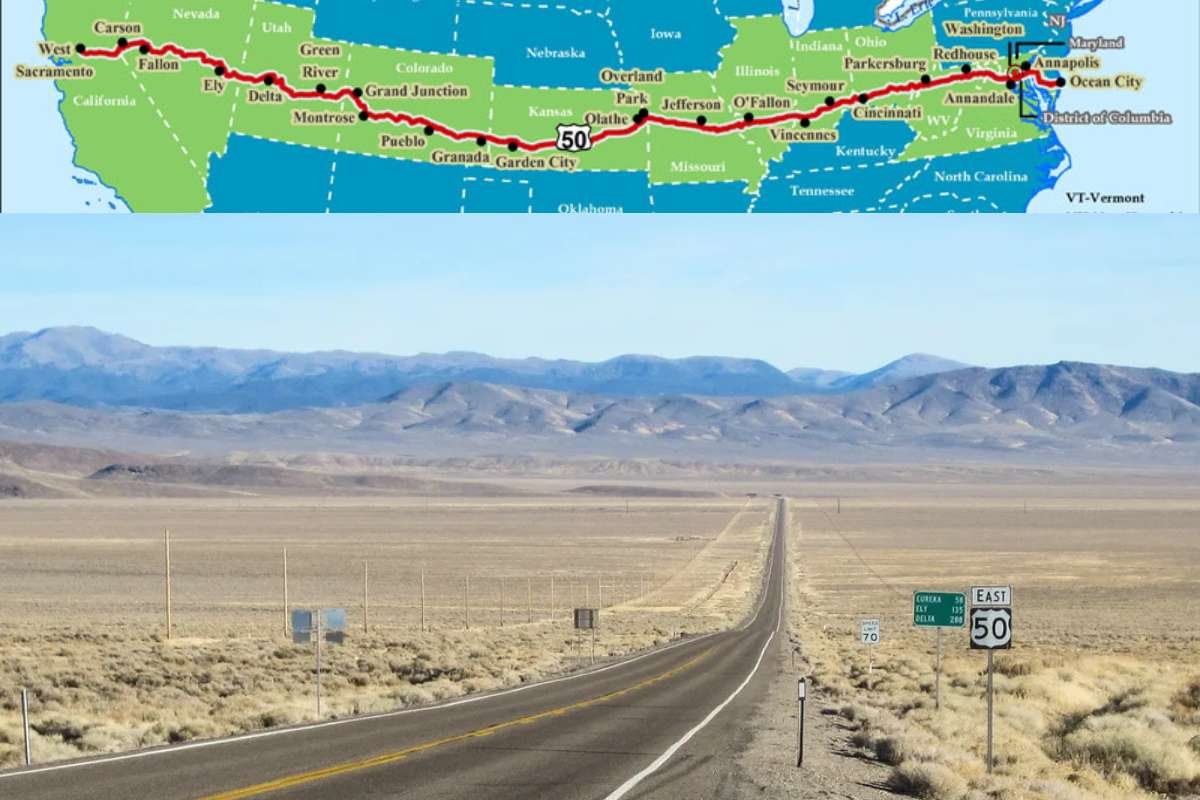
- States Covered: MD, WV, VA, OH, IN, IL, MO, KS, CO, UT, NV, CA
- Key Cities: Ocean City, Cincinnati, Kansas City, Sacramento
US Route 50 begins at the Atlantic coast in Ocean City and moves west through rolling hills and river towns before reaching major Midwestern cities. It is counted among the longest roads in the US for its continuous reach across diverse regions. Past Kansas City, the road enters long, open stretches where towns are fewer and fuel planning becomes essential.
Its Nevada section earned the nickname “The Loneliest Road in America” for the long stretches between services and sparse settlements. Remnants of military and testing activity add quiet historical weight to the surrounding desert. Farther west, the route climbs through mountain terrain before descending toward Sacramento. While it lacks the speed of modern Interstates, Route 50 attracts drivers who value quieter roads, clear night skies, and a steady pace that reflects an earlier style of cross-country travel.
Read Next:
- Why Longest Bridges in the USA Still Leave People Speechless?
- Longest Bridges in the World in 2026: What Sets These 15 Bridges Apart From the Rest
6. Interstate 80 (2,899 miles)
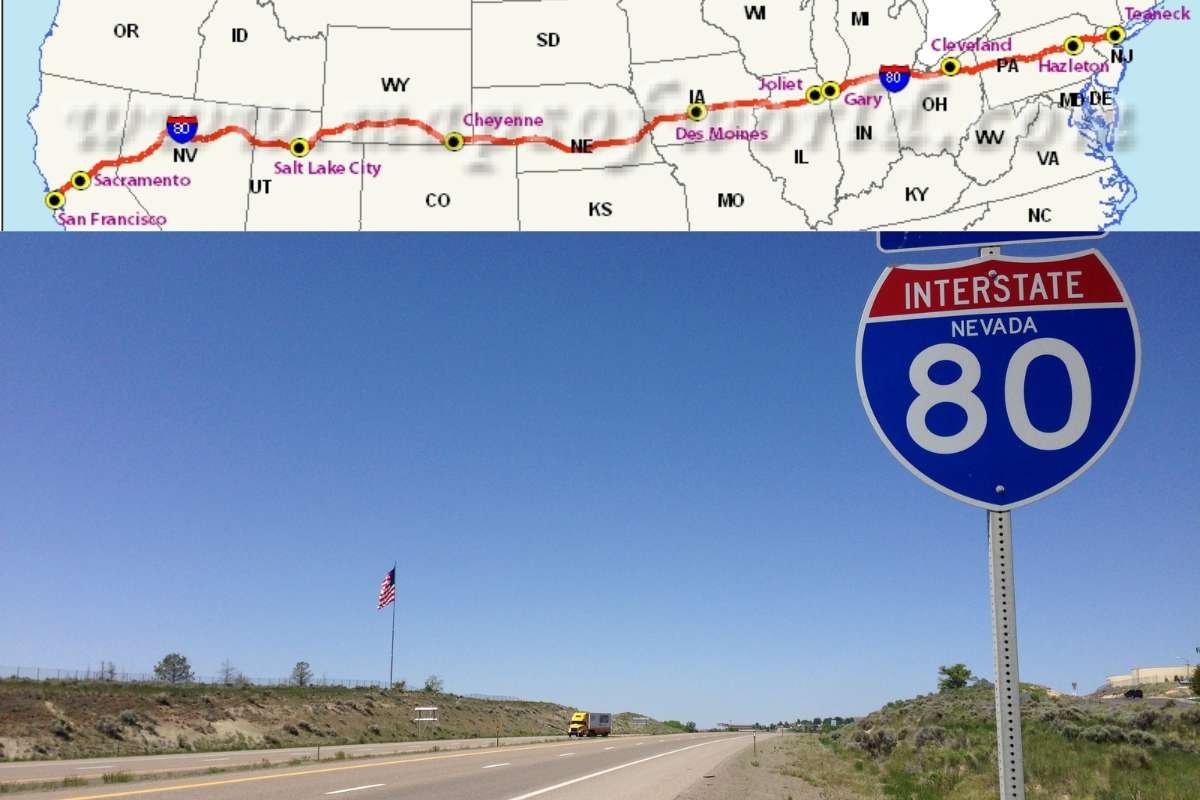
- States Covered: CA, NV, UT, WY, NE, IA, IL, IN, OH, PA, NJ
- Key Cities: San Francisco area, Salt Lake City, Omaha, Cleveland, Teaneck
Interstate 80 begins near the San Francisco Bay, where morning fog clings to bridges before the road turns inland. Nevada follows with long, open stretches across salt flats, where heat and distance test both vehicles and focus. Utah brings elevation and expansive valley views near Salt Lake City, especially striking during evening light. Nebraska delivers one of the longest straight segments in the Interstate system, a stretch that demands alert driving and careful pacing.
Omaha’s freight activity marks the road’s importance to commerce. At the same time, Illinois and Indiana bring steady traffic without fully entering Chicago’s core: Farther east, the road winds through Pennsylvania’s rolling hills before reaching New Jersey. I-80 is a major freight artery, used heavily by trucks moving goods coast to coast, while recreational travelers rely on its frequent rest areas and service access across open country.
7. US Route 60 (2,670 miles)
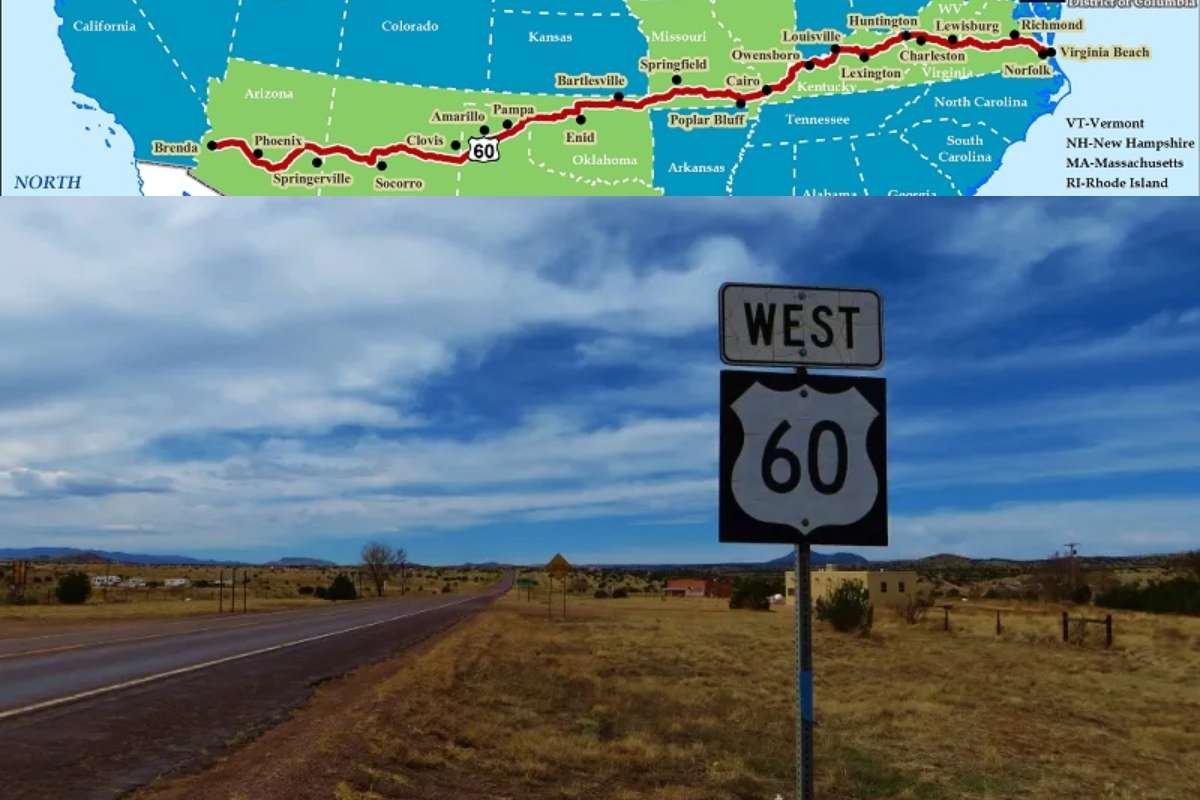
- States Covered: VA, WV, KY, TN, MO, OK, TX, NM, AZ
- Key Cities: Virginia Beach area, Knoxville, Little Rock, Albuquerque
US Route 60 begins near the Atlantic coast and moves steadily west through varied terrain that reflects the country’s regional shifts. In Virginia and West Virginia, the road climbs through wooded hills with tight curves and older roadside towns. Tennessee and Kentucky introduce gentler slopes before the route reaches the Ozarks, where winding sections pass through forested ridges near Springfield.
Oklahoma and Texas flatten out, offering long drives with few interruptions. New Mexico and Arizona bring dry air and striking rock formations, especially near Albuquerque. Often used as an alternative when Route 66 corridors are crowded, US 60 ranks among the longest roads in the US, linking distant regions without relying on high-speed corridors. Its mix of terrain makes it popular with travelers who value variety over speed.
8. US Route 2 (2,579 miles)
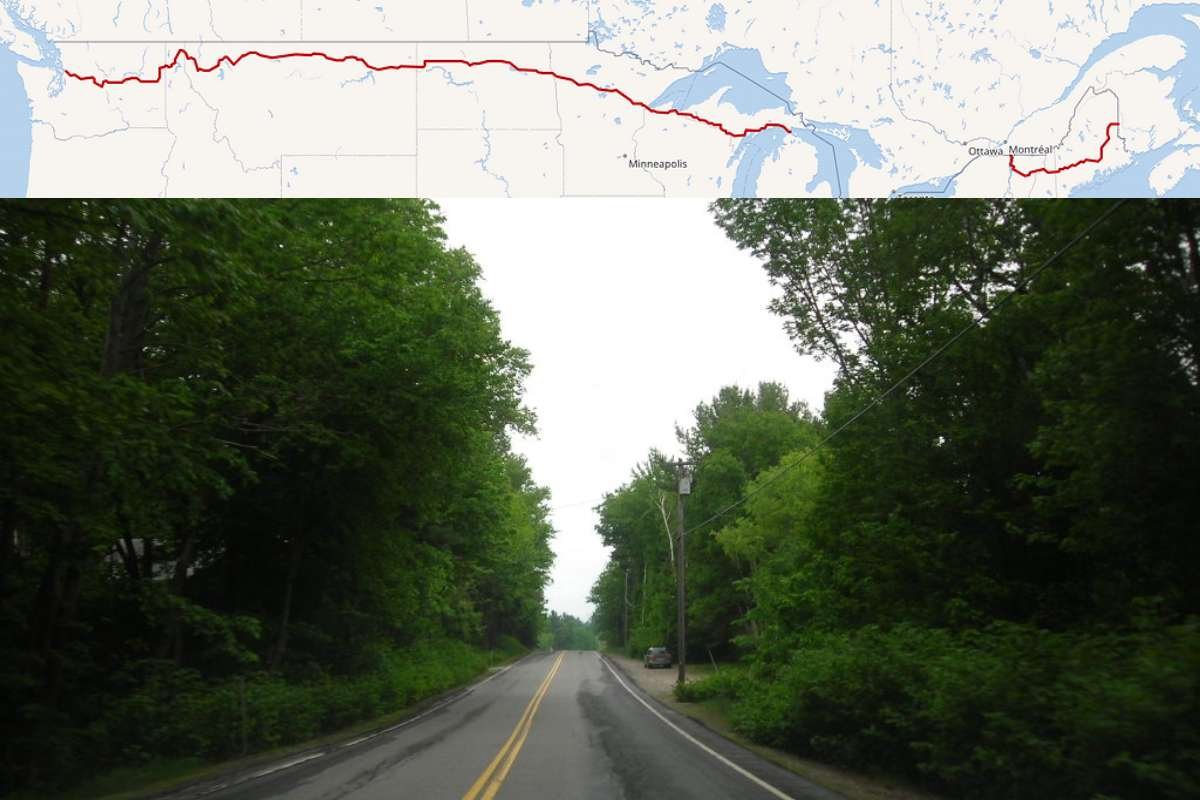
- States Covered: ME, NH, VT, NY, MI, WI, MN, ND, MT, WA
- Key Cities: Houlton, Grand Rapids, Fargo, near Glacier National Park, Everett
US Route 2 traces a northern course across the country, beginning near Maine’s wooded borderlands. Early sections pass through still-farming towns in New England before reaching Michigan’s Upper Peninsula, where lakes and forest roads dominate the landscape. The route crosses the Great Lakes region with access to ferries and small harbors, then opens into the plains of North Dakota and Montana.
Near Glacier National Park, the road skirts dramatic mountain terrain, drawing photographers and outdoor travelers. Washington marks the final leg with dense forests and damp coastal air near Everett. Wildlife sightings are common along northern stretches, especially in Montana. Colder weather and long winters keep traffic lighter, giving US Route 2 a calmer feel than similar-length southern routes.
9. Interstate 40 (2,555 miles)
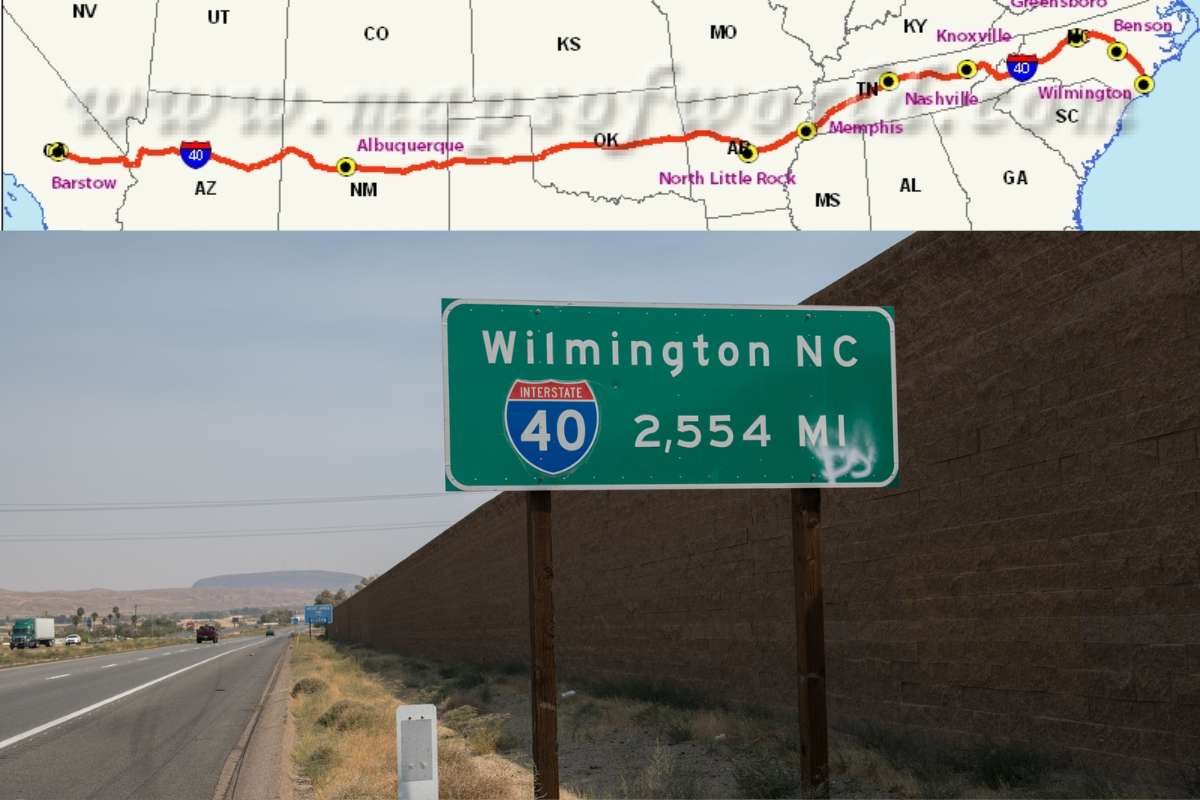
- States Covered: NC, TN, AR, OK, TX, NM, AZ, CA
- Key Cities: Wilmington, Nashville, Memphis, Amarillo, Barstow
Interstate 40 runs from the Atlantic coast deep into the Southwest, connecting ports, music centers, and desert towns. It begins near Wilmington and cuts through the Appalachian foothills before reaching Nashville and Memphis, cities closely tied to American music history. West of Arkansas, the road straightens across Oklahoma and the Texas Panhandle, where large fuel stops cater to truck traffic. Wind farms line portions of the route, reflecting regional energy development.
New Mexico and Arizona bring dry heat and open terrain before the road reaches California’s interior deserts near Barstow. Built to replace older cross-country routes, I-40 handles heavy freight and long-distance travel while remaining one of the most culturally significant east–west corridors. It continues to rank among the longest roads in the US that balance daily commerce with long-haul travel.
10. US Route 12 (2,483 miles)
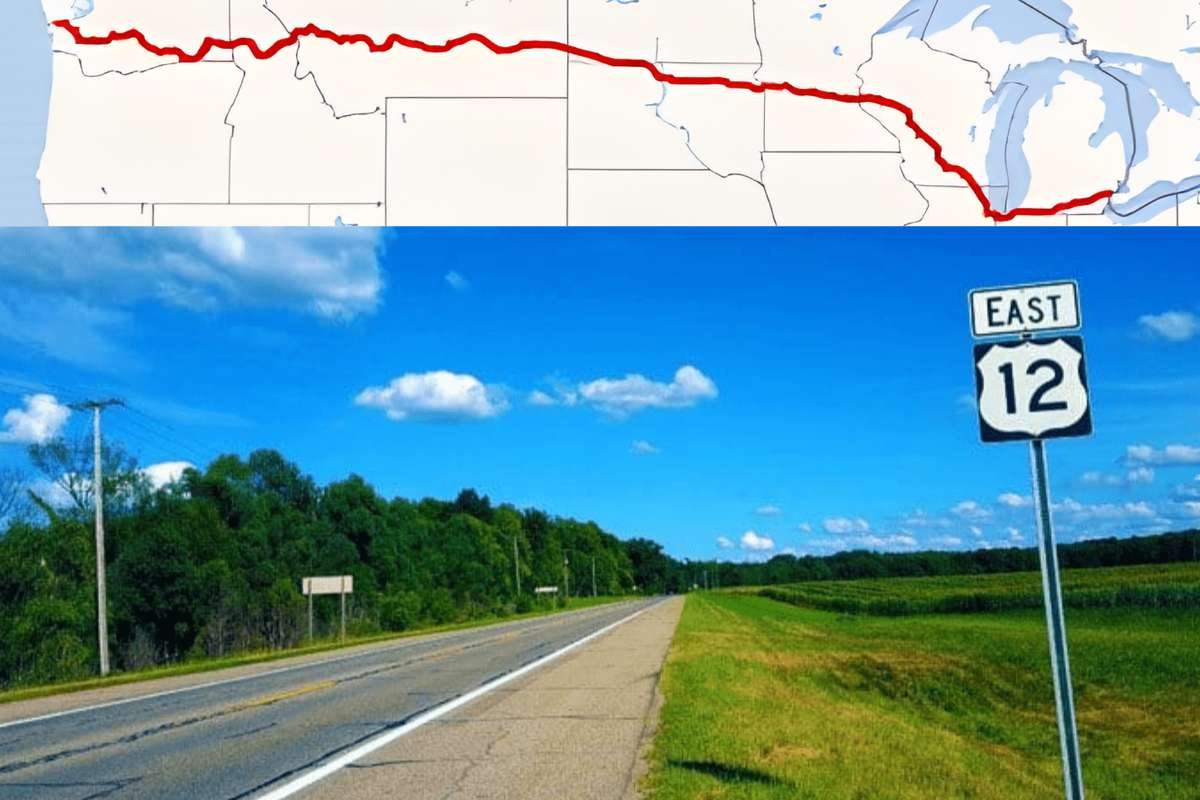
- States Covered: WA, ID, MT, ND, MN, IA, IL, IN, MI
- Key Cities: Aberdeen, Helena, Minneapolis, Detroit
US Route 12 begins near the Pacific Northwest, where coastal rain fades as the road moves inland. Idaho and Montana introduce open land and historic markers tied to the Lewis and Clark expedition, especially in more remote sections. The route crosses vast plains in the Dakotas, where towns are spaced far apart, and driving becomes rhythmic.
Minnesota brings lakes and forest edges near Minneapolis, while Iowa and Illinois add farm regions and industrial access. The road finishes near Detroit, where manufacturing history defines the area. US 12 offers frequent access to trailheads, rivers, and small communities, making it appealing to travelers who prefer steady progress and regional detail over faster highway travel.
11. Interstate 10 (2,460 miles)
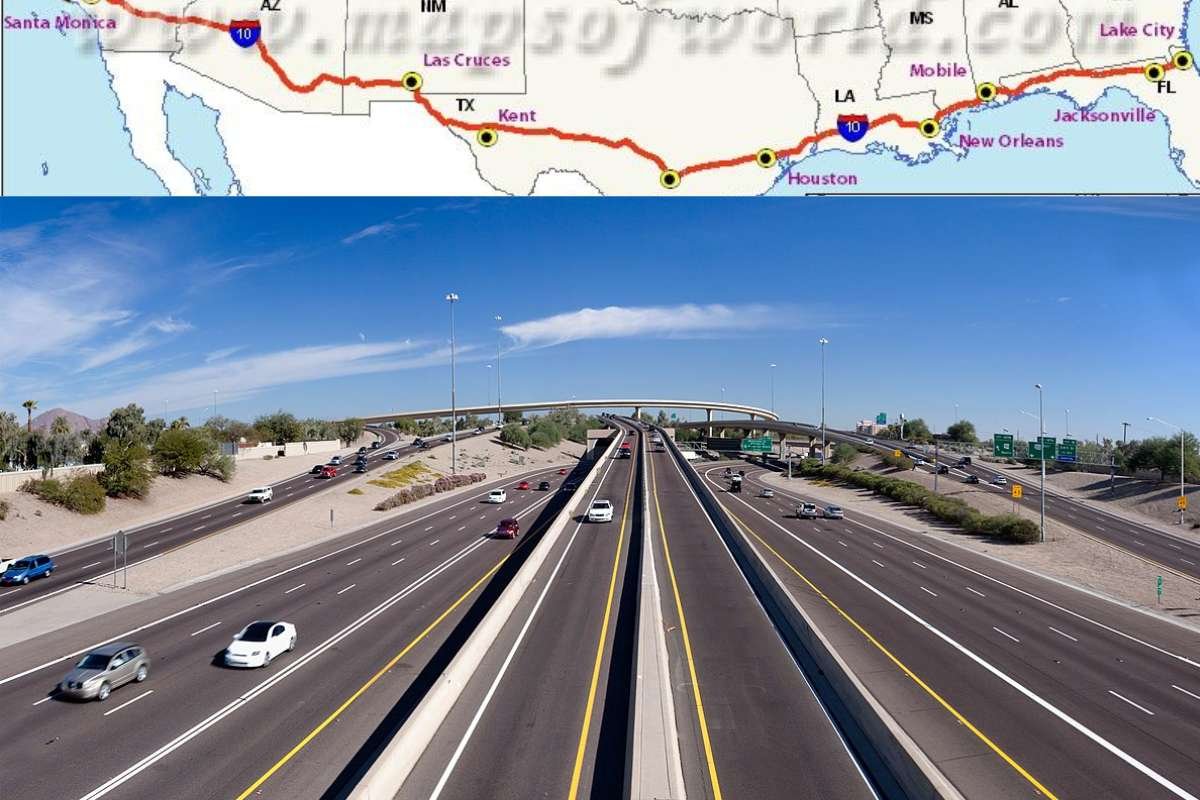
- States Covered: CA, AZ, NM, TX, LA, MS, AL, FL
- Key Cities: Santa Monica, Phoenix, El Paso, Houston, Mobile, Jacksonville
Interstate 10 begins near the Santa Monica shoreline, where ocean air and palm-lined streets give way to long desert drives within hours. Arizona brings intense heat and wide-open flats east of Tucson, where traffic moves fast, and rest stops become essential. El Paso adds border energy before the road stretches across Texas, passing through vast spaces and major urban sprawl around Houston.
In Louisiana, the route slows as it crosses bayous and wetlands, with elevated sections and drawbridges shaping the drive. Mississippi and Alabama bring coastal humidity and storm-tested infrastructure near Mobile. Florida closes the journey with green lowlands and water-heavy views near Jacksonville. I-10 is heavily used by long-distance travelers, freight haulers, and seasonal migrants heading south each year, making it one of the most traveled southern routes in the country.
12. US Route 66 (2,448 miles)
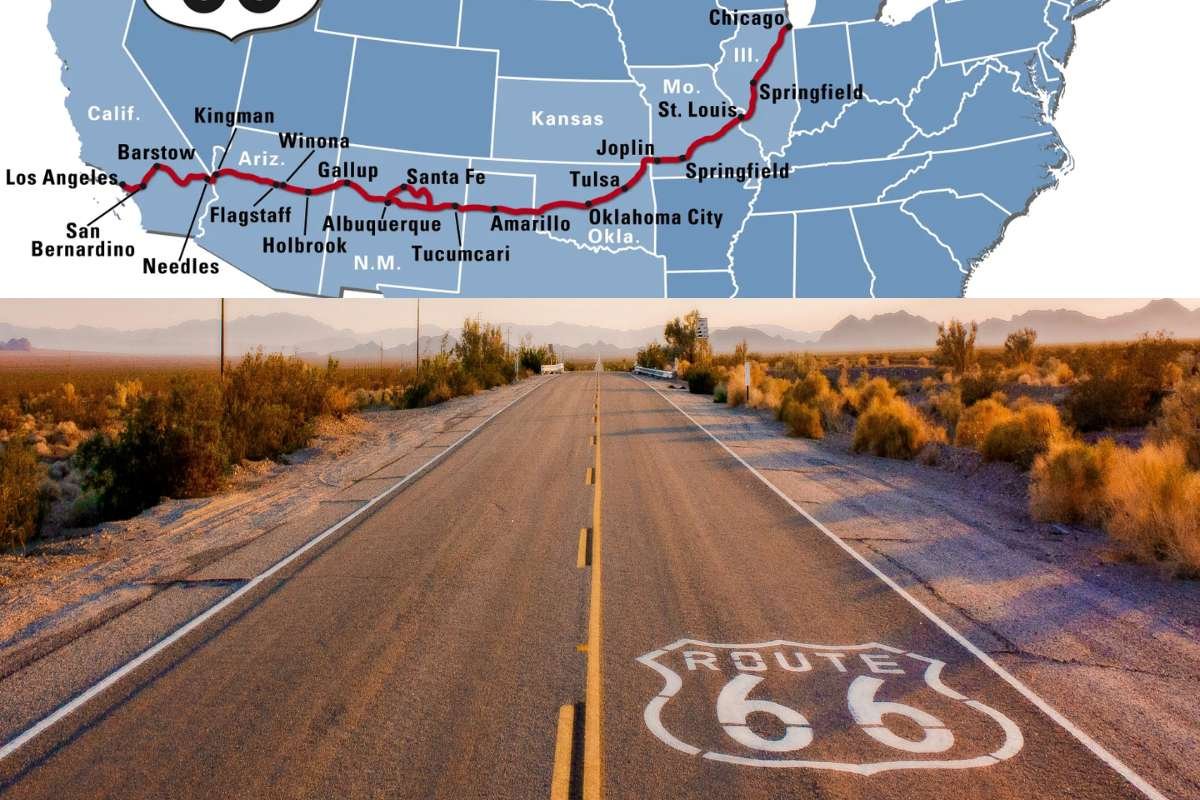
- States Covered: IL, MO, KS, OK, TX, NM, AZ, CA
- Key Cities: Chicago, St. Louis, Tulsa, Amarillo, Albuquerque, Flagstaff, Santa Monica
US Route 66 remains one of the most recognized roads in American history, even though it no longer functions as a single continuous highway. Beginning in Chicago, the route passes through St. Louis and into the plains, where Oklahoma towns reflect stories from the Dust Bowl era. Amarillo’s stockyards and roadside stops keep classic road culture alive, while New Mexico introduces desert towns and long, quiet drives.
Arizona’s high country brings cooler air and dramatic rock formations near Flagstaff before the road reaches Santa Monica once again. Neon signs, vintage motels, and preserved diners still line portions of the route, drawing travelers who seek older alignments rather than modern bypasses. Though Interstates now handle most traffic, Route 66 remains linked to the longest roads in the US as a lasting symbol of migration, travel freedom, and roadside tradition.
Infrastructure Upgrades Improving Long Roads
Major upgrades completed over the past year have made long-distance driving safer and less tiring. Several high-impact projects focused on reducing crash risks and easing long backups on heavily traveled routes. US Route 20 now features more than 500 electric vehicle charging points, stretching from rural Ohio to southern Idaho. With stations spaced roughly every 50 miles, drivers no longer worry about long gaps between charges on extended runs across the US’s longest roads.
Interstate 90 also saw significant improvements after repeated storm damage in the mountain areas. New flood barriers and drainage systems were added along exposed sections in Wyoming, helping keep lanes open during heavy rain and runoff. Safety data reflects these efforts. Fatal crashes dropped by about 15% across several of the longest routes, helped by brighter reflective signs and speed monitoring near sharp curves and downhill grades.
Freight corridors received attention as well. Interstate 80 widened truck shoulders near Salt Lake City, giving large vehicles more room to maneuver without pushing into passenger lanes. US Route 30 benefited from resurfacing work in Nebraska, where fresh asphalt improved traction during freezing conditions. Drivers report noticeable changes, including better-stocked rest areas, expanded truck parking, and improved facilities. Together, these upgrades keep America’s longest roads dependable for daily travel and long cross-country trips alike.
Read Next:
- Inside the Top 20 Longest Sea Bridges in the World and the Calculations That Refused to Fail
- The Most Dangerous Mountain Cities to Drive On in the US
Road Trip Hacks for Western Drivers
→ Stretch Your Fuel on Long Runs
If you’re driving east from the West Coast, long flat corridors work in your favor. Routes like Interstate 80 across Nebraska allow steady speeds that help hybrids and fuel-efficient cars keep costs low over hundreds of miles. On drives spanning some of the longest roads in the US, small efficiency gains add up to a real difference by the end of the trip.
→ Eat Smart, Not Expensive
Highway food adds up fast. Many Wyoming pullouts along major routes offer picnic tables and free grills, making a packed cooler a smarter option than stopping at chain restaurants. These quieter breaks also help reduce fatigue on long days behind the wheel.
→ Outsmart Traffic and Lodging
Urban bottlenecks can drain time and patience. Traffic apps help flag slowdowns on US Route 20 near Chicago before you reach them. For overnight stops, travel and camping apps highlight low-cost sites near reservoirs along US Route 6, often calmer than roadside motels.
→ Plan Meals Worth the Stop
Some food stops are part of the journey. Iowa 80 on I-80 is known for heavy breakfasts and oversized pie slices. Along US Route 30, diners near Rock Springs serve bison burgers tied to local ranching culture. Albuquerque remains a reliable pause on US Route 60 for green chile dishes that feel rooted, not mass-produced.
→ Pick the Right Season
Timing changes the experience. Spring brings clear views on I-90 through Montana, while fall colors soften drives on US Route 2 near Glacier. Mountain routes like I-40 can shift quickly, so weather checks and emergency gear remain smart precautions.
Sustainability Shifts
Solar panels now power rest areas along I-80, charging EVs and lighting lots without grid power. US 20 teams with states to hit carbon-neutral by 2030, planting trees along Nebraska stretches to soak up truck exhaust. Wind breaks on I-40 in Oklahoma shield drivers and spin turbines that feed local grids.
Climate fixes match the push. Crews raised low spots on US 50 over Nevada basins after flash floods, with drains that handle double the old flow. Yellowstone bypasses on US 20 reroute around fire-prone woods, keeping access open when blazes flare. These moves drop repair bills and let routes run year-round, rain or shine.
Daily drivers gain most from it all. Bike lanes pop up near towns on US 2, and hybrid truck incentives fill lots at I-90 stops. Greener pavement recipes last longer, too, so potholes stay rare on high-traffic legs. Riders feel the shift in quieter engines and clearer air at pullouts.
Fun Facts & Records
- US Route 20 holds the title as the longest road in the United States. It features some of the longest uninterrupted east–west drives, especially across rural Nebraska and Idaho, where traffic lights are rare.
- A full federal mileage review completed in the late twentieth century confirmed Route 20’s top ranking, and later rerouting projects have not changed its total length.
- Wildlife sightings are common along US Route 20, with drivers reporting higher deer encounters per mile than on nearby Interstates, particularly around sunrise and sunset.
- Interstate 80 gained attention after high-speed testing on Utah’s salt flats highlighted its connection to the region’s long-standing speed research.
- US Route 50 earned its “Loneliest Road in America” nickname because of long stretches between towns and fuel stops across Nevada, with some sections exceeding 100 miles.
- US Route 66, though no longer a continuous highway, still features hundreds of historic bridges from earlier alignments that remain open to passenger vehicles.
- US Route 2 records more moose crossings each year than most major U.S. routes, especially near rivers and forested areas in Montana.
- Interstate 90 maintenance crews routinely clear extreme snowdrifts in Wyoming’s mountain zones, using heated bridge systems to prevent ice buildup and reopen lanes more quickly.
Significant changes loom for these longest roads in the US as tech rewires how we roll.
New builds promise faster, safer miles ahead.
Future of U.S. Megahighways
Hyperloop tubes could be built over stretches of I-90 by 2030, shooting pods from Seattle to Chicago in hours flat. Autonomous rules kick in first on US 20 rural legs, where sensors handle Wyoming curves without human hands. Truck platoons link up on I-80 salt flats, cutting fuel use by 20 percent through computer sync.
States push intelligent asphalt that glows lane lines at night and melts snow on contact for US 30 passes. EV lanes exclusive to battery rigs pop up on I-40 near Nashville, feeding mega-chargers off wind farms. Drones scout potholes ahead on US 50, patching before backups form in Nevada voids.
Folks will mix self-driving cars with old-school RVs, apps plotting hybrid paths that skip tolls. These shifts keep epic routes fresh, blending history with speeds that shrink maps.
Conclusion: Where the Miles Add Up to Meaning
These routes show that distance means more than mileage alone. They carry truckers through overnight runs, lead families to campsites, and give solo drivers long hours of open road across multiple states. US Route 20 still leads at 3,365 miles, yet each road offers its own rewards, from diner stops with fresh pie to overlooks where wildlife appears without warning.
Recent upgrades have made these corridors more dependable. Electric vehicle chargers along Interstate 80, flood protection on Interstate 40, and safer road surfaces across older highways support smoother travel. Cleaner engines and more intelligent monitoring systems continue to reduce wear and emissions on long drives. Together, the longest roads in the US reflect how people travel when the journey matters as much as the destination.