The global medical equipment market is projected to exceed $600 billion by 2028, yet many healthcare organisations are still making procurement decisions using outdated frameworks. Understanding market shifts is no longer optional but a strategic imperative that directly impacts patient outcomes, operational efficiency, and competitive positioning.
Consider this: a hospital that invested in traditional diagnostic equipment three years ago may already be at a disadvantage compared to competitors deploying AI-enhanced alternatives delivering faster, more accurate results. As healthcare systems grapple with rising patient expectations and economic pressures, equipment procurement strategies of today will define healthcare delivery models of tomorrow.
Digital integration, supply chain resilience, sustainability imperatives, and patient outcome optimisation are converging to reshape how organisations evaluate and deploy clinical technologies. Leaders who recognise these trends early can deliver superior care whilst managing costs effectively.
The Strategic Importance of Monitoring Medical Equipment Market Dynamics
Medical equipment market represents one of the largest capital expenditure categories for healthcare systems, making procurement decisions critical to patient outcomes and financial performance. The market is experiencing simultaneous disruptions as regulatory frameworks tighten globally, supply chains are re-engineered, and technological innovation accelerates.
Equipment decisions extend far beyond purchasing departments. These choices influence clinical protocols, staff training, patient satisfaction, maintenance costs, and competitive positioning. Understanding medical equipment market trends enables leaders to make informed decisions aligned with broader organisational strategy.
Advanced Diagnostic Tools Driving Clinical and Business Value
The demand for sophisticated diagnostic tools has surged across global healthcare markets, driven by aging populations, rising chronic disease prevalence, and increased emphasis on early detection.
Modern diagnostic technologies are transforming clinical workflows. Point-of-care testing enables rapid decision-making, advanced imaging technologies are becoming standard expectations, and laboratory automation is streamlining high-volume testing whilst reducing human error.
From a business perspective, advanced diagnostic tools represent strategic investments. Organisations deploying superior capabilities can differentiate services, attract specialist physicians, and improve outcomes metrics that increasingly influence reimbursement. However, rapid technological advancement can render equipment obsolete quickly, requiring evaluation frameworks that balance clinical capabilities, total cost of ownership, and interoperability.
5 Critical Equipment Procurement Mistakes Healthcare Leaders Must Avoid

Even experienced healthcare executives can fall into common procurement traps. Here are five critical mistakes to avoid:
1. Focusing Solely on Upfront Purchase Price
The lowest initial cost rarely translates to the best value. A defibrillator that costs 20% less but requires expensive proprietary consumables can cost significantly more over its lifecycle. Smart leaders evaluate total cost of ownership including maintenance, training, energy consumption, and consumables.
2. Ignoring End-User Input From Clinical Staff
Procurement decisions made without consulting clinicians often result in low adoption rates. Stethoscopes, diagnostic tools, and equipment that users find uncomfortable may sit unused despite significant investment. Leading organisations involve physicians and nurses early in evaluation, creating champions who drive successful implementation.
3. Underestimating Integration Requirements
Purchasing diagnostic equipment that cannot communicate with existing electronic health records creates data silos and workflow inefficiencies. Modern healthcare requires seamless information flow. Equipment that operates in isolation diminishes overall system performance.
4. Neglecting Supplier Financial Stability
Selecting suppliers based primarily on pricing without assessing their financial health creates risk. If a supplier exits the market, organisations can find themselves with orphaned equipment. Established suppliers like AMA Medical Products provide stability and comprehensive support networks that protect long-term investments.
5. Failing to Plan for Technology Obsolescence
Equipment purchased today may be outdated within three to five years rather than traditional seven to ten-year cycles. Smart leaders negotiate upgrade paths, modular designs, and flexible procurement agreements that accommodate rapid innovation.
Emergency Equipment Innovation Reshaping Critical Care Delivery
Emergency and life-saving equipment represents the most critical category where reliability directly correlates with patient survival. Every minute of delay in deploying a defibrillator reduces survival chances by approximately 10%.
Modern automated external defibrillators incorporate sophisticated algorithms that analyse cardiac rhythms with increasing accuracy and provide real-time voice guidance. Where first-generation units weighed over 10 kilograms and required extensive training, current models weigh less than 2 kilograms and can be effectively operated by individuals with minimal training. They’re becoming more portable, more intuitive, and more reliable whilst simultaneously decreasing in cost.
Beyond defibrillators, advanced ventilators now feature adaptive algorithms adjusting support based on real-time patient response. Portable ultrasound devices deliver imaging quality that once required room-sized machines. Enhanced trauma care equipment with intuitive interfaces reduces cognitive load on teams working under extreme pressure.
The Enduring Relevance of Traditional Clinical Instruments
Whilst high-technology equipment captures headlines, traditional clinical instruments remain foundational to daily healthcare delivery, offering important lessons about market dynamics and user-centred design.
Stethoscopes represent the most iconic traditional medical instrument. Despite predictions of obsolescence, they remain indispensable. Cardiologists perform dozens of auscultations daily, general practitioners hundreds weekly. The tactile feedback, immediate results, and zero technology dependencies make stethoscopes irreplaceable.
The medical equipment market has evolved significantly. Modern stethoscopes incorporate acoustic engineering advances, improving sound transmission. Premium models feature dual-frequency diaphragms detecting both high and low-frequency sounds. Some include digital enhancement, noise cancellation, and recording capabilities for specialist consultation.
The price spectrum is revealing. Basic stethoscopes cost under $50, whilst premium models exceed $300. Yet superior acoustic performance can enable earlier detection of cardiac abnormalities, identifying conditions months before otherwise diagnosed. Value extends beyond functional performance to user experience and reliability. When clinicians prefer their tools, compliance increases, and patient care improves.
Supplier Relationships and Brand Considerations in Strategic Procurement

Establishing relationships with reliable suppliers has become increasingly important as global supply chains face ongoing disruption. Quality suppliers provide value beyond product delivery through clinical education, maintenance support, and regulatory compliance assistance.
Organisations like AMA Medical Products and similar established suppliers bring stability and comprehensive product portfolios that streamline purchasing workflows and often yield volume-based pricing advantages. However, supplier selection requires rigorous evaluation of product quality, financial stability, service capabilities, and supply chain resilience.
Sustainability and Total Cost Management in Equipment Decisions
Environmental sustainability has evolved from peripheral to central in procurement decisions. Healthcare generates approximately 8% of global carbon emissions, with equipment contributing significantly through manufacturing, energy consumption, and disposal.
Progressive leaders integrate sustainability metrics with measurable results. Energy-efficient MRI machines can reduce electricity consumption by 30-40%, translating to significant annual savings. One large hospital system saved over $2 million annually switching to reusable surgical instruments, simultaneously diverting 150 tonnes of waste from landfills.
Cost efficiency extends beyond purchase price to total cost of ownership. Maintenance, consumables, energy consumption, and disposal collectively determine true costs. Sophisticated organisations employ lifecycle costing methodologies, optimising both financial and environmental performance.
Technology-Driven Market Trends Healthcare Leaders Must Track
Several technology-enabled trends are reshaping the medical equipment market landscape:
- Artificial intelligence integration is moving into mainstream clinical equipment, enhancing diagnostic accuracy and clinical decision support whilst raising questions about liability and validation.
- Internet of Medical Things connectivity enables remote monitoring, predictive maintenance, and equipment utilisation analytics that optimise asset deployment.
- Cloud-based data management is transforming how equipment-generated information integrates with electronic health records, creating opportunities for population health insights.
- 3D printing and additive manufacturing are enabling on-demand production of equipment components and customised medical devices, potentially disrupting traditional supply chains.
- Telemedicine-enabled diagnostic devices are extending specialist expertise to remote locations, reshaping service delivery models and competitive dynamics.
- Modular and upgradeable equipment architectures allow organisations to extend equipment life and adopt new capabilities without complete replacement.
7 Emerging Equipment Categories Creating Competitive Advantages

Healthcare organisations seeking differentiation are investing in emerging equipment categories that enhance patient experience and create operational efficiencies:
1. AI-Enhanced Diagnostic Imaging — Artificial intelligence algorithms analysing medical images are detecting abnormalities with specialist-level accuracy. Early adopters report 30-40% reductions in interpretation time and improvements in early detection rates.
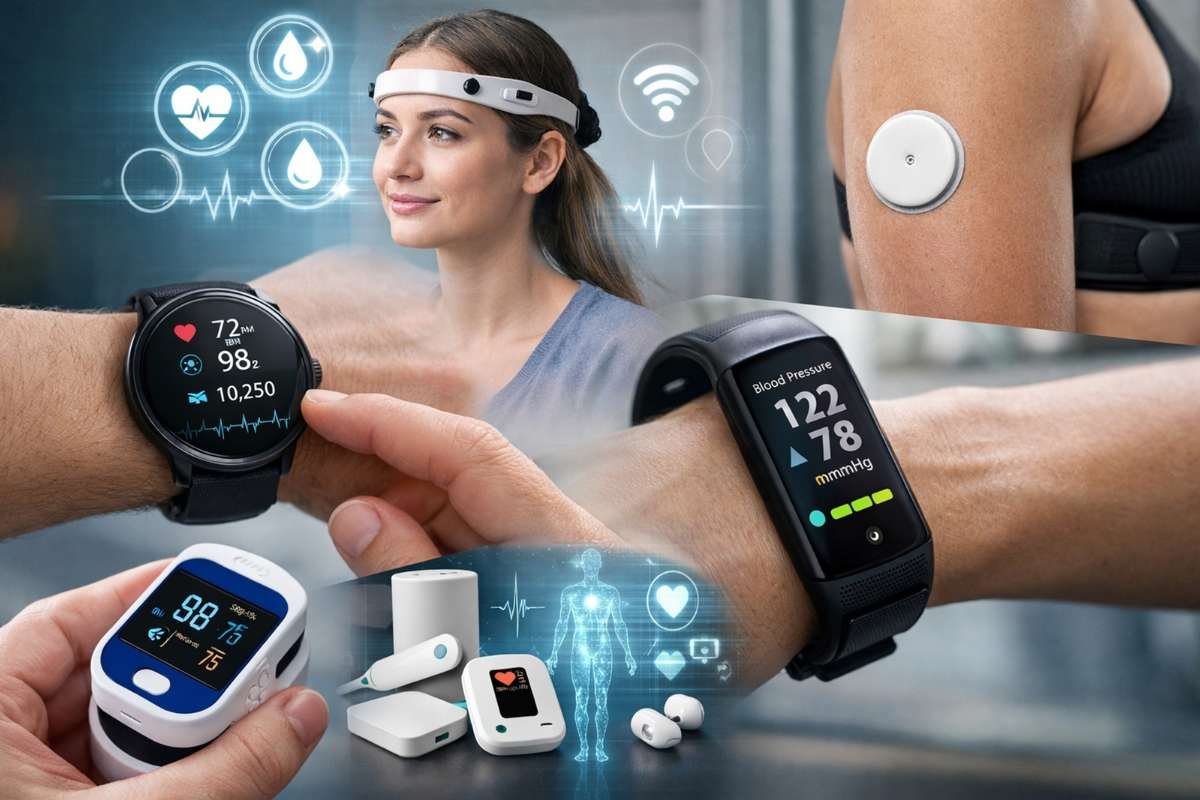
2. Wearable Patient Monitoring Systems — Remote monitoring devices tracking vital signs continuously are transforming post-acute care. Patients recover at home whilst maintaining hospital-grade monitoring, reducing readmission rates by up to 25%.
3. Robotic Surgical Assistance — Advanced surgical robots are no longer exclusive to major academic centres. Mid-sized hospitals deploy these systems to attract specialists and offer minimally invasive procedures with reduced complications and faster recoveries.
4. Point-of-Care Molecular Diagnostics — Rapid testing platforms delivering laboratory-quality results at the bedside are accelerating treatment decisions. Infectious disease identification completing in under an hour enables targeted therapy that improves outcomes.
5. Portable Ultrasound Technology — Handheld ultrasound devices the size of mobile phones are democratising medical imaging. Emergency departments, rural clinics, and ambulances gain diagnostic capabilities, enabling immediate assessment.
6. Automated Pharmacy Dispensing — Robotic pharmacy systems that precisely prepare medications are virtually eliminating dispensing errors. Return on investment typically achieves break-even within 2-3 years through reduced waste and improved efficiency.
7. Environmental Monitoring Systems — Advanced sensors continuously monitoring air quality and surface contamination are enhancing infection prevention programmes, reducing healthcare-associated infection rates that cost systems billions annually.
Strategic Insights for Maintaining Competitive Advantage
Healthcare leaders navigating this complex landscape should consider several imperatives. Establish robust governance frameworks bringing together clinical, financial, and strategic perspectives. Invest in data infrastructure enabling evidence-based decisions by tracking utilisation, maintenance costs, and clinical outcomes.
Cultivate relationships with clinical staff as end users. Their insights regarding functionality are invaluable for evaluation. Organisations engaging clinicians as partners achieve higher adoption and better outcomes.
Develop scenario planning accounting for multiple possible futures. The market faces uncertainty across regulatory, technological, and economic dimensions. Leaders preparing for various scenarios build more resilient organisations. Recognise that equipment strategy cannot be separated from broader digital transformation initiatives.
Why Staying Ahead of Medical Equipment Market Trends Is a Competitive Advantage?
The medical equipment market will continue evolving at an accelerating pace, driven by technological innovation, changing patient expectations, and economic pressures. Healthcare organisations treating equipment procurement as a strategic capability position themselves for sustained competitive advantage.
Leaders who monitor market trends, understand total value propositions, and align procurement with organisational objectives will deliver superior patient care whilst optimising resources. The alternative is reactive decision-making, deploying yesterday’s technologies to meet tomorrow’s challenges.
In an increasingly competitive healthcare environment where clinical outcomes, patient experience, and operational efficiency determine success, medical equipment market strategy represents a lever forward-thinking leaders cannot afford to overlook. The question for healthcare executives is not whether to engage with equipment market trends but how systematically to do so. Those who answer thoughtfully will find themselves well-positioned to lead through whatever challenges and opportunities the future presents.