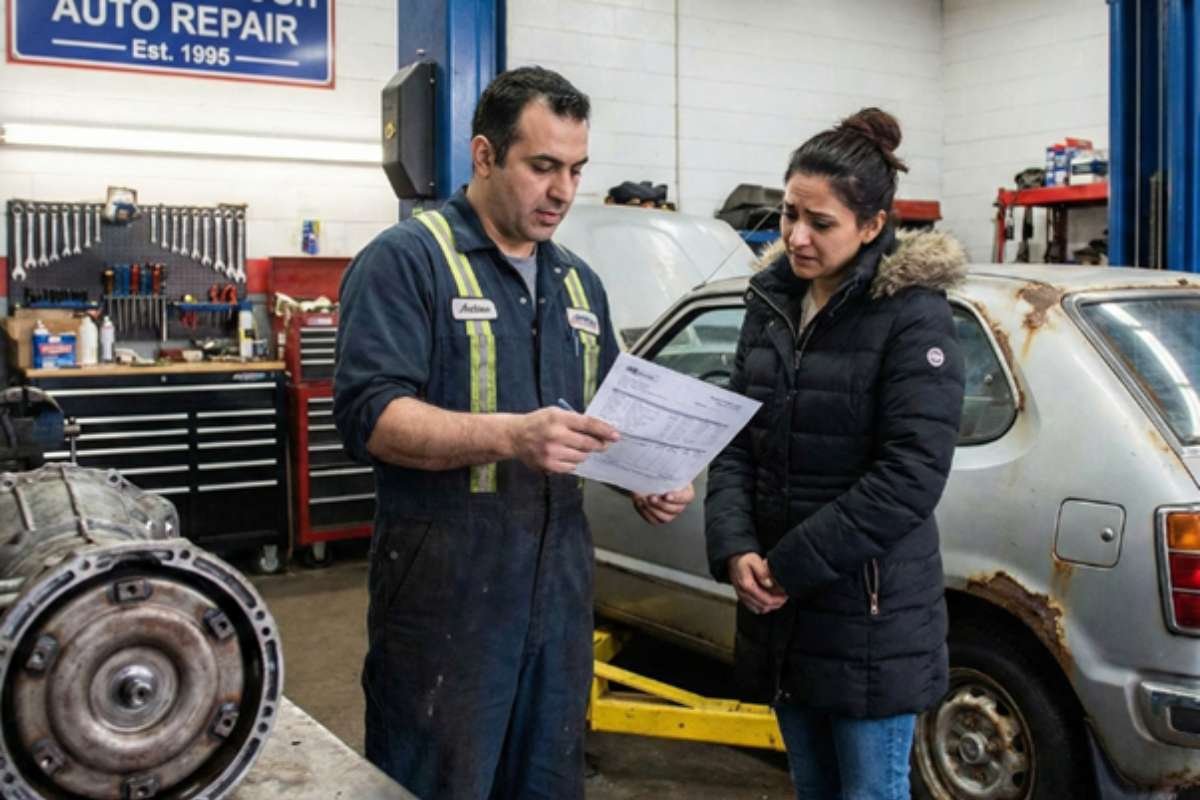
Vehicle ownership in Ontario inevitably reaches a crossroads where maintenance costs begin to rival the asset’s residual value. For many drivers in the Greater Toronto Area (GTA), this moment arrives unexpectedly—often in a mechanic’s bay with a quote for a transmission rebuild or a head gasket replacement. The prevailing guideline in automotive economics is the “50% Rule,” a decision-making heuristic suggesting that if a repair costs more than half of the vehicle’s current market value, it is generally wiser to divest.
However, applying this rule for scrap a car in Ontario requires a clear-eyed assessment of both the car’s condition and the local market realities. While emotional attachment often clouds judgment, the financial metrics are usually stark. For owners facing four-figure repair bills on aging sedans or SUVs, services like Scrap Cars GTA provide an exit strategy that converts a liability into immediate liquidity, bypassing the complexities of selling a mechanical project to a private buyer.
Weighing Major Repairs Against Residual Value
The 50% rule functions as a stop-loss mechanism. To apply it effectively, one must first establish the vehicle’s realistic street value—not the asking price of pristine models on AutoTrader, but the transacted price for a car with similar mileage and wear. For example, a 2010 sedan might ostensibly be worth $3,000 in good condition. If the transmission fails, a typical rebuild in Toronto can easily range from $1,800 to $2,500 once labour and HST are factored in.
In this scenario, spending $2,000 to restore a $3,000 asset effectively means you are “buying” the car back for $2,000. If the vehicle has other looming issues—such as worn suspension components or the onset of structural rust common to Ontario winters—the actual value may be significantly lower than the book value. We often see owners authorize a major repair only to face a secondary failure regarding the catalytic converter or alternator months later. At that point, the cumulative repair costs have far exceeded the replacement value, leading to a phenomenon known as being “underwater” on a paid-off car.
When the Scrap Route Makes Financial Sense?
There are specific thresholds where the 50% rule shifts from a guideline to a financial imperative. In the GTA secondary market, vehicles labeled as “mechanic’s specials” or “as-is” rarely command significant resale value because the buyer assumes all the risk.
- The “Sunk Cost” Trap: A common error we observe is the sunk cost fallacy, where an owner feels compelled to keep a car because they recently replaced the tires or brakes. However, consumables do not significantly increase a vehicle’s core value. If a car requires an engine replacement costing $3,000, the fact that it has new $800 winter tires does not justify the repair. In such cases, removing the new tires for resale separately and recycling the chassis often yields a better net financial result.
- Structural Integrity and Safety Standards: Ontario’s safety inspection standards are rigorous. A vehicle might have a functioning engine, but if the subframe is compromised by salt corrosion—a ubiquitous issue for cars over 12 years old in the Golden Horseshoe—the cost to pass safety certification can be prohibitive. Welding structural rust is labour-intensive and expensive. If a car cannot pass a safety check without thousands in bodywork, its value on the private market drops to its scrap weight potential, regardless of how well the engine runs.
The Hidden Costs of Keeping an Aging Vehicle in Ontario

Beyond the immediate repair bill, keeping a failing vehicle on the road incurs “friction costs” that are often overlooked until they accumulate. The equation involves more than just parts and labour; it involves time, logistics, and ongoing depreciation.
- The “Unreliability Tax”: Older vehicles with deferred maintenance become unpredictable. For commuters relying on the 401 or the Gardiner Expressway, a breakdown is not just an inconvenience; it involves towing fees (often exceeding $250 for emergency tows in the GTA), lost wages, and the stress of managing a stalled vehicle in high-traffic zones. We frequently analyze cases where the cost of emergency roadside assistance and rental cars during repair downtimes erodes any theoretical savings gained by keeping an old car running.
- Insurance and Storage: In dense urban areas like North York or downtown Toronto, parking real estate is at a premium. Keeping a non-running vehicle in a condo spot or driveway costs money—either in direct fees or opportunity cost. Furthermore, maintaining insurance on a vehicle that sits idle while the owner debates repairs is a slow leak on finances. Canceling insurance on a non-runner requires storing it on private property, which brings us back to the storage constraint.
Preparing a Non-Runner for Removal in the GTA
If the calculation tips in favor of scrap a car in Ontario, the logistical process in Ontario is distinct from a standard private sale. The primary advantage of the recycling route is the elimination of the Used Vehicle Information Package (UVIP) requirement. When selling to a licensed recycler, the seller is generally not required to purchase the UVIP, saving $20 and the administrative trip to Service Ontario.
- Ownership and Plate Removal: The critical step in finalizing the transaction is the ownership permit. Sellers must sign the transfer portion of the vehicle registration to the recycler. It is vital to remove the license plates before the tow truck departs. We have encountered numerous instances where sellers leave plates on the vehicle, leading to complications if the plates are not properly returned to Service Ontario or if 407 ETR tolls are accrued during transport (though reputable towers use their own dealer plates, errors happen).
- Clearance for Towing: Logistics play a role in the final valuation. A car stuck in an underground parking garage with a 6-foot clearance in Mississauga presents a harder extraction challenge than a car in a driveway in Scarborough. While many recyclers absorb towing costs, difficult extractions can sometimes impact the net offer. Clearing out personal belongings, including E-Z Pass transponders and garage door openers, is a final, often forgotten step that should be handled before the recovery team arrives.
Final Assessment: Cutting Losses on Depreciating Assets

The decision to scrap a car in Ontario is rarely a happy one, but it is often the most fiscally responsible choice. The 50% rule serves as a rational anchor in an emotional process. When a vehicle’s repair costs approach half its value, the risk of subsequent failures makes the investment statistically unsound.
By viewing the vehicle strictly as a depreciating asset, owners can avoid the trap of “throwing good money after bad.” Whether due to a blown transmission, profound electrical gremlins, or terminal rust, recognizing the point of diminishing returns allows owners to extract the remaining material value from the car and redirect their capital toward a more reliable mode of transport. Scrap a car in Ontario market, where rust and road wear accelerate depreciation, the ability to let go at the right moment is a key component of long-term automotive budgeting.