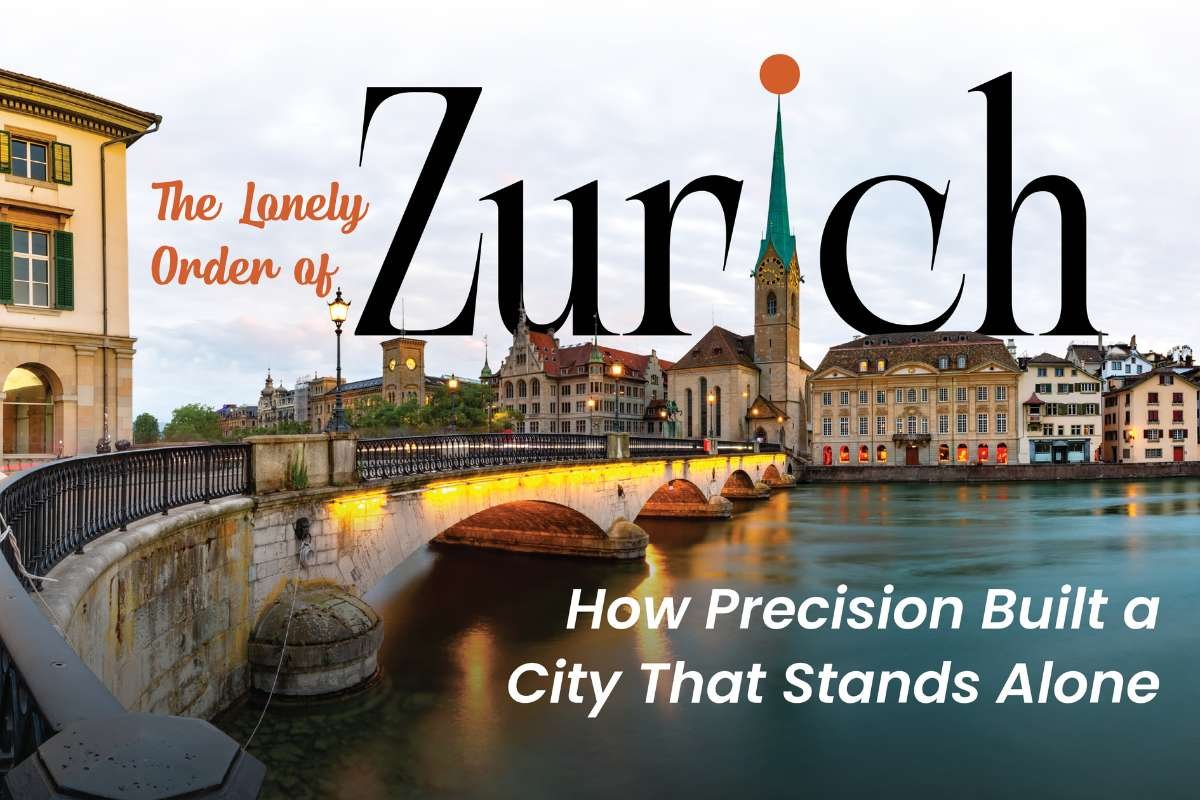
Zurich stands at the center of Switzerland as its largest city and one of the world’s most influential economic capitals. Known for precision and confidence, the city blends centuries of tradition with a sharp, modern business mindset. Its streets reflect a balance between heritage, finance, innovation, and global exchange, shaped by strong institutions and an outward-looking spirit. This outline explores how Zurich’s past shaped its present, how its economy operates on a global scale, why it attracts international business, how culture defines daily life, and where future opportunities continue to emerge.
The Birth of a Trading City
Zurich’s story begins before written records, with early settlements forming along the Limmat River because of water access and trade routes. Celtic groups created the first organized community, later drawing Roman authority. Under Roman rule, Turicum functioned as a customs station on key European routes, allowing taxation, regulation of goods, and control of movement, establishing an early commercial role.
In the medieval era, Zurich became a free imperial city, gaining political autonomy and economic privileges. Merchants operated with limited external control, supporting trade and skilled craftsmanship inside the city walls. Entry into the Swiss Confederation secured protection and commercial stability. These advantages shaped economic specialization, distinguishing Zurich from neighboring regions and preparing it for later financial and industrial development growth.
Chronology at a Glance:

- Prehistoric settlement
- Celtic community presence
- Roman Turicum customs post
- Free imperial city status
- Entry into the Swiss Confederation
Together, these early phases reveal how location, authority, and trade combined to shape Zurich’s economic character long before modern finance entered the picture.
Civic Values and Creative Pulse

Zurich’s cultural identity reflects centuries of belief, discipline, creativity, and urban contrast. Historical shifts shaped civic behavior, while artistic expression and neighborhood life gave the city a distinctive rhythm that continues to shape daily experience.
- Reformation legacy: Huldrych Zwingli’s reforms reshaped religious practice and civic order, encouraging accountability, communal responsibility, and structured public life that influenced education and governance.
- Arts and cultural expression: Museums, theaters, music venues, and annual festivals form a dense cultural network. Performing arts and creative spaces support both classical traditions and contemporary experimentation.
- Urban lifeways and districts: The Old Town preserves architectural heritage and local customs, Zurich West reflects creative reinvention, and Bahnhofstrasse anchors commercial identity. International cuisine, global residents, and community events coexist with long-standing traditions.
Together, these elements give Zurich a cultural character defined by continuity, creativity, and everyday civic practice.
Read Next: Singapore: The Minion Experiment in Order, Ambition, and Bananas
The Architecture of Financial Trust
Zurich emerged as Switzerland’s financial center through nineteenth-century industrial growth, supported by regulation, discretion, and stable governance. Clear legal frameworks enabled banks to manage capital with confidence, establishing long-term institutional credibility.

| Sector | Historical role | Current function | Global relevance |
| Banking | Grew with industrial wealth in the 19th century | Corporate and private banking services | International capital hub |
| Insurance | Emerged alongside trade risk | Coverage and financial planning | Global insurer presence |
| Central banking | Tied to monetary authority and gold trade | Policy oversight and coordination | Global financial credibility |
| Wealth management | Based on private banking tradition | High-net-worth advisory | Trusted global capital center |
Zurich hosts major banks, insurers, and private wealth institutions with international reach. Zurich Insurance sets financial targets through 2027, reflecting disciplined planning. The Swiss National Bank’s board presence confirms monetary importance, while historic gold trading adds depth. Legal clarity, neutrality, and institutional reliability continue to attract capital and corporate headquarters.
The Mechanics of Connection
Zurich’s economic reach expanded through industrial change and strategic transport links. Production methods, logistics, and access routes reshaped how the city engaged with regional and international markets, reinforcing its role as a commercial connector within Europe.
- Manufacturing transition: Early reliance on textiles and machinery gradually gave way to specialized sectors such as precision engineering, pharmaceuticals, and advanced services. This shift reflected changing market demands and higher technical standards.
- Rail and tunnel networks: Early rail connections positioned Zurich as a transport node, while projects like the Gotthard Tunnel improved north–south movement across the Alps. These links reduced travel time and supported freight circulation across major European corridors.
- Air transport and trade access: Zurich Airport serves as Switzerland’s principal international gateway, supporting business travel, cargo movement, and global trade relationships. Its efficiency supports corporate mobility and time-sensitive logistics.
- European access: Zurich’s central location allows close commercial engagement with European Union markets despite Switzerland’s independent political status.
Together, these systems of industry and connectivity prepare Zurich for its next role as a center of knowledge, research, and innovation.
Knowledge Built Into the Economy
Zurich’s reputation as a center of knowledge rests on the close alignment between academic excellence, research capacity, and emerging technology.
Universities
Zurich hosts globally respected institutions led by ETH Zurich and the University of Zurich. Their research spans engineering, medicine, and natural sciences, supported by rigorous academic standards and public confidence. Alumni include Nobel laureates, influential scientists, and industry leaders who shape international research agendas through sustained scholarly impact.
Research clusters
Research environments such as Science City connect laboratories with applied research and commercial partners. These clusters support long-term work in life sciences, materials, and advanced manufacturing, aided by shared infrastructure and clear institutional coordination.
Tech and blockchain activity

Zurich’s technology sector benefits from venture funding, startup accelerators, and global talent. Strong ties with Crypto Valley support blockchain, fintech, and applied AI initiatives, linking research with scalable commercial application.
Collectively, these elements define Zurich as a place where knowledge becomes sustained economic value.
Quality of Life: A Strategic Asset
Zurich treats quality of life as an intentional urban strategy rather than a side effect of prosperity. Public transport operates with precision, connecting residential areas, business districts, and nearby regions through dependable rail, tram, and bus systems. Infrastructure planning prioritizes safety, clarity, and long-term functionality, allowing the city to operate efficiently each day.
Green spaces along the lake, rivers, and neighborhoods provide accessible recreation within a compact urban setting. Clean streets, reliable public services, and clear zoning standards support high living conditions without excessive sprawl. Healthcare, education, and utilities function with consistency that residents and employers rely upon.
This setting attracts skilled professionals and international firms alike. People find balance and stability, while organizations benefit from retention and productivity. Livability reinforces Zurich’s competitiveness by encouraging long-term commitment.
Read Next: A City Composed: How Planning Guides Daily Life and Economic Balance in Irvine
The Business Case for the Future
Zurich’s outlook remains balanced by practical constraints. High operating costs test competitiveness, while global financial centers compete for talent and investment. Regulatory coordination after the pandemic requires careful calibration to preserve openness without risking stability.
Present strengths
- Zurich holds a strong position in finance, insurance, and private capital, supported by institutional reliability.
- A growing technology sector connects software, fintech, and advanced manufacturing within compact urban networks.
- Logistics and transport systems support efficient movement of people, goods, and data across Europe.
Near-term opportunities
- Expanded digital adoption across finance, administration, and industry increases operational efficiency.
- Artificial intelligence, blockchain services, and sustainability consulting offer room for new enterprise formation.
- Clear legal frameworks and data sovereignty continue to attract firms managing sensitive information.
Future success rests on focused innovation policy, cross-sector collaboration, and measured expansion grounded in institutional order and public trust.
Conclusion
Zurich’s development reflects continuity built on discipline, trust, and measured ambition. Trade origins, cultural values, financial credibility, and institutional clarity remain closely linked rather than isolated stages. Connectivity and knowledge systems reinforce this structure, while quality of life sustains long-term commitment. Facing global competition and regulatory complexity, Zurich’s strength lies in coherence rather than scale. Its future depends on careful coordination across sectors, preserving stability while adapting to economic and technological change within an increasingly competitive global setting.