When a Commodity Learned to Mean Something
For decades, coffee was one of the world’s most interchangeable products. Beans varied, brews differed slightly, but the act itself was largely functional: caffeine in, day continues. A few brands tried to own how coffee felt. Fewer still imagined it could anchor daily routines across cultures, cities, and generations.
Starbucks did not succeed by making coffee rare or technically superior alone. It succeeded by reframing coffee as an experience, then operationalising that experience at a global scale. What followed was not just brand growth, but the creation of a repeatable cultural habit that people were willing to pay a premium for, return to daily, and defend emotionally.
This is the story of how Starbucks turned a low-differentiation product into one of the world’s most recognisable lifestyle brands.
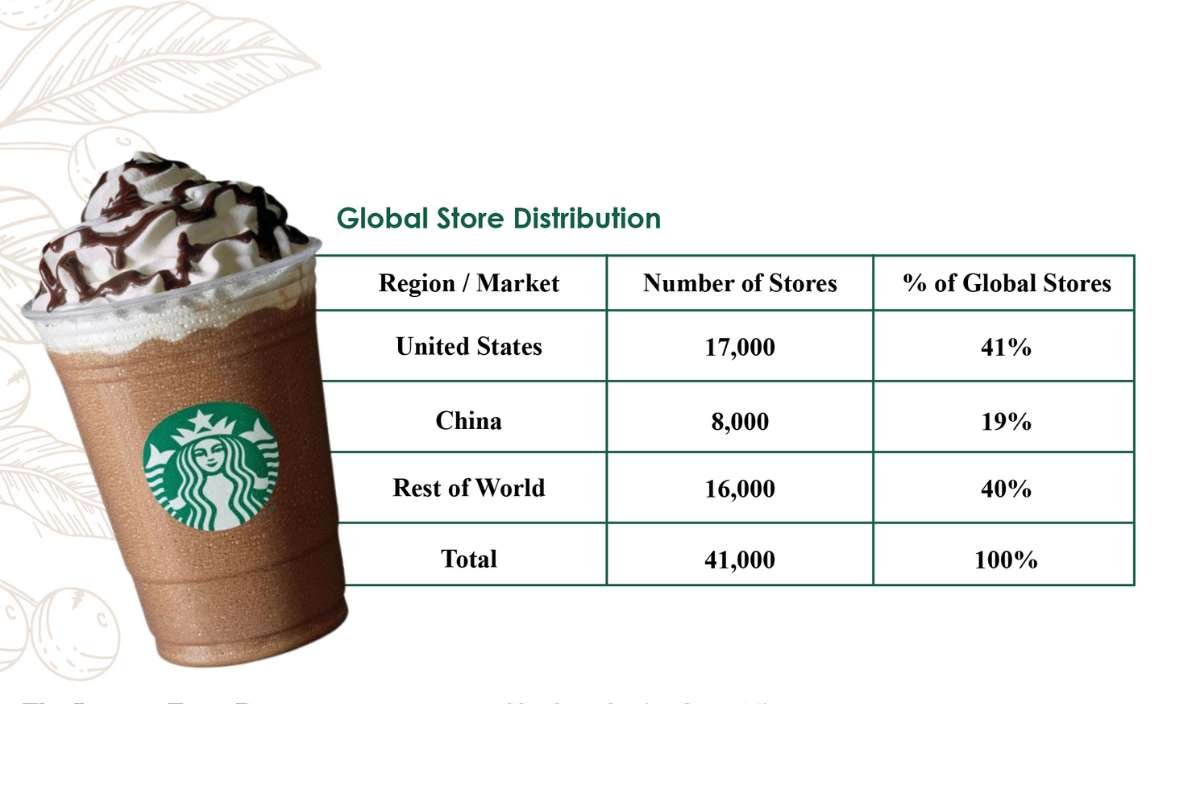
| Global Store Distribution | ||
|---|---|---|
| Region / Market | Number of Stores | % of Global Stores |
| United States | 17,000 | 41% |
| China | 8,000 | 19% |
| Rest of World | 16,000 | 40% |
| Total | 41,000 | 100% |
The Journey From Beans to Behaviour: The Strategic Pivot
Founded in 1971 in Seattle, Starbucks began as a retailer of coffee beans and brewing equipment. Its early focus was product quality and sourcing, not cafés, community, or consumption rituals. The inflection point came in the early 1980s, when Howard Schultz encountered Italian espresso bars and recognised something more valuable than the beverage itself: social behaviour.
Coffee in Italy was not rushed. It was relational. The café functioned as a social anchor, neither home nor work, but a consistent, neutral space for daily life. Starbucks translated this insight into a strategic concept that would define the brand for decades: the “third place.”
This was not a marketing slogan. It was a spatial and behavioural strategy. Starbucks stores were designed to encourage lingering, repetition, and emotional familiarity. The product was coffee, but the outcome was habit formation.
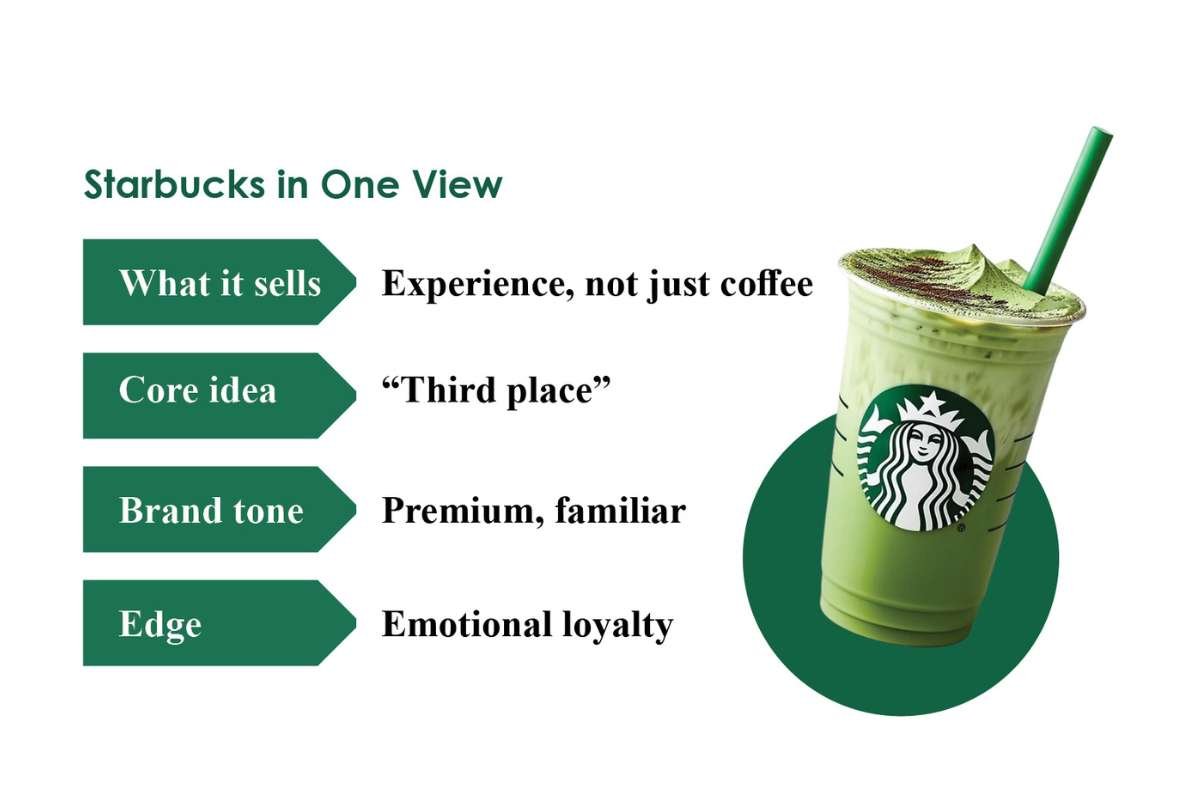
| Starbucks in One View | |
|---|---|
| Focus | Insight |
| What it sells | Experience, not just coffee |
| Core idea | “Third place” |
| Brand tone | Premium, familiar |
| Edge | Emotional loyalty |
Market Presence: Starbucks by the Numbers
By grounding experience in operational scale, Starbucks built one of the most extensive café networks in the world:
- 38,000+ stores globally across more than 80 markets
- Revenue exceeding USD 35 billion annually
- Over 60 million active Starbucks Rewards members globally, driving repeat purchases
- One of the top three most valuable restaurant brands worldwide by brand valuation
These metrics matter because Starbucks operates in a highly competitive, low-margin industry. Its sustained growth is not explained by volume alone, but by pricing power, loyalty, and brand resilience.
The Siren, the Story, the Signal – Starbucks’s Branding

Starbucks’ visual identity plays a quieter but critical role in its differentiation. The iconic green siren logo, inspired by maritime mythology, references seduction, journey, and discovery, subtle cues that align with coffee’s global origins and Starbucks’ positioning as a place of pause rather than speed.
Notably, Starbucks removed its wordmark from the logo in 2011. This decision signaled brand maturity: the company no longer needed to explain who it was. Recognition had become instinctive.
Brand storytelling at Starbucks is not campaign-led; it is embedded. From cup design to store language (“partners” instead of employees), the brand consistently reinforces warmth, familiarity, and inclusion without overt messaging.
Premium Pricing Without Alienation
Starbucks’ pricing is significantly higher than local cafés or quick-service competitors. Yet it continues to thrive across income segments and geographies. The reason lies in what customers believe they are paying for.
Starbucks does not compete on cost per cup. It competes on:
- Consistency across locations
- Customisation at scale
- Time spent, not time saved
- Emotional reassurance in routine
Customers are not buying coffee alone; they are buying reliability, personal recognition, and a predictable emotional experience. This allows Starbucks to maintain premium pricing without positioning itself as exclusive or elitist.
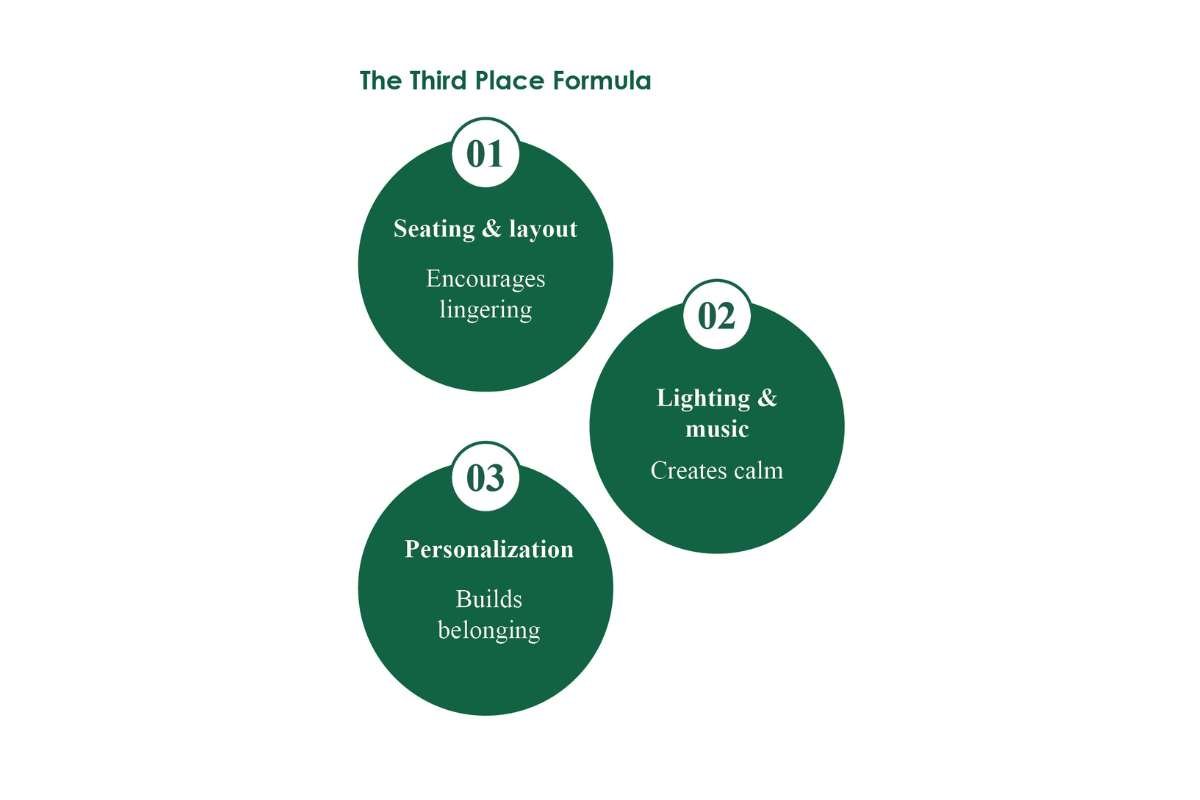
| The Third Place Formula | |
|---|---|
| Element | Effect |
| Seating & layout | Encourages lingering |
| Lighting & music | Creates calm |
| Personalization | Builds belonging |
Experience Design at Scale
A Starbucks store is engineered, not incidental. Lighting, seating density, music tempo, queue flow, and even cup texture are intentionally designed to reduce friction and increase comfort.
At the same time, Starbucks avoids rigid standardisation. Flagship stores, Reserve Roasteries, and regionally adapted interiors allow local relevance while preserving brand coherence. This balance of global familiarity with local sensitivity has enabled Starbucks to scale without feeling generic.

Ethics as Strategy, Not Decoration

Coffee supply chains are vulnerable to climate risk, labour instability, and price volatility. Starbucks recognised early that long-term brand trust required upstream investment. Programs such as C.A.F.E. Practices and farmer support centres were designed to improve sourcing transparency, quality control, and agricultural resilience.
While not immune to criticism, Starbucks’ sustainability efforts are operational rather than cosmetic. Ethical sourcing is treated as infrastructure necessary for continuity, not as a brand accessory.
People as Brand Carriers
In an industry defined by high attrition, Starbucks made an unconventional decision: invest heavily in frontline employees. Referring to staff as “partners,” offering healthcare benefits, equity participation, and education support even for part-time workers, created internal alignment with the brand promise.
This translated externally. Customer experience improved not through scripts, but through continuity, familiarity, and emotional labour that felt authentic rather than enforced.
Digital Integration Without Losing Human Texture
Starbucks’ mobile app and loyalty ecosystem are among the most successful in global retail. Mobile ordering, personalised rewards, and stored preferences removed friction from repeat visits while deepening customer attachment.
Critically, technology at Starbucks supports ritual instead of replacing it. Automation enhances convenience without eliminating human touchpoints. During COVID-19, this digital maturity allowed Starbucks to pivot quickly to pickup-first formats without eroding customer connection.
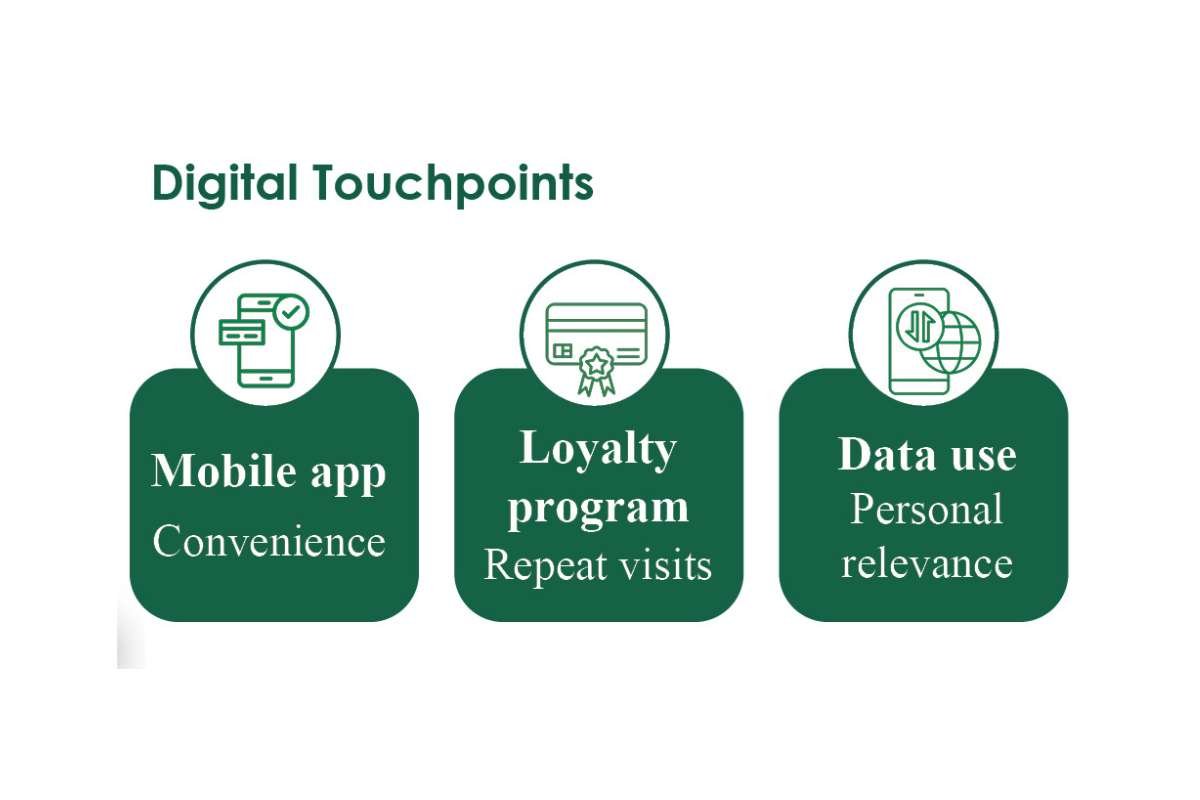
| Digital Touchpoints | |
|---|---|
| Tool | Value |
| Mobile app | Convenience |
| Loyalty program | Repeat visits |
| Data use | Personal relevance |
Competitive Pressure and Strategic Restraint
With scale came challenges: market saturation, rising labour costs, activist scrutiny, and intensifying competition from both local cafés and global chains. Starbucks responded not with aggressive expansion, but with consolidation, closing underperforming stores, simplifying menus, and refocusing on core experience quality.
This restraint underscored a key strength: Starbucks understands that brand dilution is more dangerous than slower growth.
A Brand Built on Everyday Meaning
At its heart, Starbucks is not really about coffee, stores, or scale. It is about meaning.
People may walk in for a drink, but they come back for something softer and more personal. A pause in the middle of a busy day. A familiar space that feels easy to enter. A quiet sense of being welcome without needing explanation.
In a world that moves fast and rarely stands still, Starbucks offers something increasingly rare. Consistency that feels comforting, not repetitive.

What Other Businesses Can Learn from Starbucks?
Starbucks’ success offers lessons that extend far beyond coffee:
- Experience is a system, not a campaign: Starbucks aligned product, space, people, and technology around a single behavioural idea.
- Premium works when emotion is consistent: Customers pay more when value is felt repeatedly, not explained occasionally.
- Culture scales when it’s designed, not improvised: The “third place” was operationalised, measured, and protected.
- Growth requires knowing when to slow down: Long-term trust matters more than short-term expansion.
More Than Coffee, a Cultural Infrastructure
Starbucks did not win because it sold better coffee. It won because it understood something deeper: people return to places that make life feel slightly more manageable.
By turning coffee into a daily ritual and stores into emotional anchors, Starbucks built a brand people integrate into their routines. In a fast-moving world, it offers familiarity without stagnation, consistency without boredom.
That is why Starbucks endures. Not as a café chain, but as a cultural system, one cup, one pause, one habit at a time.