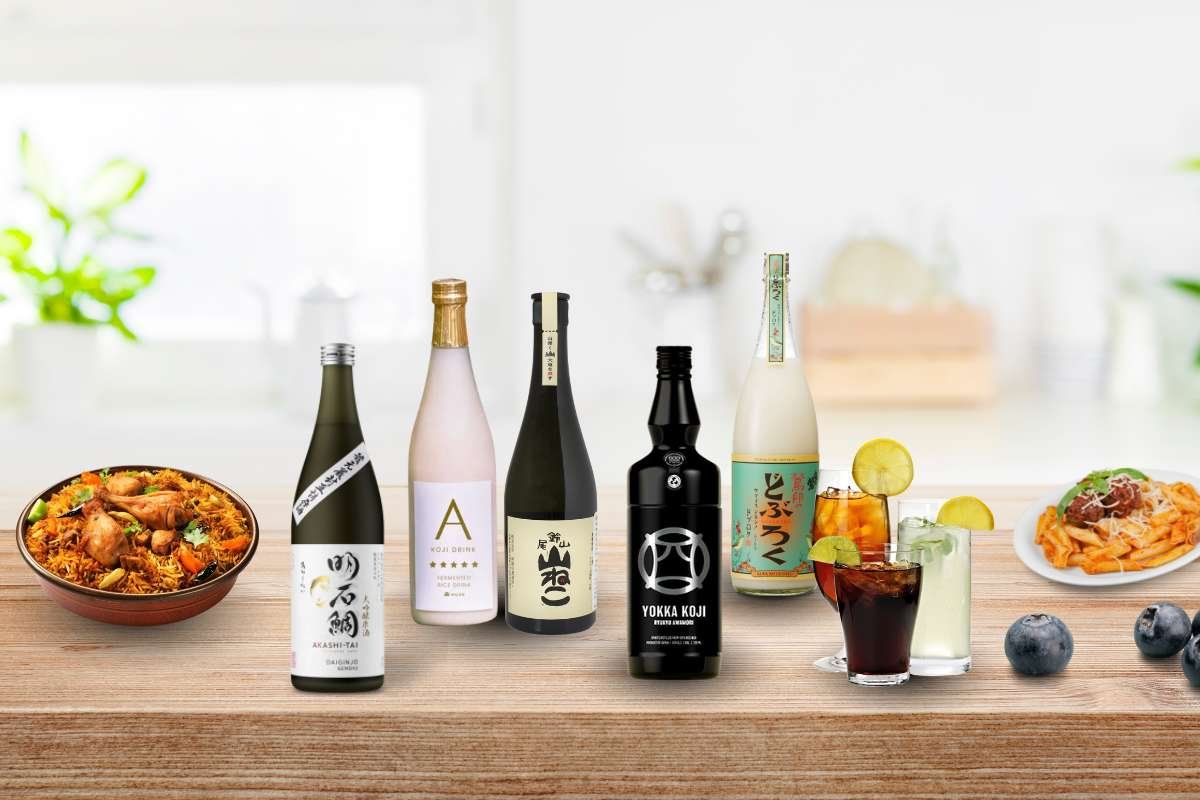
Japan brews magic in every glass. You stand in a Tokyo izakaya. Friends shout “Kanpai!” Glasses clink. Warm sake flows. Or grab a fizzy ramune from a glowing vending machine on a humid summer night.
50 Popular Japanese Drinks: Kanpai! pulls you into that vibe.
These beverages mix ancient rituals with street-smart convenience. They refresh, warm, heal, and celebrate. Forget boring drinks. Japan delivers bold flavors, from earthy matcha to fiery shochu.
You crave adventure? Start here. Raise your glass. Say “Kanpai!” Feel the buzz.
This guide hands you 50 must-tries. Get ready to toast like a local. Your taste buds thank you.
Why Japanese Drinks Are More Than Just Beverages
Japanese drinks tell stories. A cup of tea shows patience. A glass of sake shows respect. Even a cold bottle from a vending machine shows care for daily comfort. Popular Japanese Drinks: Kanpai! reflects how drinks fit into rituals, meals, workdays, and celebrations.
In temples, monks serve tea with silence and focus. At home, families share barley tea with dinner. On the streets, vending machines offer hot and cold drinks in every season. This balance of old and new makes Japanese drinks special.
Global interest keeps rising in 2026 because people want clean flavors and mindful habits. Japanese drinks feel honest. They feel human. They fit slow living trends and health-focused choices.
The Soul of Japan in a Glass
Climate shapes every drink. Hot summers bring light teas and sodas. Cold winters welcome warm sake and roasted tea. Islands and mountains influence water quality and fermentation styles. 50 Popular Japanese Drinks shows how nature guides taste.
Fermentation plays a big role. Sake, miso-based drinks, and vinegars support balance in the body. Tea culture adds calm to daily life. Seasonal habits guide choices. Cherry blossom tea in spring. Warm amazake in winter.
Japanese drinks avoid excess. They aim for balance. Simple flavors matter more than strong sweetness. This mindset defines Japanese taste.
Traditional Japanese Alcoholic Drinks
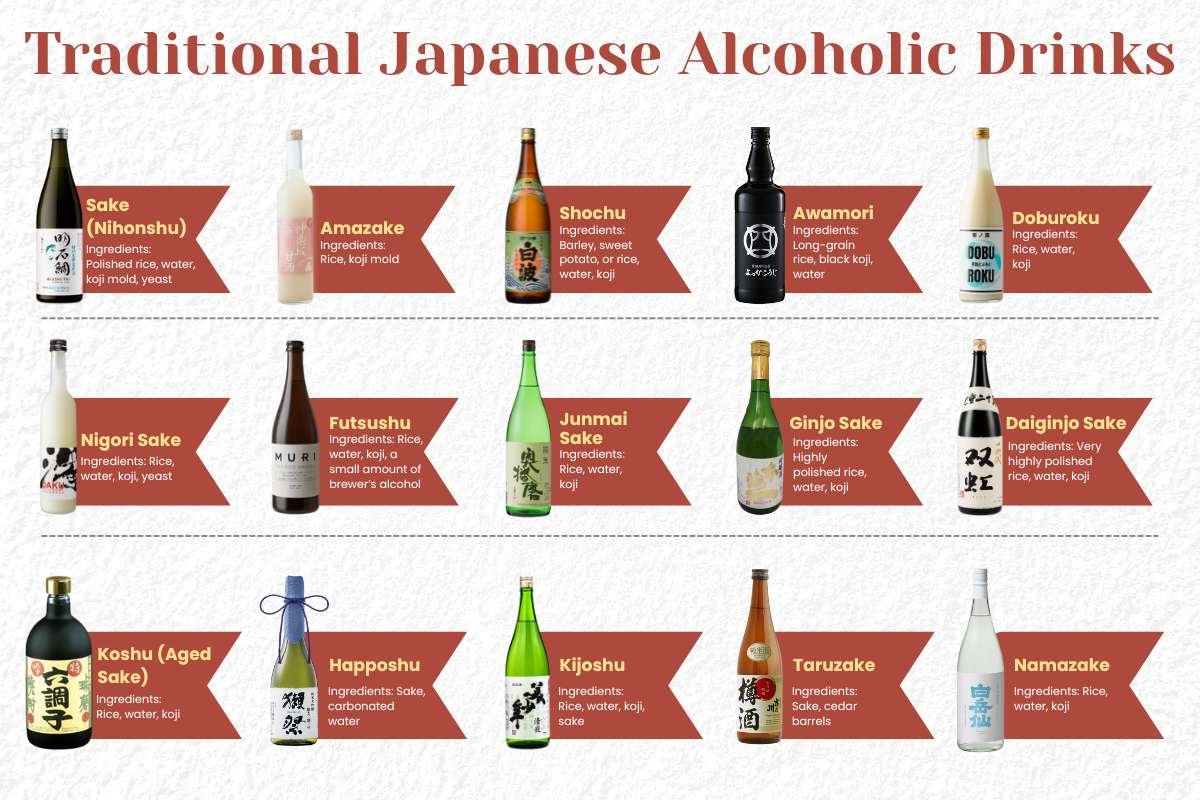
Where history meets craftsmanship
50 Popular Japanese Drinks begins with tradition. These drinks shaped ceremonies and social bonds.
1. Sake (Nihonshu)
- Ingredients: Polished rice, water, koji mold, yeast
- How to Make: Rice is polished, steamed, and mixed with koji mold. Yeast is added to start fermentation. The liquid is pressed, filtered, and bottled.
Sake is the heart of Japanese drinking culture. People serve it at weddings, New Year celebrations, temple events, and family dinners. It comes from fermented rice, water, yeast, and koji mold. Some drink it warm in winter. Others enjoy it chilled in summer. Sake represents harmony and respect. Sharing sake often means sharing trust.
2. Amazake
- Ingredients: Rice, koji mold
- How to Make: Cooked rice is mixed with koji and kept warm to create sweetness naturally.
Amazake is a sweet rice drink with low or no alcohol. People usually drink it in winter, especially during the New Year festivals. Temples often serve it to visitors to keep them warm. The taste feels gentle and comforting. Many people also drink amazake for energy and digestion. It feels more like a nourishing food than alcohol.
3. Shochu
- Ingredients: Barley, sweet potato, or rice, water, koji
- How to Make: Ingredients ferment, then distill once to keep natural flavors.
Shochu is a clear distilled spirit. People drink it daily with meals, especially in southern Japan. Makers use barley, sweet potato, or rice. Shochu has less alcohol than whisky but feels cleaner than sake. People often mix it with water or tea. It fits casual home dinners and relaxed evenings.
4. Awamori
- Ingredients: Long-grain rice, black koji, water
- How to Make: Fermented using black koji, then distilled and aged.
Awamori comes from Okinawa. It uses long-grain rice and black koji mold. This drink tastes stronger and deeper than regular sake. Families open special bottles during birthdays, weddings, and island festivals. Some people age awamori for many years. Older bottles hold strong emotional value.
5. Doburoku
- Ingredients: Rice, water, koji
- How to Make: Fermented without filtering.
Doburoku is an unfiltered, thick rice drink. It looks cloudy and feels rustic. Farmers traditionally made it at home. Today, people enjoy it during local festivals and shrine events. The flavor feels raw and earthy. Doburoku connects people to rural Japan and older traditions.
6. Nigori Sake
- Ingredients: Rice, water, koji, yeast
- How to Make: Lightly filtered sake, leaving rice particles.
Nigori sake stays partially unfiltered, which gives it a milky look. It tastes slightly sweet and soft. People drink it at casual gatherings and friendly meals. It feels less formal than clear sake. Many beginners enjoy nigori sake because it tastes smooth and easy.
7. Futsushu
- Ingredients: Rice, water, koji, a small amount of brewer’s alcohol
- How to Make: Standard fermentation with minimal polishing.
Futsushu is everyday sake. Restaurants and homes serve it daily. It does not follow strict brewing rules, which keeps the price lower. People drink it warm or cold with simple meals. Futsushu supports daily life, not ceremonies. It feels practical and familiar.
8. Junmai Sake
- Ingredients: Rice, water, koji
- How to Make: Fermented without added alcohol.
Junmai sake uses only rice, water, yeast, and koji. No added alcohol. This gives it a rich and natural taste. People often pair it with food like grilled fish or hot pot. Junmai sake works well with savory dishes. It feels honest and full-bodied.
9. Ginjo Sake
- Ingredients: Highly polished rice, water, koji
- How to Make: Slow fermentation at low temperatures.
Ginjo sake uses highly polished rice. This creates a lighter body and fruity aroma. People save it for special meals or guests. The flavor feels refined and elegant. Ginjo sake works best when served chilled. It suits seafood and delicate dishes.
Importance: Served during special meals and celebrations.
10. Daiginjo Sake
- Ingredients: Very highly polished rice, water, koji
- How to Make: Careful low-temperature fermentation with expert control.
Daiginjo is a premium version of ginjo. Brewers polish rice even more. This process takes time and skill. The taste feels smooth, floral, and clean. People often buy it as a gift. It appears at celebrations and formal dinners.
11. Koshu (Aged Sake)
- Ingredients: Rice, water, koji
- How to Make: Aged for years in controlled storage.
Koshu ages for several years. The color turns amber. The flavor grows deeper, with hints of nuts and caramel. People sip it slowly, like wine. Koshu suits quiet evenings and thoughtful moments. It pairs well with cheese and rich foods.
12. Happoshu
- Ingredients: Sake, carbonated water
- How to Make: Carbon dioxide is added after brewing.
Happoshu is lightly sparkling sake. Small bubbles give it a fresh feel. People drink it during parties and summer gatherings. It feels fun and relaxed. Happoshu works well as a toast drink. The taste stays light and refreshing.
13. Kijoshu
- Ingredients: Rice, water, koji, sake
- How to Make: Sake replaces water during fermentation.
Kijoshu is a sweet sake. Brewers replace some water with sake during fermentation. This makes it rich and dessert-like. People serve it after meals or with sweets. Kijoshu feels luxurious and smooth. A small glass feels enough.
14. Taruzake
- Ingredients: Sake, cedar barrels
- How to Make: Sake is aged briefly in cedar barrels.
Taruzake ages in cedar barrels. The wood adds a fresh forest aroma. Shrines and ceremonies often use it. People drink taruzake during weddings, festivals, and the openings of new buildings. It symbolizes purity and good fortune.
15. Namazake
- Ingredients: Rice, water, koji
- How to Make: Unpasteurized sake bottled fresh.
Namazake is unpasteurized sake. It tastes fresh and lively. Brewers keep it refrigerated to protect flavor. People drink it young, usually soon after release. Namazake feels vibrant and seasonal. It captures the taste of fresh brewing.
Modern & Fusion Alcoholic Drinks Japan Loves Today
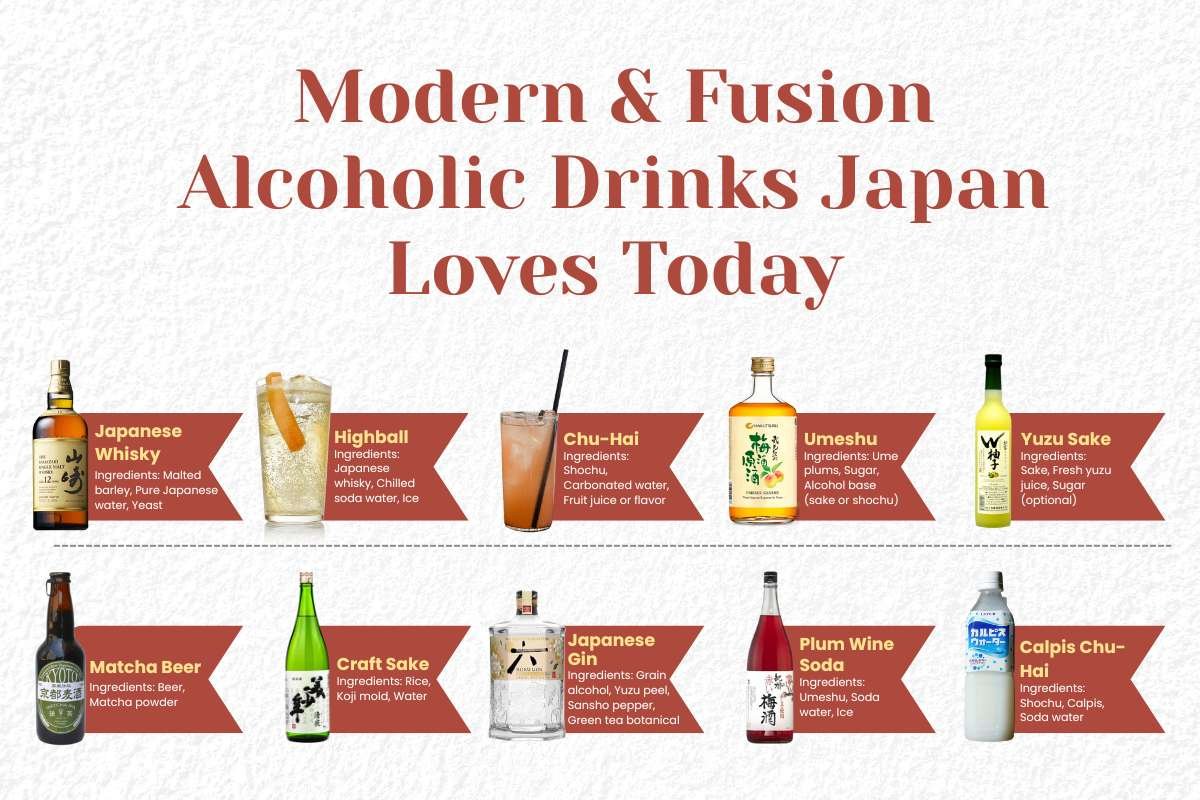
Classic flavors with a modern twist
Youth culture shaped a fresh drinking style. Bars, music nights, and casual hangouts made these drinks popular. This modern wave also lives inside Popular Japanese Drinks, where tradition meets creativity.
16. Japanese Whisky
- Ingredients: Malted barley, Pure Japanese water, Yeast
- How to Make: Barley ferments, distills, and ages in wooden barrels for years. Climate plays a big role in flavor.
Japanese whisky has earned global respect for its smooth taste and balance. Makers focus on clean water, careful aging, and precision. The flavor often feels softer than Scotch. Notes of honey, fruit, and light smoke stand out. People enjoy it neat, on ice, or in cocktails. It suits slow conversations and thoughtful sipping.
17. Highball
- Ingredients: Japanese whisky, Chilled soda water, Ice
- How to Make: Fill a glass with ice. Add whisky. Top with soda. Stir gently once.
A Highball is simple. Whisky mixed with chilled soda water. Ice keeps it crisp. The drink feels light and easy on the stomach. Many people choose it during meals because it does not overpower food. Offices, izakayas, and casual bars serve it widely. It fits long evenings and relaxed dining.
18. Chu-Hai
- Ingredients: Shochu, Carbonated water, Fruit juice or flavor
- How to Make: Mix shochu with soda and fruit flavor. Serve cold.
Chu-Hai stands for “shochu highball.” Shochu mixes with soda and fruit flavor. Lemon, grapefruit, and peach are popular. It tastes fresh and slightly sweet. Alcohol stays mild. Young adults love it because it feels easy and fun. Convenience stores sell it in cans, ready to drink.
19. Umeshu
- Ingredients: Ume plums, Sugar, Alcohol base (sake or shochu)
- How to Make: Plums soak in alcohol with sugar for months.
Umeshu uses Japanese plums soaked in alcohol and sugar. The taste blends sweet and sour. It feels gentle and comforting. Many drink it after dinner or on quiet nights. People enjoy it on ice, with soda, or warm in winter. It suits slow moments and calm moods.
Importance: Often homemade. A comfort drink shared at home and gatherings.
20. Yuzu Sake
- Ingredients: Sake, Fresh yuzu juice, Sugar (optional)
- How to Make: Blend yuzu juice into sake. Chill before serving.
Yuzu sake mixes traditional sake with yuzu citrus. The result feels bright and refreshing. The aroma feels clean and sharp. It pairs well with seafood and light snacks. Many beginners prefer it because it tastes softer than plain sake. It works well in warm and cold seasons.
21. Matcha Beer
- Ingredients: Beer, Matcha powder
- How to Make: Whisk matcha with a little warm water. Mix gently into the beer.
Matcha beer blends green tea bitterness with beer malt. Craft breweries created it for adventurous drinkers. The color looks green and unique. The taste feels earthy and crisp. It attracts people who enjoy creative flavors. Cafes and craft bars often serve it as a specialty drink.
22. Craft Sake
- Ingredients: Rice, Koji mold, Water
- How to Make: Small breweries use controlled fermentation with creative rice polishing.
Craft sake focuses on small production and creativity. Brewers test new rice types and yeast strains. Flavors vary from fruity to dry. These sakes feel personal and expressive. Younger brewers lead this trend. Many bottles target modern food pairings and global tastes.
23. Japanese Gin
- Ingredients: Grain alcohol, Yuzu peel, Sansho pepper, Green tea botanicals
- How to Make: Botanicals infuse during distillation.
Japanese gin uses local botanicals like yuzu, sansho pepper, and green tea. The taste feels light and aromatic. It avoids harsh alcohol burn. Bartenders use it in clean cocktails. People who enjoy subtle flavors prefer it. It reflects Japan’s love for balance and nature.
24. Plum Wine Soda
- Ingredients: Umeshu, Soda water, Ice
- How to Make: Mix plum wine with soda. Serve cold.
Plum wine soda mixes umeshu with sparkling water. The drink feels playful and refreshing. Sweetness stays light. Bubbles add energy. It works well during social events and summer evenings. Many people choose it as a starter drink.
25. Calpis Chu-Hai
- Ingredients: Shochu, Calpis, Soda water
- How to Make: Blend Calpis with shochu and soda. Add ice.
Calpis Chu-Hai blends shochu with Calpis, a creamy yogurt-style drink. The taste feels sweet, smooth, and easy. Alcohol remains low. Young crowds love it for parties and casual nights out. Canned versions make it easy to enjoy anywhere.
Non-Alcoholic Traditional Japanese Drinks
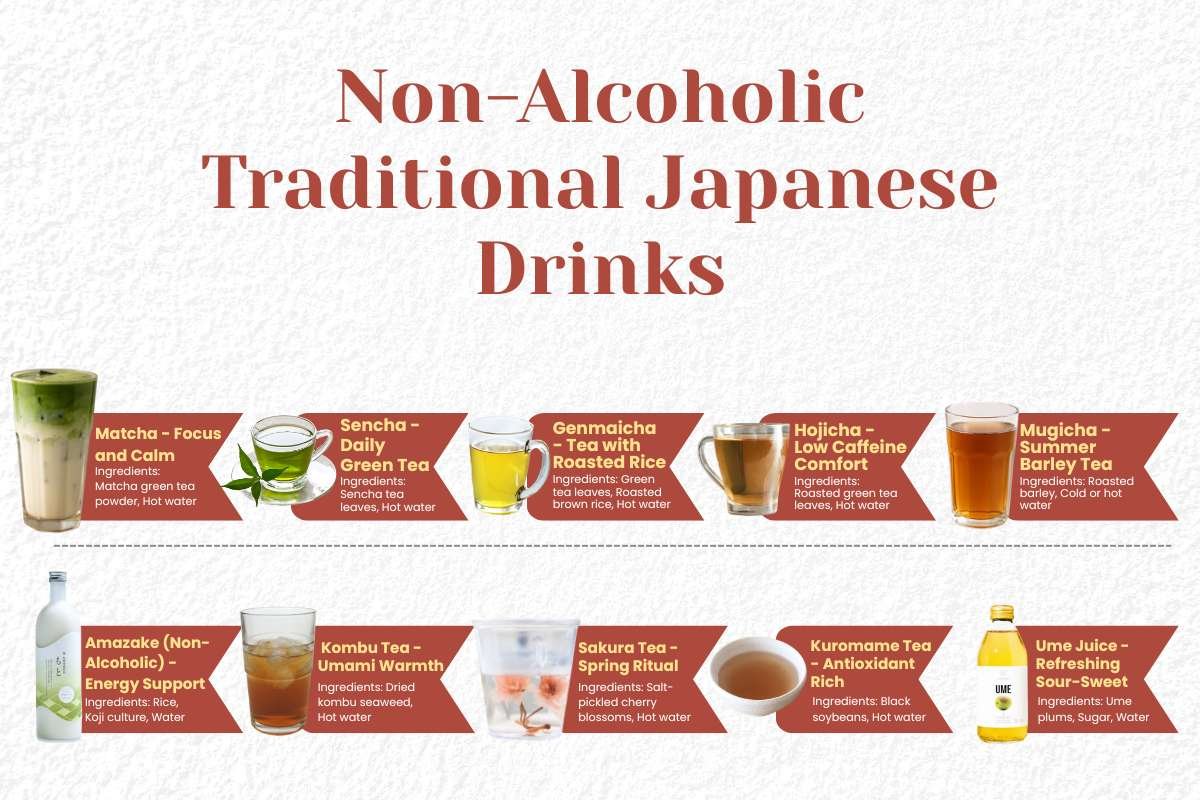
Healthy, calming, and deeply cultural
Tea leads daily life in Japan. Popular Japanese drinks include gentle drinks that people enjoy at home, at work, and during quiet moments. These drinks suit all ages and daily routines.
26. Matcha – Focus and Calm
- Ingredients: Matcha green tea powder, Hot water
- How to Make: Add matcha powder to a bowl. Pour hot water. Whisk until smooth and foamy.
Matcha is powdered green tea made from carefully grown tea leaves. People whisk it with hot water until it turns bright green and smooth. Matcha helps improve focus and mental clarity. Monks used it during long meditation sessions. Today, people drink it during tea ceremonies or quiet moments. It offers gentle energy without a sudden crash.
27. Sencha – Daily Green Tea
- Ingredients: Sencha tea leaves, Hot water
- How to Make: Steep tea leaves in hot water for one minute. Strain and serve.
Sencha is the most common tea in Japanese homes. Families drink it with breakfast, lunch, and dinner. It tastes fresh and slightly grassy. Sencha supports digestion and hydration. Many people believe it keeps the body light and balanced. Because of its mild flavor, it pairs well with most meals.
28. Genmaicha – Tea with Roasted Rice
- Ingredients: Green tea leaves, Roasted brown rice, Hot water
- How to Make: Steep the mix in hot water for one to two minutes.
Genmaicha mixes green tea with roasted brown rice. This gives it a warm, nutty smell and taste. It feels filling and soothing. People often drink it during meals or in the evening. Long ago, it helped stretch tea supplies. Today, it remains popular for its comfort and gentle flavor.
29. Hojicha – Low Caffeine Comfort
- Ingredients: Roasted green tea leaves, Hot water
- How to Make: Steep roasted leaves in hot water. Serve warm.
Hojicha comes from roasted green tea leaves. Roasting removes much of the caffeine. That makes it perfect for children and nighttime drinking. It tastes earthy and soft. Many people enjoy it after dinner to relax and settle their stomachs.
30. Mugicha – Summer Barley Tea
- Ingredients: Roasted barley, Cold or hot water
- How to Make: Soak barley in water. Chill or serve warm.
Mugicha is made from roasted barley. It contains no caffeine at all. Japanese families drink it cold during hot summers. Schools often serve it to children. It helps cool the body and prevent dehydration. Its taste feels clean and refreshing.
31. Amazake (Non-Alcoholic) – Energy Support
- Ingredients: Rice, Koji culture, Water
- How to Make: Ferment rice with koji. Warm before drinking.
Non-alcoholic amazake comes from fermented rice. It tastes naturally sweet without added sugar. People drink it during winter festivals and early mornings. Many consider it a natural energy drink. It supports digestion and provides gentle strength during cold seasons.
32. Kombu Tea – Umami Warmth
- Ingredients: Dried kombu seaweed, Hot water
- How to Make: Steep kombu in hot water. Remove before serving.
Kombu tea uses dried seaweed soaked in hot water. It tastes savory rather than sweet. People drink it for warmth and comfort. It often appears during traditional gatherings. Kombu tea also supports minerals and digestion.
33. Sakura Tea – Spring Ritual
- Ingredients: Salt-pickled cherry blossoms, Hot water
- How to Make: Rinse blossoms lightly. Pour hot water over them.
Sakura tea uses preserved cherry blossoms. People serve it during weddings and spring celebrations. The flavor feels light and floral. Drinking it marks new beginnings and happiness. It connects deeply with seasonal beauty and tradition.
34. Kuromame Tea – Antioxidant Rich
- Ingredients: Black soybeans, Hot water
- How to Make: Roast beans lightly. Steep in hot water.
Kuromame tea comes from roasted black soybeans. It tastes slightly sweet and nutty. Many drink it for skin health and circulation. It feels warming and grounding. Elders often choose it as part of their daily wellness habits.
35. Ume Juice – Refreshing Sour-Sweet
- Ingredients: Ume plums, Sugar, Water
- How to Make: Soak plums in sugar. Dilute the syrup with water.
Ume juice comes from Japanese plums. It tastes sour and slightly sweet. People drink it chilled during the summer. It helps fight fatigue and supports digestion. Many homes prepare it fresh during plum season.

Popular Japanese Soft Drinks & Vending Machine Favoritesm
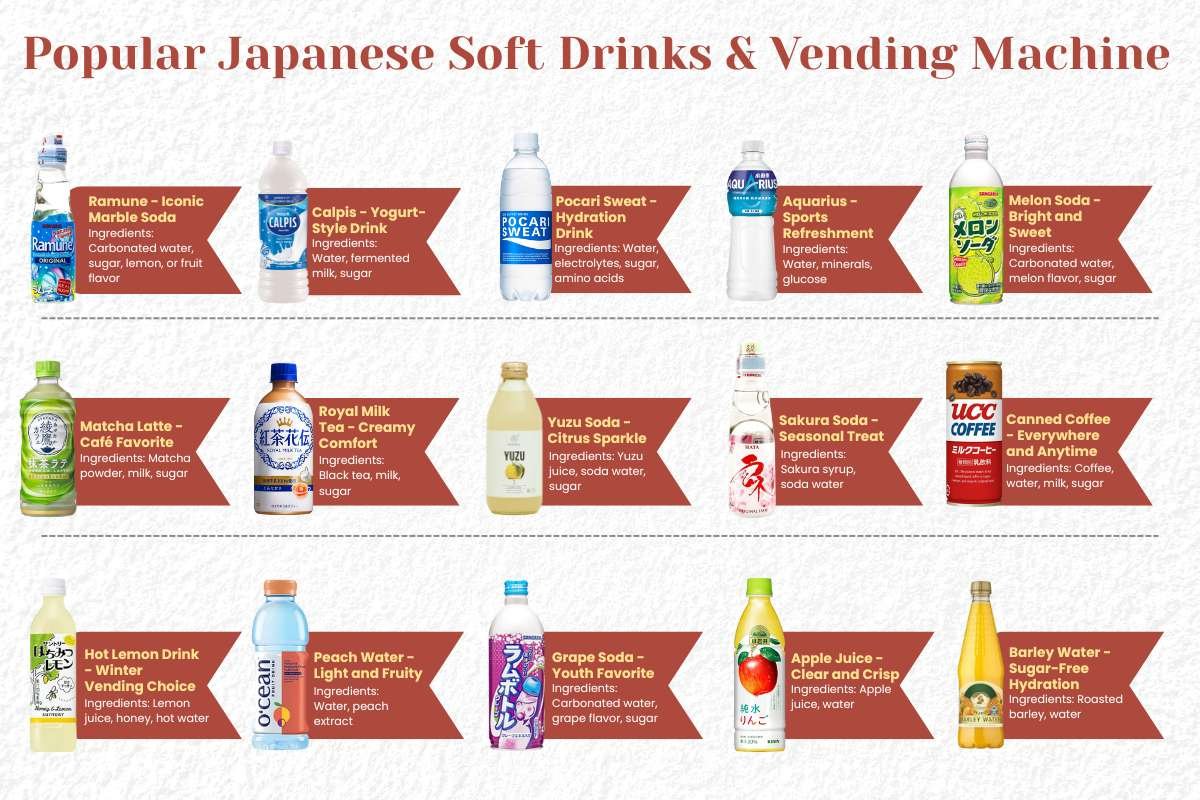
What Japan drinks on the go
Vending machines made drinks famous. Popular Japanese Drinks travels streets and stations.
36. Ramune – Iconic Marble Soda
- Ingredients: Carbonated water, sugar, lemon, or fruit flavor
- How to Make: Mix flavored syrup with carbonated water and seal with a marble stopper.
Ramune is one of the most playful drinks in Japan. The bottle uses a marble to seal the soda. Opening it feels like a small event. The taste is light, lemony, and refreshing. Children love it, and adults enjoy it for nostalgia. You often see Ramune at summer festivals and street stalls.
37. Calpis – Yogurt-Style Drink
- Ingredients: Water, fermented milk, sugar
- How to Make: Dilute Calpis concentrate with cold water or soda.
Calpis tastes gentle and slightly tangy. It feels creamy but stays light. The drink mixes fermented milk with water, which makes it smooth and easy to drink. Families serve it at home, and vending machines sell ready-to-drink bottles. It works well in hot weather because it does not feel heavy.
38. Pocari Sweat – Hydration Drink
- Ingredients: Water, electrolytes, sugar, amino acids
- How to Make: Blend electrolytes with lightly sweetened water.
Pocari Sweat supports hydration. It replaces minerals lost through sweat. Athletes, office workers, and travelers rely on it. The flavor stays mild and clean. Hospitals and schools often recommend it during illness or hot weather. That trust made it a staple across Japan.
39. Aquarius – Sports Refreshment
- Ingredients: Water, minerals, glucose
- How to Make: Mix mineral blend with water and mild sweetness.
Aquarius works like Pocari Sweat but tastes slightly sharper. It focuses on refreshment after exercise. Gyms, sports events, and vending machines near parks stock it heavily. Many people choose it during long walks or summer travel.
40. Melon Soda – Bright and Sweet
- Ingredients: Carbonated water, melon flavor, sugar
- How to Make: Combine melon syrup with soda water.
Melon soda stands out because of its green color and candy-like taste. It feels fun and cheerful. Cafés often serve it with ice cream on top. Vending machines made it easy for everyone to enjoy, even outside restaurants.
41. Matcha Latte – Café Favorite
- Ingredients: Matcha powder, milk, sugar
- How to Make: Whisk matcha with hot water, and add warm milk
Matcha latte blends green tea with milk. It tastes smooth and comforting. You can buy it hot or cold. Busy workers grab it during breaks. Vending machines helped spread café-style drinks to streets and offices.
42. Royal Milk Tea – Creamy Comfort
- Ingredients: Black tea, milk, sugar
- How to Make: Simmer tea leaves directly in milk.
Royal milk tea feels rich and calming. It uses black tea and milk in perfect balance. People enjoy it in colder months, especially warm from vending machines. It feels like a quiet break in a busy day.
43. Yuzu Soda – Citrus Sparkle
- Ingredients: Yuzu juice, soda water, sugar
- How to Make: Mix yuzu syrup with chilled soda.
Yuzu soda tastes fresh and sharp. The citrus flavor wakes the senses without being too sweet. Many people choose it as a lighter soda option. Seasonal versions appear often, which keeps interest high.
44. Sakura Soda – Seasonal Treat
- Ingredients: Sakura syrup, soda water
- How to Make: Blend cherry blossom syrup with soda.
Sakura soda appears mostly in spring. It carries a soft floral flavor and pink color. People drink it during cherry blossom season. Limited availability makes it special and memorable.
45. Canned Coffee – Everywhere and Anytime
- Ingredients: Coffee, water, milk, sugar
- How to Make: Brew coffee and can it hot or cold
Canned coffee defines Japanese vending culture. You can buy it hot or cold. Options range from black to milk-based. Office workers depend on it daily. Its convenience and consistency made it a national habit.
46. Hot Lemon Drink – Winter Vending Choice
- Ingredients: Lemon juice, honey, hot water
- How to Make: Mix lemon and honey in warm water.
Hot lemon drinks appear during winter. They soothe the throat and warm the body. Many contain honey and vitamin C. Vending machines selling hot drinks make winter travel more comfortable.
47. Peach Water – Light and Fruity
- Ingredients: Water, peach extract
- How to Make: Infuse water with peach flavor.
Peach water tastes subtle and refreshing. It feels closer to flavored water than juice. People choose it when they want flavor without sweetness. It suits long days and light meals.
48. Grape Soda – Youth Favorite
- Ingredients: Carbonated water, grape flavor, sugar
- How to Make: Mix grape syrup with soda water.
Grape soda tastes bold and sweet. Younger audiences love it. Bright packaging and strong flavor help it stand out in vending machines.
49. Apple Juice – Clear and Crisp
- Ingredients: Apple juice, water
- How to Make: Press apples and lightly filter juice.
Japanese apple juice often comes clear instead of cloudy. The taste feels clean and natural. It works well for all ages and stays popular in schools and offices.
50. Barley Water – Sugar-Free Hydration
- Ingredients: Roasted barley, water
- How to Make: Steep roasted barley in hot or cold water
Barley water, also called mugicha, contains no sugar and no caffeine. Families serve it with meals. Vending machines sell it year-round. Health-conscious people choose it for daily hydration.
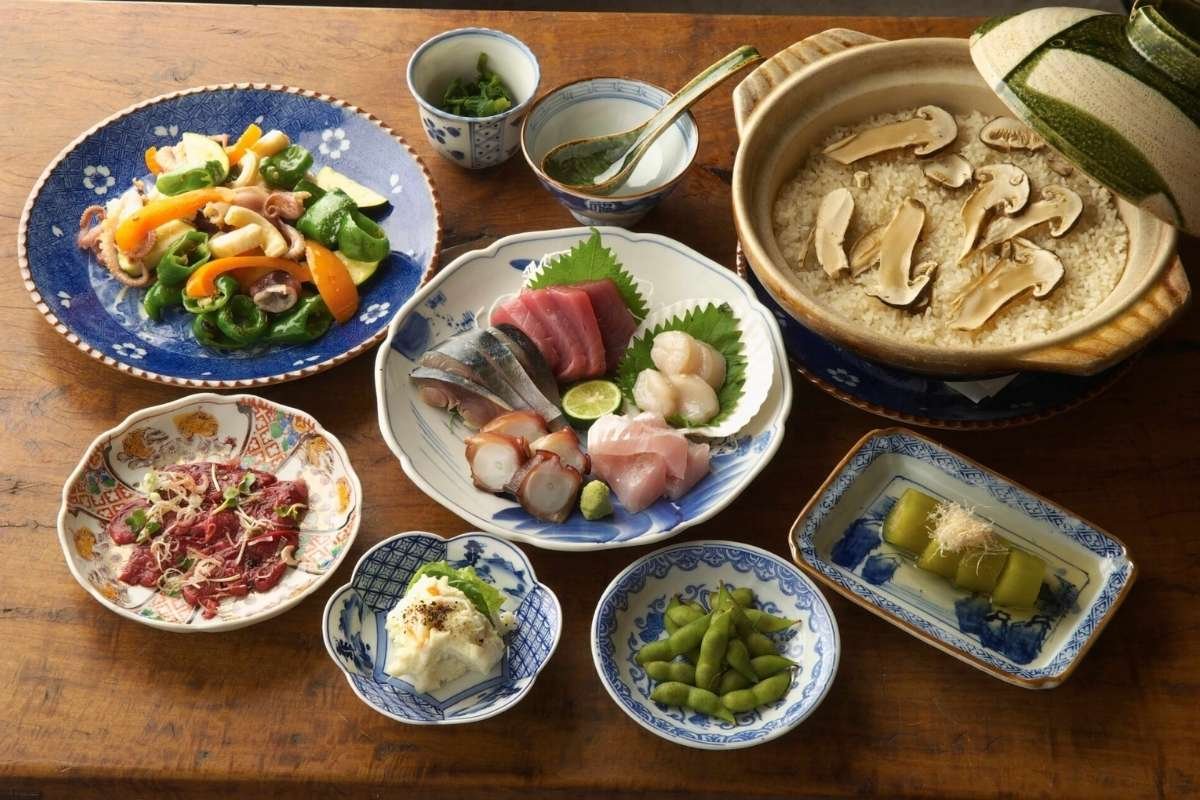
Seasonal Japanese Drinks You Can’t Miss
Season plays a big role in Japanese drinking culture. People in Japan do not drink the same things all year. They choose drinks based on the weather, festivals, and nature. This is why Popular Japanese Drinks: Kanpai! keeps changing with every season.
Japanese culture respects nature deeply. Drinks follow that belief.
Summer vs Winter Drink Traditions
| Season | Popular Drink Types | Why People Prefer Them |
| Summer | Cold barley tea, ramune, melon soda, yuzu soda | Helps cool the body and prevent dehydration |
| Winter | Warm sake, amazake, hot tea, hot lemon drinks | Keeps the body warm and relaxed |
In summer:
- Cold teas feel light and refreshing.
- Sodas give quick energy during the heat.
- Barley tea has no sugar and cools the body.
In winter:
- Warm sake helps improve blood flow
- Amazake gives energy and comfort.
- Hot teas calm the stomach.
Festival-Only and Limited-Edition Drinks
Japanese festivals often release drinks only for a short time.
Examples include:
- Sakura-flavored drinks in spring
- Chestnut or sweet potato drinks in autumn
- Special sake brewed for local festivals
These drinks make celebrations feel special. Once the season ends, the drink disappears.
Why Seasonality Matters in Japan?
- Shows respect for nature
- Encourages mindful consumption
- Keeps flavors fresh and meaningful
- Connects people to the time of year
This seasonal thinking is a key reason for Popular Japanese Drinks: Kanpai! feels so alive and cultural.
Why do many Japanese Drinks Support Digestion and Hydration?
Japanese drinks often:
- Avoid heavy sugar
- Use fermented rice, grains, or tea leaves.
- Focus on hydration rather than sweetness.
This helps the body stay light and active.
Fermented Drinks and Gut Health
| Drink | Health Benefit |
| Amazake | Supports digestion and energy |
| Sake (in moderation) | Improves blood circulation |
| Calpis | Contains helpful bacteria |
| Kombu tea | Aids digestion |
Fermented drinks help maintain gut balance when consumed in small amounts.
Tea and Natural Ingredients
Japanese teas offer:
- Antioxidants for skin and immunity
- Calm energy without jitters
- Support for metabolism
Barley tea is especially popular because:
- It has no sugar
- It contains no caffeine.
- It supports hydration
This natural focus explains why Popular Japanese Drinks feels clean and body-friendly.
How to Choose the Right Japanese Drink for You?
Choosing the right drink depends on your taste, lifestyle, and comfort level. Popular Japanese Drinks works for beginners and experienced drinkers alike.
Choose Based on Taste
| If You Like | Try This |
| Bitter flavors | Matcha, sencha |
| Sweet flavors | Amazake, Calpis |
| Light taste | Mugicha, ramune |
| Strong flavor | Shochu, whisky |
Choose Based on Alcohol Level
- No alcohol: Tea, juices, sodas
- Low alcohol: Chu-hai, amazake
- Medium alcohol: Sake, umeshu
- High alcohol: Shochu, whisky
Start light if you are new.
Food Pairing Tips
Japanese drinks taste better with food.
- Sake + sushi or rice dishes
- Green tea + sweets
- Highball + fried food
- Amazake + breakfast
Small sips and slow enjoyment matter. This is the true spirit behindPopular Japanese Drinks: Kanpai!.
Where to Find Authentic Japanese Drinks Outside Japan?
You do not need to visit Japan to enjoy these drinks. Many options exist worldwide.
Best Places to Look
- Asian supermarkets
- Japanese specialty stores
- Trusted online Japanese beverage shops
What to Check on Labels
Always read labels before buying.
Look for:
- Country of origin
- Ingredient list
- Alcohol percentage
- Brewing or production method
What to Avoid:
- Artificial flavors
- Heavy added sugar
- Vague ingredient names
When labels stay clear and honest, Popular Japanese Drinks: Kanpai! keeps its true taste and cultural value.
Conclusion
Drinks shape moments. Japan understands that truth. From quiet tea cups to loud cheers, Popular Japanese Drinks shows how balance, respect, and joy live in every sip. The same glass can calm the mind or start a celebration.
Just like the introduction promised, this journey ends with one simple idea. Drink with care. Drink with meaning. And always raise your glass with a smile. Kanpai!