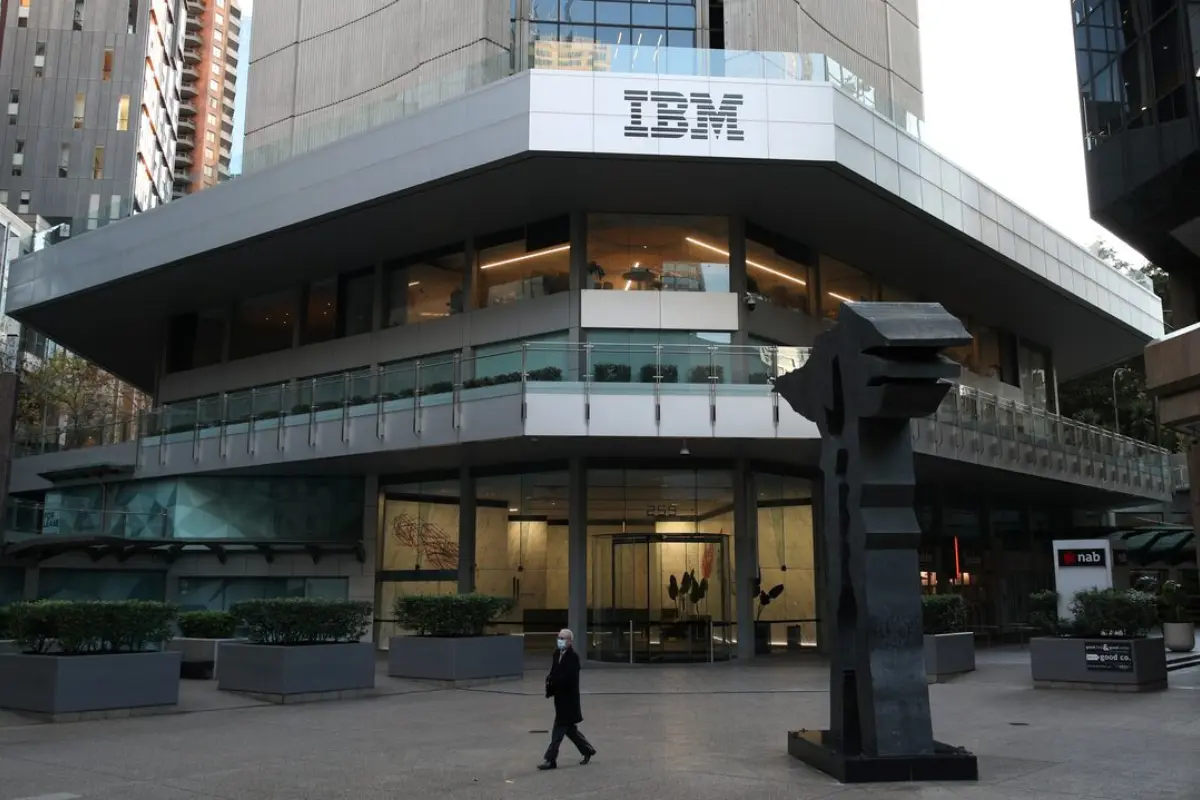
IBM experienced its sharpest single-day stock decline in more than two decades on Monday after an artificial intelligence company announced a technological breakthrough that could threaten one of the tech giant’s long-standing business pillars. IBM Shares fell roughly 13% in one session, marking the steepest drop since 2000 and erasing billions of dollars in market value.
The sell-off followed an announcement from AI startup Anthropic, which revealed enhanced capabilities in its coding assistant tool, Claude Code. The company stated that its AI system can significantly automate the modernization of COBOL, a decades-old programming language that remains deeply embedded in critical banking, insurance, and government systems worldwide.
Investors reacted swiftly, interpreting the development as a potential disruption to IBM’s consulting and mainframe-related services, which rely heavily on maintaining and upgrading legacy infrastructure. The scale of the decline underscored growing market sensitivity to AI-driven innovation and its potential to upend established enterprise technology models.
AI Targets Legacy Systems at the Core of Enterprise Computing
COBOL, developed in the late 1950s, continues to power vast segments of global financial infrastructure. Despite its age, billions of lines of COBOL code still manage transactions, records, and operational systems across industries. However, maintaining and modernizing these systems has historically required specialized expertise, lengthy project timelines, and substantial financial investment.
Anthropic’s latest update claims its AI can analyze, interpret, document, and assist in rewriting COBOL code far more efficiently than traditional manual methods. By automating large portions of code assessment and migration planning, the tool could potentially compress multi-year modernization projects into significantly shorter timeframes.
Such a shift could reduce reliance on legacy consulting engagements, an area where IBM shares have maintained a competitive advantage through its deep enterprise relationships and mainframe ecosystem. While some analysts caution that widespread adoption of AI-driven modernization tools may take time, markets appeared to price in long-term disruption risk almost immediately.
The announcement also intensified broader conversations about how artificial intelligence is reshaping enterprise IT spending. As AI tools become more capable of handling complex legacy systems, traditional revenue streams built around manual modernization efforts may face structural pressure.
A Turning Point for Legacy Tech in the AI Era
The dramatic stock movement reflects a wider reassessment of established technology firms in an AI-dominated landscape. Investors have increasingly rewarded companies perceived as AI leaders while scrutinizing those seen as vulnerable to automation-driven disruption. IBM, long regarded as a cornerstone of enterprise computing, now finds itself navigating a rapidly evolving competitive environment.
Despite the market reaction, IBM continues to invest heavily in AI, hybrid cloud, and enterprise software solutions. The company has emphasized its own AI platforms and strategic partnerships as part of its transformation strategy. However, Monday’s trading session revealed how quickly sentiment can shift when emerging technologies threaten legacy business models.
The episode serves as a reminder that artificial intelligence is not only creating new growth opportunities but also redefining existing markets. For companies built on decades-old systems and consulting frameworks, the pressure to adapt has intensified.
As enterprises weigh modernization strategies in the age of AI, investors will likely continue to scrutinize how traditional technology leaders position themselves against nimble, AI-focused challengers. The sharp decline in IBM shares may ultimately be remembered as a defining moment in the broader transition from legacy computing to AI-accelerated infrastructure.