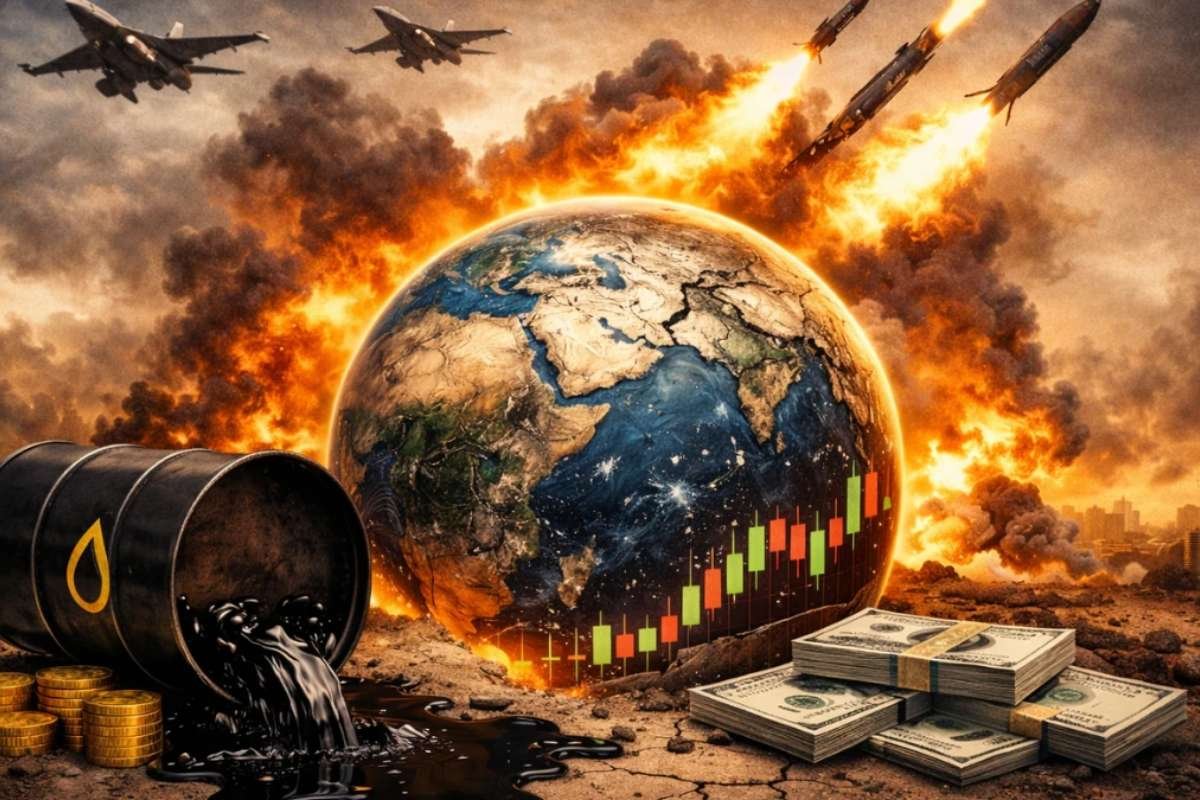
U.S. stock futures sank sharply as investors reacted to escalating hostilities involving Iran, triggering a wave of risk aversion across global markets, reflecting how Iran conflict markets tumble amid growing geopolitical uncertainty. Futures tied to the Dow Jones Industrial Average fell by more than 500 points in early trading, while contracts linked to the S&P 500 and Nasdaq also moved decisively lower. The declines signaled a turbulent opening for Wall Street as traders grappled with renewed geopolitical uncertainty.
The sell-off was not limited to the United States. Asian and European markets also recorded notable losses, reflecting broad concern over the potential economic fallout from the intensifying conflict in the Middle East. Investors shifted capital away from equities and toward traditional safe-haven assets, including gold and government bonds. Precious metal prices climbed as market participants sought shelter from volatility.
The downturn comes at a delicate time for financial markets, which had already been navigating inflation concerns, interest rate uncertainty, and uneven global growth. The sudden geopolitical shock added a new layer of risk, unsettling investor sentiment and increasing fears of broader economic disruption if tensions persist or escalate further.
Oil Prices Spike on Supply Disruption Fears
While equities declined, energy markets moved sharply in the opposite direction as Iran conflict markets tumble and crude oil prices surged as traders priced in the possibility of supply disruptions in one of the world’s most critical energy corridors. Brent crude and U.S. benchmark West Texas Intermediate both posted significant gains, with prices jumping more than 10% at certain points during trading.
The spike was driven largely by concerns over the Strait of Hormuz, a strategic waterway through which roughly one-fifth of the world’s oil supply passes. Any threat to shipping routes in the region has the potential to tighten global supply and send prices soaring. Market participants fear that prolonged instability could lead to transport bottlenecks, higher insurance costs for shipments, or even temporary closures.
Rising oil prices carry broader economic implications, especially as Iran conflict markets tumble and higher crude costs typically translate into increased fuel prices for consumers and elevated expenses for businesses, particularly in transportation and manufacturing sectors. Economists warn that sustained energy inflation could complicate central banks’ efforts to stabilize prices, especially if headline inflation begins to accelerate again due to fuel-related pressures.
Investors Brace for Economic Ripple Effects
Beyond stocks and oil, the geopolitical tension reverberated across currencies and credit markets. The U.S. dollar strengthened as investors sought relative safety, while emerging market currencies faced renewed volatility. Bond yields fluctuated as traders reassessed expectations for monetary policy in light of potential inflationary impacts stemming from higher energy prices.
Financial strategists noted that geopolitical shocks often trigger sharp but short-lived market reactions and the current trend where Iran conflict markets tumble highlights this pattern. However, the longer-term impact depends heavily on the duration and severity of the conflict. If hostilities remain contained, markets may stabilize after the initial wave of uncertainty. But a prolonged disruption, particularly one that interferes with critical trade routes or energy infrastructure, could exert sustained pressure on global growth.
Corporate earnings expectations may also come under scrutiny. Companies reliant on global supply chains or energy-intensive operations could face margin compression if input costs continue rising. At the same time, energy producers may benefit from elevated crude prices, potentially creating sector-specific divergence within equity markets.
For now, investors remain cautious. Volatility is expected to stay elevated as markets monitor diplomatic developments and assess the potential economic consequences. With inflation, interest rates, and geopolitical risk converging simultaneously, global financial markets face a complex and uncertain outlook in the weeks ahead.