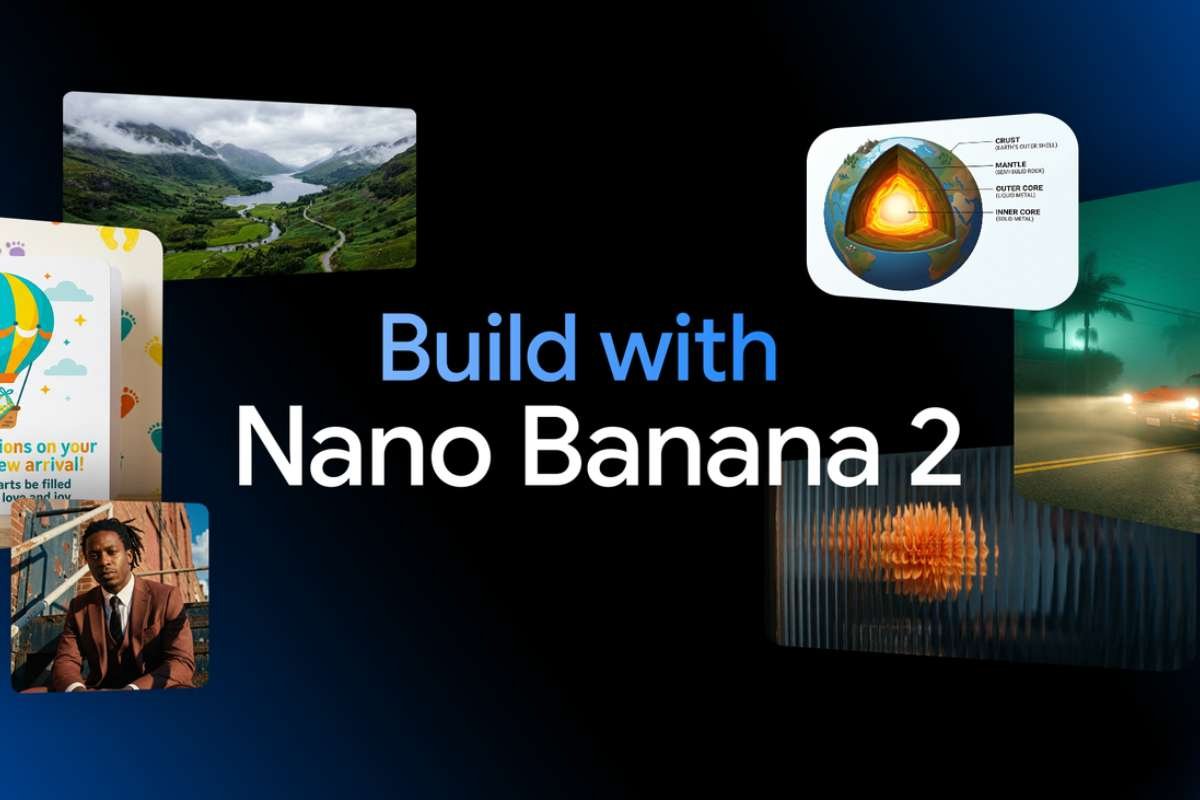
Enterprises today are producing visual content at a scale that traditional design workflows struggle to support. From e-commerce product catalogs and localized marketing campaigns to app interfaces and data-driven visuals, teams are under pressure to deliver consistent, high-quality images quickly—without letting production costs spiral. Manual processes and fragmented creative pipelines often become bottlenecks, slowing campaign rollouts and limiting global expansion.
This shift is driving interest in scalable, API-based image systems. A solution like Nano Banana 2 API enables enterprises to integrate AI image generation directly into their platforms and workflows. Instead of treating visuals as one-off creative tasks, businesses can manage image production programmatically—improving consistency, accelerating turnaround, and maintaining clearer control over cost and deployment.
Core Capabilities of Nano Banana 2 API in an Enterprise Context
1. Structured Text Rendering for Marketing
For enterprises producing large volumes of banners, ads, and product visuals, accurate in-image typography is critical. Nano Banana 2 API, powered by Gemini 3.1 Flash Image, supports structured text placement and clearer layout handling, making it suitable for promotional graphics, infographics, and multilingual campaigns. This reduces the need for manual post-editing and helps maintain brand consistency across markets.
2. Real-Time Web Search for Data-Driven Visual Generation
For enterprises that require visuals tied to current information, Nano Banana 2 API supports real-time web search grounding through Gemini 3.1 Flash. This allows generated images to reference up-to-date information when rendering specific topics or data-driven themes. In enterprise environments, this capability can help align visuals with current information without requiring manual research.
3. Multi-Object and Character Consistency Across Workflows
Maintaining visual coherence at scale is a common enterprise challenge. Nano Banana 2 API supports consistent rendering of up to five characters and multiple objects within a single workflow, helping teams preserve brand mascots, product lines, or recurring design elements. This capability is valuable for e-commerce catalogs, digital storytelling, and campaign continuity.
4. Flexible Resolution and Aspect Ratio Control
Enterprise deployment often requires assets tailored to multiple platforms, from web banners and mobile layouts to marketplace listings. Nano Banana 2 API provides resolution options from 512px to 4K, along with expanded aspect ratio support. This flexibility allows teams to generate optimized outputs for different channels without rebuilding assets from scratch.
5. Scalable, API-Driven Integration into Enterprise Systems
Beyond visual output, the architectural design of Nano Banana 2 API supports asynchronous task handling, callback notifications, and integration into existing content management or e-commerce systems. For enterprises seeking scalable AI image generation infrastructure, this API-driven model enables automated pipelines rather than isolated creative processes.
Comparing Gemini 3.1 Flash Image Pricing Across Platforms

1. Google Nano Banana 2 Pricing
Google prices Gemini 3.1 Flash Image with separate input and output billing. Input (text or image) is charged at $0.25 per request, while output pricing scales by resolution: $0.045 per 0.5K image, $0.067 per 1K image, $0.101 per 2K image, and $0.151 per 4K image. Web search grounding includes 5,000 free requests per month, after which usage is billed at $14 per 1,000 requests.
For enterprises already embedded in Google’s ecosystem, this structure offers direct access but requires careful modeling of input and grounding costs at higher volumes.
2. Kie.ai‘s Nano Banana 2 API Pricing
Kie.ai provides access to the same underlying model through Nano Banana 2 API, using an output-focused credit system. Pricing is $0.04 per 1K image, $0.06 per 2K, and $0.09 per 4K, with higher-tier top-ups offering a 10% bonus that effectively lowers rates to approximately $0.036, $0.054, and $0.081 respectively.
Because input is not billed separately, this structure may offer simpler per-image cost forecasting for enterprises managing large-scale generation workloads.
3. Fal.ai’s Nano Banana 2 API Pricing
Fal.ai charges $0.08 per 1K image, with resolution multipliers applied: 0.75× for 512px output, 1.5× for 2K, and 2× for 4K. Web search functionality carries an additional $0.015 fee per request.
While this approach provides flexibility, enterprises deploying higher-resolution outputs should account for how multiplier-based pricing affects overall budget projections.
Enterprise Deployment Strategy for Nano Banana 2 API

1. API Access Control in Enterprise AI Image Workflows
When deploying Nano Banana 2 API within enterprise environments, governance becomes a primary concern. API key management, IP whitelisting, and usage limits help ensure controlled access and cost containment. For organizations integrating AI image generation into production systems, defining permission levels and monitoring usage patterns can prevent unexpected spend and reduce operational risk.
2. Scaling and Concurrency Planning for AI Image Generation Systems
Enterprises running large campaigns or high-traffic platforms must account for concurrency and throughput. Batch image generation, asynchronous task handling, and callback-based architecture are important when integrating Nano Banana 2 API at scale. Planning for peak loads—such as seasonal promotions or product launches—can help maintain stability without overprovisioning resources.
3. Budget Forecasting and Resolution-Based Cost Management
Because pricing scales by resolution and, in some platforms, by input or grounding usage, enterprises should model projected generation volumes before deployment. Choosing between 1K, 2K, or 4K output can significantly affect budget allocation in large-scale AI image generation workflows. A clear understanding of cost drivers supports more predictable financial planning.
Evaluating Nano Banana 2 API as Enterprise AI Image Infrastructure
As enterprises continue to scale their digital operations, visual content is increasingly treated as infrastructure rather than isolated creative output. Whether accessing Gemini 3.1 Flash Image directly or integrating Nano Banana 2 API, organizations must carefully evaluate cost structure, governance controls, scalability, and long-term vendor alignment.
Beyond individual features, decision-makers are primarily concerned with how image generation fits into existing workflows and financial planning models. When implemented strategically, scalable APIs can support higher content velocity, localization at scale, and brand consistency across markets. The key is not simply selecting a capable platform, but ensuring that it aligns with enterprise operational priorities and risk management frameworks.