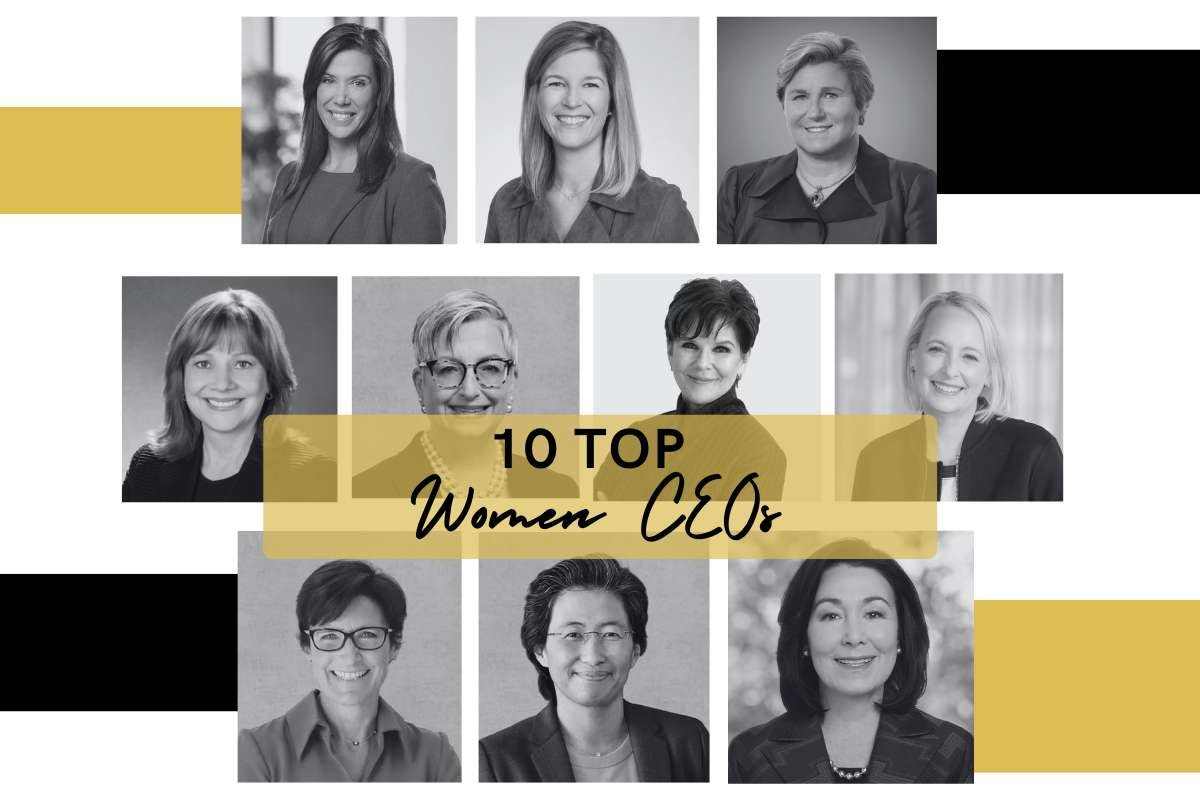
Women are increasingly leading some of the world’s most powerful corporations, managing organizations with combined market capitalizations worth more than $1.3 trillion. From semiconductors and electric vehicles to healthcare, banking, and aerospace, these executives are guiding companies that shape global markets and technological progress.
Many of the top women CEOs today are responsible for driving large-scale transformations within their industries. Leaders such as Mary Barra, Lisa Su, and Safra Catz are steering major shifts toward electric mobility, AI-powered computing, cloud infrastructure, and digital healthcare while maintaining strong financial performance and global competitiveness.
What sets these executives apart is their ability to combine strategic vision with operational discipline in rapidly evolving markets. The top female CEOs featured in this list represent diverse expertise across finance, engineering, policy, consulting, and retail, demonstrating how modern leadership is redefining the future of global business.
10 Top Women CEOs Leading Some of the World’s Most Valuable Companies (Ranked by Market Cap)
Some of the top female CEOs of multinational companies in the fields of technology, healthcare, finance, logistics, and aerospace are featured in this list. To show the scale of their influence, the leaders are arranged from the least to the most market capitalization of the companies they run.
Together, these leading women CEOs manage companies with a combined market value of over $1.3 trillion, spearheading significant changes in industries including cloud computing, digital healthcare, electric vehicles, AI chips, and international banking.
1. Corie Barry [CEO of Best Buy]

| Age | 50 |
| CEO Since | 2019 |
| Industry | Consumer Electronics / Retail |
| Market Cap | $13.26 Billion USD |
| Key Achievement | Expanded Best Buy’s omnichannel retail and strengthened its e-commerce capabilities. |
Corie Barry built her reputation as a strategic leader with a strong understanding of modern consumer behavior. She began her career at Best Buy in financial and operational roles, gradually moving into senior leadership positions. Barry is known for promoting a collaborative corporate culture that encourages innovation across teams. She has consistently emphasized the importance of customer trust and technology expertise in retail. Her leadership focuses on adapting the company to rapidly evolving digital lifestyles.
2. Sarah London [CEO of Centene Corporation]

| Age | 46 |
| CEO Since | 2022 |
| Industry | Healthcare / Managed Care |
| Market Cap | $17.63 Billion USD |
| Key Achievement | Leading one of the largest Medicaid healthcare providers while focusing on digital transformation. |
Sarah London is widely recognized as one of the top women CEOs, known for her expertise in healthcare strategy and public policy. She previously played a major role in shaping long-term corporate strategy and data-driven initiatives within the organization. London is particularly focused on improving healthcare accessibility for vulnerable and underserved populations. Her leadership approach blends policy knowledge with modern digital healthcare solutions. She continues to advocate for a more efficient and patient-centered healthcare system.
3. Gail Boudreaux [CEO of Elevance Health]

| Age | 66 |
| CEO Since | 2017 |
| Industry | Healthcare / Health Insurance |
| Market Cap | $63.95 Billion USD |
| Key Achievement | Rebranded Anthem to Elevance Health and expanded integrated digital healthcare services. |
Gail Boudreaux is considered one of the most experienced leaders in the American health insurance sector. She has spent decades working across major healthcare organizations in both operational and executive roles. Boudreaux often emphasizes collaboration between insurers, providers, and technology innovators. She is also a strong supporter of community-based health initiatives and preventative care. Her leadership vision centers on creating a more connected healthcare ecosystem.
4. Mary Barra [CEO of General Motors]

| Age | 64 |
| CEO Since | 2014 |
| Industry | Automotive / Electric Vehicles |
| Market Cap | $69.76 Billion USD |
| Key Achievement | Leading GM’s transformation toward electric vehicles and autonomous driving technology. |
Mary Barra’s career reflects decades of experience across engineering, manufacturing, and corporate leadership. She began her journey with the company as an intern and steadily rose through multiple operational roles. Barra is known for emphasizing accountability, safety, and long-term innovation in corporate decision-making, qualities that place her among the top women CEOs shaping modern industry. She has also been a vocal advocate for sustainability and responsible manufacturing practices. Her leadership style focuses on empowering teams while maintaining a clear strategic vision.
5. Carol B. Tomé [CEO of UPS]

| Age | 69 |
| CEO Since | 2020 |
| Industry | Logistics / Transportation |
| Market Cap | $85.58 Billion USD |
| Key Achievement | Introduced the “Better, Not Bigger” strategy to improve profitability and logistics efficiency. |
Carol B. Tomé is widely respected for her deep expertise in corporate finance and operational strategy. Before joining UPS, she developed a strong reputation for driving financial discipline and strategic growth. Tomé’s leadership emphasizes efficiency, transparency, and long-term value creation. She is also committed to strengthening global supply chain resilience. Her management philosophy focuses on aligning operational performance with customer expectations.
6. Phebe Novakovic [CEO of General Dynamics]

| Age | 68 |
| CEO Since | 2013 |
| Industry | Aerospace / Defense |
| Market Cap | $95.67 Billion USD |
| Key Achievement | Strengthened General Dynamics’ leadership in defense technology, naval systems, and aerospace while expanding its Gulfstream business aviation division. |
Phebe Novakovic brings a unique combination of government and corporate leadership experience. Earlier in her career, she served in several key roles related to national security and intelligence. This background has given her deep insight into defense policy and global security challenges. Novakovic is known for maintaining strong relationships with government partners and international stakeholders. Her leadership style emphasizes strategic stability and advanced engineering excellence, reinforcing her reputation among the top women CEOs in global industry.
Read Next: 10 Inspiring Businesses Owned by Women
7. Julie Sweet [CEO of Accenture]

| Age | 59 |
| CEO Since | 2019 |
| Industry | IT Consulting / Digital Transformation |
| Market Cap | $124.94 Billion USD |
| Key Achievement | Strengthened Accenture’s leadership in cloud, AI consulting, and global digital transformation services. |
Julie Sweet has become one of the most influential voices in the global consulting and technology services industry. Before leading the company, she oversaw major regional operations and developed strong client partnerships. Sweet actively promotes responsible leadership and ethical technology development. She frequently advocates for workforce reskilling to prepare employees for digital transformation. Her leadership emphasizes talent development, innovation, and global collaboration.
8. Jane Fraser [CEO of Citigroup]

| Age | 58 |
| CEO Since | 2021 |
| Industry | Banking / Financial Services |
| Market Cap | $191.00 Billion USD |
| Key Achievement | First woman to lead a major Wall Street bank and drove Citigroup’s global restructuring strategy. |
Jane Fraser, recognized among the top women CEOs in global finance, has built a remarkable career in banking through leadership roles across multiple regions. She previously managed several major divisions within the organization, gaining deep experience in international finance. Fraser is known for her strategic thinking and ability to manage complex financial institutions. She has prioritized strengthening risk management and operational efficiency. Her leadership reflects a strong focus on modernization within global banking.
9. Lisa Su [CEO of Advanced Micro Devices]

| Age | 56 |
| CEO Since | 2014 |
| Industry | Semiconductors / Technology |
| Market Cap | $333.95 Billion USD |
| Key Achievement | Revived AMD’s competitiveness in CPUs, GPUs, and AI chips, making it a global semiconductor powerhouse. |
Lisa Su is widely respected for her deep technical knowledge and engineering leadership. With a background in electrical engineering, she has spent much of her career advancing semiconductor innovation. Su is known for building strong engineering cultures that encourage technical excellence. She often highlights the importance of long-term research and development in technology companies. Her leadership has made her one of the most influential figures in the computing industry.
10. Safra Catz [CEO of Oracle]

| Age | 64 |
| CEO Since | 2014 |
| Industry | Enterprise Software / Cloud Computing |
| Market Cap | $468.82 Billion USD |
| Key Achievement | Accelerated Oracle’s growth in cloud infrastructure and enterprise software solutions. |
Safra Catz is known for her exceptional financial leadership and strategic decision-making skills. Over the years, she has played a central role in shaping the company’s global expansion strategy. Catz has also overseen numerous acquisitions that strengthened the organization’s technology portfolio, further establishing her reputation among the top women CEOs in the global technology sector. She is widely respected for her disciplined management style and operational efficiency. Her leadership continues to guide the company through rapid changes in enterprise technology.
Read Next: Think You’re Paid Well? These 20 Highest Paid CEOs in the World Will Change Your Mind
Conclusion
The rise of women in executive leadership reflects a broader shift in the global corporate landscape. The leading women CEOs featured in this list lead companies that collectively shape industries ranging from semiconductor innovation and cloud computing to healthcare systems, banking, logistics, and aerospace technology. Their leadership demonstrates how strategic vision, technical expertise, and operational discipline can drive sustained growth in highly competitive markets.
As businesses continue to navigate digital transformation, global supply chain challenges, and evolving consumer expectations, these top women CEOs are playing a critical role in defining the future of modern enterprises. Their achievements highlight not only the growing presence of women in corporate leadership but also the powerful impact of diverse perspectives at the highest levels of decision-making.
FAQs
1. Who are some of the top women CEOs in the world today?
Some of the best CEOs leading global corporations include Mary Barra (General Motors), Lisa Su (AMD), Safra Catz (Oracle), Julie Sweet (Accenture), and Jane Fraser (Citigroup). These leaders oversee companies worth billions of dollars and play a major role in shaping industries such as technology, finance, and automotive.
2. Which industries have the most female CEOs?
In sectors like technology, healthcare, finance, consulting, logistics, and aerospace, there are more and more prominent female CEOs. Women are driving innovation and significant business transformation at companies including AMD, Oracle, Citigroup, and General Motors.
3. What makes leading female CEOs crucial to the leadership of multinational corporations?
Top women CEOs bring diverse perspectives, strategic leadership, and strong operational expertise to major organizations. Their leadership often focuses on innovation, digital transformation, sustainability, and inclusive workplace culture, which are essential for modern corporate success.
4. What qualities make top female CEOs successful leaders?
Most top women leaders share common traits such as strategic vision, strong decision-making abilities, industry expertise, and the capacity to lead large teams through complex global challenges. Many also emphasize innovation, technology adoption, and long-term growth strategies.
5. What is the ranking of the top female CEOs on this list?
In this article, the top women CEOs are arranged from the least to the most market capitalization of the companies they lead. This ranking provides a clear view of the scale and economic impact of each organization.