Key Takeaway:
- Rising jet fuel prices are undermining Spirit’s bankruptcy exit strategy.
- Higher costs may exceed available liquidity, raising creditor concerns.
- Limited pricing flexibility makes Spirit highly exposed to fuel volatility.
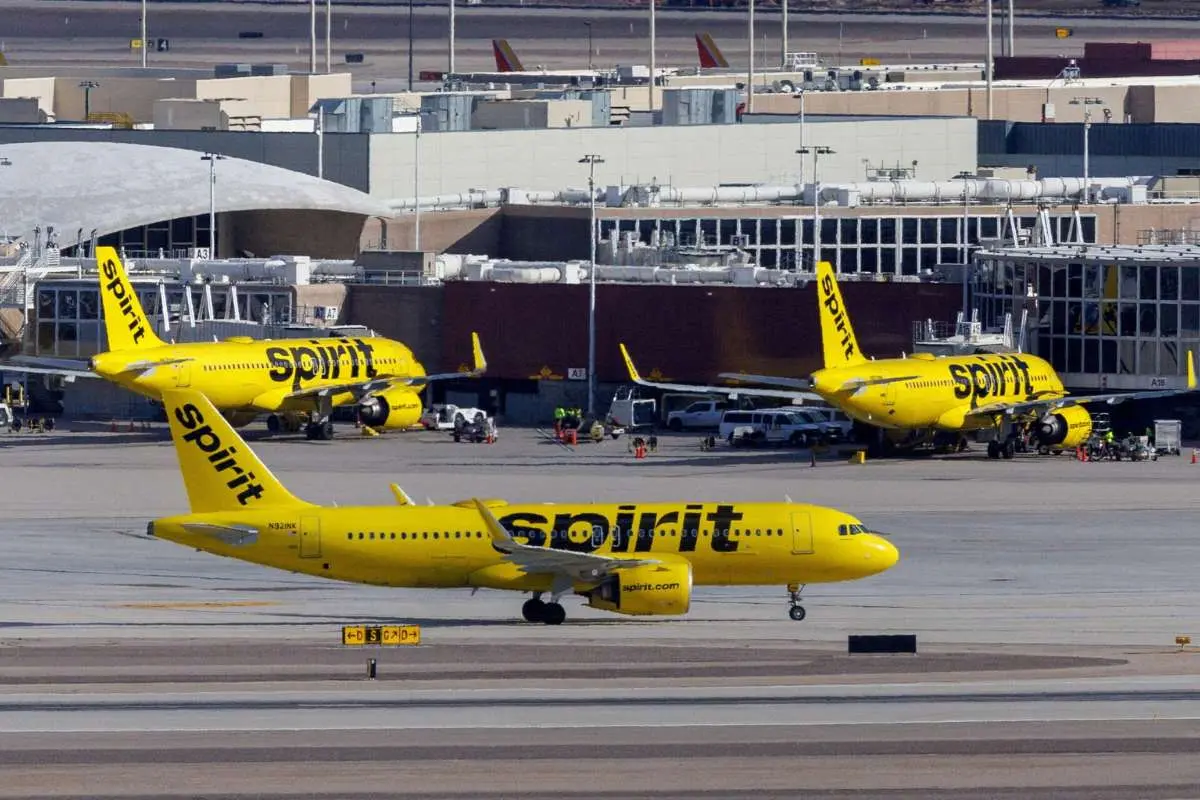
Spirit Airlines is facing renewed financial stress as a rapid increase in jet fuel prices threatens to undermine its ongoing bankruptcy exit strategy. The ultra-low-cost carrier, which entered Chapter 11 restructuring in late 2024, had designed its recovery plan around the expectation of relatively stable fuel costs and a gradual return to financial stability. However, recent developments in global energy markets have significantly challenged those assumptions.
Jet fuel prices have surged in recent weeks, nearly doubling the levels Spirit had used in its financial projections for 2026. The airline’s restructuring model had been built on an estimated fuel price of around $2.24 per gallon. In contrast, current market conditions have pushed prices closer to $4.24 per gallon, creating a major mismatch between expected and actual operating costs.
This sharp increase has immediate consequences for Spirit’s cost structure. Fuel is one of the largest expenses in the airline industry, and its impact is particularly severe for ultra-low-cost carriers that operate on thin margins. Spirit’s business model relies heavily on keeping base fares extremely low while generating revenue through ancillary services such as baggage fees, seat selection, and onboard purchases. Rising fuel costs reduce the airline’s flexibility to maintain this pricing strategy without affecting demand or profitability.
Creditors reassess risk as financial buffer weakens.
The sudden spike in fuel prices has prompted growing concern among Spirit Airlines’ creditors, who are now re-evaluating whether the airline’s restructuring plan remains viable under current conditions. Internal assessments are reportedly considering more severe scenarios, including the possibility of liquidation if financial pressures continue to intensify.
Industry analysts estimate that sustained high fuel prices could add approximately $360 million or more in additional annual costs for Spirit Airlines. This figure is particularly concerning because it exceeds the company’s reported liquidity cushion from the end of last year, raising doubts about whether the airline has sufficient financial flexibility to absorb prolonged external shocks.
As a result, creditor discussions have become increasingly cautious. While Spirit has already undertaken multiple restructuring measures, including cost reductions, fleet adjustments, and route optimization these steps may not be enough to offset sustained increases in fuel expenses. The widening gap between projected cash flows and actual operating costs has placed additional strain on negotiations surrounding the airline’s recovery plan.
Court-supervised restructuring processes typically rely on stable macroeconomic assumptions. When key inputs such as fuel prices shift dramatically, as they have in this case, it forces stakeholders to reassess the entire viability of the restructuring framework. For Spirit, this has led to heightened scrutiny at a critical stage of its financial rehabilitation.
Industry-wide cost pressures highlight structural vulnerability.
The broader airline industry is also grappling with rising fuel costs, but Spirit Airlines is more exposed than many of its competitors due to its ultra-low-cost structure. Unlike larger airlines that benefit from diversified revenue streams, premium cabin offerings, and stronger balance sheets, Spirit operates with limited pricing flexibility and thinner margins, making it more vulnerable to cost shocks.
The airline’s restructuring plan was originally built on assumptions of stable fuel prices and steady demand recovery following its bankruptcy filing. However, ongoing volatility in global energy markets, partly driven by geopolitical tensions, has disrupted those expectations. As a result, financial projections for profitability have weakened, with some estimates suggesting that margins could turn negative if elevated fuel prices persist.
Despite these headwinds, Spirit continues to operate and has maintained confidence in its ability to manage short-term volatility. The airline has implemented a series of operational adjustments aimed at improving efficiency, including network optimization, fleet restructuring, and targeted cost controls. These measures are intended to provide some relief against rising external pressures, though their effectiveness may be limited if fuel prices remain high for an extended period.
The situation places Spirit at a critical crossroads. The outcome of its restructuring now depends on several uncertain factors, including the trajectory of fuel prices, creditor support, and the airline’s ability to adapt its business model under sustained cost pressure. Without stabilization in external conditions, the airline may face difficult decisions regarding the future structure of its operations.
Conclusion
Spirit Airlines’ efforts to exit bankruptcy have been significantly complicated by a sudden surge in fuel prices that has disrupted its financial assumptions. With creditors increasingly cautious and operating costs rising faster than expected, the airline’s recovery path now appears far more uncertain. The coming months are likely to be decisive in determining whether Spirit can complete its restructuring successfully or will need to revise its strategy under intensified financial strain.