Key Takeaways
- Frequent Falcon 9 launches show space missions are becoming routine and highly efficient.
- The expanding satellite network is positioning itself as a global internet backbone.
- Rising launches from Vandenberg Space Force Base highlight growing concerns around space congestion and regulation.
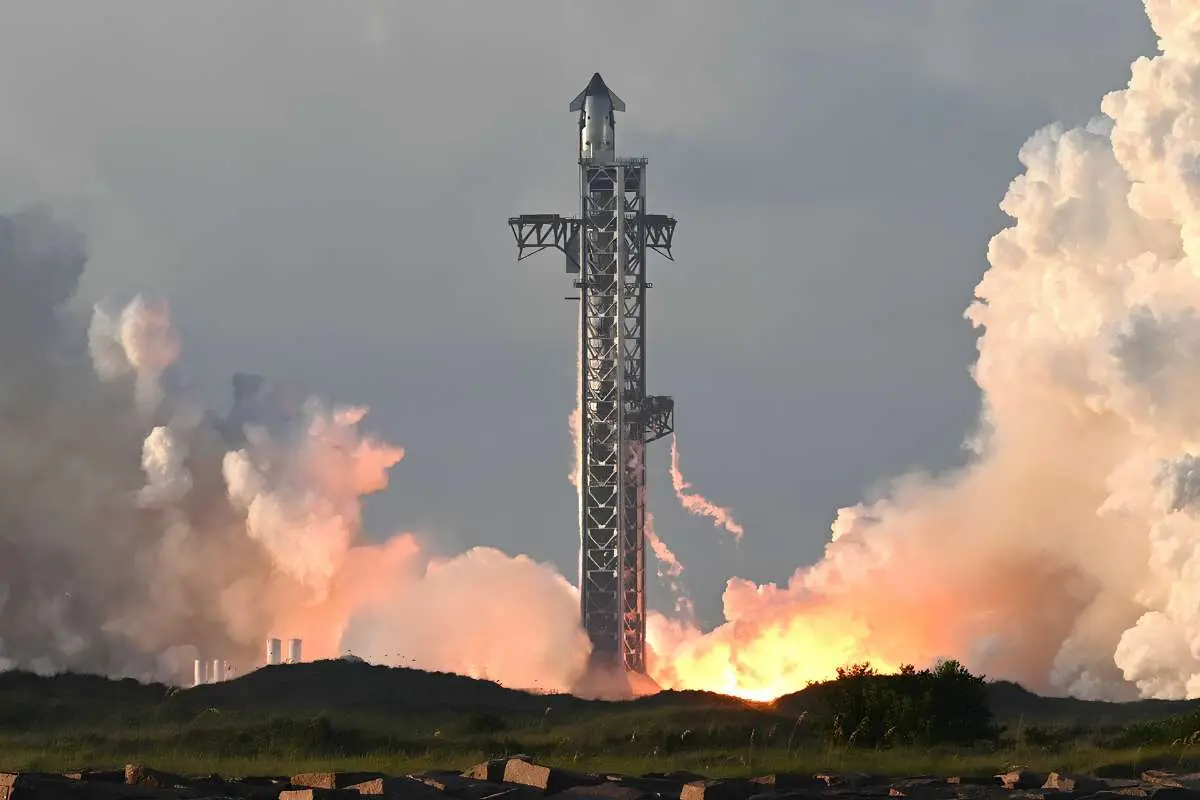
SpaceX is continuing its aggressive expansion of the Starlink satellite network with the launch of 24 additional satellites aboard its reliable Falcon 9 rocket. The mission is set to lift off from Vandenberg Space Force Base, reinforcing the company’s sustained focus on scaling its low Earth orbit (LEO) constellation.
The launch forms part of a broader effort to strengthen global broadband connectivity through space-based infrastructure. Once deployed, the satellites will join thousands already orbiting Earth, contributing to a system designed to deliver high-speed, low-latency internet services worldwide. This is particularly significant for remote and underserved regions where traditional internet infrastructure is either unreliable or unavailable.
Shortly after liftoff, the rocket will follow a south-southwesterly trajectory, a standard path for missions launched from California’s central coast. The satellites will be released into orbit in batches, after which they will use onboard propulsion systems to gradually position themselves within the constellation. This careful placement ensures optimal coverage and network efficiency.
The mission reflects a broader trend in 2026, where Starlink launches have become increasingly frequent. With dozens of missions already completed this year, SpaceX is maintaining one of the highest Falcon 9 launch cadences in the global space industry.
Reusable Rocket System Powers High-Frequency Launches
A key factor behind this rapid pace is the reusability of the Falcon 9 rocket, which has become the backbone of SpaceX operations. Unlike traditional expendable rockets, Falcon 9’s first-stage booster is designed to return to Earth after launch, allowing it to be refurbished and reused in future missions.
This approach has significantly reduced the cost of access to space while enabling faster turnaround times between launches. The current mission is part of a sequence of closely timed deployments from Vandenberg Space Force Base, demonstrating the company’s ability to execute multiple launches within a short timeframe.
Following stage separation, the booster will attempt a controlled landing, either on a droneship positioned in the Pacific Ocean or at a designated landing site. These landings, once considered experimental, are now a routine part of operations and play a crucial role in sustaining the company’s launch frequency.
Meanwhile, the rocket’s second stage will continue its journey into orbit, carrying the Starlink satellites to their deployment altitude. After separation, the satellites will spread out and maneuver into precise orbital slots, ensuring seamless integration into the existing network.
This highly coordinated process highlights the maturity of reusable rocket technology and its role in transforming the economics of spaceflight. By combining engineering efficiency with operational precision, SpaceX has redefined expectations for Falcon 9 launch frequency and reliability.
Local Effects and Broader Implications for the Space Industry
While the Falcon 9 launch is part of a routine schedule, it may still have noticeable effects for residents in nearby coastal regions. Sonic booms could be heard as the returning booster re-enters the atmosphere at supersonic speeds, a phenomenon that has become increasingly familiar in areas surrounding Vandenberg Space Force Base. These brief but powerful sounds are a direct result of the booster’s rapid deceleration during its descent.
Beyond local impacts, the continued expansion of the Starlink network represents a significant shift in global connectivity. By deploying thousands of satellites in low Earth orbit, SpaceX aims to create a resilient and scalable internet infrastructure capable of serving users across continents.
However, this rapid growth has also sparked debate within the scientific community. Concerns have been raised about orbital congestion, the long-term sustainability of satellite constellations, and their potential impact on astronomical observations. As more satellites are launched, managing space traffic and minimizing interference will become increasingly important.
Despite these challenges, the latest mission underscores the company’s commitment to its long-term vision. With a relentless launch schedule and continuous technological innovation, SpaceX is not only expanding its Starlink constellation but also shaping the future of commercial spaceflight.
As the countdown proceeds, this mission stands as another milestone in an era defined by rapid advancements, where the boundaries of connectivity and space exploration continue to be pushed further than ever before.