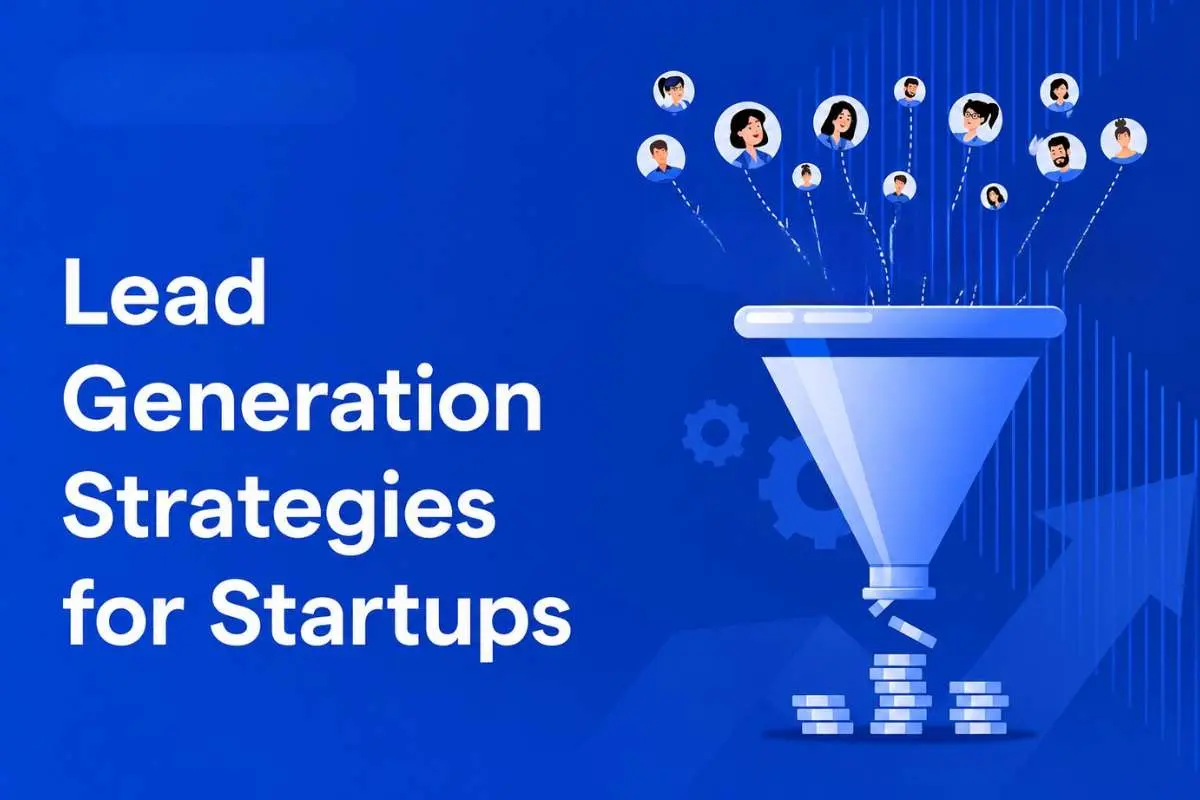
Lead Generation for Startups helps new businesses find people who are likely to become customers. This guide explains how to identify the right audience, generate leads with little or no budget, create content that attracts prospects, improve conversions, build partnerships, and track results. It also shares practical ways to grow steadily and attract more qualified leads over time.
Getting people interested in a new business is often one of the biggest challenges for founders. That is where lead generation comes in. A lead is someone who shows interest in what you offer. A prospect is a lead who matches your target audience and may be ready to buy. A customer is a person who has already made a purchase.
Lead generation for startups is the process of attracting people who may buy a product or service and turning them into potential customers through content, outreach, referrals, SEO, and partnerships. For early-stage businesses, a steady flow of leads helps create sales opportunities, test market demand, and support long-term growth.
How startups can generate qualified leads on a budget
Many startups assume they need a large marketing budget to get leads. In reality, some of the most effective methods cost little or nothing. They require time, consistency, and a clear understanding of the target audience.
Founder-led LinkedIn content
People often connect with founders before they connect with brands. Share lessons from building the business, industry insights, and common customer challenges. This helps build trust and keeps your startup visible to potential buyers.
Community participation
Join places where your audience already spends time. This may include Slack groups, Discord communities, industry forums, and niche Facebook groups. Focus on answering questions and being helpful rather than promoting your product.
Strategic commenting
Thoughtful comments can reach more people than a post. Engage with industry creators and add useful insights to ongoing discussions. Good comments can start conversations and attract profile visits.
Referral requests
Happy customers and professional contacts can become a strong source of leads. According to McKinsey, word of mouth influences up to 50% of purchasing decisions. A simple referral reward can encourage more recommendations.
Cold outreach done properly
Avoid generic sales messages. Research each prospect, understand their challenges, and explain how you can help solve a specific problem.
A useful habit is the 30-Minute Daily Lead Routine: spend 10 minutes posting content, 10 minutes commenting on industry discussions, and 10 minutes on personalized outreach. This simple system can create steady momentum for Lead Generation for Startups.
Build a simple lead generation system for your startup before choosing channels

Lead Generation for Startups works best when there is a clear system behind it. Many founders spend time choosing marketing channels before building a process to turn visitors into leads and customers.
- Traffic source – Where people find you
- Lead capture method – How you collect their information
- Follow-up process – How you stay in touch
- Conversion step – The action that turns a lead into a customer
For example, a startup might use this funnel:
LinkedIn post → Landing page → Email signup → Discovery call
Before trying to get more traffic, check if your funnel is working. If people visit your landing page but do not sign up, adding more traffic will not solve the problem. The same applies if leads sign up but never respond to follow-ups.
Fixing these funnel leaks first helps startups get better results from the traffic they already have.
Know your ideal customer before you generate leads
Before trying to attract leads, you need to know who you want to reach. This starts with creating an Ideal Customer Profile (ICP). An ICP describes the type of person or business most likely to benefit from your product or service.
Look at their biggest problem, what causes them to look for a solution, the result they want, and what might stop them from buying. These four points can help shape your messaging and offers.
You should also identify where your audience spends time online. Some may prefer LinkedIn, while others may use industry forums, communities, or search engines.
A simple 3-question icp test
Before launching any campaign, ask:
- What problem does this audience want to solve right now?
- Where do they actively look for answers?
- Can they realistically buy our solution?
If you cannot answer all three questions clearly, refine your audience before investing more time in Lead Generation.
Create content that brings leads long after it is published
Good content can keep bringing in leads months or even years after it goes live. Unlike paid ads, content continues working without ongoing spending.
Start by creating educational blog posts, comparison articles, industry guides, case studies, and FAQ pages. These content types help answer questions people already have when looking for solutions.
For many businesses, Lead Generation for Startups becomes easier when content is built around real customer problems instead of product features.
| Strategy | Action |
| Answer Questions Directly | Give clear answers near the top of the page. |
| Structure Content for AI Search | Use questions, lists, and short summaries. |
| Build Topic Clusters | Create one main article and several related articles. |
A useful alternative to a full case study is a micro-case study. Instead of writing a long success story, share a short example that explains the problem, solution, and result. This helps startups build credibility faster while creating content more consistently.
Use SEO to build a long-term lead engine

Lead Generation for Startups becomes much easier when potential customers can find your business through search engines.
Focus on these SEO basics:
- Search intent: Understand what people want when they search.
- Informational keywords: Target users looking for answers.
- Commercial keywords: Target users comparing solutions.
- On-page SEO: Use clear titles, headings, and helpful content.
- Internal linking: Connect related pages on your website.
According to BrightEdge Research, 68% of online experiences begin with a search engine.
Many startups make the mistake of relying only on keyword tools. A better strategy is to study customer questions from sales calls, emails, reviews, and online communities. These real conversations often reveal low-competition keyword opportunities that competitors miss.
Turn website visitors into leads with better conversion paths
Getting traffic is only half the job. Your website must make it easy for visitors to take the next step.
1. High-converting landing pages
A good landing page should include:
- A clear value proposition
- One main call to action (CTA)
- Customer reviews or testimonials
- Fast loading speed
Use the 3-Second Clarity Test: If a visitor cannot understand what you offer and what to do next within three seconds, your page needs improvement.
2. Lead magnets that work
Give visitors a reason to share their contact details. Popular options include:
- Templates
- Checklists
- Calculators
- Industry reports
- Forms That Do Not Kill Conversions
Long forms can reduce signups. Ask only for the information you truly need and remove unnecessary fields.
Small improvements in landing pages, forms, and lead magnets can make a big difference to Lead Generation for Startups.
Partnerships can generate leads faster than advertising

For many businesses, Lead Generation for Startups becomes easier when they partner with brands that already have an audience. This strategy is often called audience borrowing. Instead of building trust from scratch, you gain exposure through a partner that your target audience already knows.
Some effective partnership ideas include:
- Cross-promotions
- Webinar partnerships
- Newsletter swaps
- Affiliate relationships
- Industry collaborations
For example, a startup selling project management software could partner with a business consulting firm. Both serve similar audiences without competing directly.
Partnerships can help startups reach qualified prospects faster and at a lower cost than advertising. They also allow smaller businesses to compete with larger companies by tapping into established communities and trusted networks.
Why lead generation matters more for startups than established businesses
Unlike large companies, startups often have limited budgets, little brand awareness, and no existing customer base. They cannot rely on reputation alone to attract buyers. This is why Lead Generation for Startups plays a key role in early growth. It helps businesses find potential customers, create sales opportunities, and understand what the market actually wants.
Many successful startups take a validation-first approach. Rather than spending heavily on marketing, they generate leads early to test demand, gather feedback, and refine their offer. This lowers risk and helps them make smarter decisions. A steady flow of leads also supports future revenue, while waiting too long to build a pipeline can make growth much harder.
According to HubSpot’s State of Marketing Report, 61% of marketers say generating traffic and leads is their biggest challenge. For startups with fewer resources, the challenge can be even greater. That makes building a reliable lead generation system one of the most important tasks in the early stages of growth.
How does one measure lead generation success?
Lead generation is only effective if it produces meaningful business results. Tracking a few key metrics can help you understand what is working, where leads are dropping off, and how to improve performance over time.
Track the right metrics
To measure performance, focus on website visitors, conversion rate, cost per lead, qualified leads, sales opportunities, and customer acquisition cost. These metrics show whether your marketing efforts are attracting potential customers and turning them into revenue.
Keep your dashboard simple
You do not need dozens of reports. Start with four numbers: traffic, leads, qualified leads, and customers. Together, they provide a clear view of how your funnel is performing.
Focus on lead quality, not just volume
Many startups chase more leads, but volume alone can be misleading. A smaller number of qualified leads often creates more sales than a large number of poor-fit contacts. For this reason, lead quality is one of the most important indicators of the success of lead generation.
Common lead generation mistakes startups should avoid
Small mistakes can slow growth and waste valuable time. Many startups do not struggle because of a lack of leads. They struggle because they focus on the wrong activities.
| Mistake | Why It Hurts |
| Targeting everyone | Broad messaging makes it harder to attract the right audience. |
| Using too many channels at once | Time and resources get spread too thin, leading to weak results across all channels. |
| Ignoring follow-ups | Interested leads may forget about your business or choose a competitor instead. |
| Buying low-quality lead lists | Many contacts may be irrelevant, outdated, or unlikely to engage. |
| Measuring vanity metrics | Traffic, likes, and impressions do not always translate into revenue. |
One way to avoid these mistakes is to focus on lead quality instead of lead volume. This is especially important for Lead Generation for Startups, where resources are often limited.
A simple lead quality framework
Before spending time on a lead, ask three questions:
- Fit: Does this person match your ideal customer profile?
- Interest: Have they engaged with your content, emails, or website?
- Intent: Have they shown signs of wanting a solution, such as booking a call or requesting more information?
Leads that score well in all three areas are usually more likely to become customers.
The future of lead generation for startups

Lead Generation is shifting toward trust, expertise, and audience relationships. As AI search tools become more common, businesses that publish helpful and accurate content will have a better chance of appearing in both traditional search results and AI-generated answers.
Other important trends include first-party data collection, community-led growth, personal branding, and trust-based marketing. These approaches help startups build stronger connections with potential customers without relying heavily on paid advertising.
While tools and platforms will continue to change, the fundamentals remain the same. Understand your audience, focus on a few effective channels, create useful content, build partnerships, and track qualified leads. In the end, lead generation for startups works best when businesses solve real problems and earn trust over time.
FAQs
1. How long does it take to see results from lead generation?
Outreach and referrals can produce results within days, while SEO and content marketing may take several months to gain traction.
2. What is a good lead-to-customer conversion rate for a startup?
It varies by industry and business model. Instead of chasing benchmarks, focus on improving your conversion rate over time.
3. Should startups approach B2B and B2C lead generation differently?
Yes. B2B often requires relationship building and longer sales cycles, while B2C usually involves faster buying decisions.
4. Can startups outsource lead generation?
Yes, but it works best when the startup already has a clear audience, message, and offer.
5. What is a common sign that strategies for lead generation for startups are not working?
High traffic with very few qualified leads often signals a problem with targeting, messaging, or conversion paths.