Key Takeaways:
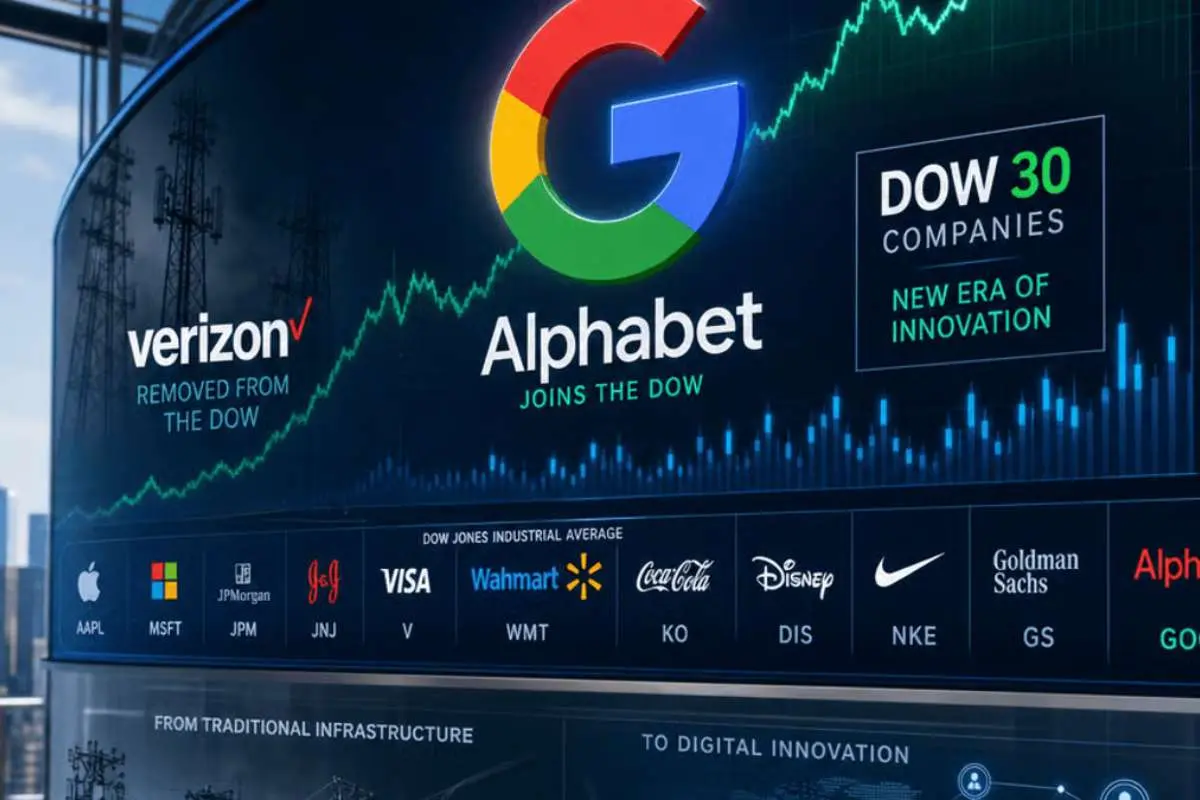
- Alphabet joins Dow, boosting exposure to AI, cloud, and advertising
- Verizon exits despite a 14% YTD gain due to a lower share price
- Index shift reflects the rising weight of technology-driven sectors
Alphabet will join the Dow Jones Industrial Average on June 29, replacing Verizon Communications, in a move aimed at aligning the index with fast-growing sectors of the United States economy. The change reflects a shift toward technology-driven businesses, with Alphabet bringing exposure to artificial intelligence, cloud computing, healthcare technology, and digital advertising.
Index composition shifts toward high-growth technology sectors
The inclusion of Alphabet marks a notable change in the composition of the Dow, which is a price-weighted index. Companies with higher share prices have a greater impact on index performance. Alphabet’s higher share price and larger market value make it a stronger contributor compared to Verizon.
Verizon, despite gaining about 14% year to date, has a lower share price, which limits its influence on the index. The replacement highlights how index construction methods can affect representation, even when companies show positive stock performance.
Alphabet operates across multiple high-growth segments. Its businesses span search, advertising, cloud services, and artificial intelligence. These areas continue to attract strong investment and drive revenue expansion across the technology sector.
Shares of Alphabet rose less than 1% in after-hours trading following the announcement. The modest movement reflects a measured market response, even as index inclusion often increases visibility among institutional investors.
Market dynamics reflect AI investment and valuation pressures
Alphabet has increased its focus on artificial intelligence, committing significant capital to expand its capabilities. The company recently issued nearly $85 billion in shares to support its investment plans. This highlights the scale of spending required to compete in advanced technology segments.
At the same time, broader market conditions have created pressure on technology stocks. A more cautious stance on inflation has led investors to reassess valuations, particularly in sectors that have seen strong gains.
The shift in the Dow also comes alongside changes involving Honeywell International. The company will remain in the index after completing the spin-off of its aerospace business on June 29. The parent entity will be renamed Honeywell Technologies, while the aerospace unit will operate independently and will not be included in the index.
For business owners and entrepreneurs, the update reflects how capital markets are prioritizing companies with exposure to innovation-driven sectors. Areas such as artificial intelligence, cloud infrastructure, and digital platforms continue to attract investment and shape long-term growth expectations.
The Dow’s adjustment signals a broader trend. Traditional sectors are making room for businesses that align with evolving economic drivers. As technology adoption accelerates, companies operating in these areas are gaining stronger representation across major financial benchmarks.