Key Takeaways:
- A 7.2 magnitude quake causes transport checks and brief service pauses
- No tsunami risk confirmed as operations continue across key sectors
- Infrastructure inspections highlight preparedness in high-risk regions
A 7.2 magnitude Japan earthquake struck off Japan’s northern coast on June 25, prompting immediate safety checks across transport and infrastructure systems, while authorities confirmed there was no tsunami risk. The tremor was recorded off the eastern coast of Iwate prefecture at a depth of about 50 km.
Infrastructure and transport systems activate safety protocols
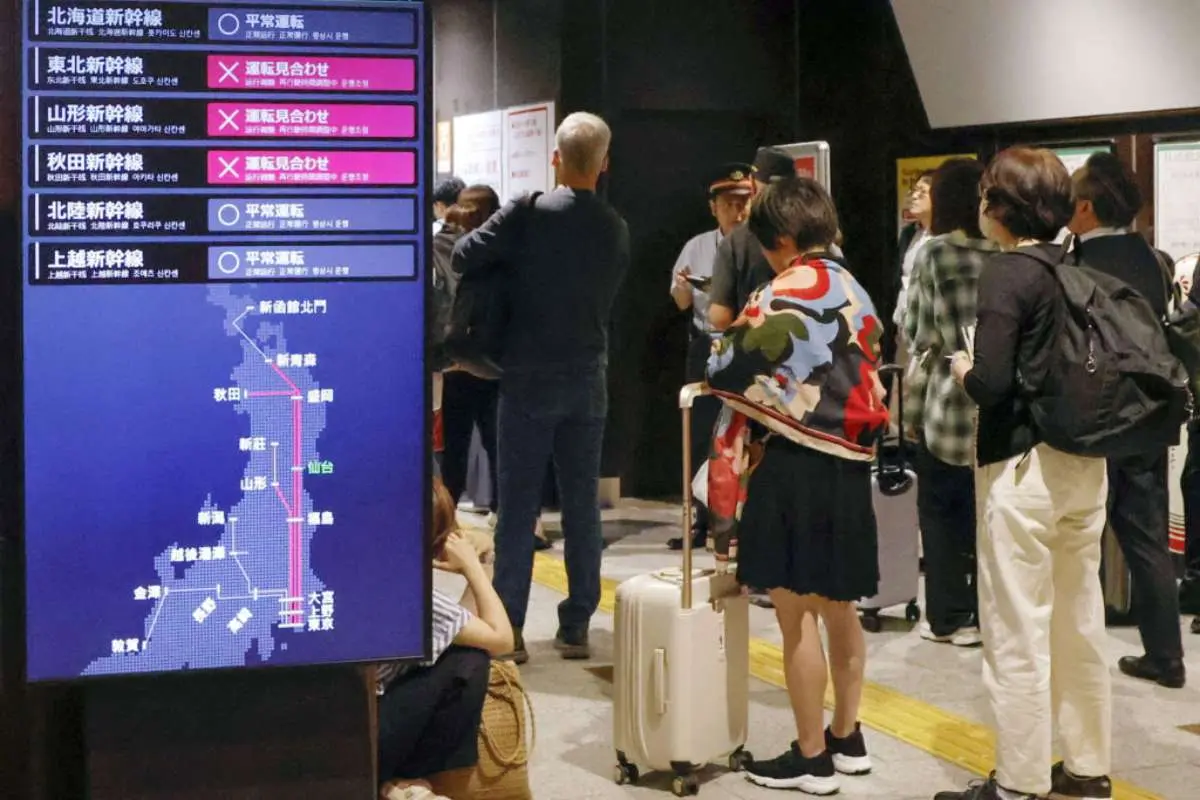
The Japan earthquake occurred during morning commuting hours, leading to precautionary actions across transport networks. East Japan Railway temporarily suspended bullet train and local services in the northeastern regions to conduct safety inspections.
Despite the disruption, early reports indicated that operations resumed in phases after initial checks. Commuters in affected regions, including Tokyo, experienced mild tremors but continued with their daily routines following brief interruptions.
Government officials confirmed there were no immediate reports of major structural damage. Localized impact included minor building damage in certain areas, such as Hachinohe in Aomori prefecture. Schools in some regions suspended classes for the day as a precautionary measure.
Japan’s infrastructure response reflects established systems designed to manage seismic activity. Rapid inspections and controlled service pauses are standard procedures aimed at maintaining operational continuity while ensuring safety.
Business continuity and risk preparedness remain in focus
Authorities also reviewed the status of critical infrastructure following the Japan earthquake. Nuclear facilities, including the Fukushima Daiichi plant and a fuel reprocessing facility in Aomori, reported no abnormalities after inspections.
The event follows a series of recent seismic activities in the region, including a strong tremor in December that led to a week-long caution advisory. These repeated events highlight the ongoing need for preparedness across sectors.
For businesses, the temporary suspension of transport services underscores the importance of continuity planning. Logistics, workforce mobility, and supply chain coordination can face brief disruptions during such events, even when physical damage is limited.
Japan remains located on the Pacific Ring of Fire, one of the most seismically active zones globally. As a result, companies operating in the region often incorporate risk mitigation measures into their operations, including infrastructure resilience and emergency response protocols.
Officials advised residents and businesses to remain alert for aftershocks. While immediate disruptions were limited, the coordinated response across transport and infrastructure systems demonstrates the role of preparedness in maintaining stability during unexpected events.
The incident highlights how structured response systems and regular safety checks help reduce operational impact. For entrepreneurs and business owners, it reinforces the need to plan for continuity in environments exposed to natural risks.