Most people forget what they heard at a conference within days. The keynote, the panel, the guy who talked too long about “synergy.” Gone.
But ask someone about the booth where they actually got to do something, and they’ll describe it months later, sometimes right down to what they were wearing that day.
Not a coincidence. It’s why marketing budgets keep sliding away from banners and brochures and into things people can touch, press, and record themselves doing.
Experiential marketing stopped being a buzzword a while back. It’s just what works now, whether the slide decks have caught up to that or not.
What Experiential Marketing Actually Means?
Strip the jargon out, and it’s simple. Instead of telling someone your brand is fun or premium or whatever adjective got picked in a meeting, you let them feel it for themselves.
Watching an ad is passive; your brain just files it as information, and information without something to hook it tends to slide right back out. Doing something, laughing, posing badly, fumbling a prop, that lands as a memory tied to a feeling.
And feelings stick around longer than facts do. Most of us can’t recite a single billboard slogan from this week, but could absolutely describe the worst photo someone took of us at a wedding three years ago.
Why Doing Beats Watching?

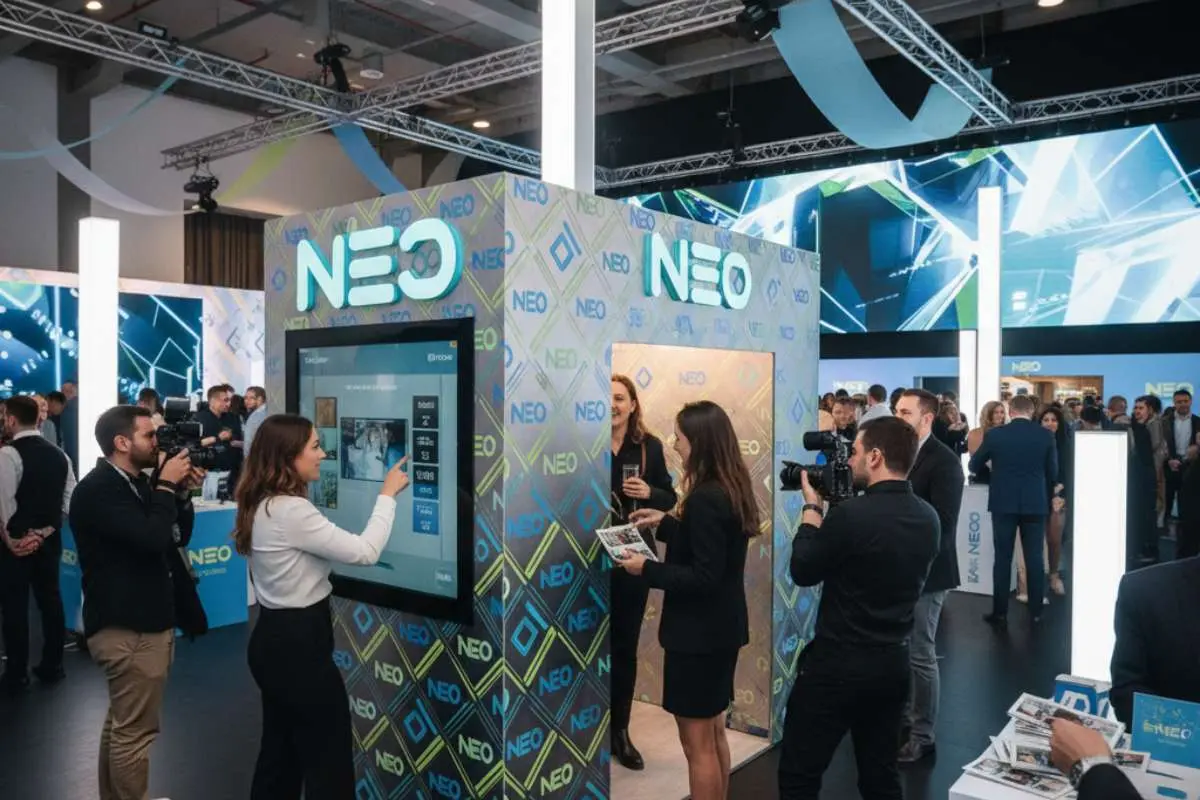
People stop walking past a booth and start lingering once there’s something to actually do. And once someone’s standing there waiting their turn, your brand rep finally has an opening, an actual conversation, not just a flyer handed off mid-stride.
Dwell time at booths can roughly triple by adding one single thing that attendees can physically do.
More time on site, more conversation, more leads, more chance someone remembers your brand instead of mixing it up with the one or two booths down. Small change, bigger payoff than it should be, honestly.
Photo Booths Aren’t What They Used to Be
A lot of people still picture the curtain and flash setup from a school dance, which is at least a decade out of date by now.
Current setups run branded templates, instant phone sharing, QR downloads, GIFs, boomerangs, 360 capture, and even a live gallery streaming on a screen while the event’s still happening around it.
What’s interesting, and most brands haven’t fully clocked this yet, is that a photo booth rental Toronto setup has quietly turned into something closer to a content engine than a party rental.
No photographer on retainer. No art director. No separate content line item in the budget. Just a steady stream of on-brand photos that people are choosing, on their own, to keep and share.
What AI Has Done to “Personalized”?

AIs have made a kind of personalization possible now that used to need a full creative team and a week’s lead time. Custom backgrounds, branded avatars, themed transformations generated on the spot, tailored to whoever happens to be standing in front of the lens at that moment.
Picture a software company at a launch, letting people generate themselves as some branded “future of work” character right there. Far more memorable than a static backdrop, and it scales without anyone touching Photoshop.
An AI photo booth rental setup has made that kind of thing affordable even for brands without six figures sitting around for an activation.
The Free Experiential Marketing Nobody Budgets For
Every photo someone posts is a tiny ad you didn’t pay for. People like sharing flattering or funny photos of themselves, and if branding’s sitting quietly in frame, that’s reach you can’t really buy outright.
Add a hashtag, and suddenly there’s a way to track impressions you’d otherwise have zero visibility into.
Depends on the design, though. Tacky templates don’t get shared, no matter how good the tech behind them is. Nail the design, and the multiplier on visibility can dwarf whatever the activation cost to begin with.
What an Audio Guest Book Catches Those Photos, Miss?

Experiential Marketing Photos aren’t the only format worth grabbing. An audio guest book lets someone leave a spoken message instead: a testimonial, feedback, a congratulations, whatever the moment calls for. A recorded voice does something a photo can’t: the pauses, the laugh in the middle of a sentence.
For a business, that means real testimonials, honest appreciation messages from staff, contest entries- none of it pulls anyone off their actual job to manage.
Where the Payoff Actually Shows Up?
Trade shows get more traffic and better leads. Conferences get people actually participating instead of watching from the back. Launches get organic sharing that nobody had to ask twice for.
Galas get more engaged staff. Networking events break the ice faster than small talk manages on its own. Community activations pull in more interaction than a flyer ever did.
Whether It Was Worth It?
The tricky part is that most businesses don’t track this consistently: dwell time, impressions, and what happens after the event ends.
The ones that do tend to find the case makes itself anyway: more leads, more impressions, better recall weeks out, higher numbers on the post-event survey, almost nobody reads.
Doing It Right
Know what you actually want before booking anything. Make the branding feel custom, not stock. Give people an actual reason to share.
Train staff to use the moment instead of standing near it doing nothing. Capture the data; the content’s only half of what you paid for.
Experiential Marketing isn’t a phase that’s about to pass. It’s where attention already went. Photo booths, AI-generated content, audio guest books- all of it gives a business a real way into that shift, one moment at a time, nothing fancier than that.