Whether you run a commercial kitchen or an agricultural venture, establishing a consistent propane tank inspection frequency can help your business lower its energy bills, maintain operational continuity, and safely power a wide array of equipment. By keeping a close eye on your fuel reserves, you ensure that you never lose the cost and environmental advantages of propane.
Maintaining reliable fuel levels means you never lose the advantages of propane. Therefore, understanding inspection frequency, seasonal shifts, gauges, cylinder weights, water tests, Remote Telemetry Units (RTUs), and safety practices ensures a steady supply.
Inspection Frequency for High-Demand Operations
Not all businesses consume propane at the same rate. Tailoring your propane tank inspection frequency to your workflow will help you catch low fuel levels before they impact service.
For example, if you run a restaurant, agricultural business, or even a hotel, you’re going to use more propane than smaller establishments. You also have to consider peak demand seasons, which increase operations, such as cooking, guest water heating, and crop management. With these considerations in mind, inspect your propane levels weekly during the off-season and daily during busy seasons.
Since these sectors rely on an uninterrupted supply, you should reorder tanks when your current supply is at 40% to prevent downtime.
These sectors can also experience volatile fuel consumption patterns, especially agricultural operations, where grain drying can deplete tanks quickly during harvests and frigid winter seasons. Failing to monitor your propane levels can result in frozen equipment, ruptured pipes, or catastrophic crop loss.
Considerations for Home-Based Businesses

Many home-based businesses also rely on fuel-efficient propane, such as home bakeries, small catering operations, woodworking shops, and pottery studios.
If you run a home-based operation, learn how to tell if a propane tank is empty by performing a simple DIY water test.
Fill a cup with warm or hot water and pour it over the external side of the propane tank. Next, run your hands over the metal surface to check for cool spots. Since propane absorbs heat so quickly, the metal will instantly feel warm above the fuel line and cool below.
If the “cool area” is noticeably larger, it’s probably a good time to reorder.
Standard Commercial Propane Needs
Corporate offices and fulfillment warehouses that use propane experience more predictable fuel use patterns. These tanks only need to be checked once a month or once a week. To ensure uninterrupted workflow, reorder when your tanks hit 30% capacity.
Confirming Propane Fuel Levels

When establishing your propane tank inspection frequency, verifying actual fuel levels is best done via the built-in dial gauge positioned under the protective metal dome at the top of the tank. This gauge uses a magnetic float mechanism to measure liquid levels inside the tank, providing a volume percentage. If the gauge dial reads 80%, the tank is full, as propane tanks require remaining space for gas expansion.
Some propane tanks don’t have floating mechanisms inside. Instead, they come with magnetic strips or ultrasonic stick indicators attached to the outer shell of the tank. These external gauges read the tank’s temperature and pressure, changing colors or displaying digital calculations to measure exact propane liquid levels.
Construction and warehouse equipment, like forklifts, often require 20-lb to 100-lb propane tanks. In these cases, the physical weight of the tanks is used to measure propane levels.
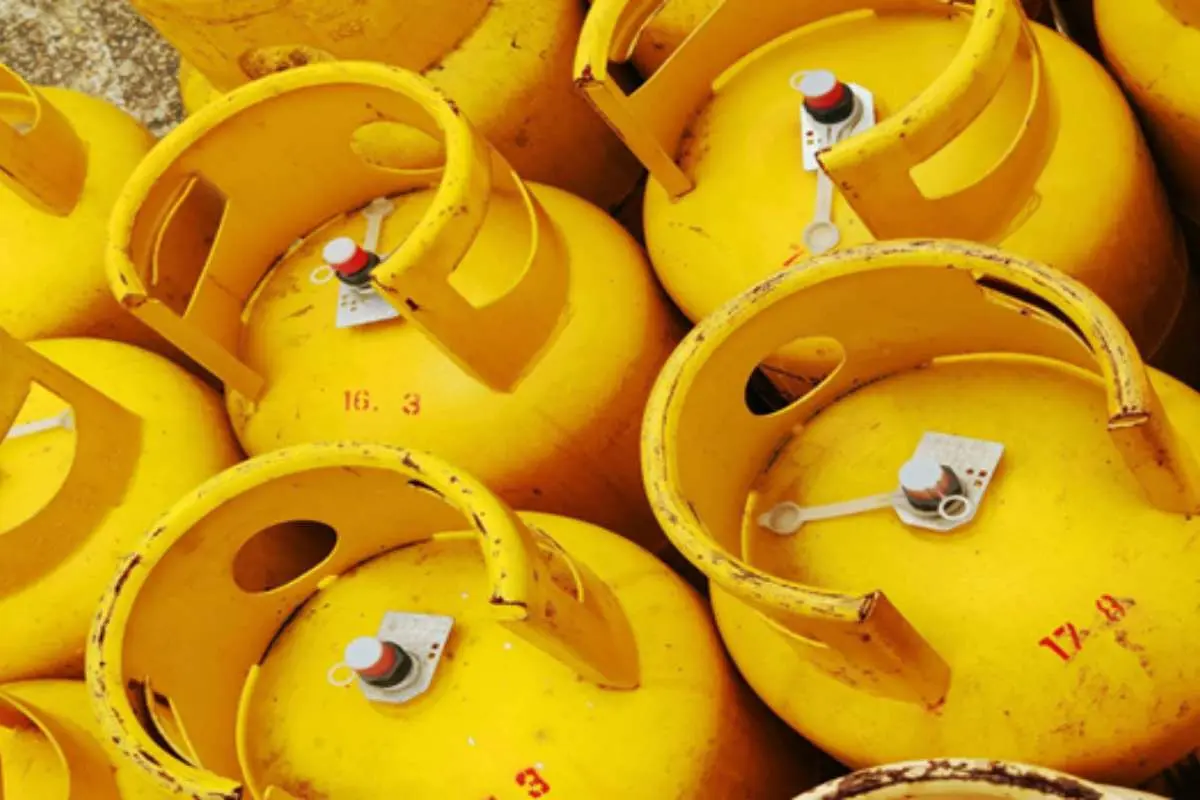
Every propane cylinder has an empty weight, known as the Tare Weight (TW). The TW value is stamped on the metal collar.
To find the remaining fuel level, you need to disconnect the tank and place it on a scale. Subtract the TW number from the scale number to find the usable fuel level.
You can also find accurate propane levels without handling your tanks at all.
Remote Telemetry Units (RTU), with Bluetooth sensor technology, can be attached to the base of the tank or the dial gauges inside the tank. RTUs continuously track fuel levels while transmitting real-time data to a fuel management dashboard. Managers receive instant alerts when levels drop below a predetermined threshold.
Propane Safety Practices
When measuring propane levels, always keep safety in mind.
For instance, never fill the tank beyond the 80% mark. Propane expands significantly when temperatures rise. That remaining 20% allows for critical vapor expansion.
Always be aware of odors. Since natural propane is odorless, manufacturers treat it with ethyl mercaptan, a safety additive that emits a rotten egg smell when there’s a leak. If you smell this odor, don’t touch any equipment, evacuate the area immediately, and call an emergency service.
Propane tank storage needs plenty of ventilation, as well. Make sure they’re located at least five feet from open windows, building entry points, and mechanical ventilation systems.
Manage Propane Fuel Efficiency

Enjoy the cost advantages of this fuel by establishing a consistent propane tank inspection frequency and regularly analyzing gauges, RTU data, and cylinder weight calculations. Ultimately, putting safety first is the absolute priority, whether you are running a large commercial operation or managing a home-based business.
Discover even more articles for managing your business resources, from IT technologies and construction equipment to startup capital and inventory.