Owning a rental property often is viewed as a smart investment, but it can quickly become harder to manage without the right tools and systems. What appears manageable on paper can break down in practice when even a single missed payment, a difficult tenant, or an unexpected vacancy disrupts both income and day-to-day operations.
If you jump in with no plan or process, the reality sets in fast: tenant communication, listings, paperwork, and rent tracking all competing for your time at once.
Managing everything alone leads to long hours and stress, while hiring a property management company can take a meaningful cut of your rental income. As portfolios grow, staying organized becomes harder, and rising tenant expectations add even more pressure, leaving landlords stretched between time, money, and control.
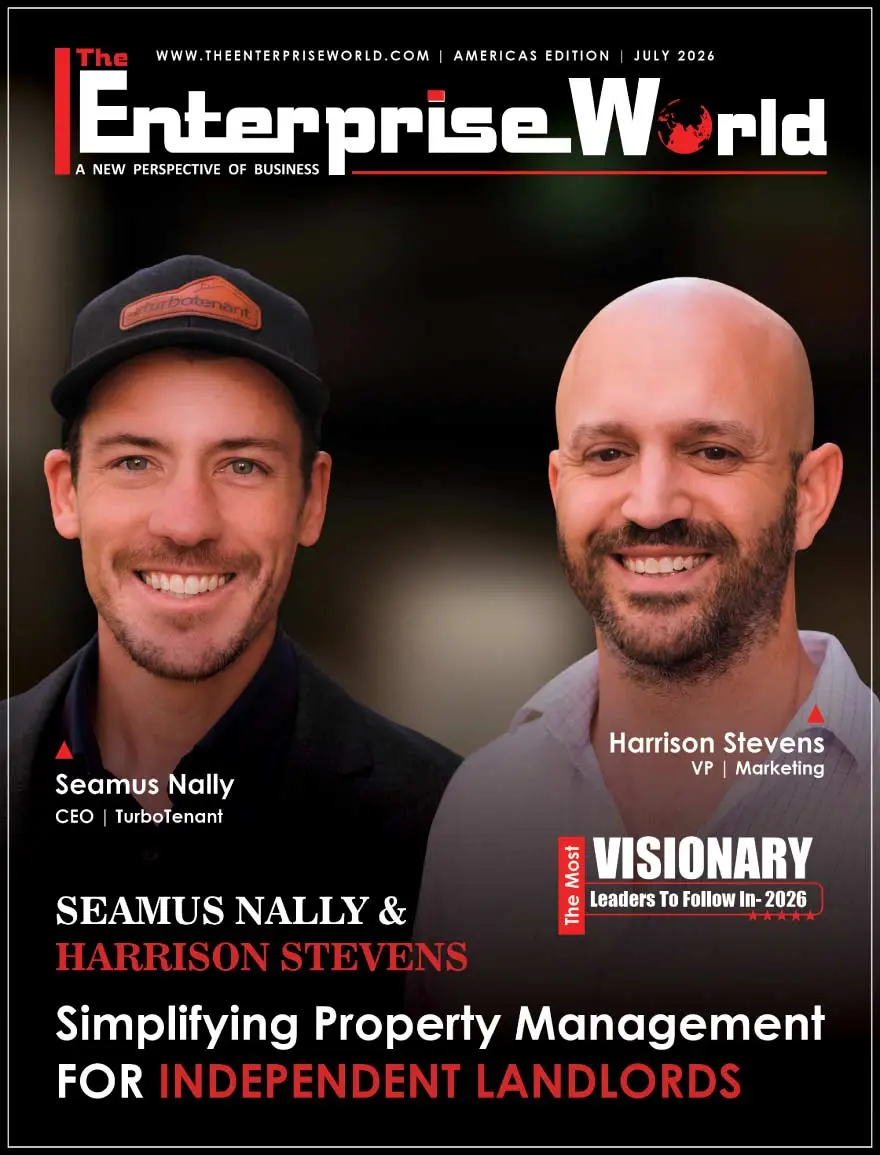
Seamus Nally, CEO of TurboTenant, and Harrison Stevens, VP of Marketing, are tackling this problem head-on by rethinking how property management should work for independent landlords. Seamus leads the platform’s direction, shaping it into a modern, end-to-end solution that supports landlords at every stage. Harrison focuses on ensuring that vision translates into real value for landlords, drawing from both his professional background and his own experience as a landlord.
Together, they are building a system that reduces complexity, lowers costs, and gives landlords greater control. This impact is reflected in the platform composed of over 1 million landlords, a signal of both demand and trust among users.
By reducing traditional property management costs from nearly 10% of rental income to little or none, they’ve delivered meaningful financial value at scale while making it easier for rental property investors to operate with confidence.
Targeting the Overlooked Market of Independent Landlords
TurboTenant stands out in the property technology industry by focusing on a segment often overlooked: independent landlords managing between one and hundreds of rental units.
While many software providers prioritize large enterprise portfolios, TurboTenant is purpose-built for individual landlords who need professional-grade tools without the cost or complexity of traditional solutions.
Key strategies include:
- Freemium model: Landlords access essential features at no cost, lowering the barrier to entry
- Premium features: Optional tools that scale alongside landlord needs
- Transparent pricing: No hidden fees — just clear, predictable pricing that is priced to help you scale your portfolio
The Start of TurboTenant

Seamus Nally explained that TurboTenant was inspired by a clear gap in the property management market identified by its founder, who was a landlord himself.
At the time, most software solutions catered to large property management companies and institutional investors, leaving independent landlords underserved and forced to rely on fragmented, manual processes.
To address this gap, TurboTenant was built from the ground up for independent landlords. The platform combined a thoughtful and practical approach, bringing together the simplicity of consumer software with the functionality needed to run a rental business.
It provided the tools necessary to manage properties efficiently and professionally, without the traditional cost barriers.
The initial focus was on solving vacancy-related challenges, a critical pressure point for landlords. By helping landlords list properties, screen tenants, and quickly secure reliable renters, TurboTenant established a strong foothold in the market.
That early traction laid the foundation for what would become a broader, more comprehensive platform.
Stepping Into the CEO Role During a Critical Time
Seamus Nally faced one of his most defining leadership moments in August 2021 when he stepped into the CEO role following the founder’s departure. This transition came at a pivotal time, as the market was beginning to demand more comprehensive solutions beyond vacancy management.
To meet these evolving expectations, the company needed to expand its vision and capabilities. It required both strategic clarity and decisive execution.
Drawing on his experience as Chief Product Officer, Seamus Nally led the transformation of TurboTenant from a point solution into an all-in-one platform that supports landlords throughout the entire rental lifecycle, from tenant acquisition to ongoing management and move-out.
At the same time, he focused on reshaping the company’s internal culture. Taking the helm of an established organization required balancing continuity with change, preserving what worked while introducing new principles that reflected his leadership philosophy.
This effort led to the creation of the “Be Better Virtues,” which now serve as a guiding framework for how the team collaborates, innovates, and scales.
A Defining Shift in the Company’s Trajectory
When asked about a defining moment that changed TurboTenant’s trajectory, Seamus pointed to a major inflection point nearly four years ago.
At that time, the company made a deliberate decision to reposition itself in the market. Instead of being perceived as a collection of individual tools, TurboTenant established a clear identity as a complete, all-in-one platform purpose-built for landlords.
This shift extended far beyond a messaging update. Product development and brand communication were aligned to ensure a consistent experience, making it easier for landlords to understand and adopt the platform’s full value. The result was a stronger, more cohesive market presence.
As that foundation took hold, the company entered its next phase of growth, one driven by sharper positioning, stronger storytelling, and increased market visibility. That momentum accelerated with the addition of Harrison Stevens, who joined to lead marketing and further define how TurboTenant shows up in the market.
Scaling the Vision Through Marketing

Harrison Stevens began his professional journey at the intersection of design and development, focusing on building digital products from the ground up. As those products moved closer to market, he became increasingly involved in positioning and go-to-market strategy, a shift that naturally pulled him into marketing.
Over time, he built a career across multiple industries, primarily within B2C and subscription-based businesses, developing a strong understanding of customer behavior and value creation.
In parallel, Harrison Stevens became actively involved in real estate as an investor and landlord, gaining firsthand exposure to the operational and strategic challenges landlords face, particularly when operating without structured tools or reliable support systems.
TurboTenant became the intersection of those two worlds.
As both a user of the product and the leader behind its market positioning, Harrison Stevens brings a practical, customer-first perspective that has been instrumental in scaling the platform, refining its narrative, and strengthening its position in the market.
Flexible Solutions for Different Levels of Landlord Involvement
Seamus highlights a broader shift underway in the rental market: more landlords are choosing to take control of their own property management. This trend is driven in part by frustration with traditional management services, which are often perceived as expensive, opaque, and misaligned with landlord needs.
In response, TurboTenant is building solutions that offer greater flexibility and control. Landlords can choose to manage their properties independently or leverage automation and managed services as needed.
This hybrid model allows landlords to tailor their level of involvement based on their time, experience, and goals.
At the same time, tenant expectations are evolving. Today’s renters expect seamless digital experiences, from online payments to fast communication and mobile accessibility. Landlords who fail to meet these expectations risk lower satisfaction and increased turnover.
Additionally, advancements in artificial intelligence are beginning to reshape the industry. AI-powered tools are streamlining operations, reducing manual work, and improving decision-making.
TurboTenant is focused on integrating these technologies in practical ways, ensuring they reduce complexity rather than add to it, and ultimately improve the experience for both landlords and tenants.
Real-World Guidance for Landlords

Seamus and Harrison Stevens also contribute to thought leadership in property technology, focusing on education and empowerment.
They recognized early on that most landlords lack formal training, often learning through trial and error. In response, they built a content ecosystem designed to give landlords practical, real-world guidance.
- “Be a Better Landlord” podcast and YouTube series covering rent collection, tenant screening, and landlord-tenant relationships
- “Landlord Lens” podcast and YouTube series covering industry updates, regulatory changes, and market trends
- Contributions to external publications and podcasts highlighting technology’s role in modern property management
Together, these initiatives help landlords operate with more confidence, make better decisions, and understand how technology can simplify and professionalize their business.
A Track Record That Speaks for Itself
TurboTenant’s growth and impact haven’t gone unnoticed. As the platform has expanded, so has its recognition across the industry.
The company was named Rental Property Management Software Company of the Year (2025), a reflection of its growing influence in the space. It was also included in the 2026 Capterra shortlist, highlighting both product quality and usability.
Recognition from users and industry platforms continues to reinforce that momentum. TurboTenant was named a 2026 Best Real Estate Software Product by G2, underscoring strong performance and customer satisfaction.
Beyond product recognition, the company has been featured in a Trending Today documentary, highlighting its role in reshaping the property management landscape, and has earned multiple Best Places to Work awards, reflecting a strong internal culture.
That growth is also reflected in its continued presence on the Inc. 5000 list, signaling sustained momentum and a company that is steadily gaining ground.
Building for What Comes Next
TurboTenant’s growth strategy is grounded in a clear ambition: to become the leading landlord software platform in the United States. The company is expanding through a mix of partnerships, acquisitions, and organic growth, with a focus on strengthening both its product capabilities and market reach.
A key driver of that growth is its network of listing partnerships. By syndicating properties across dozens of rental listing sites such as Apartments.com, Redfin, Rentler, Rent.com, and Craigslist, TurboTenant increases visibility and demand for its users’ listings in a meaningful way.
These partnerships continue to evolve, with a focus on deepening existing relationships while unlocking new distribution channels.
Together, this approach supports sustainable, long-term growth and positions TurboTenant to expand its influence across the broader landlord software ecosystem.
Advice for Emerging Leaders

Seamus and Harrison Stevens encourage emerging leaders in property technology to maintain a clear and disciplined focus.
They emphasize the importance of identifying a specific audience and building solutions around real, unmet needs, rather than trying to serve everyone at once.
This level of focus, they note, is what ultimately drives differentiation and long-term success. They also stress the importance of building a sustainable business model from the outset. Companies that achieve early profitability and deliver real customer value
Seamus and Harrison’s 5 Impactful Business Mantras
- Simplify to Empower: Turn complexity into clarity, giving users the confidence and control to take action.
- Listen to the Customer: Ground every decision in real customer experience, using it to shape both product and strategy.
- Focus on the Underserved: Prioritize overlooked markets and build solutions specifically designed for their needs.
- Lead Through Action: Drive meaningful change by aligning culture, strategy, and execution.
- Build for Sustainable Growth: Create systems and business models that prioritize long-term value over short-term gains.