Learning how to spot dry rot early is essential, as this deeply concerning form of decay starts quietly and slowly breaks down structural elements. The formation of fungi in a window frame crack or beneath a slightly soft floorboard may not seem like a serious issue at first, but it can quickly turn small repairs into a major restoration project. The earlier you identify the problem, the more you can save on repair costs.
Dry rot generally travels through masonry, behind plasterwork, and across metal surfaces, aggressively consuming new wood. If you notice any unusual changes to your home’s timber structures, get a contractor for dry rot and wood damage repair. A professional can identify hidden issues, locate the source of moisture, and recommend the right solution to protect the property’s structural integrity and value.
Dry Rot Spreads Faster Than You Think
Dry rot, or Serpula lacrymans, is a cord-forming basidiomycete fungus that thrives in damp conditions. Primarily caused by inadequate maintenance and moisture in the wood, it spreads through spores and thrives in dark, unventilated voids and cavities under floors, behind walls, and in ceilings.
Because most of it occurs out of homeowners’ sight, they generally remain unaware of the hazardous internal decay that’s affecting their property and their family’s health. Leaking pipes, poor ventilation, roof damage, condensation, and overflowing gutters create optimal conditions for the fungus to grow and colonize. Fixing the moisture source is just as critical as repairing damaged wood.
Signs to Spot the Presence of Dry Rot

Spotting dry rot early can help property owners not only limit fungal infestations but also reduce mold- and moisture-related property risks. The usual signs typically include the appearance of cotton-wool-like white or grey spots, an unusual damp, earthy, mushroom-like smell, and wood that easily shrinks, crumbles, or cracks into small, dry, cube-like sections. Here’s how to keep an eye out for these warning signs:
Changes in the Wood Texture
Knowing how to spot dry rot starts with checking if your wood feels soft, spongy, or brittle. Press the suspicious areas around window frames, floorboards, or skirting boards to see if they feel firm or crumble easily. If the timber sounds hollow and breaks down into a dry powder, it is clear that the wood has lost its density and structural integrity.
Mushroom-Like Fruiting Bodies
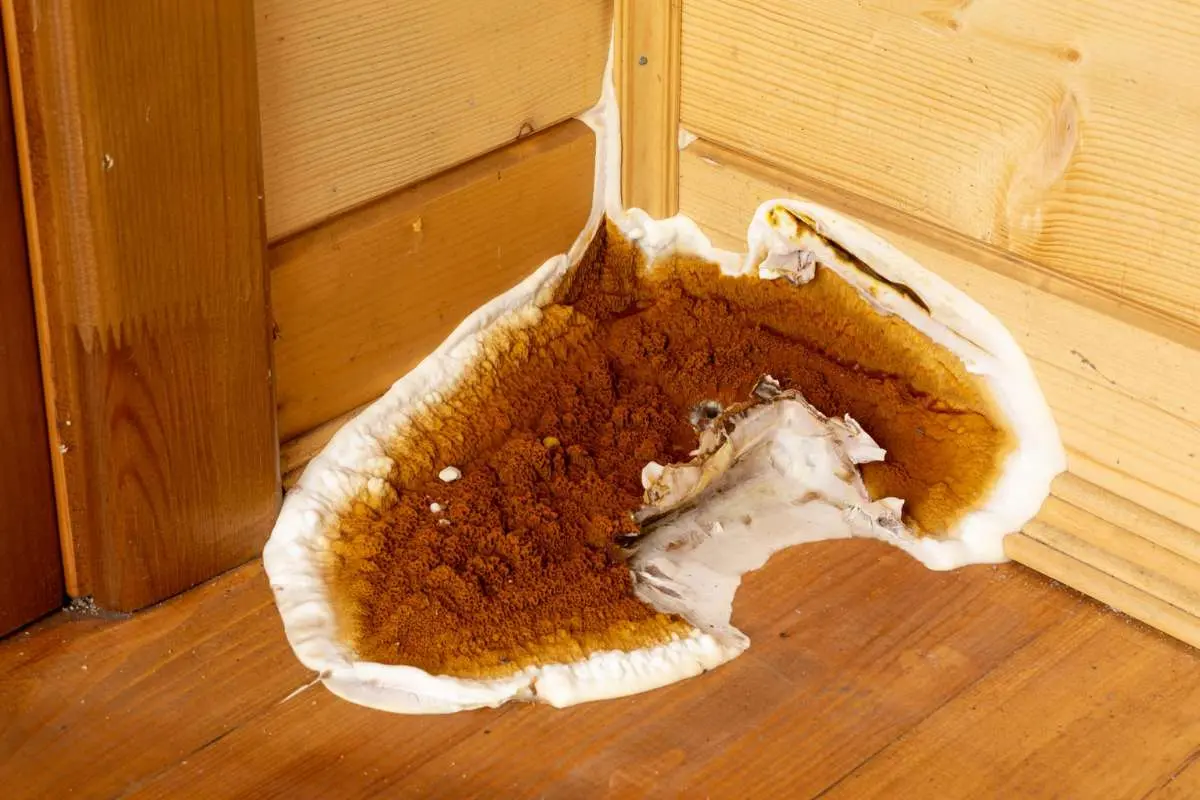
Mushroom-like fruiting bodies, or sporophores, are very distinctive and can appear in varied shapes and sizes. These are red or orange, have a pancake-shaped center with whitish or lighter-colored edges, and generally occur when dry rot can no longer feed on wood.
Appearance of Mycelium
Mycelium is a cotton- or wool-like substance that develops inside the timber to break down wood for food. These fine, cobweb-like strands of fungal growth spread across materials, forming thick, white or greyish-white patches in humid, unventilated areas. These fungal growths can also develop sulfur-yellow and purple or lilac highlights.
Deep Cuboidal Cracking
Knowing how to spot dry rot involves looking for distinct structural changes, as unchecked fungal growth extracts moisture and nourishment from the wood cells. As a result, the timber shrinks, darkens to a deep brown, and develops deep cracks in block-like or cross-grain patterns. As the decay progresses, these splits break the wood into fragile, cube-like segments that crumble easily.
How to Check for Dry Rot?

Basic inspection for dry rot does not require specialized skills or tools. Conduct regular inspections to identify the issue early. Here’s what you should do:
- Inspect wood regularly and look for discoloration or cracks in window frames, exposed beams, decking, skirting boards, and wooden flooring.
- Gently press suspicious areas and check if they feel different or have an unusual odor.
- Watch out for moisture issues like peeling paint, water stains, bubbling wallpaper, or condensation.
- If you notice any signs of damage or fungal growth, schedule a professional inspection to identify and fix the hidden moisture issues.
Read Next: 6 Ways to Weatherproof Your Construction Site Effectively
Closing Note
Learning how to spot dry rot is critical because this type of decay doesn’t announce itself with sudden signs. The structural damage is usually slow, subtle, and easy to ignore. By paying close attention to moisture problems and gradual changes in wood color, homeowners can prevent the infestation from worsening and save their property from massive repair costs down the road.