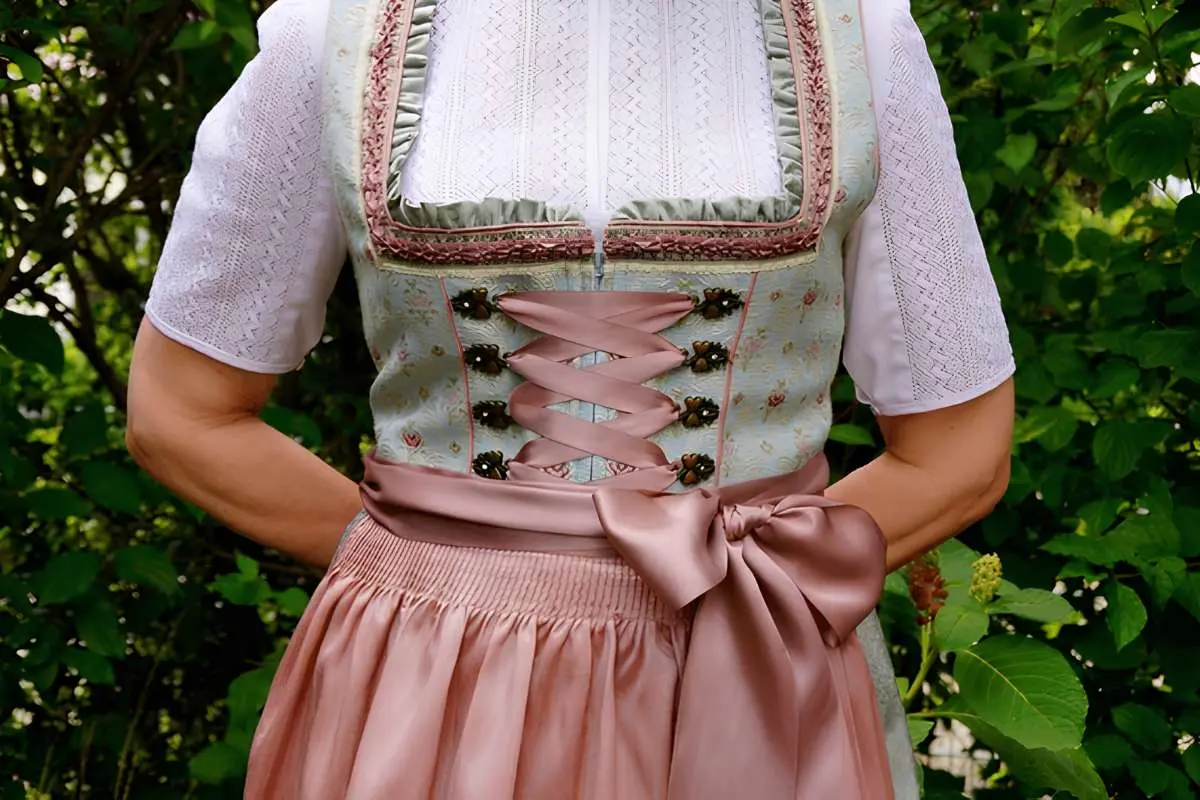
Wear an authentic dirndl with minimal traditional details (not flashy costumes), pair with the right blouse, choose midi length, tie apron, get a tight fit, and you are all set to attend Munich Oktoberfest without any faux pas.
Most dirndl guides online repeat the same four part apron bow code and call it tradition. Ask the people who actually run Munich’s traditional dress shops and costume preservation societies, and they rarely mention the bow at all.
What they judge instead about your dirndl dress is the fit, fabric, construction, and whether the whole outfit reads as one coherent piece rather than a costume assembled from a plastic bag. That distinction is the real secret when it comes to understanding how to wear a dirndl with true authenticity.
Rules of wearing a dirndl to avoid criticism from locals
Treat the dirndl dress as a traditional Bavarian garment rather than a costume, and no one will criticize you. Locals love it when visitors embrace their culture and wear Oktoberfest outfits with the right Bavarian styling.
Traditional dirndl obligations according to experts
The official Munich tourism board itself ran a feature that photographed nine real Oktoberfest visitors and asked two qualified judges to rate each outfit. One was Eileen Popielaty, a designer at the traditional costume retailer Angermaier. The other was Andreas Weinhart, a committee member of D’Wetterstoana, a Munich traditional mountain dress preservation society founded in 1912. Between them, they represent both the commercial and the heritage-preservation sides of Bavarian dress authority.
Across all nine outfits, the judges never once used relationship status, bow position, or apron symbolism as a criterion. What they judged, consistently, was:
What dirndl details were approved:
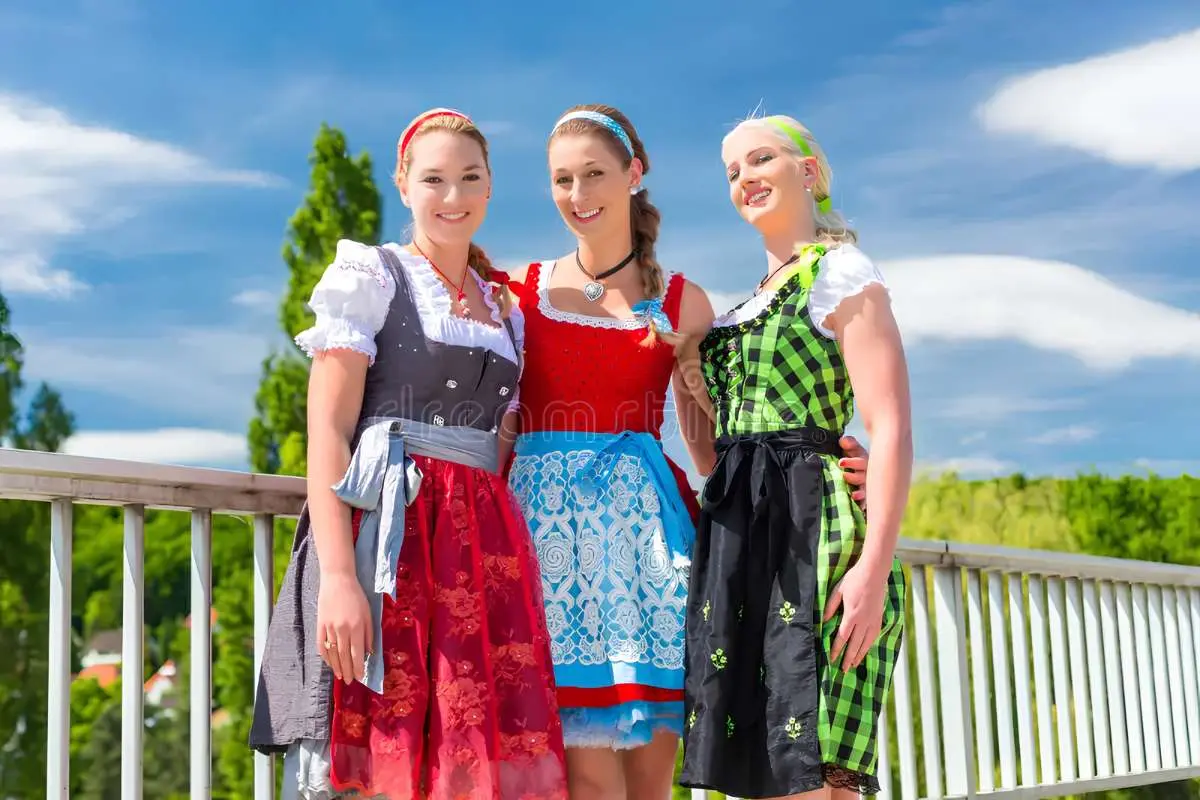
- A skirt that fell to the ankle or well below the knee read as a deliberate sign of respect for tradition
- A full, coordinated ensemble: matching hat, correctly colored knee socks, a charivari chain, visible lacing on the bodice
- Fabric and construction quality were good enough that the fit looked deliberate rather than cheap
- A blouse that sat close at the shoulder rather than off the shoulder
What earned criticism:
- Mini-length skirts, described directly as looking “more like a costume you would wear to a folk festival”
- Off-the-shoulder Carmen-style blouses, which the judges noted are a modern invention rather than a traditional cut
- Visibly cheap fit and finish, which any judge could identify at a glance as a lower-cost version
- Mismatched or non traditional details, like a checked shirt where a plain white one is expected, or single-color knee socks where two-tone is traditional
Things to remember when wearing a dirndl in a Bavarian setting
Understanding how to wear a dirndl starts with focusing on the core fundamentals emphasized by top Tracht brands like Lederhosens.com, Lederhosen Store, and Krüger Dirndl. These include choosing the right fit, pairing the dress with a complementary blouse, opting for a midi or maxi length, avoiding cheap costume fabrics, and styling with simple, traditional accessories. Once these essentials are in place, the rest of the details naturally follow.
Fabric and fit matter more than anything
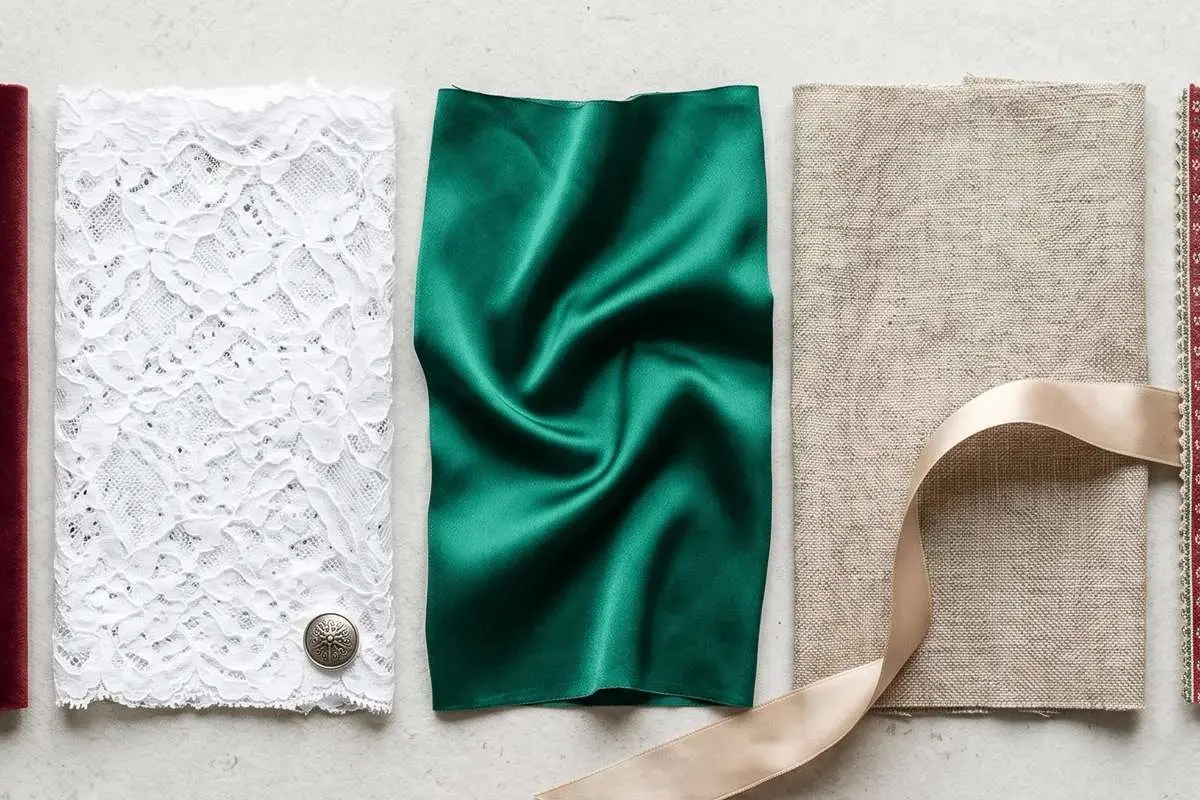
The material and construction of the garment matter more than any accessory choice. Cotton, linen, silk, and velvet are treated as the right fabrics for a dirndl.
Shiny polyester and flimsy zippers are treated as the clearest tell of a costume store purchase, visible in the fit even before anyone checks the fabric by hand.
When talking about dirndl etiquette, snug is better than loose, and the bodice should show no pulling or gapping at the waist or shoulder straps.
The knee length is the real hemline rule
Traditional dirndls fall at or below the knee. Long dirndl skirts signal that the wearer understands tradition. Locals criticize short and sexualized dirndls directly, even when the rest of the outfit is well made. Maxi or knee-length dirndl reads as more traditional, and anything cut for a “costume” silhouette above mid-thigh gets treated as exactly that, a costume rather than Tracht. Brands like dirndlonlineshop.com continue to embrace traditional German styling by offering dirndls inspired by this authentic Bavarian heritage.
A longer skirt signals that the wearer chose the garment deliberately rather than picking whatever was cheapest and shortest off a rack built for a different market.
Never skip the dirndl blouse and apron
Understanding how to wear a dirndl properly comes down to respecting its traditional construction. Wearing the dress without a trachten blouse and apron is one of the most critical styling mistakes you can make. Skipping these layers isn’t a modern artistic choice or a stylistic accident—the blouse and apron are core components of the original design. The goal isn’t necessarily to cover up, but to honor the complete three-piece structure: the bodice, blouse, and apron working together, rather than treating the outfit like a simple one-piece dress that only mimics the look from a distance.
Sewn originally to keep a women’s Bavarian dress clean while working, the apron is now the one piece nobody gets to skip. A dirndl missing its apron looks unfinished to anyone who knows what they’re looking at, regardless of how carefully the rest is styled.
Color follows the region, not a rulebook
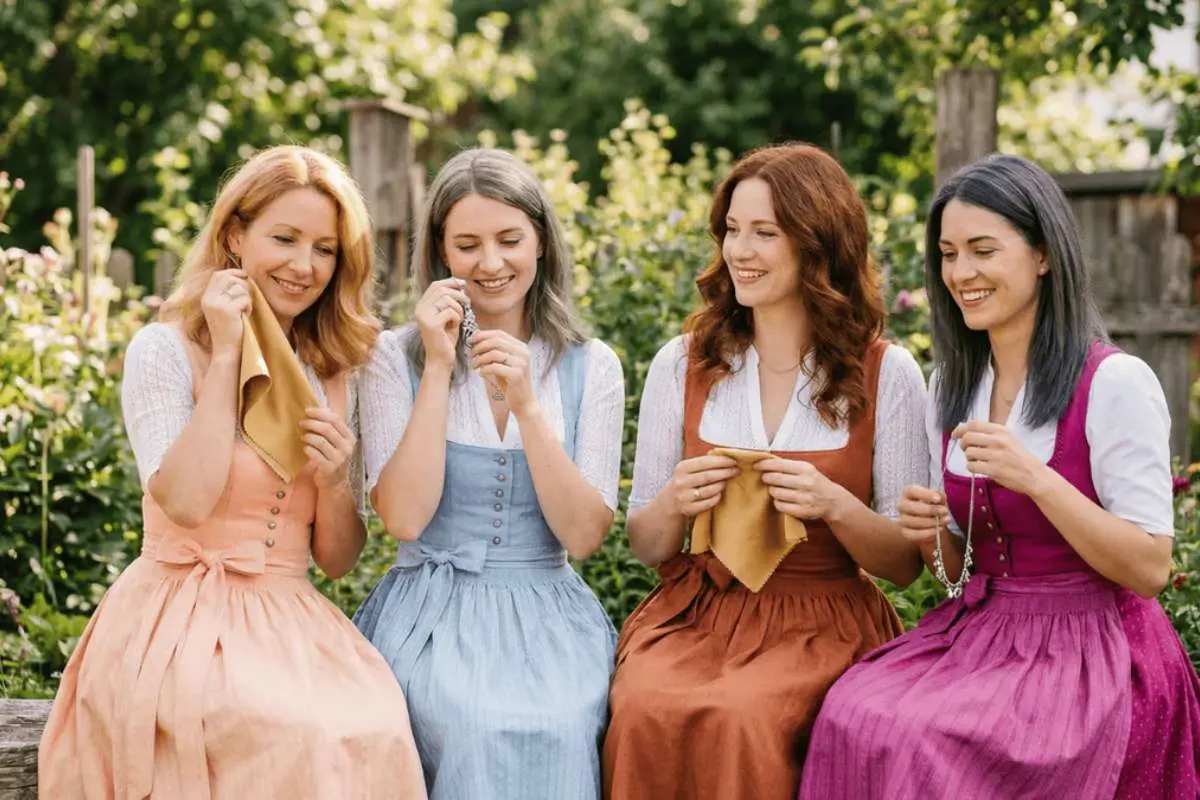
Munich buyers lean toward bright checks and florals. Just south, across the Austrian border, tastes run muted, closer to navy, forest green, and cream.
Neither is more correct. Bavarian designer Lola Paltinger, who dresses clients on both sides, treats this as a standing fact of the business rather than a point of debate.
Small, deliberate accessories beat loud ones
A charivari chain, one edelweiss or pearl necklace, small earrings, and a neat braided Oktoberfest bag are all you need to complete your dirndl look for Wiesn.
Across the Munich judging panel, restraint consistently outscored volume, and mismatched shoes or the wrong sock color was the detail that quietly undid an otherwise solid outfit.
Full-outfit coordination makes you stand out
A real Tracht outfit reads as a coordinated whole assembled from period-correct pieces, not a costume with one or two “traditional-looking” items added on top of a generic outfit.
The logic applies to women’s dirndl: matching accessories, an appropriate handbag style, and coherent color choices across skirt, apron, and blouse read as effort. A single traditional detail bolted onto an otherwise ordinary outfit reads as the opposite.
Buy an authentic dirndl dress to avoid looking like a costume
A well-made dirndl is made of genuine cotton, linen, or silk that costs a couple of hundred euros, and the difference in fit and finish is exactly what the locals notice first. Buy your authentic dirndl dress from trusted online stores, as they are more focused on tradition than on keeping up with fashion trends.
What the dirndl bow actually means, and what it doesn’t?
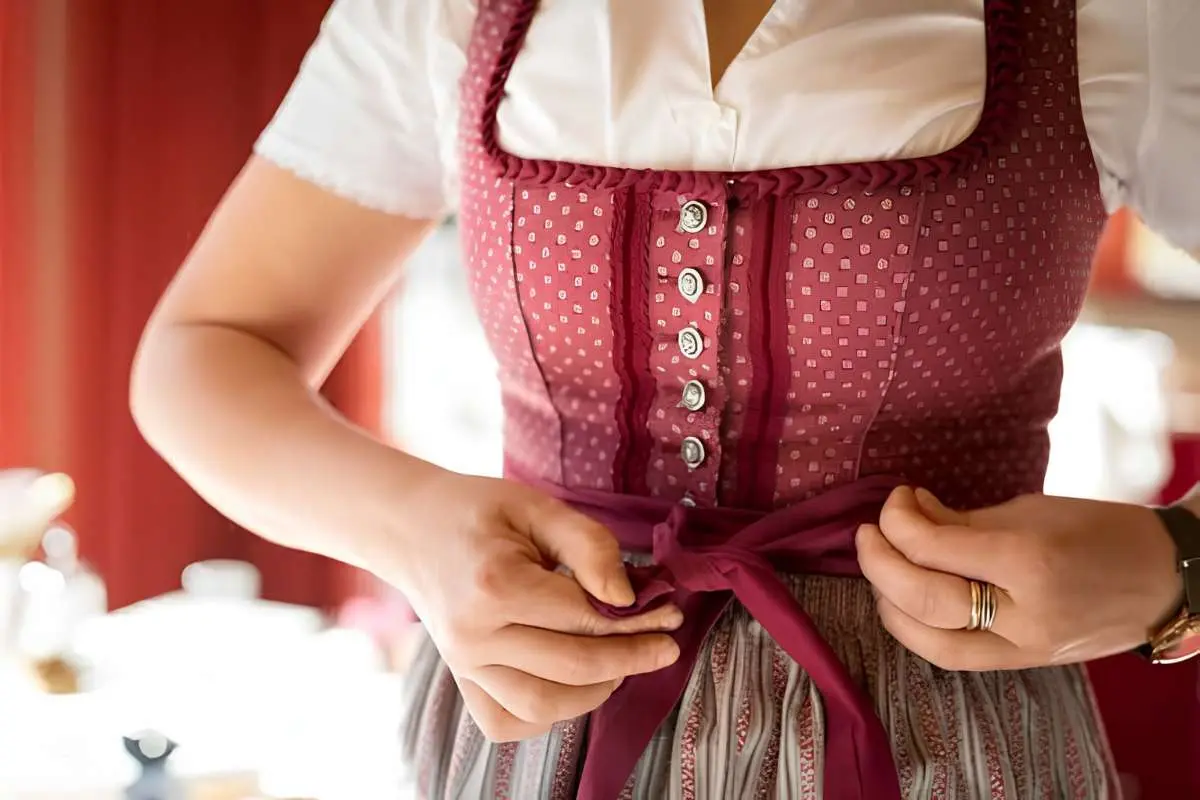
Multiple Bavarian costume researchers describe the apron bow’s relationship-status meaning as a relatively recent invention, not a folk tradition passed down for centuries.
Alexander Wandinger, a costume advisor for the Bezirk Schwaben’s official Trachtenkultur-Beratung, has stated publicly that rigid dress “dogmas” work against a living tradition rather than for it, and has separately dismissed at least one related Tracht myth as an invented story. Sources reporting on Wandinger’s research describe the bow code as gaining its popular relationship-status meaning only from the 1980s onward, well after the dirndl’s own 19th century origins. Before that, women tied the apron wherever practical, front or back center, without using position to signal anything about their love life.
Katrin Weber traces the code specifically to a fashion magazine that printed the left-right coding in writing for the first time, after which it hardened into an assumed rule. Her assessment is blunt that the dirndl bow code has no real connection to actual Bavarian or Franconian tradition, regardless of how widely it’s now believed. But modern interpretations from Dirndl Delights and other fashion forward traditional clothing stores widely use the bow concept as an essential part of wearing a dirndl.
The modern bow code
- Left Side: Single and available.
- Right Side: Married, engaged, or in a committed relationship.
- Front/Center: Undecided or prefers not to disclose their status.
- Back/Center: Signifies a widow, or a waitress
Key takeaways
Skip the anxiety over which side to tie your bow. Nobody’s grandmother is watching, and the code you read about probably started in a magazine rather than an Alpine village. When learning how to wear a dirndl, earning real respect at a festival table comes down to something much simpler and more concrete. Choose an Oktoberfest outfit with a structured bodice and a hem that hits the knee, opt for natural fabrics over shiny synthetics, and never skip the blouse and apron. That’s the real code. Every Bavarian designer, costume researcher, and Wiesn visitor agrees on it far more than they agree on any bow position.