Key Takeaways:
- AI demand is reshaping the memory-chip market
- CXMT is becoming a serious alternative in global memory supply
- Apple must balance supply-chain resilience with geopolitics
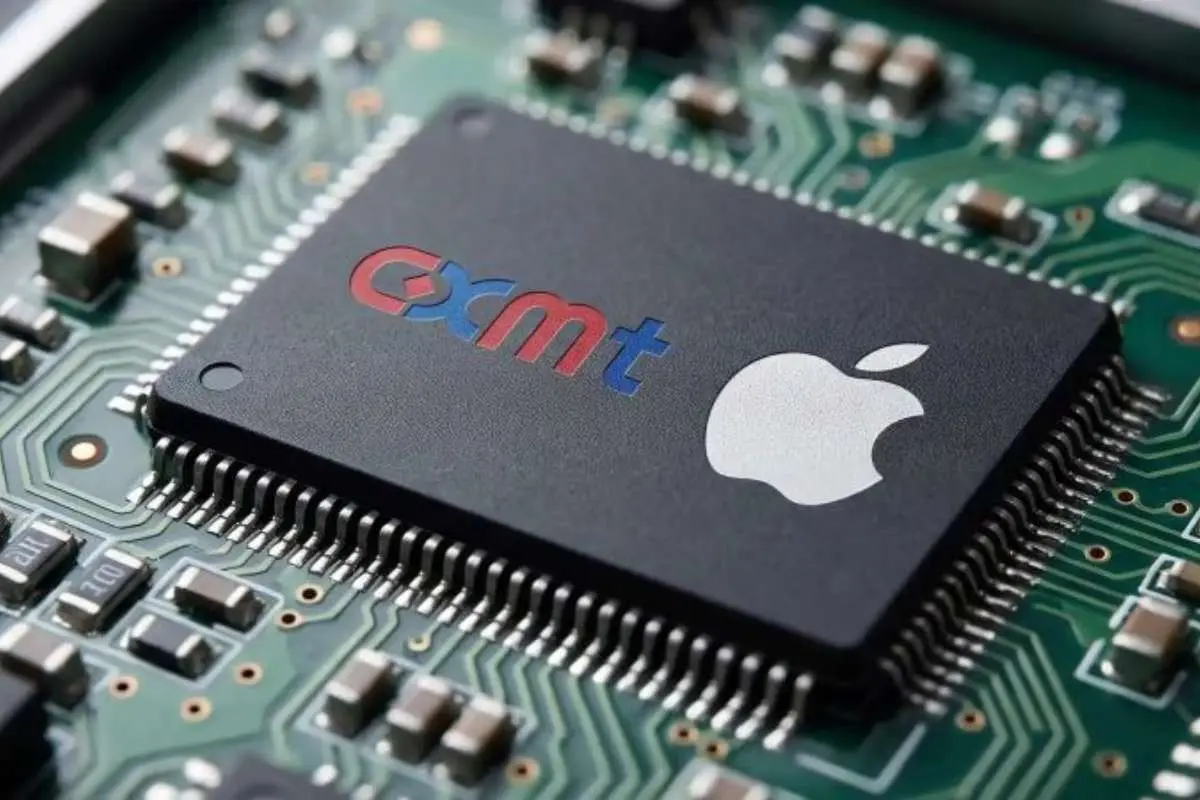
Apple is testing CXMT memory chips — produced by China’s ChangXin Memory Technologies — for potential use in iPhones and MacBooks, as a surge in artificial intelligence infrastructure spending tightens global supplies of memory components.
The reported move could give Apple another potential source of memory at a time when semiconductor manufacturers are facing growing demand from AI data centres. The company is understood to be evaluating CXMT memory chips, specifically its low-power DRAM chips, which are widely used in smartphones, laptops and other consumer electronics.
The reported discussions are initially focused on products intended for the Chinese market. However, Apple’s decision to test components from one of China’s largest memory-chip manufacturers could have wider implications for its global procurement strategy, particularly as memory availability and pricing become increasingly important factors for electronics companies.
The global memory market has come under pressure as AI companies build increasingly powerful data centres. These facilities require large volumes of advanced memory, diverting manufacturing capacity toward higher-performance products and leaving consumer electronics manufacturers competing for available supply.
The resulting supply constraints have contributed to rising memory costs. For Apple, which sells hundreds of millions of devices across its product portfolio, even relatively modest increases in component prices can have a significant impact on production costs.
Apple has not confirmed that CXMT chips will be used in mass-produced products. Testing and qualification are standard steps before a component can be approved for commercial production, meaning the evaluation does not necessarily indicate that a supply agreement has been reached.
CXMT expands its position in global memory market
CXMT has emerged as China’s leading DRAM manufacturer as Beijing pushes to reduce the country’s reliance on foreign semiconductor suppliers.
The company has been investing aggressively in manufacturing capacity and technology development. It operates multiple memory-chip production facilities and is pursuing further expansion in Beijing, Shanghai and Hefei. The planned investments could significantly increase its production capacity in the coming years.
CXMT’s expansion comes as the global DRAM market remains heavily concentrated among Samsung Electronics, SK Hynix and Micron Technology. These companies continue to dominate advanced memory production, particularly products required for high-performance computing and AI applications.
CXMT, however, has steadily increased its presence in the market. Its growing production capabilities have allowed it to supply CXMT memory chips to a wider range of electronics manufacturers, including international computer brands.
The company also secured substantial funding through a recent listing in Shanghai, giving it additional resources to expand factories and invest in semiconductor technology.
The rise of CXMT is strategically important for China because memory chips are essential components across smartphones, computers, servers and AI systems. Strengthening domestic production could reduce the country’s dependence on foreign suppliers while creating a larger Chinese alternative to established global memory manufacturers.
For Apple, CXMT could potentially provide another option as the company navigates a memory market increasingly affected by AI-related demand.
Apple faces supply-chain and geopolitical challenges
The potential use of CXMT memory chips also places Apple at the intersection of supply-chain requirements and growing US-China technology tensions.
US lawmakers have raised concerns over American technology companies working with Chinese semiconductor manufacturers, particularly companies that Washington believes could have links to China’s military or strategic technology programs.
Apple has faced increasing pressure to limit its exposure to Chinese semiconductor suppliers, even as China remains a major manufacturing base and an important consumer market for the company.
This creates a complicated strategic environment for Apple. Diversifying its supplier base could help the company manage shortages, control costs and reduce dependence on a small number of global memory manufacturers. At the same time, greater reliance on Chinese semiconductor companies could attract additional scrutiny from US policymakers.
The reported CXMT testing therefore represents more than a routine supplier evaluation. It reflects the broader changes taking place across the semiconductor industry as AI reshapes demand and companies seek greater flexibility in their supply chains.
For now, Apple’s evaluation of CXMT memory remains preliminary, and there is no confirmed indication, according to the official report, that the chips will enter mass-produced iPhones or MacBooks. The testing nevertheless signals the growing importance of Chinese memory manufacturers in the global semiconductor market.
As AI investment continues to absorb semiconductor capacity, consumer electronics companies are likely to face increasing competition for memory. Apple’s reported interest in CXMT illustrates how manufacturers may be forced to weigh technological performance and cost against supply security and geopolitical risk when deciding where their critical components come from.