Nobody plans for a fire marshal deadline. It shows up after a failed inspection, a tripped sprinkler head, or an alarm panel that stops responding, and suddenly a property manager has a countdown instead of a normal Tuesday.
The instinct is to start researching, comparing companies, and reading reviews. That instinct costs time you may not have. When the time frame is hours and not days, the property where a fire watch can be secured quickly and where the paperwork is a secondary concern is the property that will most likely remain operational.
This guide discusses what steps need to be taken when that time frame hits your office, when you need professional fire watch services, what a fire watch entails, and what happens when the time frame expires.
1. Why a Fire Marshal Imposes a Time Frame
A fire marshal deadline is not arbitrary. It reflects a judgment that the building’s normal fire protection cannot currently do its job, and until it can again, someone has to watch for what the system would otherwise catch. According to the Texas Department of Insurance’s State Fire Marshal’s Office, state and local fire marshals typically enforce their inspections against NFPA 1 and NFPA 101, the model fire and life safety codes most jurisdictions adopt in some form, and any deviation from those standards is treated as a deficiency requiring correction.
Structure fires remain common enough that this scrutiny makes sense. The National Fire Sprinkler Association reports the U.S. still averages around 500,000 structure fires a year, a number that has declined significantly since the 1980s but has not disappeared, which is part of why an impaired system is not something a fire marshal will simply overlook.
Common Triggers for a Fire Watch Order
A handful of situations tend to bring the fire marshal to your door with a deadline attached:
- A fire alarm or suppression system goes offline for testing, repair, or replacement
- A sprinkler riser fails, or a fire pump goes down
- Hot work such as welding, cutting, or brazing is planned or underway
- A failed inspection turns up a code violation tied to fire protection
- Construction activity temporarily disables part of the building’s fire systems
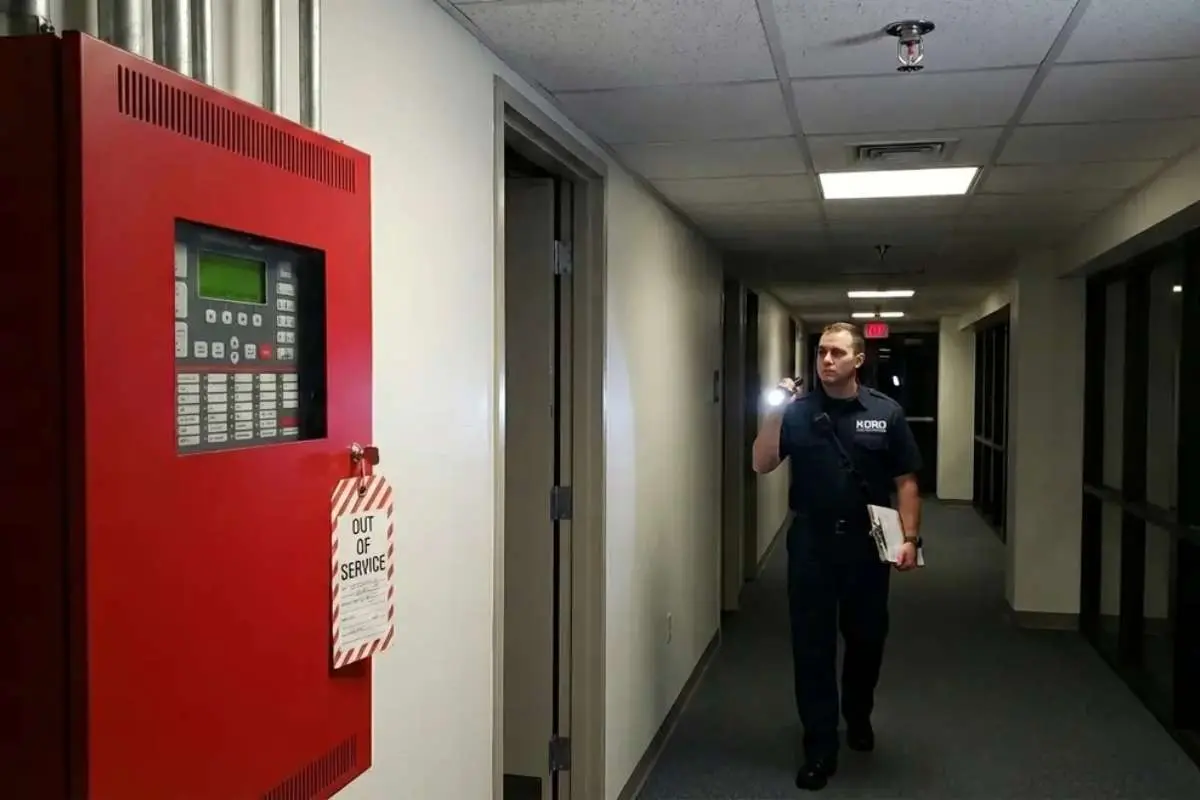
Whatever the trigger, the order usually comes with a window, and how you spend that window determines whether you stay open.
2. What to Do in the First Hour
1. Read the Order Carefully
Before making any calls, confirm exactly what triggered the order, what the deadline is, and whether the requirement is continuous coverage or coverage during specific hours. This detail changes what you need to ask for when you call a provider.
2. Call for Emergency Fire Watch Coverage Immediately
This is the step that actually buys you time. A provider with live 24/7 dispatch should be able to capture your address and the nature of the impairment on the same call and get a guard moving right away. The Fast Fire Watch Company built its dispatch process around a 3-hour response window specifically for situations like this, where the gap between the call and the guard’s arrival is the entire point.
Do not wait to compare five companies before making this call. Confirm one provider can meet the deadline, get them moving, and continue evaluating from there if needed.
3. Confirm What the Guard Needs to Document
Ask the provider what the patrol log will include and how it gets delivered to the fire marshal. GPS-tracked rounds and timestamped photos are the standard now, and a compliance packet at the end of the engagement is what actually satisfies an inspector who comes back to check.
3. What Happens During the Fire Watch
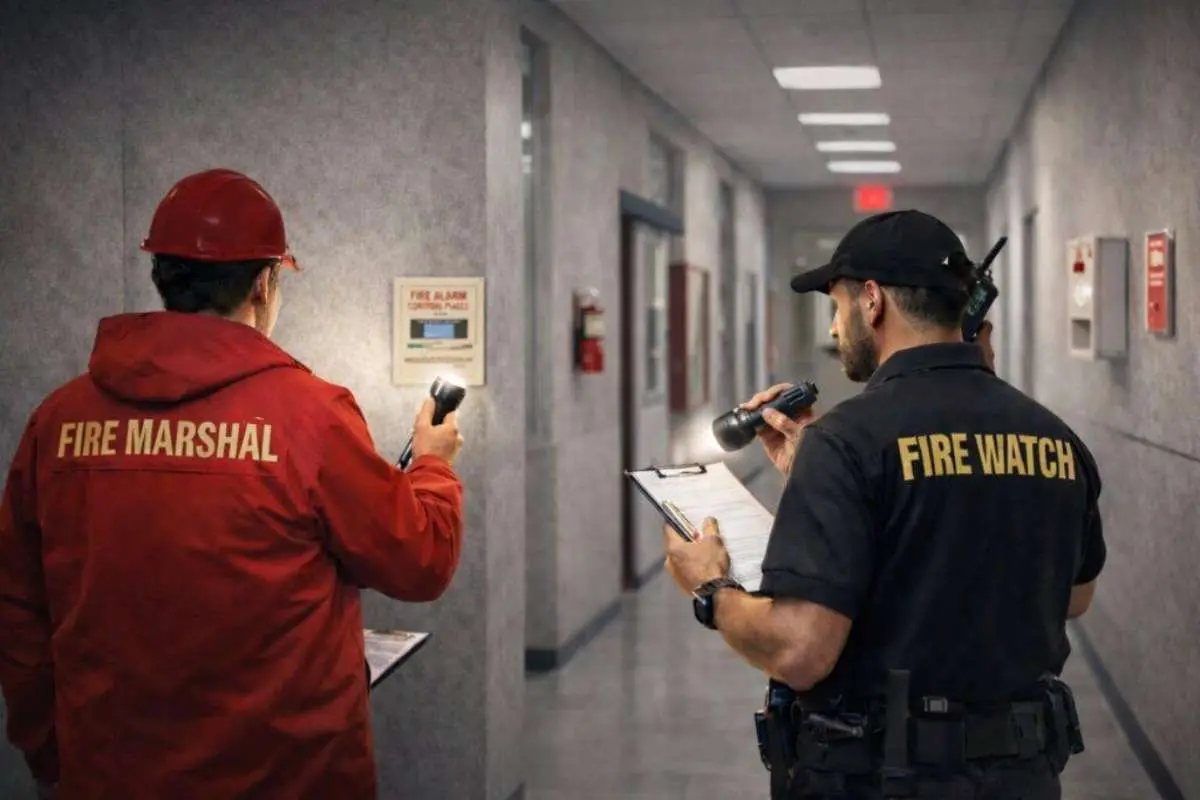
Once a guard is on site, the job is straightforward but exacting. They walk a set patrol route, watch for smoke and ignition sources, and log every round with a timestamp. They dial 911 and help evacuate in case there is a fire breakout.
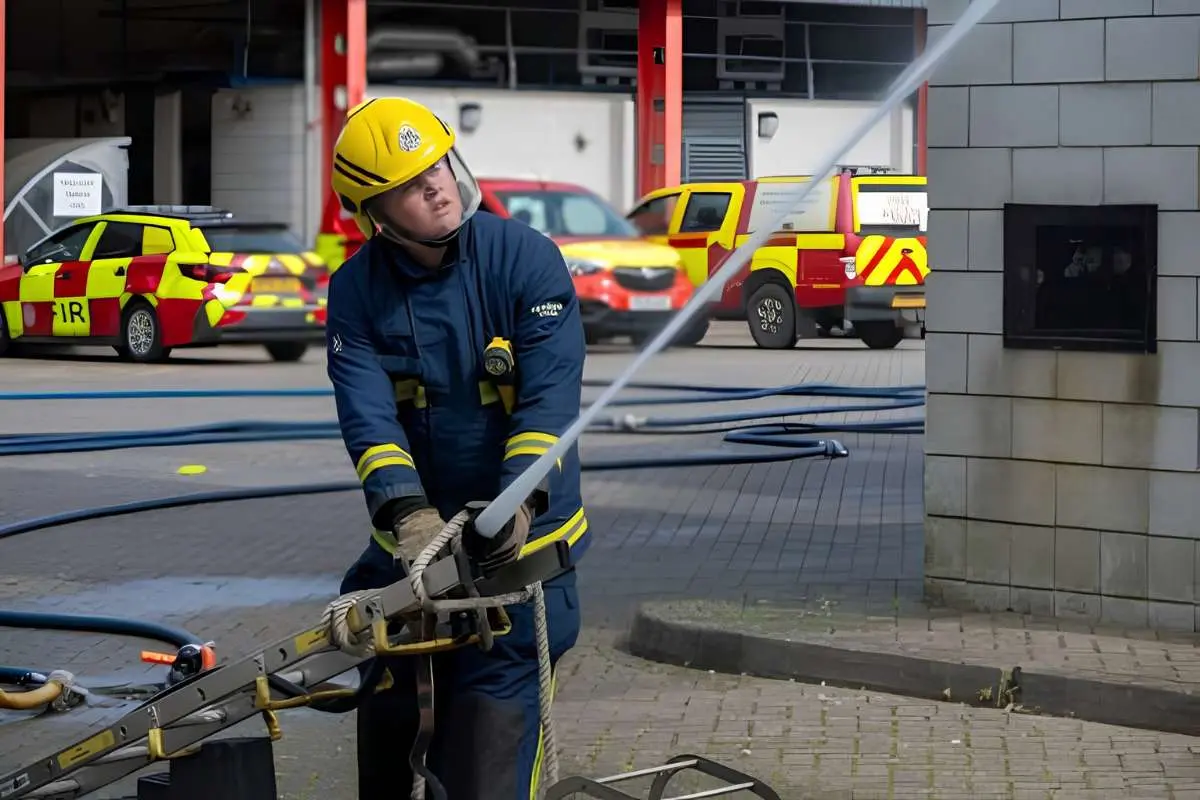
In accordance with OSHA 29 CFR 1910.252, the fire watch associated with hot work has to continue at least 30 minutes after the work is done, since the fire might smolder and ignite again unnoticed later on. The fire watch associated with malfunctioning of alarm/suppression systems continues until the system is fixed or the fire watch is officially called off by the fire marshal, which is why the rotation shifts are crucial for any engagement lasting for more than one day.
What Occurs after the Deadline Expires
The fire watch will not automatically come to an end once the repair is done or the hot work is done. The guard’s final logs, along with any photos and the compliance packet, go to the fire marshal as proof the property was monitored for the entire impairment window. A property that skips this step risks a second citation even after the underlying problem is fixed, since the paperwork is what closes the loop.
Insurance carriers may also request these records separately, particularly for larger commercial properties where a lapse in fire protection could affect a claim down the line. Keeping a copy of the full compliance packet on file is worth doing regardless of whether anyone asks for it right away.
Frequently Asked Questions
How fast can a fire watch guard actually get on site?
Providers with regional guard hubs and live dispatch typically respond in a few hours, including nights and weekends. Ask for a specific window on the call rather than a general estimate.
What if the deadline is less than 3 hours away?
Call immediately and be direct about the timeline. A dispatcher who works with fire marshal deadlines regularly should be able to tell you within minutes whether they can meet it.
Does the fire watch guard replace my normal security?
No. Fire watch is a dedicated compliance function focused specifically on fire monitoring and documentation, not general security duties, and the guard should not be assigned other tasks during the watch.
The Bottom Line
A fire marshal deadline is stressful mainly because it feels unfamiliar. It does not have to be complicated: read the order, call for coverage immediately, confirm the documentation standard, and let the guard do the rest. Companies like The Fast Fire Watch Company exist specifically for this moment, so use one, get your guard on site, and get back to running your property instead of watching the clock.
Also Read: Why Real-Time Alerts Matter in Fast-Moving Workplace Emergencies?