Every modern business depends on software, and behind that software are APIs that connect systems, services, and data. However, as organizations rely on more APIs, they often face growing complexity, rising costs, security concerns, and the ongoing burden of managing multiple integrations. What should help businesses innovate faster can instead consume valuable engineering time and resources.
This hidden operational load can slow development, reduce efficiency, and make scaling more difficult. As a result, businesses increasingly need solutions that simplify API management, improve reliability, reduce maintenance demands, and lower operational costs so teams can focus on innovation, customer value, and long-term growth.
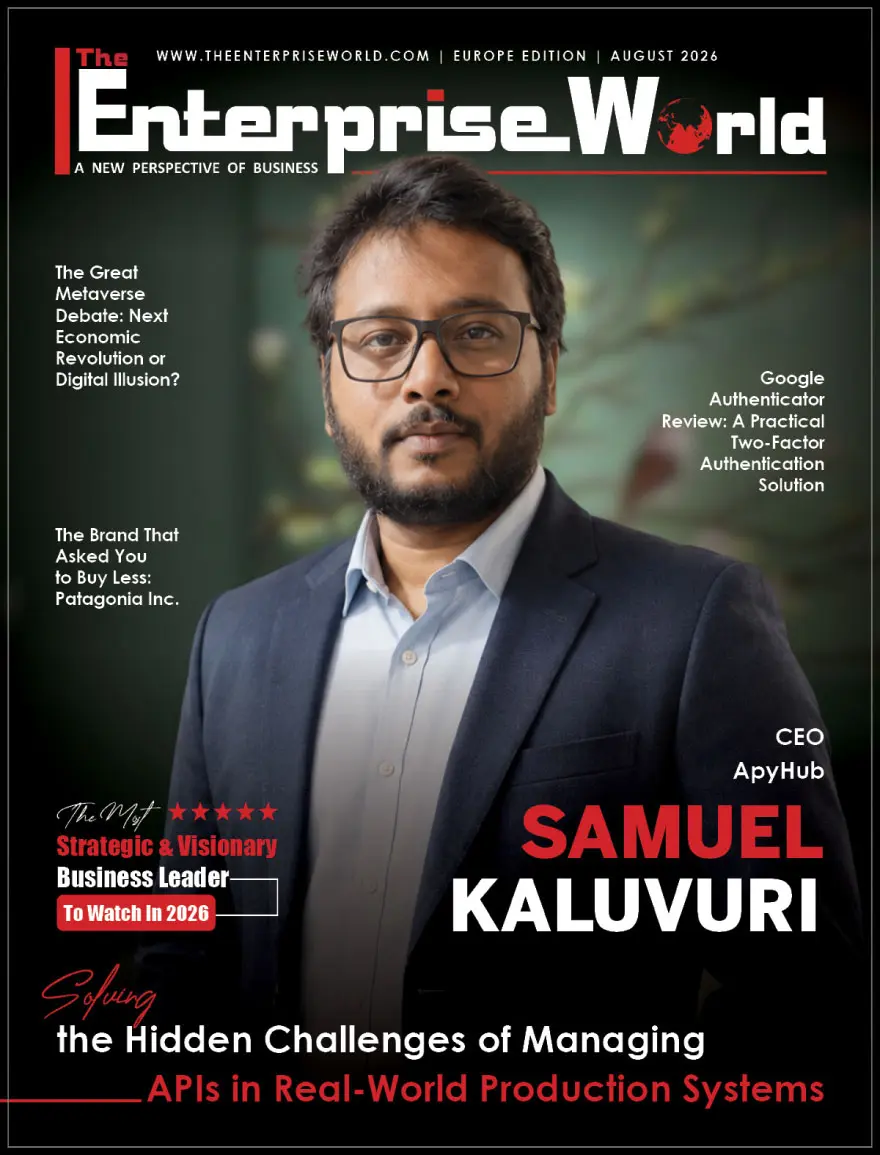
Addressing these challenges is the core focus of Samuel Kaluvuri, CEO of ApyHub. Recognizing that businesses need more than just access to APIs, he is dedicated to making them easier to use, manage, secure, and maintain in real-world production environments. Through his leadership in product strategy, platform development, and technical innovation, he helps organizations reduce the hidden costs, compliance requirements, maintenance burdens, and operational risks that often come with managing complex software systems.
This vision has played a key role in ApyHub’s growth, transforming it into a platform trusted by more than 65,000 developers and teams worldwide and processing millions of API calls every month.
Foundation of Apyhub’s mission
ApyHub was built from a challenge Samuel repeatedly saw while working with engineering teams in large companies and fast-growing startups. He noticed that skilled developers were spending a large amount of time rebuilding the same basic tools and services, such as file conversion, data validation, integrations, and other utility functions. These were important, but they rarely helped a company stand out. Instead, they took away time that could have been spent on more meaningful product work and also created long-term maintenance responsibilities.
As he looked closer, he realized the problem was even deeper. Every service came with ongoing tasks such as:
- Updates and version upgrades
- Security checks and patches
- Compliance requirements
- System maintenance and monitoring
On top of that, businesses often had limited visibility into how external services managed their data or whether those services would remain reliable over time. These challenges led him to rethink how APIs should work. Instead of being treated as isolated tools, he saw the need for systems that are reliable, transparent, and easy to manage throughout their entire lifecycle. This thinking became the foundation of ApyHub’s mission to reduce complexity, lower operational effort, and help organizations use APIs with more confidence.
The real complexity starts after adoption
One of the earliest challenges Samuel Kaluvuri faced while building ApyHub was realizing that building APIs is only the starting point. The real challenge begins after they are adopted and become part of live business systems. At that stage, companies must handle reliability, security, compliance, maintenance, and unexpected issues that can impact performance. These ongoing responsibilities often become more demanding than the initial development itself.
He also learned that APIs do not exist in isolation. They are deeply connected to other systems, and even a small issue in one area can affect multiple parts of an organization. Different teams also evaluate APIs based on different priorities such as speed, compliance, or cost, which makes decision-making more complex. This experience shaped his thinking as a leader, focusing on helping teams reduce uncertainty, understand real-world API behavior, and make better, more informed decisions while building reliable systems.
The moment ApyHub shifted its focus

A key turning point in ApyHub’s journey came when the team studied how APIs actually behave in real business environments. They found that high usage did not always mean success. Many APIs that looked simple during setup often created unexpected costs and operational challenges once they were used at scale. This made it clear that businesses needed more than access to APIs. They needed better visibility into how those APIs perform, scale, and impact long-term costs.
This insight led ApyHub to shift its focus from expanding API offerings to helping organizations understand and manage API usage more effectively. The company introduced the Atoms model, which breaks down API work into clear units so teams can better evaluate performance and cost. At the same time, ApyHub realized that API providers were also struggling with operational complexity such as billing, authentication, and usage tracking. This understanding shaped the company’s evolution from an API marketplace into a platform that simplifies these challenges for developers and providers, and this direction continues to guide its growth today.
Making APIs easier to manage over time
Samuel Kaluvuri recognized that the biggest challenge businesses face is not gaining access to APIs but managing them effectively over time. As organizations connect more APIs to their software systems, they often face rising maintenance demands, compliance requirements, increasing costs, and greater operational complexity. While APIs help businesses add new capabilities, every integration also brings long-term responsibilities that can consume valuable time and resources.
To address these challenges, he has helped build a platform that makes APIs easier to access, manage, and evaluate. By creating a more standardized and transparent approach to API usage, businesses can better understand factors such as costs, data handling practices, compliance requirements, and overall reliability before integration. He has also worked to reduce the operational burden on API providers by simplifying areas such as distribution, scaling, and infrastructure management, allowing them to focus on improving their services while helping developers and businesses work more efficiently and confidently.
Service certification framework and Voiden
One of the most important internal innovations developed by ApyHub is the Service Certification framework, which brings a structured and consistent way to evaluate every API on the platform.
Instead of relying on scattered or incomplete documentation, it provides clear visibility into key factors such as:
- Data handling practices
- Retention policies
- Compliance standards
- Third-party dependencies
It also adds continuous monitoring, helping teams stay updated on changes in privacy, compliance, or service behavior so that important risks or updates are not missed after integration.
Alongside this, the team also developed Voiden, an open-source API development environment designed to simplify how APIs are created and improved. Together, these systems strengthen the entire API lifecycle. The Certification framework helps organizations make informed and confident decisions before using an API, while Voiden supports cleaner design and development. Combined with ApyHub’s platform for API access and management, these tools create a more transparent, reliable, and complete ecosystem for building, evaluating, and operating APIs.
The rising cost of running modern software systems

One of the most important shifts Samuel Kaluvuri observes in the industry is that building software has become faster and more accessible than ever, but managing it over time has become significantly more complex. As more systems go live, businesses are increasingly responsible for ensuring reliability, security, compliance, performance, and long-term maintenance. In his view, the real challenge is no longer just building software, but keeping it stable, trustworthy, and manageable as it scales.
He also sees a major shift in the role of APIs. What once served mainly as tools for developers are now becoming core infrastructure that powers automated systems and intelligent applications. This evolution is increasing the need for greater transparency, consistency, and trust in how APIs behave. At the same time, growing focus on data privacy and regulatory compliance is turning governance into a core part of modern infrastructure. As a result, he believes the future will belong to solutions that help organizations move fast while keeping systems simple, reliable, and easier to operate over time.
Trusted by more than 65,000 developers and teams worldwide
ApyHub is trusted by more than 65,000 developers and teams worldwide, ranging from startups to large enterprises. The platform’s Atoms model has gained strong adoption among organizations that need a clearer understanding of API usage, costs, and performance, helping them make more informed operational decisions. Another key milestone has been the growing acceptance of ApyHub’s Service Certification framework, particularly among businesses operating in highly regulated industries. By providing clear visibility into data handling, security, and compliance requirements before integration, the framework helps organizations evaluate services with greater confidence. The strong adoption of these solutions reflects the platform’s ability to address real-world challenges faced by modern development teams.
Every API is designed with security, compliance, and real-world use
Samuel Kaluvuri believes trust should be built into a product from the very beginning, not treated as something added later during audits. Under his leadership, every API is designed with security, compliance, and real-world use in mind. The company’s certification framework provides clear, structured information on how data is handled, stored, and protected, helping organizations make informed decisions before adopting a service. Instead of asking businesses to simply trust a service, it gives them the information they need to evaluate it on their own terms.
As software becomes more automated, transparency and verification have become even more important. His approach ensures that critical service information is clearly visible and can be reviewed and validated, rather than relying on reputation or assumptions. This continuous certification process is regularly updated, helping organizations maintain confidence in the services they use while adapting to changing standards and requirements.
From feature delivery to platform thinking
This shift shows a move from focused engineering delivery to building scalable systems and platforms that support entire ecosystems, with a stronger focus on long-term impact, reliability, and growth.
Before leadership journey:
Engineering execution focus, structured delivery cycles, enterprise systems, feature shipping mindset, predictable roadmaps, internal tooling, operational stability, incremental improvement, scoped problem solving, team efficiency focus.
After leadership journey:
Platform thinking, infrastructure ownership, global developer ecosystem, AI driven consumption, agents as system users, compliance as infrastructure, operational responsibility, system scalability, cost transparency, governance at scale, long term system design, cross functional leadership, uncertainty driven execution.
Snapshot of a typical day
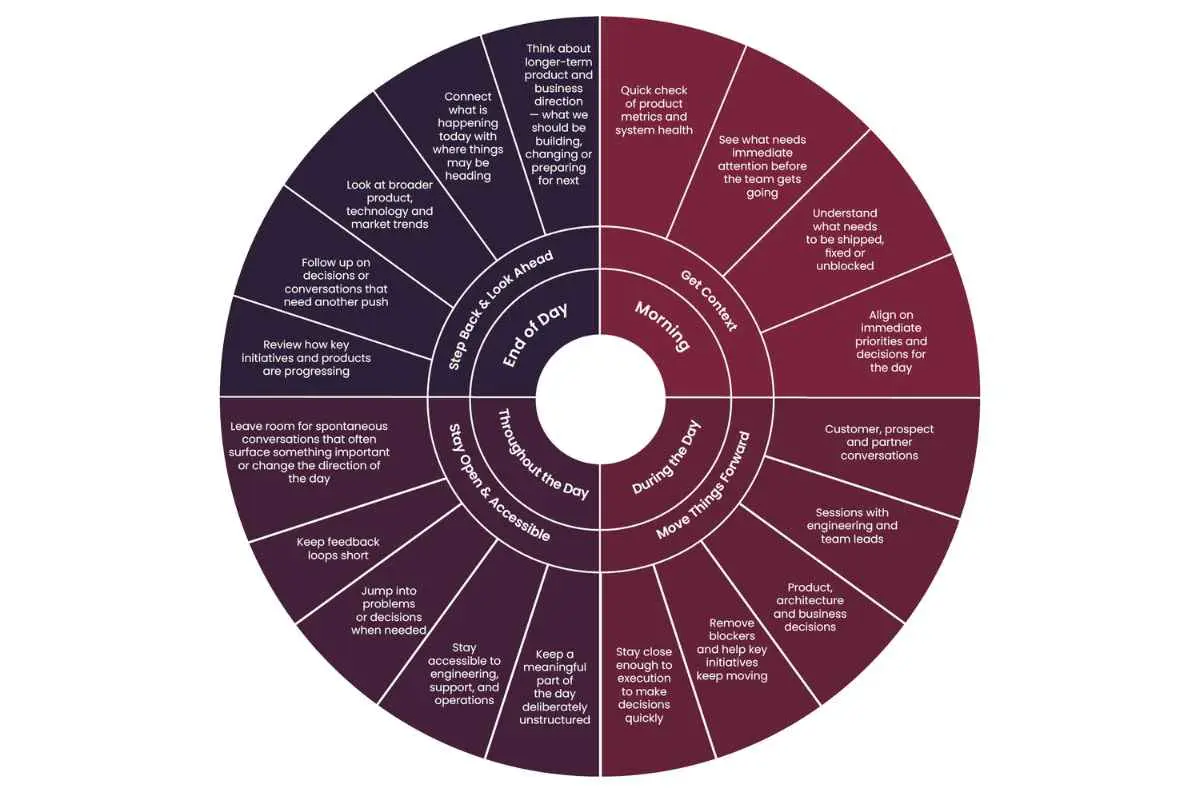
The day has some structure, but is intentionally not over-planned. There are planned priorities and conversations, but also enough open space to stay accessible, respond quickly, and follow where the most important problems lead.
Morning — Get context
- Quick check of product metrics and system health
- See what needs immediate attention before the team gets going
- Understand what needs to be shipped, fixed or unblocked
- Align on immediate priorities and decisions for the day
During the Day — Move things forward
- Customer, prospect and partner conversations
- Sessions with engineering and team leads
- Product, architecture and business decisions
- Remove blockers and help key initiatives keep moving
- Stay close enough to execution to make decisions quickly
Throughout the day — Stay open & accessible
- Keep a meaningful part of the day deliberately unstructured
- Stay accessible to engineering, support, and operations
- Jump into problems or decisions when needed
- Keep feedback loops short
- Leave room for spontaneous conversations that often surface something important or change the direction of the day
End of day — Step back & look ahead
- Review how key initiatives and products are progressing
- Follow up on decisions or conversations that need another push
- Look at broader product, technology and market trends
- Connect what is happening today with where things may be heading
- Think about longer-term product and business direction — what we should be building, changing or preparing for next
Building is easy, sustaining is hard
Samuel Kaluvuri advises emerging founders to remember that the desire to build is stronger than ever today, and technology now makes it easier than before to turn ideas into real products. But he encourages them not to stop at creation alone.
He often emphasizes that building something is only the first step. The real challenge begins after it is built, in how well it is maintained, improved, and adapted over time. As development continues to speed up and more products enter the market, his advice is to focus not just on launching ideas, but on ensuring they remain reliable, useful, and valuable as they grow and evolve.
Quick takes
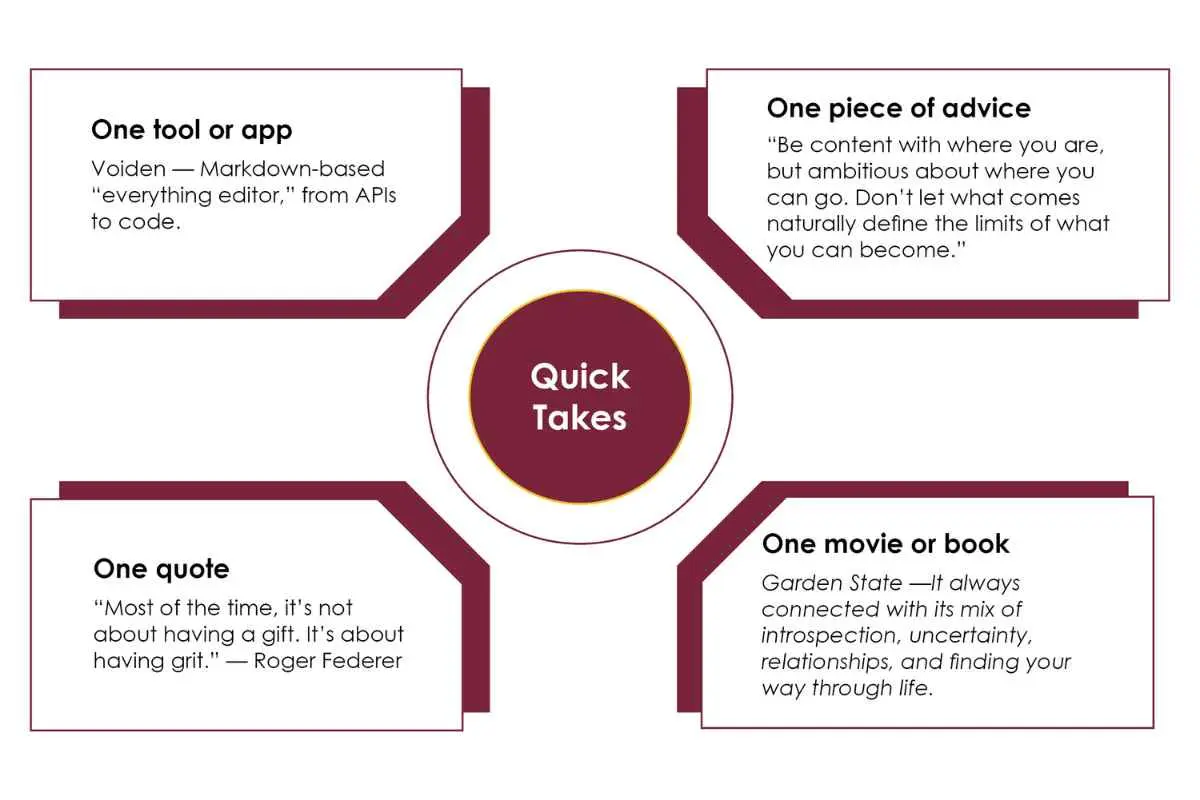
1. One tool or app you would recommend to professionals in your industry:
Voiden — Markdown-based “everything editor,” from APIs to code.
2. One quote that motivates you the most:
“Most of the time, it’s not about having a gift. It’s about having grit.”
Roger Federer
3. One piece of advice you would offer to upcoming entrepreneurs or future business leaders:
“Be content with where you are, but ambitious about where you can go. Don’t let what comes naturally define the limits of what you can become.”
4. One movie or book you recommend everyone in business or leadership should experience:
Garden State —It always connected with its mix of introspection, uncertainty, relationships, and finding your way through life.
Samuel Kaluvuri’s 5 impactful business mantras
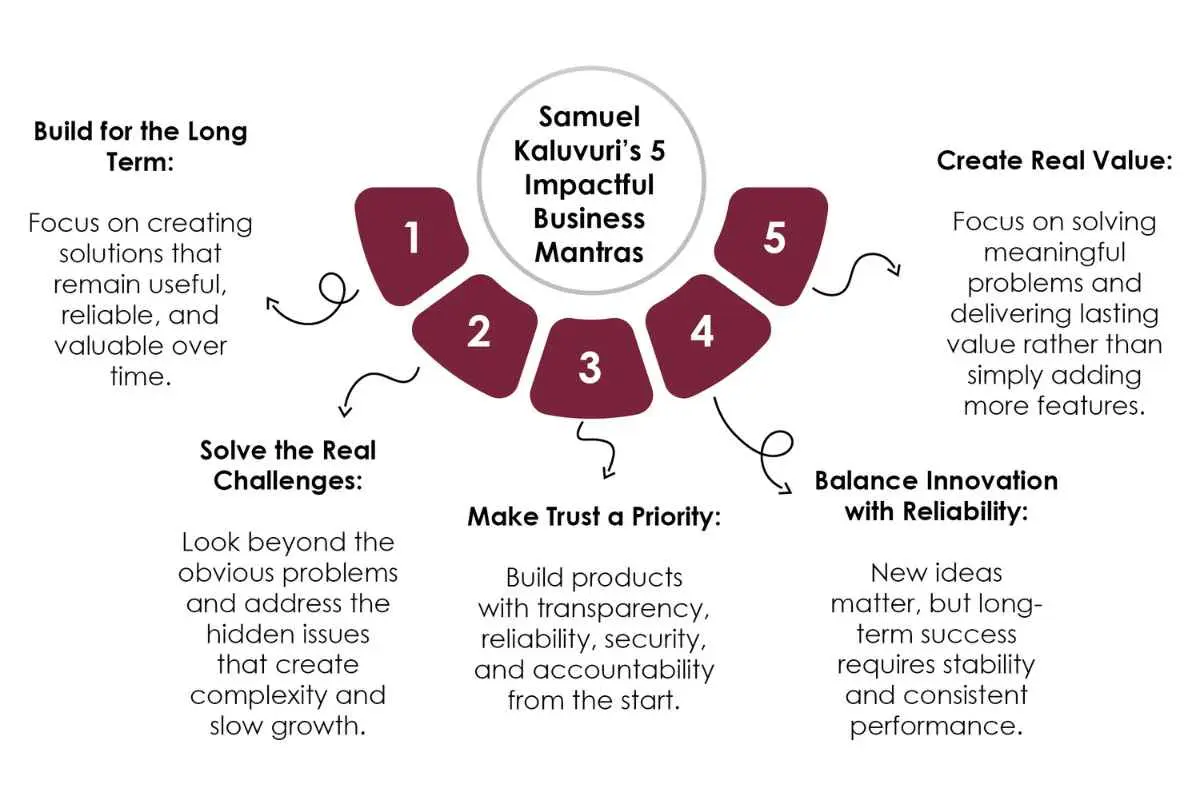
- Build for the Long Term: Focus on creating solutions that remain useful, reliable, and valuable over time.
- Solve the Real Challenges: Look beyond the obvious problems and address the hidden issues that create complexity and slow growth.
- Make Trust a Priority: Build products with transparency, reliability, security, and accountability from the start.
- Balance Innovation with Reliability: New ideas matter, but long-term success requires stability and consistent performance.
- Create Real Value: Focus on solving meaningful problems and delivering lasting value rather than simply adding more features.