The playbook at a glance
- Merch people wear by choice beats merch people wear by policy, and the difference is decided by the quality of the garment and the restraint of the design.
- Belonging is a business metric, and apparel is one of the cheapest, most visible belonging signals a company can produce.
- Logo size is inversely correlated with weekend wear, so the design should feel closer to a small clothing label than to advertising.
- The quality of the garment and the print determines whether your merch says “we invest in our people” or quietly says the opposite.
Most company merch fails a very simple test, which is whether anyone would choose to wear it on a Saturday. The branded polo nobody picked, cut in a fabric nobody likes, inevitably ends up at the back of a closet, taking the budget, the branding opportunity and a small piece of goodwill along with it.
Merch that works is a different animal altogether, because it’s apparel employees reach for by choice. That choice quietly turns a team into the most credible advertising a growing business can get, since these are people who visibly want to be associated with the place they work.
Getting there has less to do with putting a better logo on a shirt and more to do with making better decisions about the shirt itself. Fabric, fit, design restraint and print quality are what separate company merch people tolerate from clothing they actually want to wear.
Why should a growing business care about merch at all?

Because the research on engagement and belonging keeps producing numbers too large to ignore. Gallup’s State of the Global Workplace puts the global cost of disengagement in the trillions of dollars. What’s striking is how small the everyday drivers of engagement turn out to be, like feeling seen at work and having the workplace signal in concrete ways that you matter.
Apparel is a wearable version of that signal. When a new hire receives a genuinely good hoodie on day one, one that fits properly and doesn’t feel like a conference giveaway, the message lands before their laptop does. And when Pew’s research on how people view their jobs finds that most workers rate their relationships with colleagues as the single best part of working, a shared team identity you can literally put on carries more leverage than its price tag would suggest.
The timing matters for growing companies in particular. Deloitte’s Global Human Capital Trends research keeps circling a theme that anyone who has scaled a company will recognize: culture transmits itself automatically at fifteen people, and stops doing so somewhere well before sixty. That’s the point where the artifacts of belonging start earning their keep.
The Saturday test: Would your employees wear it by choice?
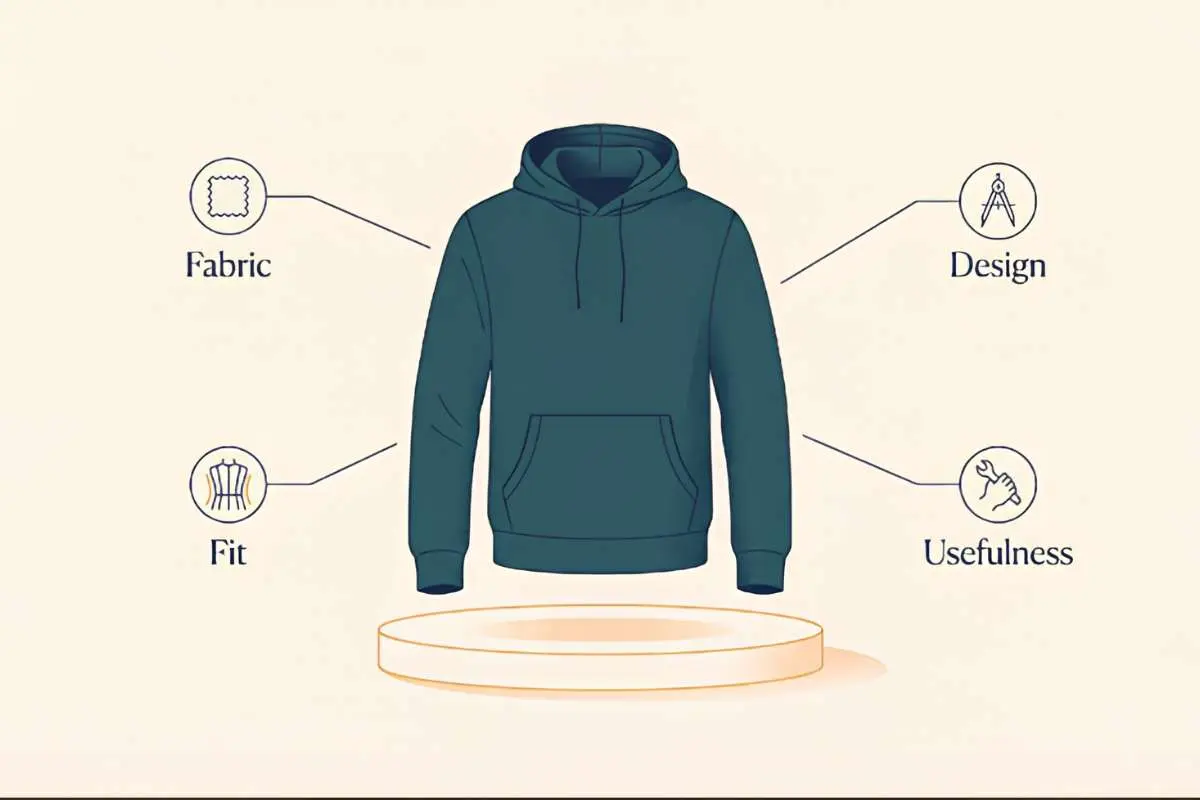
Passing the Saturday test comes down to four things: fabric, fit, design restraint and production quality. Get those right and company merch starts to feel like clothing. Get them wrong and even the best logo in the world won’t save it from the back of a closet.
- Fabric comes first. A heavyweight combed-cotton tee or a properly made fleece hoodie feels like something you’d buy for yourself, while a scratchy promo-grade blank feels like exactly what it is: a giveaway. The garment carries most of the message before anyone even notices the print, so it deserves to be chosen with the same care you’d give any other customer-facing part of the brand.
- Fit comes next, because one boxy unisex cut might make ordering easier, but it also guarantees that a chunk of the team won’t feel good wearing it. Offering a real size range and a couple of cuts adds a little complexity to the order and gives far more employees something they’ll actually reach for.
- Then there’s design restraint. This is where companies have to resist the urge to turn every square inch into advertising. A small embroidered mark or subtle chest print reads as clothing; a jumbo logo across the back reads as sponsorship. If the goal is to get employees wearing merch outside work, the best designs tend to look closer to something from a small clothing label than something from a promotional catalogue.
- Finally, quality has to survive the wash. A great garment with a print that cracks after five cycles still fails the test. Screen printing, embroidery and finishing should hold up to the kind of repeated wear you’re hoping the garment will get. That’s why companies building merch for long-term use tend to work with a dedicated apparel shop rather than simply choosing the lowest-cost promo supplier. Canadian teams, for instance, can turn to R&P Prints custom apparel for screen printing and embroidery on garments designed for repeat wear.
The standard is simple: if you wouldn’t expect someone to choose it from their closet on a Saturday morning, putting the company logo on it won’t change their mind.
How do you run a merch program without wasting money?
Start smaller than feels natural and earn the reorder: one excellent hoodie beats a five-item welcome kit of mediocre things, and watching what people actually wear tells you exactly where to expand. It also helps to tie company merch drops to moments that mean something, like a new hire’s first day or a work anniversary, because items that mark an occasion get kept in a way that generic swag never does. Letting employees choose between a few items costs the same and roughly doubles the hit rate. And when the quotes come in, order for durability rather than unit price, since the cheapest garment per unit is almost always the most expensive per wear.
Frequently asked questions
1. How much should a growing company budget for merch?
Less than most leaders assume, spent better than most programs do. A quality hoodie program for a fifty-person team typically lands somewhere between $2,000 and $3,500, which is a rounding error against a single bad hire, for something every employee touches weekly.
2. Is merch worth it for remote teams?
For a remote team the case is arguably stronger, because apparel becomes one of the few shared physical artifacts of the company that exists at all — it’s the office you can mail.
3. Should the logo go big or small?
Go small almost every time, because the entire point is getting people to wear it outside work, and that only happens when the design feels like clothing they would have bought on their own.