Listen closely to what happens right after a high-stakes project wraps up. When employees are deeply engaged, they do not just log off and check out; they immediately start pitching bold ideas for the next launch, completely invested in where the company is headed next.
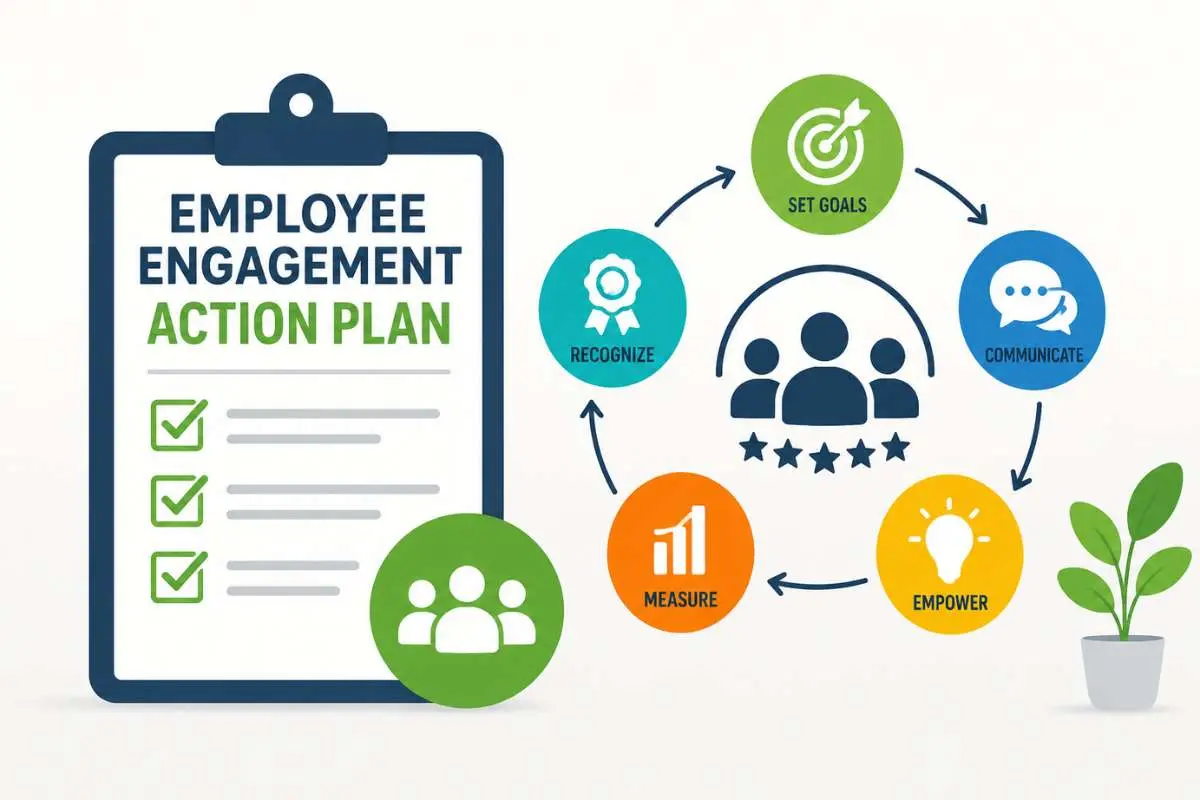
That level of active commitment happens when people feel a strong emotional bond with their workplace and trust that their voices actually matter. Building a tailored employee engagement action plan gives management teams a structured method to capture that creative energy, assign real ownership to fresh ideas, and track cultural progress over time.
In this article, we will take a look at how to build an effective action plan for employee engagement. So, let us begin!
How to create an employee engagement action plan?

An employee engagement plan turns employee feedback into action. It gives leaders a clear path forward after an engagement survey. The plan should show what needs to change, who will make the change, and when the work should happen. It also gives employees a reason to trust the process. A good plan stays focused on a few clear priorities instead of trying to fix every issue at once.
Step 1: Review and interpret your engagement data
Start by looking closely at the feedback you have collected. This may include engagement surveys, pulse surveys, employee interviews, manager check-ins, and exit interviews. Do not focus only on the overall engagement score. Look at the scores for specific areas, such as leadership, recognition, communication, workload, growth, and teamwork.
Employee comments can add more meaning to the numbers. A low score may tell you that a problem exists, but comments can help explain why. Look for common themes across different responses. You should also compare current results with older data to see which areas have improved and which ones have become weaker.
Check the results across teams or departments when possible. One team may have a very different experience from another. These differences can help leaders find problems that a company-wide score may hide. Take time to understand the data before deciding what employee engagement action plan to create.
Tips:
- Compare results with previous surveys.
- Look for common themes in comments.
- Review both high and low scores.
- Compare results across teams when useful.
- Look for areas that are getting worse.
Step 2: Prioritize the issues that matter most
Most engagement surveys reveal several problems. You cannot fix them all at once. Trying to do so can make the plan harder to manage. Instead, choose the issues that have the greatest effect on employees and the business.
Start by asking a few simple questions. How many employees face this problem? How strongly does it affect engagement? How can you improve employee engagement? These questions can help leaders separate major concerns from issues that need less attention.
Think about the effort each solution will require as well. Some issues may need major policy changes or large budgets. Others may need better manager training or clearer team communication. Focus first on areas where the organization can make real progress.
Tips:
- Pick two or three main priorities.
- Consider how many people each issue affects.
- Look at the effect on employee engagement.
- Focus on problems leaders can address.
- Balance quick wins with long-term needs.
Step 3: Set specific action items
Next, turn each priority into a clear action. Avoid goals such as “improve communication” or “increase employee motivation.” These goals sound useful, but they do not tell anyone what to do. A good action item should explain the task, the person responsible, and the deadline.
Suppose employees say they do not receive enough feedback. Leaders could ask managers to hold monthly one-to-one check-ins. If employees want more recognition, the company could create a regular employee recognition program. Specific actions make the plan easier to follow.
Each action should also have a clear way to measure progress. The measure does not need to be complex. Leaders can track participation, completion rates, survey scores, or employee feedback. Simple measures make it easier to see what works and what needs to change.
Tips:
- Give every action one clear owner.
- Set a deadline for each task.
- Define what success should look like.
- Break large tasks into smaller steps.
- Choose simple ways to measure progress.
Step 4: Communicate the plan back to employees

Employees want to know what happens after they give feedback. Share the main findings once leaders have reviewed the data. Then explain which issues became priorities and what actions the organization will take. This shows employees that leaders did not ignore their feedback. This improves engagement as well. According to People Insights, employees who receive regular feedback are 2.8 times more likely to be engaged.
Be clear about what the organization can and cannot change. Some requests may need more time, money, or senior approval. Others may not fit the current business goals. Explain these decisions instead of leaving employees to guess what happened. A good employee engagement action plan sets clear expectations about timing as well.
Not every change will happen quickly. Tell employees when they can expect updates or early results. This keeps the process open and gives people a clearer view of what comes next.
Tips:
- Share the main survey findings.
- Explain why certain issues became priorities.
- Tell employees what will change.
- Set realistic timelines for major actions.
- Explain why some requests need more time.
Step 5: Execute and assign accountability
The plan needs action behind it. Give each task to a specific person or team. Make sure they understand what they need to do and when they need to finish it. Senior leaders should review progress and help remove problems that slow the work down.
Set regular times to check your employee engagement action plan. These reviews can happen monthly or quarterly, depending on the size of the project. Use them to check completed tasks, missed deadlines, and early results. If an action does not work, change the approach rather than letting the task sit unfinished.
Keep employees updated as well. Share meaningful progress when actions move forward. Tell them when a change has been completed or when a project needs more time. Consistent updates show that leaders take employee feedback seriously.
Tips:
- Track every action and deadline.
- Review progress at set intervals.
- Hold each action owner responsible.
- Fix delays before they grow.
- Keep employees informed about progress.
A strong employee engagement action plan turns feedback into visible change. Leaders need to understand the data, choose the right priorities, and give each action a clear owner. They also need to keep employees informed as the work moves forward. When leaders follow through, employees can see that their feedback leads to real action.
Employee engagement action plan: how to measure its success
An employee engagement action plan needs regular measurement. Leaders should not wait for the next annual survey to see if their efforts worked. Instead, they can track early signs of change and connect those results to specific actions. This makes it easier to spot progress and make changes when needed.
1. Track leading indicators
Look for smaller signs of progress between annual surveys. Pulse survey scores, participation rates, feedback activity, and recognition levels can show whether employee views are changing. These measures give leaders a faster view of progress.
For example, rising pulse survey scores may show that an issue is improving. Higher survey participation can also suggest that more employees feel willing to share their views.
2. Connect metrics to action items
Each action should have a metric that matches its goal. This helps leaders see whether a specific action is producing results. If the plan includes manager training, leaders can track manager-level engagement scores or employee feedback about their managers.
The same approach works for other actions. A recognition program could track recognition activity and employee views on appreciation. This creates a clearer link between the action and its results.
3. Set a regular review cadence
Set regular dates to review the plan and its results. Quarterly reviews work well for many organizations, while some actions may need monthly checks. During each review, compare progress with the original goals and look for areas that need attention.
If an action is not producing results, adjust it. Regular reviews keep the plan active and prevent it from becoming a document that leaders create and then forget.
Measuring progress helps leaders see whether their actions are making a real difference. Early indicators, action-specific metrics, and regular reviews provide a clearer view of what works. Leaders can then adjust the plan based on results instead of waiting for the next annual survey.
What are the mistakes to avoid?
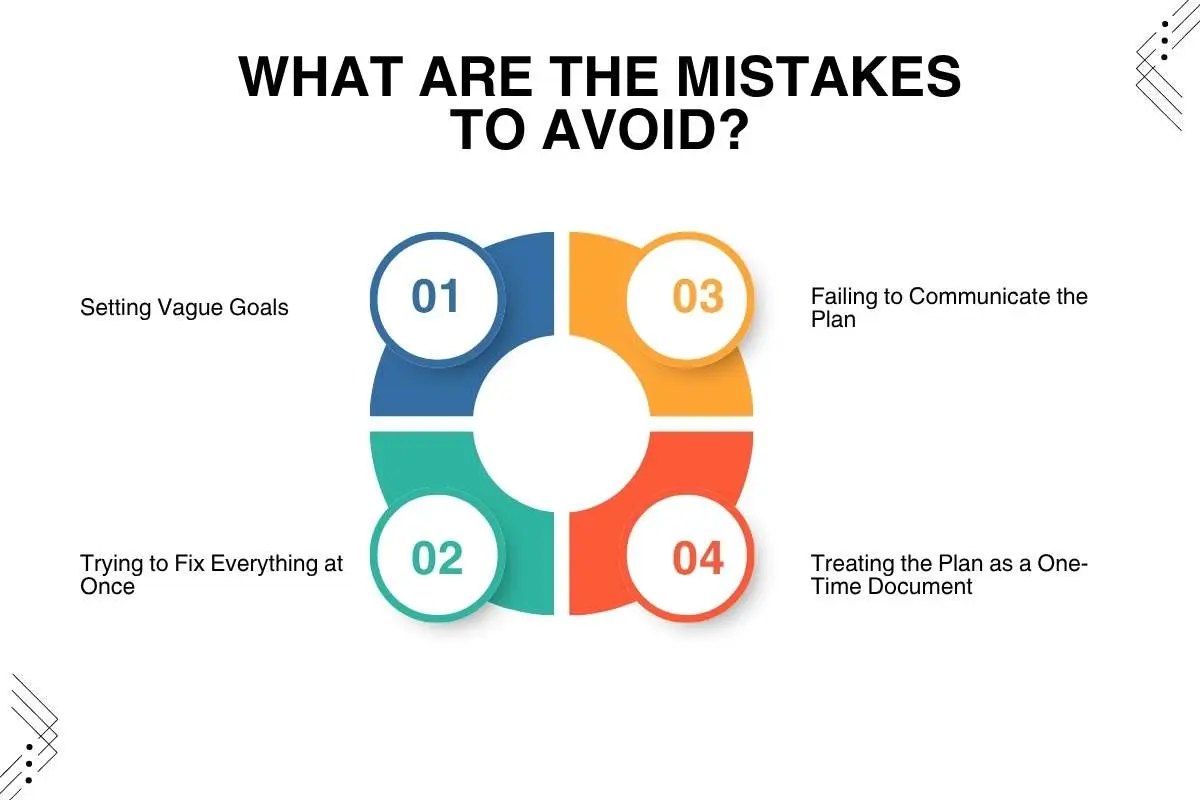
Even a strong employee engagement action plan can fail without proper follow-through. Avoid these common mistakes to keep the employee engagement strategy focused and useful.
- Setting Vague Goals: Avoid broad goals. Give each action a clear owner, deadline, and measure of success.
- Trying to Fix Everything at Once: Do not tackle every issue at the same time. Focus on two or three key gaps that can create the greatest impact.
- Failing to Communicate the Plan: Employees need to know what happened after they shared feedback. Explain the key findings, chosen priorities, and actions you plan to take. According to People Insights, 86% of employees blame company failures on poor communication.
- Treating the Plan as a One-Time Document: An engagement plan should change as employee needs change. Review it regularly, track progress, and update actions when needed.
A strong action plan needs focus and follow-through. Clear goals, realistic priorities, open communication, and regular reviews can keep the plan on track. When leaders treat employee engagement as an ongoing process, they can respond to employee needs and build lasting improvements over time. As Culture Expert Shelley Smith puts it: “If your people can only do what you’ve trained them to do when you’re present, you’ve built dependency, not culture. Build for your absence.”
Conclusion:
That post-project rush of bold ideas is what happens when people own their work. Sustaining that level of active investment means giving your team a visible target to hit. Deploying a structured employee engagement action plan bridges the gap between listening to your people and actually handing them the keys to shape their work environment.
Leaders can impact employee engagement as well. When leadership consistently turns honest feedback into real operational autonomy, quiet dedication turns into fierce loyalty. Supporting your workforce with accountable, transparent execution builds an unbeatable culture where top talent stays hungry, invested, and ready for the next big challenge.
FAQs
1. What keeps an action plan from becoming ignored paperwork?
Assigning public deadlines to every item proves leadership is listening and locks in immediate credibility.
2. Who carries the daily weight of executing these cultural changes?
Frontline managers drive the momentum by turning the executive budget into daily team autonomy.
3. How do you measure whether the employee engagement action plan is actually working?
Look for behavioral shifts like higher internal promotions and lower top-performer turnover.