Why do two employees with the exact same title, pay, and workload exhibit completely opposite levels of effort? An operations director watching a star engineer quietly disengage realizes that competitive compensation alone cannot prevent burnout or passive detachment.
Diagnosing that gap requires evaluating the fundamental drivers of employee engagement. These drivers are the core psychological needs, management habits, and growth opportunities that determine how deeply workers invest in their roles. Mapping team dynamics to those foundational elements replaces expensive guesswork with targeted workplace improvements.
Focusing on root motivators equips leaders to build meaningful retention strategies. Prioritizing core engagement pillars builds a resilient culture where top talent thrives long-term.
The key drivers of employee engagement
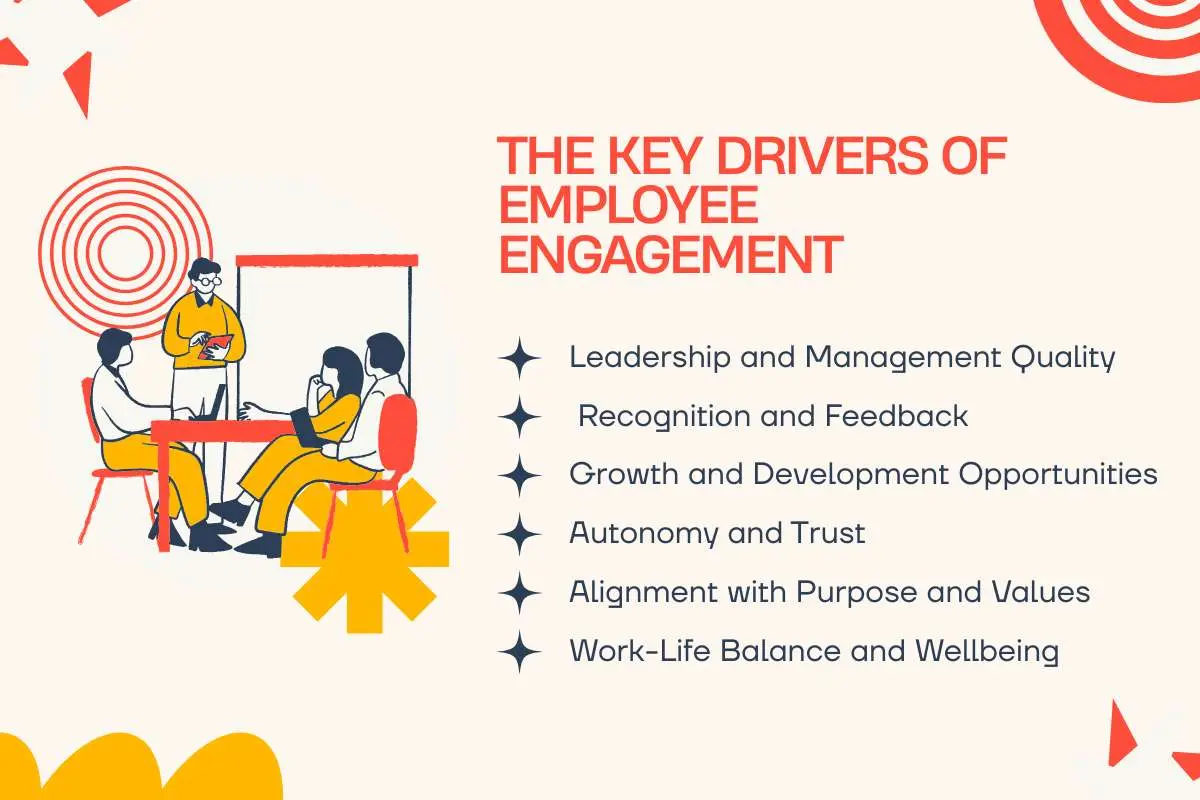
Employee engagement grows from the daily work experience. Employees need support, trust, recognition, growth, and a clear sense of purpose. These factors affect how people feel about their work and their willingness to give their best. Leaders can improve engagement by focusing on the conditions that employees experience every day.
1. Leadership and management quality
Managers have a strong effect on employee engagement. In fact, they account for at least 70% of the variance in team engagement. Managers set goals, give feedback, solve problems, and support their teams. A good manager also listens when employees face challenges. This daily relationship can shape how employees feel about their jobs.
Poor management can quickly lower engagement. Employees may feel ignored, stressed, or unsure about what leaders expect. They may also stop sharing ideas or raising concerns. Regular one-on-one meetings can help managers understand these issues early. They also give employees a safe space to discuss goals and challenges.
2. Recognition and feedback
People want to know that their work matters. Recognition programs give employees a clear sign that leaders see their effort. It works best when it feels timely and specific. Telling someone that they handled a difficult client well has more value than saying, “Good job.”
Feedback should also help employees improve. Managers can point out what worked and what needs to change. They can then suggest clear steps for improvement. Frequent feedback keeps communication open and reduces the pressure around annual reviews. This is important as 86% of employees blame company failures on poor communication. As Strategic Advisor Jeffrey Sanow puts it:
“The true challenge lies in knowing what must remain confidential while communicating openly enough to build genuine confidence among colleagues and decision-makers.”
3. Growth and development opportunities
Employees want to know where their careers can go. Clear career paths help them see possible roles within the company. They also show which skills employees need to move forward. Training can then help employees build those skills.
Internal development programs give employees more ways to grow. They can take new roles, join different teams, or work on new projects. This can reduce the need to leave the company for career growth. Mentoring, training, career talks, and internal job boards can support this process.
4. Autonomy and trust
Employees work better when leaders trust them. Clear goals give employees direction without controlling every task. They can then decide how to complete their work. This freedom can also encourage better ideas and stronger problem-solving.
Micromanagement creates the opposite effect. Constant checks can make employees feel that leaders do not trust them. They may also become afraid to make decisions on their own. Managers can avoid this by setting clear goals and using regular check-ins instead of constant supervision.
5. Alignment with purpose and values
Employees want to see meaning in their work. A clear company purpose can help connect daily tasks with larger goals. Company values can strengthen that connection when leaders follow them in practice.
Words alone are not enough. Employees notice when company values do not match daily actions. A company may promote teamwork while rewarding only individual results. It may support work-life balance while expecting late-night replies. These gaps can weaken trust and lower engagement.
6. Work-life balance and wellbeing
Employees cannot stay engaged when work leaves them drained every day. Heavy workloads, long hours, and unclear expectations can create lasting stress. Over time, this stress can lead to burnout. Burnout is not a separate workplace issue. It can directly reduce focus, energy, motivation, and engagement.
Companies can support wellbeing through better work practices. Leaders can review workloads and set clear priorities. They can also support reasonable work hours and flexible options where possible. Employee support programs can help, but they cannot fix poor working conditions on their own.
These drivers also affect each other. A good manager can give useful feedback, support career growth, and build trust. Strong values can guide better decisions, while healthy workloads can help employees stay focused. When companies address these drivers together, they create better conditions for long-term employee engagement.
How to identify which drivers of employee engagement need the most attention?

Not every engagement driver needs the same level of attention. Some may already work well, while others may create clear problems for employees. A step-by-step review can help leaders find the biggest gaps and focus their efforts where they matter most.
Step 1: Measure each engagement driver
Start by measuring each driver separately. Avoid relying only on one overall engagement score. Break survey results into areas such as management, recognition, growth, autonomy, purpose, and wellbeing.
This approach shows where engagement is strong and where it falls short. A high overall score can still hide serious problems in one area.
Step 2: Segment the survey data
Look at results across different employee groups. Compare teams, departments, roles, locations, or levels of seniority where useful. One team may report strong management support while another reports poor communication.
These differences can help leaders find problems that broad company scores may hide. They also make it easier to direct support to the teams that need it most.
Step 3: Compare scores with employee feedback
Survey scores tell you what employees feel, but they may not explain why. Review written comments, focus group feedback, and other employee input alongside the numbers.
Look for repeated concerns and common themes. If many employees mention limited career growth, that issue deserves closer attention.
Step 4: Review exit interview themes
Former employees can provide another useful source of insight. Review exit interviews for repeated reasons behind employee departures. Look for links to workload, management, career growth, recognition, or workplace culture.
Repeated themes can reveal problems that current employees may not share openly. Compare these findings with your engagement survey results to spot common patterns.
Step 5: Prioritize the biggest gaps
Once you review the data, rank the drivers of employee engagement that need attention. Focus first on areas with low scores, repeated complaints, or a clear link to employee turnover.
Do not try to fix everything at once. Choose a few high-impact areas and create clear actions for each one.
Step 6: Build better survey questions
The quality of your findings depends on the questions you ask. Vague questions may produce scores without useful insight. Specific questions can show what employees experience and where problems exist.
This makes survey question design the next important step. A well-designed engagement survey can help leaders measure engagement with greater clarity.
Turning driver insights into action

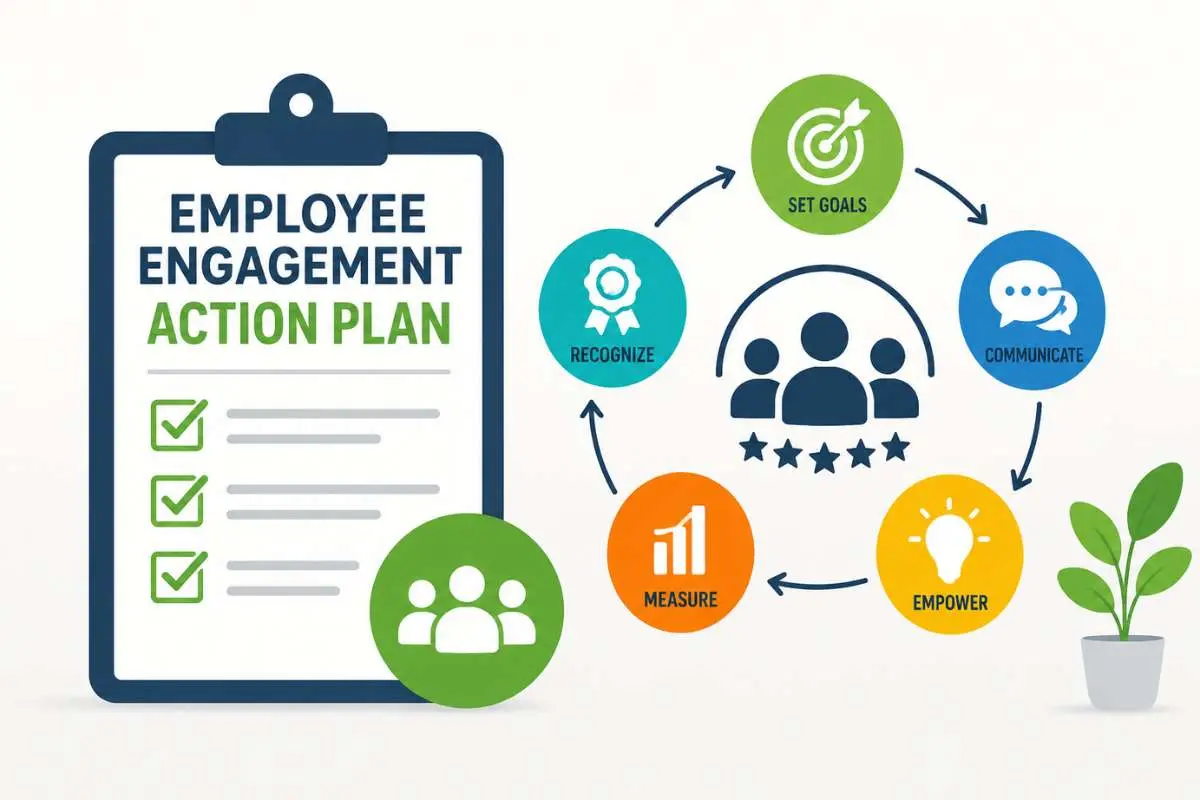
Finding weak drivers of employee engagement is only the first step. Leaders must turn those findings into a clear engagement action plan. Start with the areas that show the biggest gaps or affect the most employees. Avoid trying to fix every issue at once.
Next, define what needs to change. If employees report weak career growth, the company could improve career paths, mentoring, or training. If managers receive poor feedback, leadership coaching may offer a better solution.
Set clear goals for each priority area. Assign ownership, set timelines, and decide how progress will be measured. Regular check-ins can show whether the changes are working or need adjustment.
Employee feedback should remain part of the process. Ask employees whether they notice meaningful changes after new actions begin. This keeps engagement work focused on real employee needs rather than one-time survey results.
These insights can guide broader employee engagement strategies and help leaders build a clear employee engagement action plan.
Conclusion:
Superficial perks may create temporary boosts in workplace morale, but long-term workforce retention strategies depend on sustained management habits. Systematically addressing the primary drivers of employee engagement gives executive leadership a clear, repeatable roadmap to eliminate internal friction, strengthen manager-team relationships, and align individual roles with broader company goals.
When organizations move beyond reactive fixes and consistently prioritize psychological safety, transparent communication, and meaningful career paths, employee trust deepens across every department. Investing in these foundational engagement pillars secures your top talent and establishes a resilient framework for sustainable business growth.
FAQs
1. What are the drivers of employee engagement?
They are the core workplace conditions and management habits that directly fuel workforce motivation, such as autonomy, clear communication, and growth opportunities.
2. Which driver of employee engagement has the largest impact on turnover?
Direct manager quality has the biggest impact because frontline supervisors control daily workload, feedback, and career growth.
3. How do managers identify which drivers of employee engagement are failing within a team?
Leaders pinpoint weak drivers by conducting regular 1-on-1 check-ins and tracking team-level retention trends.
4. How does clear recognition act as one of the drivers of employee engagement?
Regular recognition validates hard work, making employees feel genuinely valued and directly boosting their daily commitment to team goals.
5. Can compensation alone drive long-term employee engagement?
No, fair pay attracts talent, but engagement depends on ongoing motivators like supportive leadership, clear career paths, and daily work autonomy.