Every company fears the sudden email from a top performer asking for a “quick chat.” Losing experienced people hurts morale, disrupts ongoing projects, and drains your budget.
To stop this cycle, businesses rely on employee retention strategies. They are the practical plans and workplace policies companies use to keep their staff engaged and eager to stay. Rather than waiting for someone to hand in their notice, these strategies focus on fixing common workplace frustrations before they push people away. When you give employees clear growth paths, fair recognition, and supportive leadership, staying becomes an easy choice.
In this article, we will see how keeping your best talent is ultimately about creating a workplace people genuinely enjoy being part of. So, let us begin!
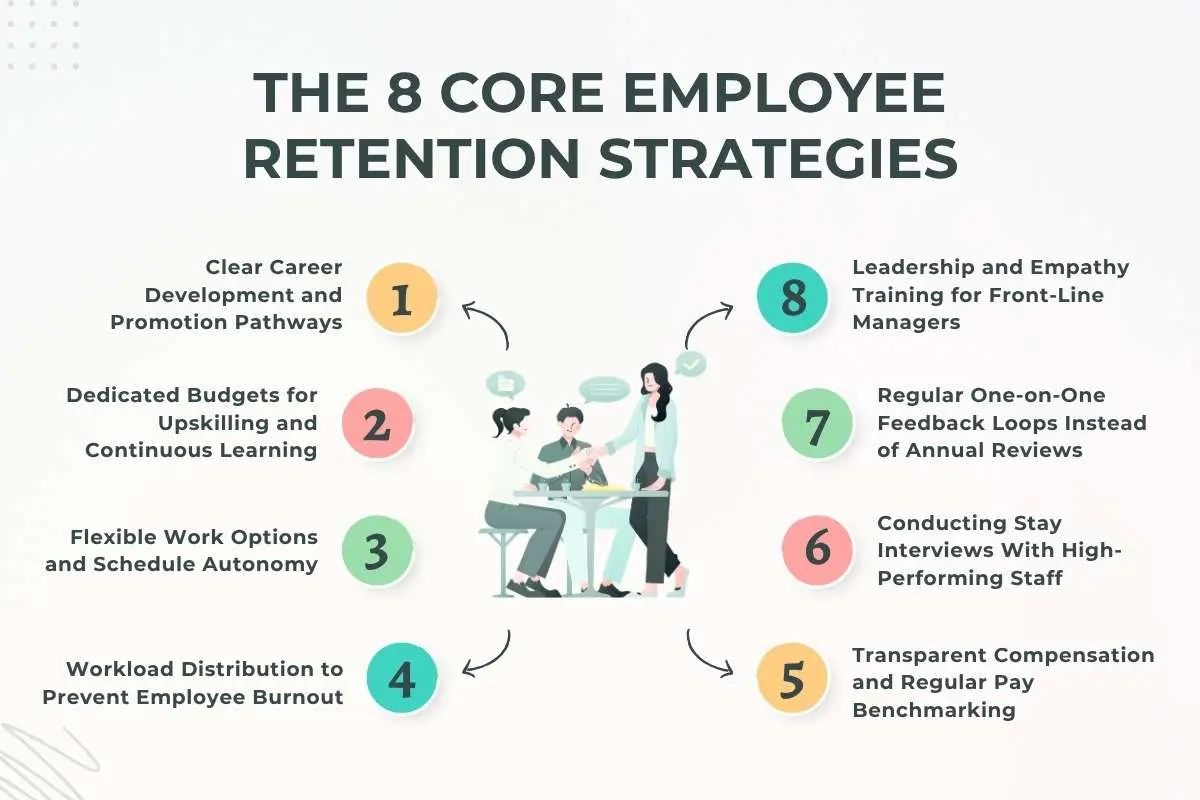
The 8 Core Employee Retention Strategies
Data from Gallup shows that 37% of employees left due to “Engagement and Culture” in 2024.
This has led to a higher emphasis being put on retaining employees through engagement and using employee retention strategies. Employees want growth, fair treatment, supportive managers, and work that feels meaningful. When companies improve these areas, they can build stronger engagement and give employees more reasons to stay.
1. Clear Career Development and Promotion Pathways
Employees want to see a future within the company. Clear career paths show them how they can grow, build skills, and take on new roles. This can keep employees engaged because they can see progress in their work.
Pros: Career paths give employees clear goals and a reason to keep developing. They can also reduce turnover among people who may otherwise leave for better growth options.
Cons: Not every role offers many promotion opportunities. Unclear career steps can also make employees feel stuck or overlooked.
Tips to implement:
- Define career levels and the skills needed for each.
- Discuss career goals during regular one-on-one meetings.
- Create clear employee development programs for employees who want to advance.
2. Dedicated Budgets for Upskilling and Continuous Learning
Learning opportunities can keep employees interested in their work. A dedicated budget can support courses, workshops, certifications, and other training. Such employee retention strategies can help them build useful skills while the company strengthens its internal talent.
Pros: Learning support shows employees that the company values their growth. It can also increase engagement by giving people new goals and skills to work toward.
Cons: Training can become costly as more employees use the budget. Some training may also have little value if it does not match the employee’s role or goals.
Tips to implement:
- Set a yearly learning budget for each employee or team.
- Link training choices to career and work goals.
- Review learning plans with managers during the year.
3. Flexible Work Options and Schedule Autonomy
Employees often value control over how they manage their workday. Flexible hours, remote work, and hybrid options can give people more freedom when their roles allow it. This flexibility can support a better work experience and keep employees more engaged.
Pros: Flexible work can help employees manage work and personal needs. It can also reduce stress and improve satisfaction when teams have clear goals and expectations.
Cons: Some roles need fixed hours or a set location. Different schedules can also make communication and teamwork harder.
Tips to implement:
- Set clear rules for flexible work.
- Offer remote or flexible options where the role allows them.
- Set clear expectations for availability and results.
4. Workload Distribution to Prevent Employee Burnout
Heavy workloads can reduce energy, focus, and interest in work. Managers should check how tasks are shared across the team. A fair workload helps employees stay productive without feeling constantly overwhelmed.
Pros: Balanced workloads can support better performance and reduce stress. Employees are also more likely to stay engaged when they feel their workload is fair and manageable.
Cons: Moving tasks can create short-term pressure for other team members. It may also not solve the problem when the team needs more staff or resources.
Tips to implement:
- Review workloads during team meetings and one-on-ones.
- Remove tasks that add little value.
- Reassign work when employees become overloaded.
5. Leadership and Empathy Training for Front-Line Managers
Managers have a direct effect on employee engagement. Employees are more likely to stay involved when their managers show understanding. Training can help managers build these skills and create stronger team relationships.
Pros: Good managers can build trust and make employees feel supported. They can also spot concerns early. Then address problems before they affect engagement or retention.
Cons: Training alone cannot fix how leaders impact employee engagement. Managers also need coaching and regular feedback to change how they lead.
Tips to implement:
- Train managers in listening, empathy, and conflict management.
- Use real workplace situations during training.
- Provide regular coaching after the training ends.
6. Regular One-on-One Feedback Loops Instead of Annual Reviews
Employees should not wait a full year to discuss their work. Regular one-on-one meetings create space for goals, feedback, concerns, and career plans. These conversations can help employees feel heard. Simultaneously, they keep managers aware of their needs.
Pros: Regular feedback can build trust and improve communication. It also gives managers more chances to support employees. They can also address concerns before they lead to disengagement.
Cons: These meetings take time and require regular follow-up. They can also lose value when managers only discuss tasks and deadlines.
Tips to implement:
- Schedule regular one-on-one meetings with each employee.
- Discuss goals, progress, concerns, and support needs.
- Review action points during the next meeting.
7. Conducting Stay Interviews With High-Performing Staff
Stay interviews help leaders understand why employees choose to remain with the company. These talks can reveal what employees enjoy and what may affect their future plans. They give managers a chance to address concerns while employees are still engaged.
Pros: These conversations can uncover problems before they cause turnover. They also show employees that leaders care about their experience and future with the company.
Cons: Some employees may not feel comfortable sharing honest concerns. The process can also lose trust when leaders collect feedback but take no action.
Tips to implement:
- Hold stay interviews with key employees at set times.
- Ask what keeps them engaged and what they would change.
- Act on common concerns and share progress.
8. Transparent Compensation and Regular Pay Benchmarking
Fair pay affects how employees view their relationship with the company. When employees feel underpaid, employee engagement strategies can fail. Regular pay reviews help companies maintain fair salaries and address gaps before they lead to turnover.
Pros: Fair compensation can build trust and support stronger engagement. It also helps companies reduce turnover linked to pay concerns.
Cons: Pay increases can raise company costs. Salary reviews may also reveal gaps that require difficult budget decisions.
Tips to implement:
- Compare salaries with trusted market data.
- Review pay levels at set times each year.
- Address major pay gaps when the budget allows.
Strong retention starts with the employee experience. Addressing the above areas consistently gives employees stronger reasons to stay.
Common Mistakes to Avoid When Using Employee Retention Strategies

Employee retention can suffer when companies treat it as a short-term HR task. The following mistakes can weaken retention efforts and allow engagement problems to grow.
1. Treating Retention as a One-Time Initiative
Retention needs ongoing attention. Employee needs, workloads, and workplace expectations can change over time. Companies should review retention efforts regularly. They can then update them when engagement starts to decline.
2. Ignoring Early Warning Signs of Low Engagement
Low engagement often appears before an employee decides to leave. Lower participation, poor morale, reduced performance, or less communication can signal a problem. Leaders should address these signs early instead of waiting for turnover to rise.
3. Relying Only on Exit Interviews
Exit interviews explain why employees leave, but they happen too late to prevent that decision. Regular one-on-one meetings, stay interviews, and engagement surveys give leaders earlier feedback. This allows them to fix problems while employees are still engaged.
Avoiding common retention mistakes helps companies respond to employee needs. A consistent approach also helps leaders build stronger relationships with employees. As Consultant Christine Riley VanDerVort says:
“Culture is not a statement on a wall. It is what people experience every day.”
How to Measure the Success of Employee Retention Strategies?

Retention efforts need clear measures. Companies should track a mix of turnover and engagement metrics to understand whether their efforts are working.
1. Voluntary Turnover Rate
This measures the percentage of employees who choose to leave during a set period. A lower rate can show stronger retention. This is especially true when companies compare results across teams, roles, and time periods.
2. 90-Day Retention Rate
This measures how many new employees remain after their first 90 days. A strong rate can point to effective hiring, onboarding, and early employee support.
3. eNPS
Employee Net Promoter Score measures how likely employees are to recommend their company as a place to work. A stronger eNPS can signal higher engagement and a better employee experience. Tracking it over time can help leaders spot changes in employee sentiment.
Employee engagement metrics help companies understand whether their retention efforts are working. Reviewing these measures over time can help companies improve both engagement and retention.
Conclusion:
Keeping your best people doesn’t require complex formulas or endless perks. At the end of the day, effective employee retention strategies come down to treating employees with respect, giving them room to grow, and listening to what they need to succeed.
When you build a supportive environment where hard work is recognized and management actually cares, staying becomes an easy decision for your top talent. Investing in your team today ensures your company stays strong, stable, and ready for the future.
FAQs
1. What are employee retention strategies?
They are the practical plans, policies, and daily habits a company uses to keep its staff happy, valued, and eager to stay long-term.
2. Why are employee retention strategies so important?
They prevent costly turnover, protect team morale, and keep valuable company knowledge from walking out the door.
3. What is the main reason employees quit their jobs?
Most people leave because of poor management, lack of career growth, unsupportive work environments, or feeling unappreciated.
4. How can a small business retain employees without a big budget?
Small businesses can retain talent by offering flexible work arrangements, showing regular appreciation, providing clear growth paths, and maintaining open, supportive management.
5. What is the most cost-effective way to boost retention in a small team?
Creating a positive, flexible culture with direct access to leadership costs nothing but makes employees feel heard, valued, and far less likely to look elsewhere.